On the Agenda
Filter updates:
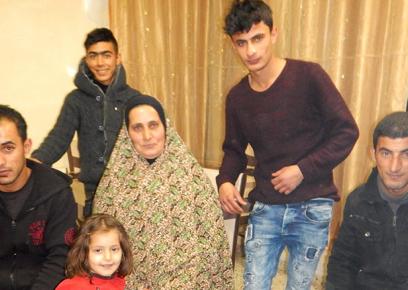
one of the families whose home the soldiers raided. Photo by Musa Abu Hashhash, B'Tselem, 13 December 2017.
Night in Beit ‘Einun: Israeli soldiers throw stun grenades and raid homes
Late at night on 11 Dec. 2017, troops entered the village of Beit ‘Einun, northeast of Hebron. They threw stun grenades and raided dozens of homes, pounding on doors and breaking some down, and terrifying the residents and their children. They forced residents to read out a statement accusing the village of terrorist activity and threatening nightly harassment. The military’s abuse of power to intimidate entire families suspected of no wrongdoing exemplifies the arbitrary violence to which Palestinians are subject to under the occupation.
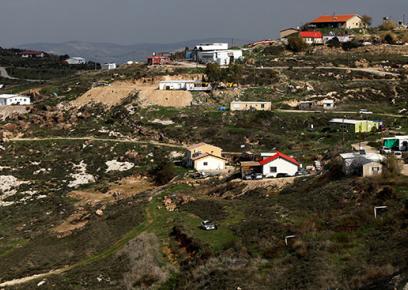
Palestinians kill Israeli civilian in shooting attack near settlement point of Gilad Farm near Nablus
B’Tselem expresses deep sorrow at the death of Rabbi Raziel Shevach, 35, a father of six from Gilad Farm who was killed by Palestinians in a shooting attack yesterday. B’Tselem conveys its sincerest condolences to the Shevach family. The deliberate targeting of civilians undermines every moral, legal and human standard. B’Tselem strongly condemns any and all deliberate attacks against civilians.
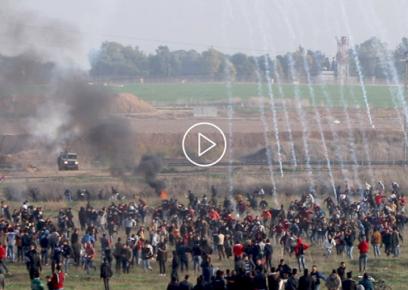
Still from video.
Not only in Iran: Israeli troops fire live ammunition during protests against Trump’s declaration, killing 10 Palestinians and injuring hundreds
Ten Palestinians were killed and hundreds injured when Israeli troops used live gunfire during protests sparked by President Trump’s declaration on Jerusalem. Live gunfire is permitted only in case of immediate mortal danger that cannot be otherwise averted. The great number of Palestinian casualties will probably be addressed no differently from thousands of past cases of excessive and unlawful use of live gunfire. With the MAG Corps at the helm, those responsible for these deaths will be afforded protection instead of being held to account.
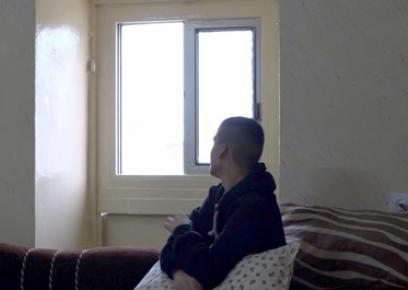
A chronicle of growing up under occupation: Broken lives in East Jerusalem
Still from video.
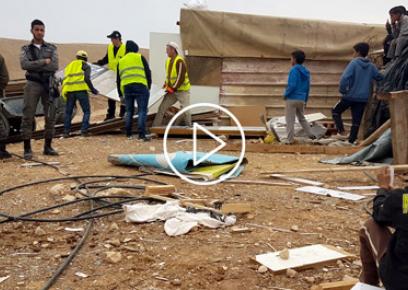
Israeli Civil Administration confiscates wooden panels from Khan al-Ahmar
On 28 Dec. 2017, at around 8:30 A.M., Israeli C.A. officials came with Border Police officers to the Khan al-Ahmar School community in the area of Ma’ale Adumim, handed the residents a military warrant and took away 60 wooden panels and two doors. The community of Khan al-Ahmar is located in an area that Israel has earmarked for future expansion of the Ma’ale Adumim settlement.
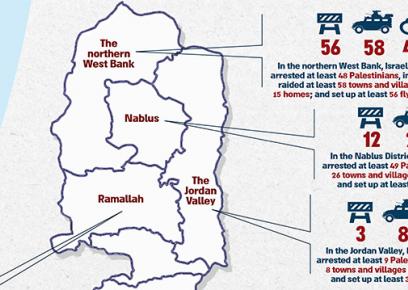
#Occupation365: Updates from the West Bank routine, 2 Dec. 17 - 15 Dec. 17
In the first half of December, Israeli security forces arrested at least 237 Palestinians, including 61 minors; raided at least 123 towns and villages and at least 104 homes; and set up at least 155 flying checkpoints. Click here for more detailed information.
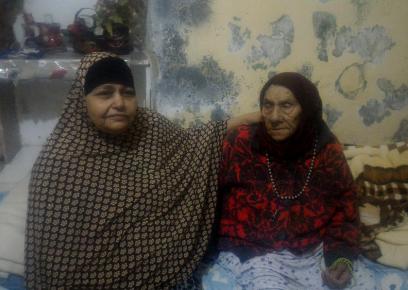
Budrus, exposed: Israeli soldiers raid five homes of extended Palestinian families in dead of night
In the small hours of the night on 5 Dec. 17, Israeli soldiers raided five buildings in the Palestinian village of Budrus, northeast of Ramallah. They entered the apartments of 9 families, in some cases gathering all members of the family in a room, with no consideration for their age or health. The soldiers conducted searches, damaged property and left a mess behind, all based on a military order that gives them sweeping powers, with no need to meet any sort of legal standard such as a search warrant signed by a judge.
Still from video.
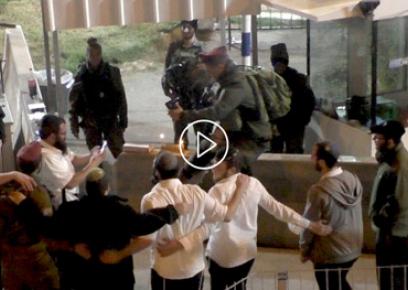
Hanukkah in Hebron’s Old City, 12 December 2017
In 2012 the Israeli military built a fence along a-Salaimeh St. in Hebron’s Old City, designating the broad, paved section for Jews; the narrow, unpaved one for Palestinians. In 2017 the fence was extended, incl. a gate that is unlocked at the discretion of the troops at the nearby Bakery Checkpoint; on 12 Dec. 2017 settlers and soldiers celebrated Hanukkah near it. Some 40,000 Palestinians and 800 settlers live in Area H2 of Hebron where the military imposes a regime of separation, limiting Palestinian movement and upholding settler rights.

Israeli military digs deep trenches to prevent access to communities of Masafer Yatta
For over a month the military has been curtailing the movement of the Palestinians living in Masafer Yatta (Greater Yatta) in the South Hebron Hills by putting in place physical obstacles. Local residents occasionally managed to forge side paths to get through, and each time the soldiers restored the obstacle either the same day or the next. This morning, 26 December 2017 2017, at around 10:00 A.M., soldiers arrived in the area with bulldozers. They re-blocked paths the Palestinian residents forged between Masafer Yatta and the community of Sh’ab al-Botum. This time the soldiers also piled up mounds of boulders and dug a ditch – two meters deep, by three meters wide – to keep vehicles from getting though. In addition, the troops also dug another ditch along a road which had not previously been blocked, and which runs between the communities of Khallet a-a-Dabe’ and Khribet al-Fakhit.
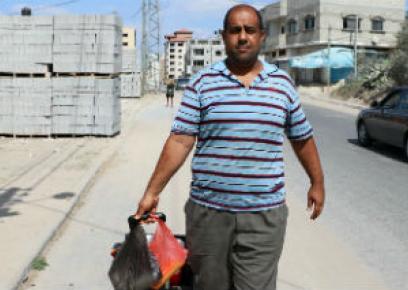
Dead end: Unemployment among college and university graduates in Gaza
June 2017 marked a decade since Israel imposed a blockade on Gaza, ruining the Gazan economy and drastically lowering the quality of life there. The unemployment rate there is currently one of the highest in the world, at 46.6%. Women and young adults are even worse off. Four residents related to B’Tselem field researchers how they pursued higher education in the hopes of improving their financial position, but since graduating have remained unemployed, with little hope for change.
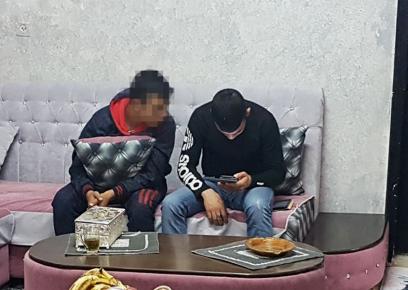
H.R. (on the left) at home with a friend. Photo by Amit Gilutz, B'Tselem, 24 Dec. 2017
East Jerusalem: Israeli Border Police officer pepper- sprays Palestinian, 15, at close range for no reason, others arrest the father
On 20 Nov. 2017, Israeli Border Police harassed Palestinian teens in Batan al-Hawa. An officer pepper-sprayed one of them, 15, in the face from very close range, for no reason. When his father tried to complain, the police arrested him for “threatening a police officer”. He was taken to a police station, interrogated and released on bail. This is not unusual conduct. Police brutality and false arrests are nothing new in Batan al-Hawa, a neighborhood where the largest expulsion in East Jerusalem in recent years is currently underway.

Yazan a-Rajabi after a Border Police officer sprayed pepper spray in his face. Still from video
Israeli police assault and arrest two Palestinian teens, fire sponge rounds and throw stun grenades in East Jerusalem neighborhood
On 7 Nov. 2017, Israeli police writing traffic tickets in Batan al-Hawa, Silwan, detained a Palestinian, 15, cycling by. When their demand to see his ID card went unmet, as he is too young to have one, an officer assaulted him and pinned him to the ground. A cousin who tried to intervene was pepper-sprayed. Both teens were arrested and the younger fined for riding without a helmet. This incident exemplifies deliberate harassment in a neighborhood under settler takeover, and the default use of arrest against Palestinian teens in East Jerusalem.
Israel’s regime of apartheid and occupation is inextricably bound up in human rights violations. B’Tselem strives to end this regime, as that is the only way forward to a future in which human rights, democracy, liberty and equality are ensured to all people, both Palestinian and Israeli, living between the Jordan River and the Mediterranean Sea.
Since the Hamas attack on 7 October 2023, Israel has acted in a coordinated and deliberate manner to destroy Palestinian society in the Gaza Strip, committing genocide against its residents. In light of Israel’s actions in Gaza, the public statements made by Israeli decision-makers, and the international community’s failure to take effective action, there is a serious risk that the Israeli regime will expand the genocide to other areas under its control—first and foremost, the West Bank.
B’Tselem calls on the Israeli public and the international community to use every tool available under international law to bring an immediate end to Israel’s genocide against the Palestinian people.