“There are no half measures. Rafah, Deir al-Balah, Nuseirat – total annihilation. ‘You will blot out the remembrance of Amalek from under heaven’ – there’s no place under heaven.”
Israeli Finance Minister Bezalel Smotrich, April 2024
Since October 2023, the Israeli regime has been carrying out genocide in the Gaza Strip. It has killed tens of thousands of people, injured hundreds of thousands more, destroyed homes and critical infrastructure and starved most of the population – all as part of a systematic, coordinated attack aimed at annihilating all facets of life in the Gaza Strip (for further details, see B’Tselem report Our Genocide, July 2025).
As of October 2025, according to figures released by the Palestinian Ministry of Health in Gaza, an estimated 68,519 people were killed as a direct result of the assault on the Gaza Strip, the vast majority of them civilians who did not participate in hostilities, and an estimated 170,382 were injured. Several studies published throughout the assault show that these figures represent a significant underestimation of the death toll and there is reason to believe the actual number of casualties resulting from Israel’s onslaught is much higher. No such assessment of the number of injured has been conducted, but given the collapse of Gaza’s healthcare system and similar limitations, those two are likely underestimated.
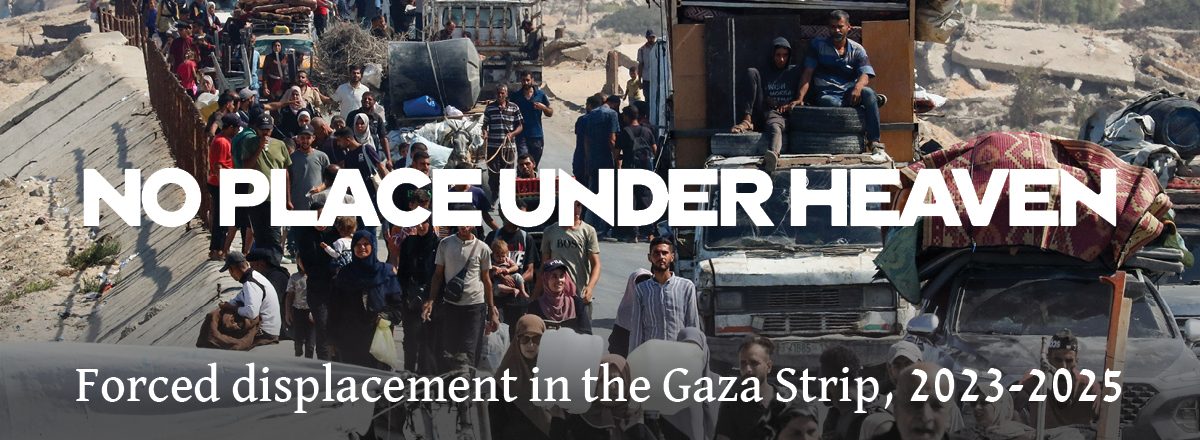
The enormous displacement crisis created by Israel is a central component of the genocide it is carrying out in the Gaza Strip. Over the course of two years, Israel repeatedly ordered Gaza’s residents to uproot themselves. Approximately 1.9 million Palestinians, about 90% of Gaza’s population, were displaced at least once since October 2023, often after losing family members and most of their belongings. It is estimated that by the end of the first year of the assault, Gaza’s residents had been displaced an average of six times. The displacement forced on them by Israel has stripped them of their humanity and dignity, and compelled them to wander for months from one displacement camp to another in a daily struggle for survival.
After ordering people to flee their homes, Israel concentrated IDPs (Internally Displaced Persons)in ever-shrinking areas where living conditions were impossible. Although designated by Israel as safe zones, the Israeli military systematically bombed these areas and fired on them. With no real possibility of finding shelter that could offer protection from Israeli attacks, and no safe access to food, water, and basic services, residents of Gaza quickly learned that nowhere in the Strip is safe.
As demonstrated in the following sections, ongoing displacement has harmed Gazans’ physical and mental health, their family units, and the social fabric of the population. Given these foreseeable consequences, displacement must be understood as a central tool Israel used to destroy Palestinian society in Gaza as a group, in other words, to commit genocide against Palestinians in the Gaza Strip (for more, see What is Genocide? in Our Genocide, July 2025).
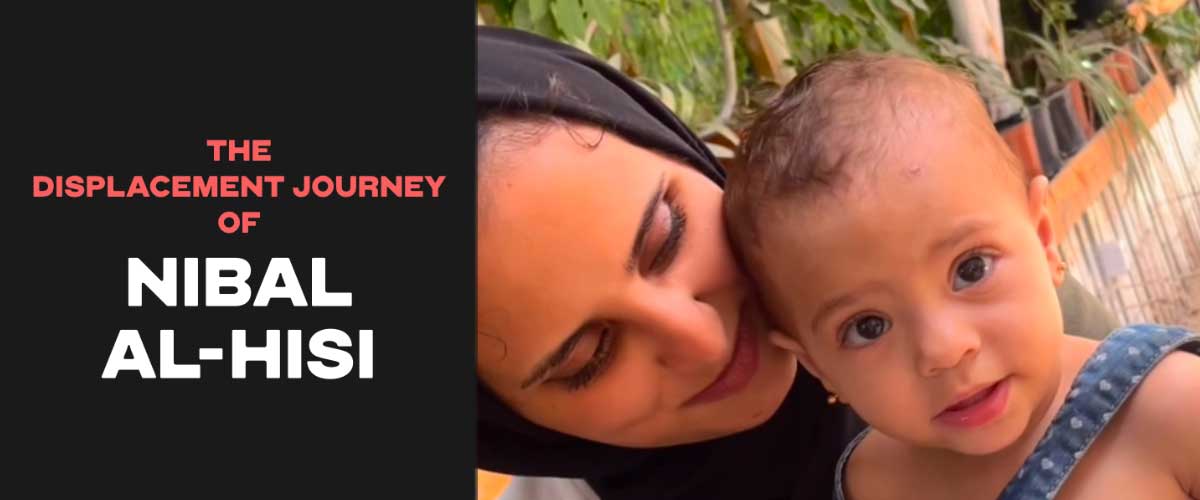
Scrollytelling: The Displacement Journey of Nibal al-Hisi
Legality of displacement
In an advisory opinion delivered in July 2024, the International Court of Justice (ICJ) held that Israel was an occupying power in the Gaza Strip even before the October 2023 invasion, due to its control over Gaza’s land crossings, airspace, territorial waters, and the supply of water and electricity. Therefore, Israel is bound by the duties imposed on an occupying power under international humanitarian law. According to the advisory opinion, Israel’s obligations are directly commensurate with the degree of control it exercises over the area. The increased level of control Israel exercised in the Strip after 7 October further reinforces its status as occupying power in the Gaza Strip.
International humanitarian law, or the laws of armed conflict, prohibits the forcible transfer of civilians in an occupied territory by the occupying power. The sole exception permitted under the Geneva Convention and its Additional Protocols is evacuation stemming from imperative military reasons or carried out in order to ensure the security of the population. At the same time, the occupying power must meet the following conditions:
It must ensure that the evacuation is temporary and, once hostilities end, allow and actively facilitate the return of IDPs to their homes in the area from which they were uprooted as soon as possible.
It must guarantee safe passage for any person forced to leave their home. The occupying power must take all possible measures to ensure displaced persons are not separated from their families and must provide shelter along with access to food, water, healthcare, and sanitation services.
Under international humanitarian law, when displacement fails to meet these conditions, it may amount to a war crime and, if carried out on a widespread and systematic basis, a crime against humanity.
In the following sections, the displacement policy Israel used against Gaza’s residents between October 2023 and October 2025 will be assessed against these binding legal requirements.
Displacement waves and “humanitarian zones”
The next section offers a brief overview of the main waves of displacement in the Gaza Strip since October 2023. For clarity, framing events as waves is an abstraction of a dynamic and continuous reality of displacement that has shaped nearly every aspect of life for Gaza’s residents with almost no relief since October 2023. Between October 2023 and October 2025, the Israeli military issued at least 161 evacuation orders to residents of the Strip, many of which instructed the evacuation of dozens of areas simultaneously.
The IDP numbers referred to below reflect the size of the population required to evacuate in each wave of displacement, not necessarily the number of people who were actually displaced during the period in question.
The areas included in evacuation orders issued by the Israeli military for residents of Gaza from October 2023 to October 2025
From October 2023: Displacement from north to south
On 7 October 2023, Hamas and other armed groups from the Gaza Strip carried out the deadliest attack ever perpetrated against Israeli civilians. That same day, Israel launched a broad assault on the Gaza Strip by air, sea, and land.
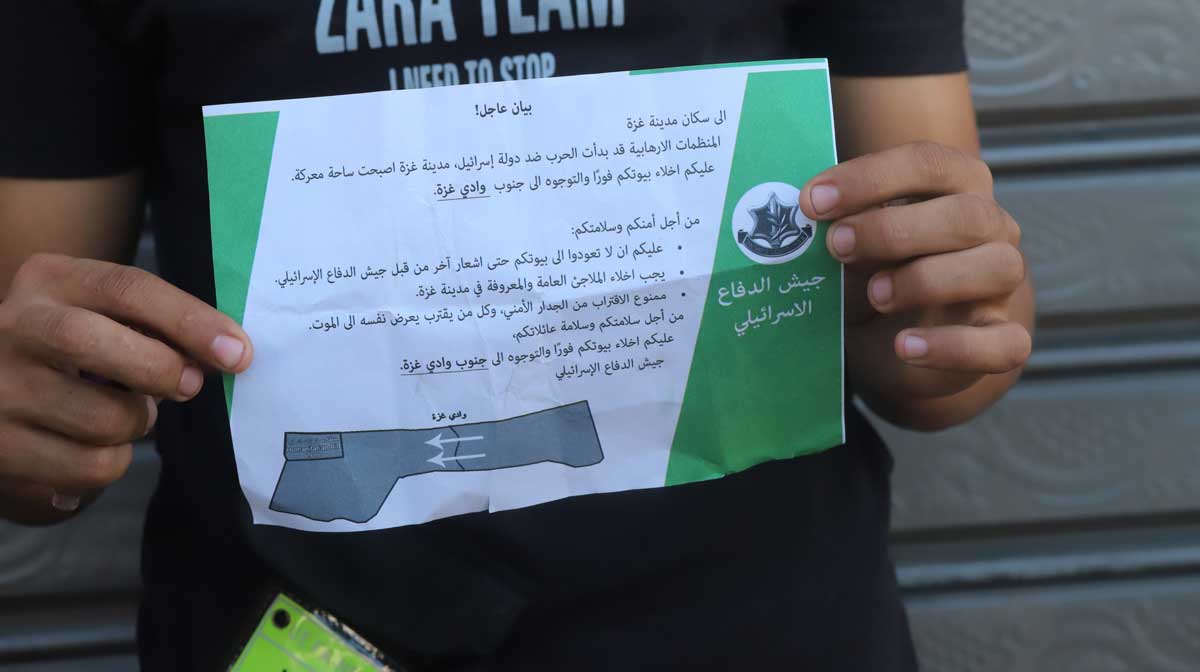
A leaflet dropped by the military in Gaza City warning of an “impending attack” and ordering residents to evacuate south, 13 Oct. 2023. Photo by Doaa Albaz, Anadolu
On 13 October 2023, the military issued the first mass evacuation orders to residents of the Gaza Strip, instructing approximately 1.1 million residents of the northern Strip to leave their homes and move south within 24 hours. Hundreds of thousands of people, already under heavy bombardment, were forced to decide hastily where to flee, without knowing if or when they would be able to return to their homes. Many began fleeing toward central and southern Gaza with only the belongings they could carry on their persons. The entire area south of Wadi Gaza, about 63% of the Strip’s territory, was presented by the military as a safe zone to which displaced people were required to relocate.
From December 2023: Displacement in the south
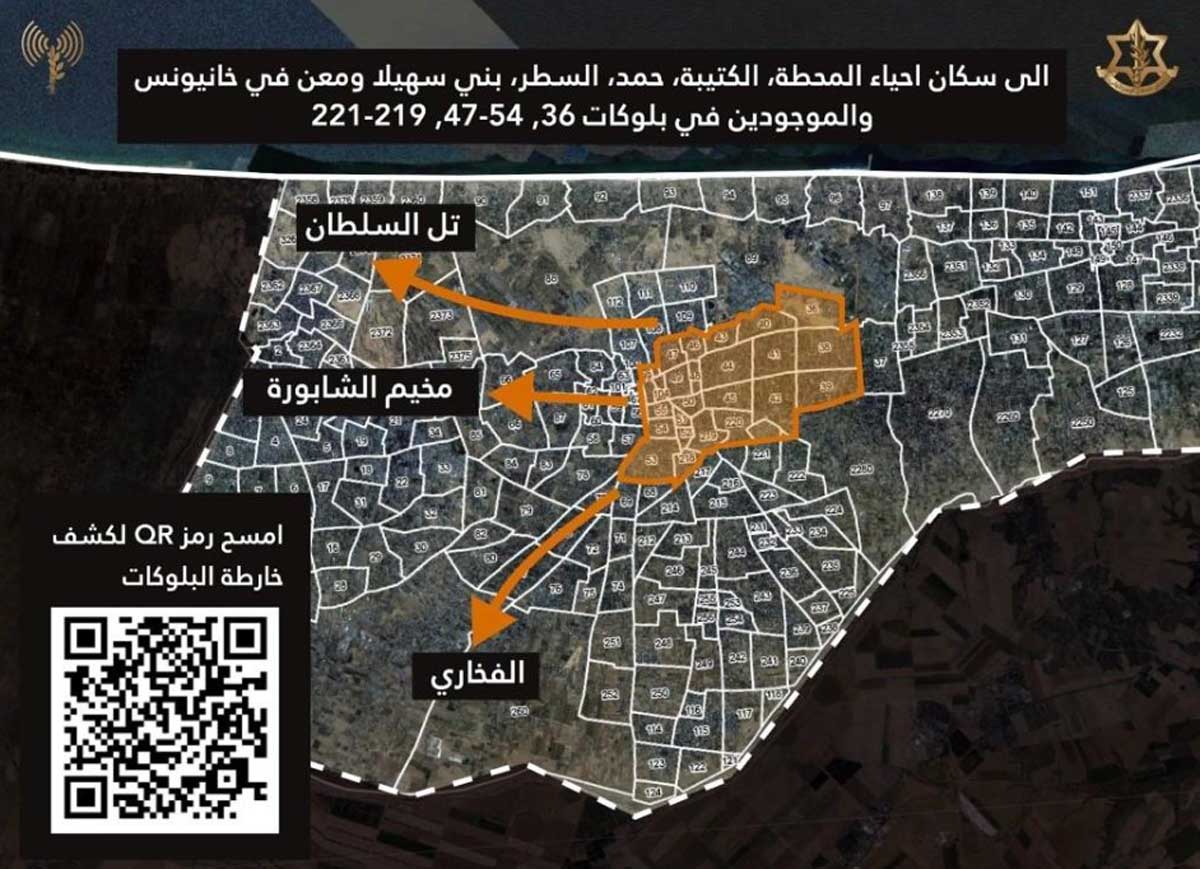
An Israeli evacuation order, ordering residents of Khan Yunis to go south, 4 Dec. 2023
In December 2023, two months after the fighting began and as the assault on the vicinity of the city of Khan Yunis in the southern Strip began, the military issued evacuation orders instructing approximately half a million people located in Khan Yunis and central Gaza, roughly half of them IDPs who had come from the north in the preceding two months, to evacuate to an area of 80.8 square kilometers, about 22% of the Strip’s territory. Most of them went to the Rafah area.
The evacuation orders issued in December 2023 were the first to direct some IDPs to an area the military defined as the “humanitarian zone” in al-Mawasi, a sandy coastal stretch along the Strip’s southern shoreline. Much of this area lacked electricity, water, and sewage infrastructure even before the Israeli assault, and only about 9,000 people lived there.
Satellite image of the “humanitarian zone” in al-Mawasi, Khan Yunis, May 2023 and January 2025 (ESRI Wayback)
From May 2024: Invasion of Rafah
Beginning on 6 May 2024, the military issued new evacuation orders requiring residents of the city of Rafah to relocate to the newly designated and expanded “new humanitarian zone” in al-Mawasi. The zone was reduced from about 22% of the Gaza Strip in December 2023 to about 17% by May 2024. In the first 24 hours after the orders were issued, the military intensified its air and tank strikes in the area and began a ground invasion. By the end of that month, nearly one million people, almost all of them IDPs who had arrived in the city in the previous months, were required to flee Rafah to the so-called humanitarian zone in al-Mawasi, where extreme overcrowding and acute shortages of food, clean water, and basic services were already prevalent. Many of the IDPs who arrived during this period reported that they and their families were forced to sleep in the open due to a shortage of tents.
Bilal Balbulah, a 34-year-old father of six from Rafah, said in his testimony:
[On] 6 May 2024, the Israeli army announced ground forces were going to invade Rafah and dropped flyers ordering us to evacuate immediately. It was a horrible day. We didn’t know where to go […] [we arrived in] the al-Mawasi area in Khan Yunis, which is on the coast. The area looks like a desert, there’s nothing there. When we arrived, there were already thousands of families there and it was terribly overcrowded. We found a place to set up the tents. There were nearly 60 men, women and children in our tents, and we immediately started to feel the lack of basics. […] My kids complained that they were hungry and thirsty, and I didn’t even have a few biscuits or anything sweet to give them. Constantly worrying about food and water was torturous – how and where to get it, what will be if I can’t find anything and the children don’t have what to eat.
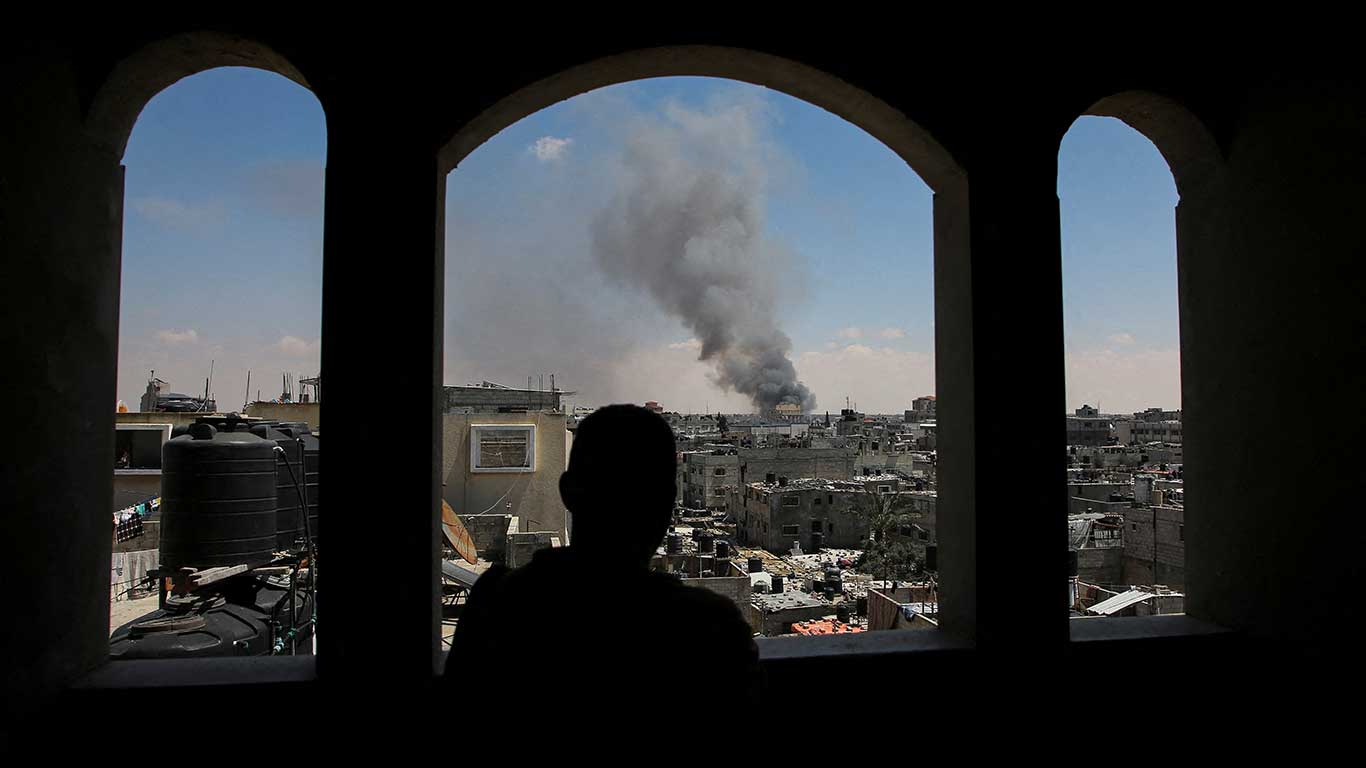
A resident watches smoke rising while Israeli forces launch a ground and air operation in eastern Rafah, 7 May 2024. Photo by Hatem Khaled, Reuters
From October 2024: From north to south, the Generals’ Plan
“Little by little, the northern Gaza Strip, including Gaza City […] will become a distant dream. They’ll forget about this area like they forgot about Ashkelon.”
Although earlier evacuation orders instructed more than one million residents of the northern Gaza Strip to move south, more than 400,000 people still lived in northern Gaza in October 2024. Some remained because they could not endure the harsh conditions of travel and displacement, due to age or various disabilities; some feared evacuating because of the impossible living conditions in the “humanitarian zones” or because of the heavy bombardment across the Strip; others were IDPs who had returned home over the course of the assault.
Beginning in October 2024, Israel intensified its systematic destruction of the urban and agricultural environment in the northern Gaza Strip and implemented a policy of starvation, destruction, and extreme, deliberate displacement. Residents of Gaza City and the towns of Beit Hanoun, Beit Lahiya, and Jabalya were ordered to move south to the “humanitarian zone” in al-Mawasi.
These actions were pursued in accordance with a plan developed by former senior military officers, known as the Generals’ Plan. The plan instructed to displace all civilians, hundreds of thousands of people, from the northern Strip within a single week, after which the entire area would be placed under blockade, with no movement allowed in or out, and no food, fuel, or water entering.
As stated by various military officials, the plan sought to empty the area of its residents entirely in the long term. Though never formally adopted, the plan did inform military activities on the ground. Israel’s actions in the northern Strip, including the policy of starvation, the extensive destruction, and the displacement of hundreds of thousands of residents from their homes, were described by numerous experts, including the UN Secretary-General, as an attempt to carry out ethnic cleansing.
January-March 2025: Ceasefire and return north
With the announcement of the temporary ceasefire as part of the prisoner exchange deal between Israel and Hamas in January 2025, Israeli forces withdrew from parts of the area the military had defined as the Netzarim Corridor (for more on the Netzarim Corridor, see below) and allowed IDPs to return to the northern Gaza Strip. In the two weeks that followed, approximately half a million people returned north. Many described the devastation they found where their homes, neighborhoods, and cities once stood.
Less than two months later, on 18 March 2025, Israel violated the ceasefire agreement and immediately ordered residents of various areas throughout the Strip to uproot themselves once again.
Ahmad Matar, 32, a resident of Beit Hanoun in the northern Gaza Strip, told B’Tselem about his experience returning to his home at the start of the ceasefire.
Everything was destroyed. Nothing is left of the life that was there. Desperate people were wandering the streets, talking to themselves. On the way, I passed a group of women crying helplessly in the face of the massive destruction. I saw schools that the Israeli army burned and demolished. People were cleaning them up to stay there, too, even though there weren’t proper living conditions. Camp residents were sitting by the sides of roads, looking sad and desperate. People had a hard time recognizing their own homes and when they found the ruins, they only tried to get some clothes or blankets out of the rubble.
At the start of the ceasefire, sixteen-year-old Ahmad al-Ghalbanand his family also returned to their home in Beit Lahiya in the northern Strip, after being displaced five times since the beginning of the assault. On 22 March 2025, four days after Israel violated the ceasefire and less than 24 hours after it issued new evacuation orders for Beit Lahiya, just after Ahmad and his family placed their belongings outside in preparation to leave, the Israeli military fired shells toward them.
Ahmad al-Ghalban after his injury. Photo courtesy of al-Ghalban
I was seriously wounded. Muhammad [his twin brother] was dying next to me, and my uncle Iyad [33] was torn to pieces. Hibah, my mother, my sister Alaa, and my brother Qusai were about ten meters away. I lay on the ground, bleeding. I looked at my legs and couldn’t believe what I saw. I told myself, “This is a dream.” My mother screamed and called for help. Five minutes later, a man arrived, and when he saw we were still alive, he put Muhammad and me in a tuk-tuk and took us to the Indonesian Hospital […] After two weeks, when I was doing better emotionally, she (his mother) told me Muhammad had died. I cried a lot because Muhammad was a friend, too. He was my twin brother. I couldn’t believe he was gone. I cried nonstop for five days. I never imagined I would lose him, or that I would lose both my legs. […] I can’t stop thinking about what happened, the blood, Muhammad dying, my uncle’s dismembered body. All these images. I miss Muhammad. I wish he were here with me these days. I think about him all the time.
After violating the ceasefire on 18 March 2025 and until September 2025, Israel stopped designating specific humanitarian zones in the evacuation orders issued to residents of the Strip, but continued displacing people in various areas in the northern and southern Gaza Strip.
August-September 2025: Destruction of Gaza City
“The latch has been unfastened at the gates of hell in Gaza. A first evacuation notice is delivered to a multi-story terror building in Gaza City before the strike. Once the door opens, it will not close. The IDF’s activity will only intensify until the Hamas murderers and rapists accept Israel’s terms for ending the war: first and foremost, the release of all the hostages and disarmament, or they will be annihilated.”
At the end of August 2025, Israel launched a wide-scale assault on Gaza City. In early September, for the first time since March 2025, it designated a new “humanitarian zone” in the vicinity of Khan Yunis, covering roughly 11% of the Gaza Strip. In mid-September, Israel nearly doubled the area in which it allowed civilians to remain, extending the al-Mawasi “humanitarian zone” to parts of the central camps located between it and Gaza City. The evacuation orders issued at that time for northern Gaza instructed some 1.2 million people to leave their homes.
Evacuation orders and “safe corridors”
“To the residents of Gaza City [...] we have recently called on you to evacuate to the area south of Wadi Gaza for your own safety [...] If you cherish your lives and the lives of your loved ones, go south, to the south of Wadi Gaza. We recommend going to the ‘humanitarian zone’ in al-Mawasi, in accordance with the guidelines.”
From the Arabic-language Facebook page of IDF Arabic Spokesperson, Avichay Adraee, 20 October 2023
In December 2023, the Israeli military posted an online map dividing the Strip into numbered blocks, ostensibly to make the evacuation orders easier to understand. However, after Israel cut off the electricity supply, internet access became extremely limited, and many residents were unable to view the online map, heightening panic and helplessness.
For two years, Israel delivered evacuation orders primarily through leaflets dropped from aircraft and social media posts. A study by Forensic Architecture found that in many cases the orders were unclear or misleading: many orders contained errors in the names and boundaries of the areas residents were instructed to leave, as well as in the boundaries of the “safe/humanitarian” areas to which they were told to evacuate. Often, the orders were issued after the military had already begun attacking the areas designated for evacuation, sowing fear and confusion among residents who were trying to comply, and creating chaos during their attempts to flee. Some leaflets and social media posts included messages that mocked IDPs or were intended to provoke panic among residents.
In November 2023, Israel began designating “safe corridors,” marked on some of the maps included with the evacuation orders, and promising to provide safe passage to evacuation areas. However, throughout the months of the assault, numerousreports emerged of people who were bombed by the Air Force or shot by Israeli snipers while walking along these “safe corridors.” Testimoniesgiven by Gaza Strip residents to B’Tselem and videos published by international media outlets showed bodies lying along the sides of the “safe corridors.” For example, as early as 13 October 2023, the day roughly one million residents of northern Gaza were ordered to evacuate south, the military struck Salah a-Din Road, the main north–south artery of the Gaza Strip, which Israel had directed residents to use as a “safe corridor.” The strike targeted a convoy of vehicles carrying IDPs and killed approximately 70 people.
To comply with the evacuation orders, many residents were forced to leave behind family members who would not have been able to endure the difficult travel and displacement conditions due to age, disability or illness. Many families were separated for extended periods, often without knowing the fate of their loved ones due to the collapse of communication networks in the Gaza Strip. Others remained under heavy bombardment in order to care for relatives, out of a well-founded fear that the conditions in the areas to which they were ordered to move would preclude them from meeting their loved ones’ basic needs as well as their own.
Due to the combination of severely damaged roads, large sections of which were completely destroyed during the months of the assault, and the lack of fuel and, consequently, vehicles, many IDPs had to evacuate on foot or in animal-drawn carts, with the journey often lasting many hours and sometimes even days.
At the end of 2023, the military began establishing the Netzarim Corridor, a buffer zone under its full control that cut across the Gaza Strip from east to west. The military systematically demolished all buildings located in this area. At the intersection between the corridor and Salah a-Din Street, the main traffic artery running from north to south and designated as a “safe corridor” at the time, the military erected a checkpoint through which passage was permitted only southward.
Many Gaza Strip residents who gave testimony to B’Tselem described finding themselves surrounded by Israeli snipers upon arrival. Manyreported being instructed by soldiers over a loudspeaker, with warning shots and threats of arrest, to put up their hands, strip for inspection, and turn their faces toward cameras, apparently for biometric data collection. The Israeli military carried out hundreds if not thousands of arbitrary arrests of IDPs traveling through the checkpoint on their way south. These arrests often involved severe violence, long detentions, or imprisonment, often without clear grounds.
Over the course of the assault, the military expanded the “corridor.” At its peak, it was seven kilometers wide, a space later designated a “kill zone,” meaning any Palestinian who entered it was shot on sight.
Living conditions in IDP compounds
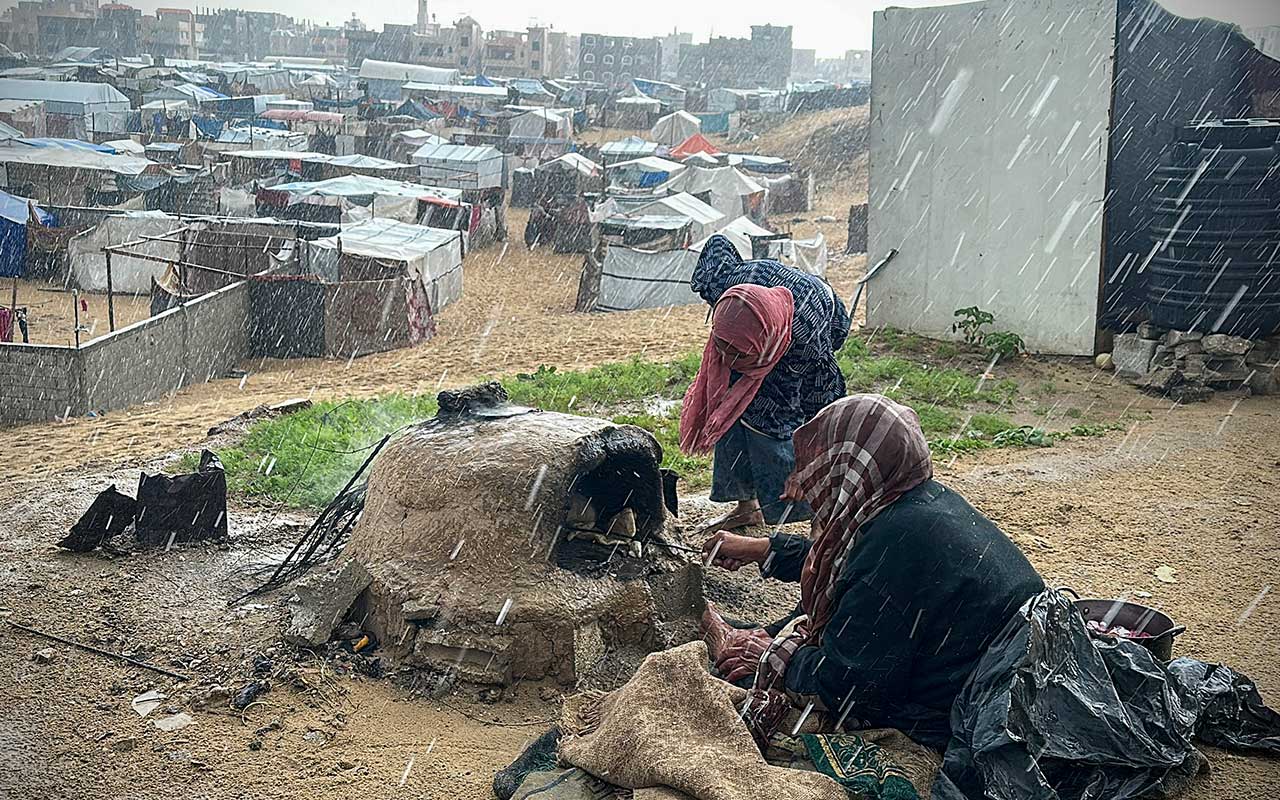
Winter in an IDP camp in Khan Yunis, 31 Dec. 2024. Photo by Doaa Albaz, Activestills
The IDPs who, throughout the months of the assault, reached the shrinking “humanitarian zone” in al-Mawasi, as well as the buildings converted into makeshift shelters in other parts of the Gaza Strip, suffered for months from an escalating shortage of food and potable water, extreme overcrowding, a lack of adequate shelter and exposure to inclement weather conditions. They were forced to live amid piles of garbage and sewage, without access to basic medical care, conditions that are fertile ground for illness and death, as well as violence and exploitation (for more, see Destruction of living conditions in Gaza in Our Genocide, July 2025).
UN experts estimated that more than 90% of the Gaza Strip’s residents were facing acute food insecurity as early as in November 2023. The situation rapidly deteriorated over the months of the assault, and by the end of July 2025, the same agency concluded that “The worst-case scenario of Famine is currently playing out in the Gaza Strip,” with 500,000 people, roughly a quarter of the population, experiencing daily hunger.
The hunger in Gaza is not a by-product of Israel’s war against Hamas but the predictable outcome of Israel’s deliberate, openly declared starvation policy. After Israel thoroughly destroyed and incapacitated most existing food production and distribution systems in Gaza, while systematically preventing the entry of food into it, in late May 2025, an American agency known as the Gaza Humanitarian Foundation (GHF) began operating four aid distribution centers in the Strip. Established with Israel’s encouragement and support, these centers, were intended, in part, to force the Gaza Strip’s population into the overcrowded areas Israel designated as humanitarian zones (for more see Routine killings at the ‘aid distribution centers’ in Our Genocide, July 2025).
In the very first days of operation, a UN representative described these sites as “death traps,” where thousands of hungry and exhausted people were forced to stand in extremely overcrowded conditions and compete for a small number of aid packages under fire from Israeli forces stationed nearby, ostensibly to secure the food distribution. Almost every day the centers operated, dozens of people, most of whom had come from IDP camps in search of food for themselves and their families, were fatally shot in their vicinity.
In a testimony she gave B’Tselem, Safa al-Farmawi, 35, a mother of seven, described the hunger and the desperate attempts to obtain food for her children during their stay in the “humanitarian zone” in al-Mawasi:
Sometimes, Jana, Hala and Bassam [my children] went around the neighboring tents asking for bread, and sometimes I even sold the children’s clothes to get a little money to buy what we needed. Those were months of terrible hunger. I barely had a handful of flour to make bread. One day, my son ‘Omar found a dry pita near the garbage, brought it back to the tent, cleaned it and ate it. After that, I told myself that must never happen again. I would do anything, even risk my life, to get food for my children.
Due to the scale of displacement and the steady reduction of the areas to which residents were directed, extreme overcrowding developed within weeks of the assault’s onset. For example, in early July 2024, evacuation orders instructed the roughly quarter million residents of Khan Yunis, Rafah and Gaza City to move to various sections of the al-Mawasi “humanitarian zone.” Later that month, the military reduced the size of the zone by about 15 percent and required a large number of IDPs to evacuate yet again, effectively squeezing the population westward. Over the following month, August 2024, the military issued at least four additional evacuation orders for areas inside the “humanitarian zone.” IDPs in areas that were excluded from the humanitarian zone were forced to evacuate repeatedly, even as new waves of IDPs continued arriving at the already saturated zone. By the end of August 2024, the “humanitarian zone” had shrunk to about 13% of the Strip’s total area. According to UNRWA estimates, in the following month, September 2024, more than one million IDPs, nearly half of Gaza’s population, were living within it.
The changing border of the “humanitarian zone” in al-Mawasi, July-August 2024
Throughout the months of the assault, numerous accounts described families being crowded into classrooms in schools that had been converted into shelters or forced to share a single tent in the “humanitarian zone” in al-Mawasi. In the absence of adequate housing solutions and due to a growing shortage of tents, many residents in thesesites were forced to improvise makeshift shelters out of materials such as plastic sheets, which left them exposed to the cold in winter and the heat in summer. Many also reportedly slept in the open. In most sites, hundreds of IDPs had to share a single toilet stall and wait for hours in line. Women and girls paid a heavy price for the lack of privacy, which put them at heightened risk of gender-based violence. Their plight was exacerbated by the severe shortage of hygiene products, forcing women to reuse single-use sanitary pads or improvisepads from pieces of cloth.
Due to the decimation of Gaza’s water and sanitation infrastructure as a result of Israel’s actions, many IDPs were forced to live among piles of waste and sewage, while exposed to additional pollutants such as smoke and soot from fires lit for cooking and heating.
Israel’s devastating assault on Gaza’s healthcare system left most of the population without access to adequate medical care. The harsh living conditions in IDP sites further undermined the recovery of IDPs suffering from injuries, disabilities, and chronic illnesses. In many cases, inadequate treatment for injuries, resulting from the collapse of the healthcare system and the poor conditions in the camps, led to infections and other complications. Israel compounded this harm by systematically preventing the sick and injured from leaving the Strip to receive medical care and by preventing the entry of assistive devices for people with disabilities, such as crutches and wheelchairs. The shortage made it extremely difficult for thousands of IDPs with disabilities to move among tents, stand in line for food and water distribution, or access the toilets. As living conditions deteriorated, outbreaks were reported in IDP sites. As early as December 2023, approximately two months after the assault began, the UN Office for the Coordination of Humanitarian Affairs (OCHA) reported a significant increase in cases of diarrhea, acute respiratory infections and skin diseases due to overcrowding and poor sanitary conditions in the camps.
Muhammad Abu ‘Aytah, 50, a father of five, described in a testimony he gave B’Tselem how his home in Jabalya R.C. was bombed in December 2023, in a strike that killed many members of his family and injured two of his children:
We had some relatives displaced from the north and east of Gaza staying with us. Sixteen of them – my uncles and cousins – were killed and buried under the rubble. […] I was in shock when I saw Hassan and Rima [his children] – they were lying on the ground screaming with their legs cut off. I fell to the ground and couldn’t get up. My children, who hadn’t even had time to enjoy their youth, were hanging between life and death.
After the bombing, Muhammad’s family, stricken with grief and shock, embarked on an ordeal of displacement among hospitals and IDP sites.
Hassan and Rima Abu ‘Aytah. Photos courtesy of the witness
[At the hospital] they threw my children down in the corridor. I begged the staff to treat them, but no one could listen. […] On the seventh day, the military ordered the hospital staff to evacuate. We had nowhere to go and didn’t know what to do. The children were supposed to undergo surgery, but we picked them up and went out to the street.
We reached Abu Hussein School in the town of Jabalya, where thousands of displaced people were sheltering. We lived in a crowded room with no mattresses, food or medicine. We stayed there for seven whole months – hungry, in pain and afraid. The only treatment the children received was washing their wounds and changing their bandages, even though the water was contaminated and unfit for use. Their wounds worsened and filled with pus, and they were in constant pain. […] I can’t describe the frustration I felt because I couldn’t provide my family’s most basic needs or medical care for my children.
The ongoing displacement took a heavy toll on the mental health of Gaza’s residents. A study on IDPs in the Strip conducted in November 2024 found that between 70% and 90% of participants met the diagnostic criteria for post-traumatic stress disorder (PTSD). Sixty-three percent exhibited significant indicators of anxiety, depression, and PTSD simultaneously. In both cases, rates were far higher than those documented among IDP populations in other war zones. The researchers suggested that, unlike in previous rounds of fighting, where IDPs were eventually able to find alternative shelter, this time, Gaza’s IDPs were trapped inside an active war zone for months, without any possibility of resettling, securing basic safety, or beginning a recovery process. The trauma experienced by Gaza’s residents, the researchers argued, is not due to a discrete event but an ongoing condition with no knowable endpoint.
As the majority of the population was forced to share increasingly overcrowded displacement sites, community relations in Gaza eroded. Israel’s assault on public order enforcement agencies and the acute shortage of basic necessities led, according to IDP accounts, to violent altercations between hungry and exhausted families over the placement of a tent in the camps, “wild behavior of children,” or “jealousy after someone was able to get his hands on a food package.” (for more see Spread of anarchy in Our Genocide, July 2025).
Airstrikes on IDP compounds
“I cannot stress this enough: there is nowhere safe in Gaza. But under International Humanitarian Law, there should be. Camps, shelters, schools, hospitals, homes and so-called “safe zones” should not be battlegrounds. Yet Gaza has been laid to waste. [...] If people stay, they are killed. If they move, they are killed. People are facing the ‘choice’ of one death sentence or another.”
Jason Lee, Country Director for the occupied Palestinian territory at Save the Children, 4 January 2024
A deadly airstrike site in the “humanitarian zone” in al-Mawasi, Khan Yunis.
Photo: Abed Rahim Khatib, Anadolu, 14 July 2024
Since October 2023, countless testimonies and documented evidence of air and artillery strikes on the areas to which the military directed IDPs have accumulated. For example, of the 1,028 airstrikes documented by Forensic Architecture between 7 and 28 October 2023, 426 took place in the southern Strip, an area the Israeli military had defined at the time as “safe” for displaced people. This reality soon became routine. A BBC analysis showed that immediately after approximately one million people were directed to the “humanitarian zone” in al-Mawasi, around the time of the military’s invasion of Rafah in May 2024 and up until the beginning of the temporary ceasefire in January 2025, the purported safe area was attacked at least 97 times. At least 550 people were killed in these attacks.
A.H., A 30-year-old mother of four, spoke about the Israeli strike on a-Sayedah Khadijah school on the morning of 27 July 2024. The school was located inside the al-Mawasi humanitarian zone as defined at the time. During the strike, A.H. was inside one of the classrooms with her six-year-old son, while her other children were in the adjacent classroom.
I heard the sound of heavy bombing. […] I took my baby, grabbed my three other children, and we ran toward the school gate with the other IDPs. We all fled for our lives. The scene that day was apocalyptic. The school was a site of ruin, wreckage, stones, glass everywhere. On the way out, we stepped on bodies, some burned, and body parts, and on bleeding wounded whose limbs had been severed. There was blood and bodies everywhere.
Since then [the massacre], my children haven’t been able to sleep well. They cry and scream all the time. They replay what they went through, telling me, “We stepped on body parts, on bodies, and on blood!” My children are emotionally scarred from the bombings, from being displaced again and again, from the massacre they witnessed. My baby’s body trembles with fear every time there is a bombing or even a loud noise. […] We still haven’t found a place to live. My husband is in a tent with his family, and I’m staying with the children in relatives’ homes, moving every week or ten days. There is no safe place to go. All the IDP camps are full beyond capacity. […] I have almost no family left. So many of my relatives were killed. I live a rootless life. I have no stable place to stay. There is no security and no life in Gaza. We are surrounded by death.
Later in 2025, the military carried out hundreds of additional attacks on the “humanitarian zone” in al-Mawasi, even as its evacuation orders continued directing IDPs there. According to the UN Office of the High Commissioner for Human Rights (OHCHR), between 18 March and 16 June 2025 alone, 112 attacks were documented in the “humanitarian zone,” resulting in the death of 380 people, at least 158 of them women and children.
In addition to the “humanitarian zone” in al-Mawasi, some evacuation orders issued by the Israeli military directed residents to move to shelters and schools throughout the Strip without clarifying which structures were considered protected. By the end of February 2025, 62% of the schools that served as IDP sites had been directly attacked by the Israeli military.
Erasure of civilian space
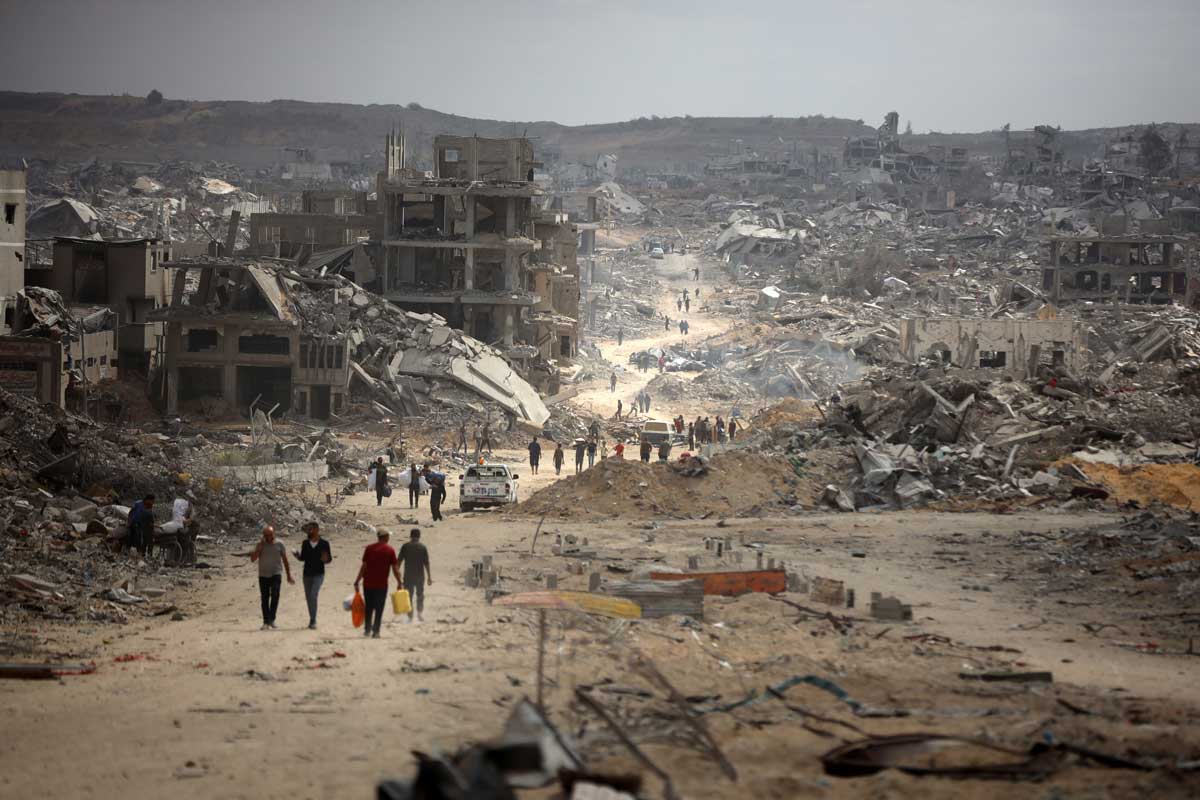
IDPs return to a devastated Gaza City, 12 October 2025. Photo by Majdi Fathi, NurPhoto
Over two years of continuous military assault, Israeli forces inflicted severe damage through airstrikes, shelling, and bulldozers, destroying more than 90% of Gaza’s homes; approximately 70% of all structures in the Gaza Strip, including hospitals, schools, and religious and cultural institutions; and roughly 81% of the road network. Entire neighborhoods and cities in the Strip were wiped off the map (for more detail, see Domicide in Our Genocide, July 2025). Military attacks also destroyed most of Gaza’s farmland. In many cases, the destruction was carried out in places where there was no threat to military forces and in areas where military activity had already completely ceased, often when the area was already fully under Israeli control. Israeli soldiers who served in Gaza spoke about how systematic destruction had become an end in itself.
Variousreports examining the scope of the destruction Israel inflicted on the entire Gaza Strip suggested that, given the absence of clear military targets, it is plausible that Israel sought to turn the alleged temporary displacement of at least part of the Strip’s population into a permanent one. Beginning in May 2025, Israeli officials declared the ethnic cleansing of Gaza’s population as a central objective of the war and clarified that physical destruction and control over humanitarian aid were means of advancing that objective.
Throughout the months of the assault, the Israeli military methodically worked to erase all civilian infrastructure in the areas it seized and carved up the Gaza Strip with a slew of roadblocks and buffer zones. In addition to the expanded buffer zone between Gaza and Israel, where it destroyed most structures and agricultural land, by June 2024, the Israeli military took control of the Philadelphi Corridor along the Gaza–Egypt border, expanded it to a depth of up to 450 meters from the border with Egypt. In May 2025, the military also took control of the Morag Corridor, which cut across the Strip from east to west between Rafah and Khan Yunis. In several of the areas it destroyed, the Israeli military establishedcheckpoints and military posts, connected them to water, sewage, and electricity infrastructure, and paved roads and access routes linking them to one another and to Israeli territory.
Under the Hamas-Israel ceasefire agreement that went into effect on 10 October 2025, Israeli forces were to withdraw to what was defined as the “yellow line,” leaving approximately 50% of the Gaza Strip’s territory under Israeli control. However, a BBC investigation published in late October showed that Israel placed yellow-painted concrete blocks to mark the “yellow line” on a route that deviated from the maps drawn as part of the agreement and approved by both sides by hundreds of meters. In this way, Israel has retained control over a much larger area than agreed.
The reconfiguration of the territory, coupled with numerous statements made by public officials throughout the months of the assault, indicates that Israel’s conduct was motivated by an intention to establish lasting Israeli presence in the Gaza Strip and fundamentally transform civilian space and the distribution of Palestinian population centers in the post-war reality.
Conclusion: Displacement as a facet of genocide in Gaza
The displacement crisis Israel has created in the Gaza Strip is key to its coordinated genocidal assault aimed at destroying Palestinian society in Gaza as a group. Israel’s repeated uprooting of more than 90% of the population there has left Palestinian society shattered, stripped of the resources needed to cope with the destruction Israel left behind, and almost entirely dependent on external aid.
Throughout the months of the assault, Israel claimed that the displacement of Gaza’s residents was driven by essential military considerations and intended to protect civilians in the Strip. Israel also asserted that its conduct throughout the fighting met the requirements for protecting displaced civilians. Yet an examination of Israel’s actions in light of international humanitarian law makes clear that it has blatantly violated its obligations, denied displaced people the protections they are entitled to under the law, and acted systematically and deliberately to prevent them from returning to their homes and to the areas from which they were uprooted.
During the months of the assault on Gaza, Israel carried out extensive, systematic bombardments of the “humanitarian zone” in al-Mawasi and other displacement sites to which it instructed residents to evacuate, as well as the evacuation routes themselves. Israel’s deliberate policy of starvation and its obstruction of the entry of essential humanitarian aid led to the spread of catastrophic hunger, the collapse of the healthcare system, severe shortages of essential hygiene items, outbreaks of disease, and the creation of inhumane living conditions across the entire Strip, especially in displacement camps. In doing so, Israel clearly violated its duty to provide displaced people with safe shelter, access to food, drinking water, medical care, and minimum hygienic conditions.
Israel’s deliberate destruction during the months of fighting – which it continues to carry out in areas still under its control after the ceasefire came into effect – was intended to ensure that the overwhelming majority of displaced people would be unable to return to their homes and rebuild their lives in the areas from which they were uprooted. The destruction of neighborhoods and even entire cities was not a by-product of the fighting but, rather, part of a deliberate policy. Israel deployed an array of engineering, military, and civilian tools that systematically demolished homes in areas from which Palestinians had been displaced and which the Israeli military had taken over. As Israeli policymakers declared, the scale of destruction of residential buildings, along with the systematic demolition of essential infrastructure such as roads, sewage, electricity, water systems, and agricultural land, was carried out with the intention of preventing displaced Palestinians from returning to their homes and fundamentally reshaping the civilian landscape of the Gaza Strip.
The displacement crisis Israel created in Gaza is a central component of the genocidal assault it has carried out and continues to carry out with the aim of destroying Palestinian society in the Strip. Beyond violating Israel’s legal obligations, its actions have caused devastation on an immense human scale. The Israeli assault abruptly upended the lives of nearly two million people in Gaza, rendering many of them destitute. Displaced people were stripped of their humanity and their possessions, pushed from place to place, forced to live for many months in overcrowded camps lacking basic infrastructure, under extreme deprivation, exposed to Israeli bombardments and gunfire, and without any form of protection. These camps house hundreds of thousands of people separated violently from their loved ones, children left without school and psychological support for the horrors they experienced, and parents unable to provide their children with food or drinking water, or forced to risk their lives to obtain it. All this has also resulted in the complete collapse of Gaza’s social fabric and in a severe erosion of interpersonal relations within the displacement camps.
IN RED: THE AREA REMAINING UNDER ISRAELI CONTROL ACCORDING TO THE FIRST PHASE OF THE OCT. 2025 CEASEFIRE DEAL The ceasefire agreement between Israel and Hamas on 10 October 2025 did not lead to any meaningful change in Israel’s conduct. Even within the territory that supposedly remained under Palestinian control beyond the “yellow line,” Israel continues to inflict extensive harm on civilians, homes, and infrastructure – often within the very area designated as the al-Mawasi “humanitarian zone,” where hundreds of thousands of displaced people currently live. Moreover, as of November 2025, Israel refuses to open several commercial crossings through which it was supposed to allow humanitarian aid into Gaza, disrupts and delays the entry of essential aid through the crossings that have opened, and continues to impose draconian restrictions on humanitarian organizations and to prevent journalists from entering devastated Gaza. UN agencies and international organizations reported that between the agreement’s entry into force and 21 October, Israel rejected approximately 75% of all requests submitted for the entry of aid into the Strip. The blocked items included tents and plastic sheeting, blankets, mattresses, food, hygiene items, assistive devices for people with disabilities, and children’s clothing. All these are items that should not have been restricted during a ceasefire and that are essential for meeting the needs of displaced people.
Given the severity of the crimes for which Israeli leadership is responsible, the international community has an obligation to act immediately and decisively to ensure that Israeli decision-makers are held accountable. The international community must also ensure that the entry of essential humanitarian aid – required in the immediate term – and the long-term reconstruction of the Gaza Strip, expected to take decades, proceed without delay and efficiently, overcoming the obstacles Israel is already imposing and is likely to continue imposing. Should the international community allow those responsible for these crimes to evade accountability and allow Israel to shirk its legal and moral responsibility for the devastation it inflicted on Gaza, Israel’s aspiration to “purify” the Strip of its Palestinian residents may transform from a nightmare vision into an irreversible reality.
Israel’s regime of apartheid and occupation is inextricably bound up in human rights violations. B’Tselem strives to end this regime, as that is the only way forward to a future in which human rights, democracy, liberty and equality are ensured to all people, both Palestinian and Israeli, living between the Jordan River and the Mediterranean Sea.
Since the Hamas attack on 7 October 2023, Israel has acted in a coordinated and deliberate manner to destroy Palestinian society in the Gaza Strip, committing genocide against its residents. In light of Israel’s actions in Gaza, the public statements made by Israeli decision-makers, and the international community’s failure to take effective action, there is a serious risk that the Israeli regime will expand the genocide to other areas under its control—first and foremost, the West Bank.
B’Tselem calls on the Israeli public and the international community to use every tool available under international law to bring an immediate end to Israel’s genocide against the Palestinian people.


![רימא וחסן אבו עייטה. התמונות באדיבות העד [ניתן להקליק להגדלה - שימו לב, תמונות קשות לצפייה]](/sites/default/files/inline-images/rima_and_hassan_abu-aytah.jpg)