A 35-year-old mother of seven from Rafah, Safaa recounted how her daughter was killed at a GHF aid distribution center and another daughter injured, and described displacement, hunger and desperate efforts to find food for her children:
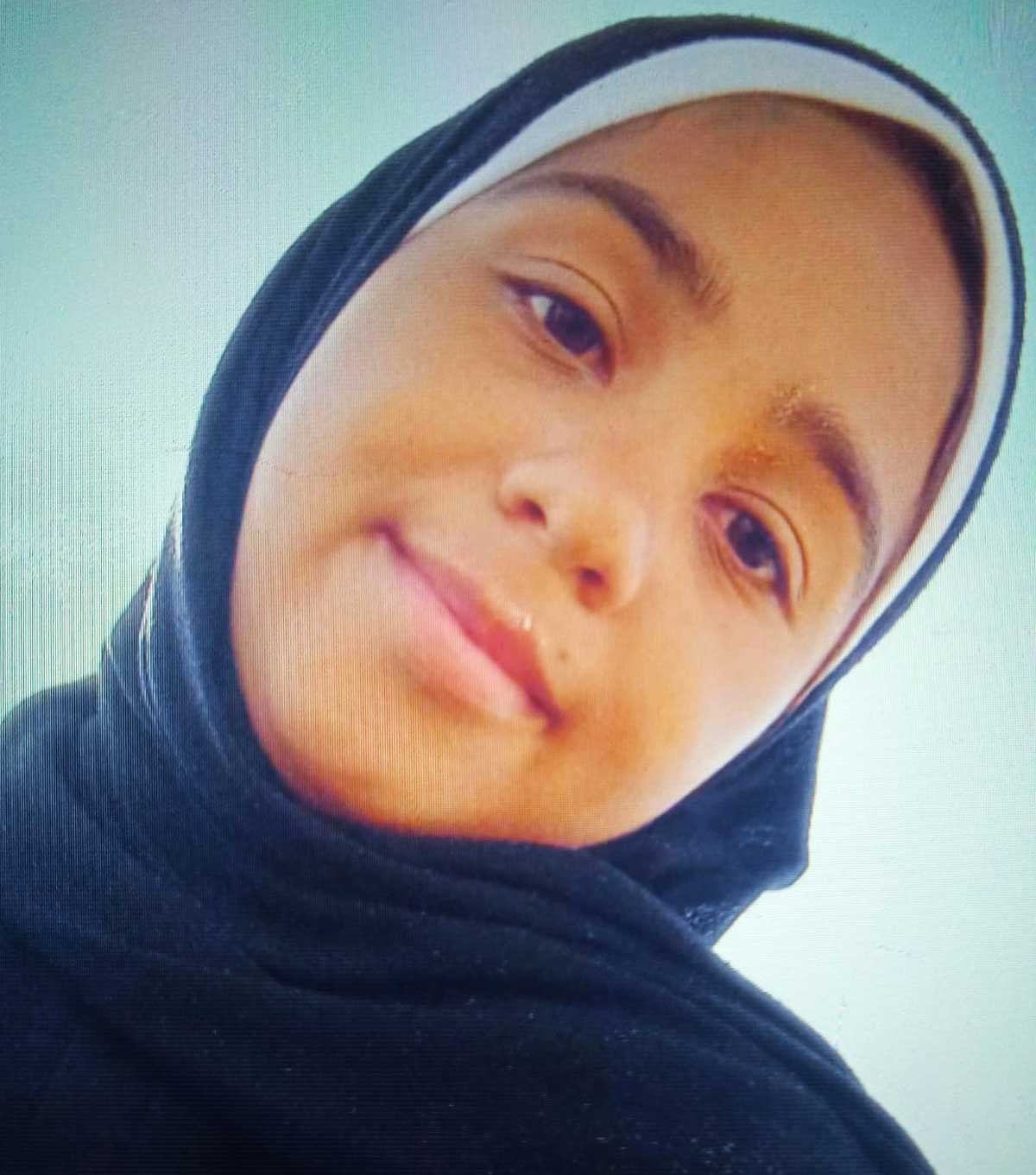
Before the war, I lived in a rented apartment in Rafah with my husband and our children – Ghazal, 15, Jana, 14, Bassam, 11, Hala, 10, Isma‘il, 8, ‘Omar, 6, and Nur, two and a half. My husband has high blood pressure and a slipped disk, and is very unwell emotionally. He used to work as a driver. I have diabetes and use to make cleaning products such as bleach, dish soap and laundry detergent, which Ghazal sold door to door in houses nearby. Since the war began, neither of us has had any income.
Since the first Israeli invasion of Rafah in early May 2024, we’ve been displaced about six times. Before the January 2025 ceasefire, we moved to an area near the Fish Fresh restaurant on the beach at al-Mawasi, Khan Yunis. One night in winter, our tent, which was made of plastic sheets and blankets, flooded and everything inside washed away into the sea. My daughter Ghazal tried to save the blankets and mattresses and almost drowned herself; a neighbor rescued her at the last minute.
During the ceasefire, we returned to Rafah and found my husband’s family home partially destroyed. We cleaned it up and stayed there, but when the war resumed in March 2025, it got too dangerous because of the bombings. We went back to the al-Mawasi Khan Yunis area and set up another tent, near al-Aqsa University.
The hunger quickly got worse, and I didn’t have enough money to buy food. Ghazal would go out at 8:00 A.M. to stand in line at a “takiya”, a soup kitchen handing out hot food, and would come back in the afternoon with lentils, or rice and beans, or something like that. The food often spilled on her clothes because of the chaos and commotion in those places. Sometimes, Jana, Hala and Bassam went around the neighboring tents asking for bread, and sometimes I even sold the children’s clothes to get a little money to buy what we needed. Those were months of terrible hunger. I barely had a handful of flour to make bread. One day, my son ‘Omar found a dry pita near the garbage, brought it back to the tent, cleaned it and ate it. After that, I told myself that must never happen again. I would do anything, even risk my life, to get food for my children.
When I heard that an aid distribution center opened in Rafah, I decided to go. The first time, I went with my daughter Jana. We left in the morning and walked about five kilometers. When we got near, we saw crowds of people, many already heading back carrying boxes. I asked them what was happening, and they told me the center was already closed. A few seconds later, I lost Jana. I turned around and she was nowhere to be seen. I thought she might have gone back to our tent, so I went, but she wasn’t there.
I kept looking for Jana and finally found her with some acquaintances on the beach. She had a box from the aid center and a wood pallet. She looked exhausted but happy. I asked where she’d gone and she said she was very thirsty, so she went up to one of the soldiers and asked him for water. The soldier gave her a small bottle of water and an orange and told her to leave, and then she got the aid box and the pallet. The box had instant noodles, biscuits, oil, and cans of stuffed grape leaves, tuna and cheese.
On 6 June 2025, the first day of ‘Eid al-Adha, I went with Jana to the aid distribution center in the a-Shaqush area. When we entered, soldiers started pepper spraying us and throwing stun grenades, and a quadcopter dropped explosive devices on the crowd. Jana and her friend Malak were standing and talking near where they were shooting. Malak was hit in the neck and died instantly, and Jana was wounded by shrapnel.
People helped me carry both girls in a car to the American field hospital. From there, Jana was transferred to Nasser Hospital. She had several pieces of shrapnel lodged in her body, including her lung. The doctors operated on her and drained the blood from her lung. She stayed in the hospital for five days, until 10 June 2025. She still suffers from the shrapnel inside her and is in severe pain, especially from one fragment that’s still in her abdomen.
On 11 June 2025, I went with my daughter Ghazal to the aid distribution center in the al-‘Alam area of western Rafah. We left at 8:00 A.M. and took a car there. On the way, Ghazal stuck her head out of the window to feel the wind and said to me, “Mom, I’m brave and strong.” She was proud of herself.
We arrived around 8:30 A.M. There were thousands of people there, and every time the crowd moved forward, the Israeli military opened fire. Ghazal and I lay down next to a destroyed house by the roadside. When the shooting died down, someone shouted that the center was open and everyone started running toward it. As we ran, the soldiers opened fire again. I lost Ghazal and started shouting her name. I heard her answer, “Yes, Mom, I’m here,” but I couldn’t see her through the dense crowd. After that, I didn’t hear her again.
When the shooting stopped, I kept looking for her but couldn’t find her. I went back to the destroyed house where we lay before and sat there with some friends and other women. I felt like I was suffocating. My heart was racing and I felt dizzy. When the distribution began, I didn’t have the strength to run there. I thought to myself that Ghazal was fast, unlike me, with my diabetes and shortness of breath, and that she’d probably already got hold of some aid and gone back. When we went to the center before, we agreed that if we lost each other in the crowd, we would meet by the electric pole at the entrance.
I looked for her for more than an hour and then went to the meeting point and waited there, but she never came. I bumped into a relative and asked if he had seen her. He asked what she was wearing, and when I told him, he said, “Pray for her.” I understood something had happened. When I insisted he tell me, he said Ghazal had been shot in the shoulder and taken to the Red Cross hospital in al-Mawasi Rafah.
I went there, and one of the nurses said a girl matching her description had arrived and been transferred to Nasser Hospital in Khan Yunis. I tried to get there, but there was no car or cart available to take me, so I walked for an hour and a half until I reached our tent near al-Aqsa University.
When I arrived, I found my brother there. He hugged me and said that Ghazal had been shot in the back of the head and killed. I screamed and refused to believe it. My son Bassam was in the tent, but the rest of my children weren’t. They’d already heard that Ghazal was dead and had gone with relatives to say goodbye to her. Bassam didn’t go because he’s afraid of saying goodbye to the dead.
I walked to Nasser Hospital and saw Ghazal’s body there. My relatives were all crying. I sat dow next to her to say goodbye. The farewell was brief, and then we buried her. That night, I couldn’t sleep. I kept waiting for her to come back to the tent, because she could never sleep without me.
After Ghazal was killed, I didn’t go to any aid distribution centers for several weeks. I was too sad. I only started going again in early July. I went to an aid distribution center on a-Tina Street in Khan Yunis, and it was extremely crowded. I fell down and people trod on me. I was choking and my face started turning blue. Just when I thought I was about to die, a young man pulled me out from under the people’s feet. My whole body hurt, and I went back to the tent without my shoes.
Now I’m exhausted and can’t go to the aid centers because of the distance, the crowds, the heat and the danger. My daughter Jana helps me get food. She has a small cart and transports people and their belongings in exchange for lentils, hummus, oil, a few pitas or a few shekels.
Ghazal was the person I relied on most. I’ve lost my support. She was my life.
* Testimony given to B’Tselem field researchers Olfat al-Kurd and Khaled al-‘Azayzeh on 11 and 17 August 2025