A 20-year-old from Jabalya Refugee Camp, Shams spoke about relatives killed by military airstrikes and gunfire, and described suffering, displacement and hunger since the war began
On Friday, 6 October 2023, I was visiting my aunt Maryam, 31, in the city of a-Zahraa in the central Gaza Strip. She lives near my university, and I was planning to go there straight from her place the next morning. But the next day, 7 October 2023, we heard explosions in the morning and I realized something was going on and there would be no studies.
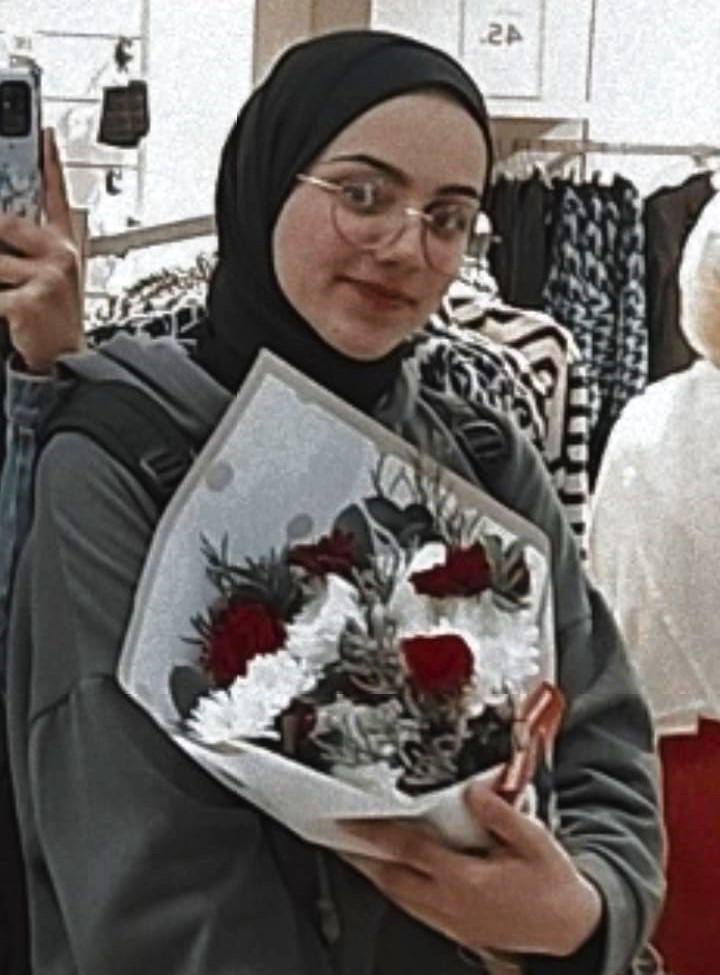
My aunt and I decided to go to my parents’ home in the al-Falujah area, in the northern part of Jabalya Refugee Camp, because she was worried it was too dangerous in her area. But soon after we got there, the situation got worse and it became dangerous there, too. There was heavy bombing everywhere.
That went on for seven days. The situation in the northern Gaza Strip was terrifying, and the army ordered everyone to leave and go south. F16 planes bombed the area around us during the day, and especially at night. The nights were truly unbearable, with nonstop bombing. We live on the third floor, but at night we went down to to my grandparents’ apartment on the first floor. It felt safer.
On 14 November 2023, a shell hit the roof of our building while we were at home. Then they bombed the house next door, a few meters away, and then they bombarded the al-Falujah cemetery across from us. I looked out the window. There was a funeral being held in the cemetery, and the army fired at the people there. They dropped the dead man and ran away. They simply left the body lying on the ground and didn’t come back to bury it, they were so scared.
We immediately decided to move to my other grandfather’s, Nahed, in the center of the camp, even though his house was partially destroyed in the bombing of the a-Tawbah Mosque across the street from him. My father stayed behind to watch over our house. We stayed at my grandfather’s for two days. The next day, 15 November, there were fewer bombs and they sounded a little further away. But then, on 18 November, we had the worst night of our lives. Fighter jets bombed the area massively, creating large rings of fire everywhere. My grandfather’s apartment is on the third floor, but we went down to the first floor and huddled there with almost 60 people, including displaced people from my mother’s family.
The rings of fire were very close to us. After an hour, we went back upstairs to sleep. Around 1:00 A.M., they started massive artillery shelling of the camp. The blasts were very loud. We went downstairs again. Houses were shelled all around us, and shell fragments flew everywhere and came inside. We were all terrified and crying in horror. All the displaced people were in a state of panic.
In the early hours of the morning, I told my mother we should go back up to the third floor, but she was very frightened and refused to go up. Just then, the house across from us was bombed. About 18 people were killed in that bombing and it also damaged my grandfather’s building, which got covered in debris and rubble.
We decided to move to my uncle’s inlaws from the Abu Samrah family, still inside the camp. There were 40-50 displaced people from the camp in their house, all of us in one room. Then there was shelling nearby and fragments hit my mother’s uncle, Ramadan Hamid, 80, in the hand and my sister Haya, 7, in the head. Luckily, one of the displaced people in the house was a nurse who gave them first aid. Then there was more shelling at houses around us, and debris and broken glass fell on us.
We realized we shouldn’t stay there, either, so we walked towards the UNRWA schools. On the way, we saw horrifying sights. The streets were strewn with bodies, wounded people, displaced people, rubble, broken glass and rocks. It felt like the end of the world.
We reached the Abu Hussein school and stayed there. Some of the other displaced people kept walking to Al Yemen Assaeed Hospital in the camp, which was still under construction, but there were already ambulances and Civil Defense teams there.
An hour after we arrived at the school, my father, who had stayed home until then, joined us. He said we had to go south. We set out with my uncles and their families. We walked about 15 kilometers south, along Salah a-Din Road in eastern Gaza City, carrying the belongings we had with us. We reached al-Kuwait Square, and from there continued walking to the Netzarim checkpoint.
When we got to the checkpoint, the soldiers said no one was allowed through and fired at us and at the other displaced people. We stood there for three hours with our hands up, waving our ID cards. It was so humiliating.
Around 4:00 P.M., we went back to the Abu Hussein school in the camp. The men settled into the school and the women into the house across from it. We stayed like that for a week. During that week, my uncle Nader and his wife Mirvat went with their four children to her family’s house in the camp. On 23 November, that house was bombed. Mirvat, 34, was killed with all four children: Layan, 19, Shadi, 13, Rital, 11, Tulin, 2, and other members of the family. My uncle Nader and his son ‘Abd a-Sami’, 20, were lightly injured.
At the end of November, when there was a ceasefire, we went back home. We found most of the walls damaged and no windows. We cleaned the house and had a quiet week there. It was a short rest from the difficult things we’d been through.
But on 1 December, the ceasefire ended and planes bombed the camp again from every direction. We grabbed some clothes and other items and went back to Al Yemen Assaeed Hospital. Two days later, on 3 December, the army invaded al-Falujah. Tanks surrounded the area and bulldozers razed the cemetery. Uncle Nader and his son ‘Abd a-Sami’ were stuck in our family’s building and couldn’t leave. The army burned the cemetery and houses in the area. Uncle Nader said that from the window, he could see dogs eating bodies that were dug up. Thank God, they both eventually made it out of there safely.
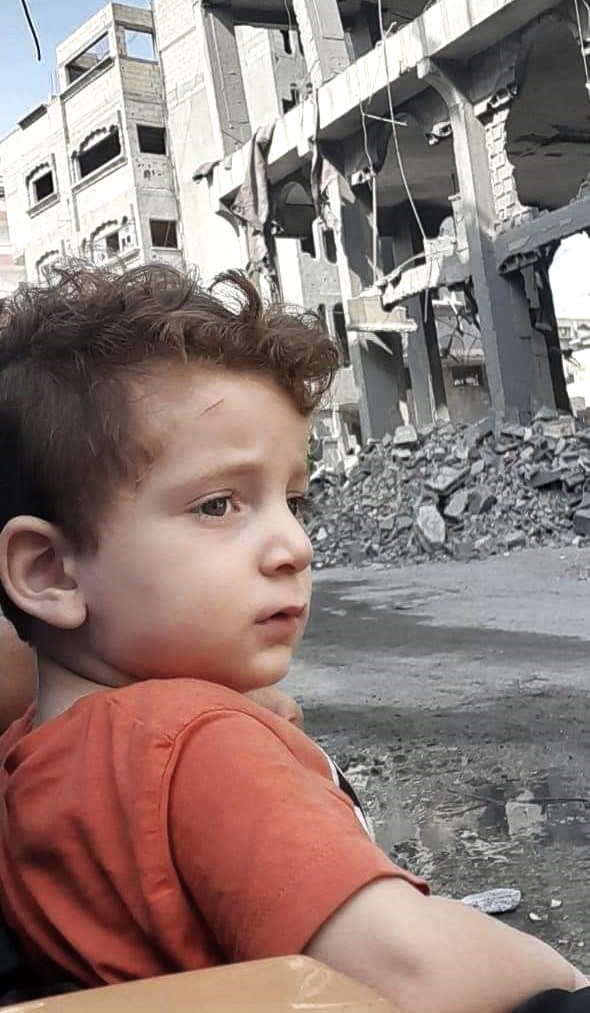
On 8 December, the army invaded the camp and surrounded the hospital we were sheltering in. We were under siege for about five days, with no one coming in or going out. The whole time, there was tank shelling, drones shooting from the air, and snipers shooting from rooftops near the hospital. We had no food or water and I was very weak, half passed out some of the time. It was too dangerous to even go to the bathroom, and at some point, a shell was fired at it. The shelling burned down trees and tents near the hospital.
One day, during the siege on the hospital, my uncle Amir and his children were sitting next to us. His son Karim, 3, was sitting on his lap when suddenly a bullet hit him in the head. He started bleeding, but there was no medical staff there. His mother held him. We bandaged his head with gauze, and then, even though it was dangerous outside, my uncle took him to the UNRWA al-Fakhura clinic. They told him Karim’s condition was very serious and he had to take him to al-Ma’amadani Hospital in Gaza.
He didn’t manage to get him there, and at 6:00 P.M., Karim died. Around the same time, his mother Rawan, who stayed with us, said she felt he was no longer alive. When she received the bad news, she started screaming and crying. Karim was buried at the market in the camp, because we couldn’t reach the cemetery. Despite the danger, Rawan went out of the hospital to say goodbye to him. Later, after Ramadan, they managed to move his body to the cemetery in al-Falujah.
One day, while I was standing by a window in the hospital, I saw with my own eyes how a guy was shot while walking down the street. Then they shot a guy who went over to help him, and then a third guy who went over.
The five-day siege on the hospital was very difficult. On the sixth day, the army withdrew from the area. But the situation was still very bad. There was hunger. You could barely get flour, and even when we managed to bake pita bread, we had nothing but za’atar to eat it with. A 25-kg bag of flour cost 2,000 shekels (~ USD 550) or more. We mostly made bread from cornmeal meant for livestock. We baked over an open fire because there was no fuel of any kind. We suffered from severe hunger for nearly three months. It was the darkest time of my life. We just wanted to eat all the time.
It was impossible to get hold of vegetables, meat, or even canned food. I saw people eating animal feed. We ate only one meal a day, a piece of bread or two, and went to sleep hungry. Besides bread, we only had lemons and mallow, which we paid a lot for. The situation in the northern Gaza Strip was catastrophic.
In the end we went back home, even though the house was uninhabitable. It was better than being in the hospital, even though we had no water or electricity and had to keep going to fill up a bucket of water. Then Ramadan began, a month of fasting – but we were pretty much fasting already. I can’t describe the hunger. It was so hard. By the end of Ramadan, some vegetables and flour were available in our area, but the prices were very high and we could hardly buy anything.
Later, things improved a bit and we managed to get flour and canned goods. My mother started stockpiling food because she was afraid the hunger would return. I had digestive problems because of the contaminated water and canned food.
On 11 May 2024, the Israeli army airdropped leaflets again ordering us to evacuate the camp. We grabbed clothes and set out for my grandfather Nahed’s house in the northern part of the camp. But before we got there, we saw and heard massive bombings in the camp – horrific explosions. We went to Al Yemen Assaeed Hospital again.
We stayed there one night. The next day we went to western Gaza City, to the a-Sheikh Radwan neighborhood. Walking through the streets, we saw most of the houses were destroyed. The streets were full of debris and rubble, dead bodies and wounded people. Houses were on fire, and there was shelling and bombing everywhere. Bulldozers were razing the eastern part of the camp, the market and houses. The walk from the camp to Gaza City felt like a death march.
Now we’re staying with relatives in a-Sheikh Radwan, not far from the camp. There’s bombing from planes and tanks day and night. It never stops. Here in the northern Gaza Strip, there really is no life anymore. Most of the residents have left Jabalya camp and moved to western Gaza City. Everyone here is living in very difficult conditions. Schools and hospitals that were converted into IDP camps have burned down. Al-’Awda Hospital is under siege. The Indonesian Hospital and Kamal Adwan Hospital are out of service. The situation is very difficult.
* Testimony given to B’Tselem field researcher Olfat al-Kurd on 21 May 2024
* Update: Shams Mhanna and her family returned to Jabalya R.C. several days later. B’Tselem has not been able to contact them since 27 October 2024
The following people were killed in the bombing on 23 November 2023:
- Shams’ uncle’s wife, Mirvat Mhanna, 39 and her children:
- Layan Nader Mhanna, 19
- Shadi Nader Mhanna, 13
- Rital Nader Mhanna, 11
- Tulin Nader Mhanna, 2
- Mirvat’s father, Mahmoud ‘Abd al-Hadi Hamad, 73
- is wife, Siham Hamad, 52
- Mirwat’s sister-in-law, Faten Hamad, 45, and her daughters:
- Maram Sa’di Hamad
- Malak Sa’di Hamad