A 16-year old from Beit Lahiya, Ahmad spoke about losing his twin brother and uncle, both his legs and four of his fingers, the hunger and living in a tent amid hunger
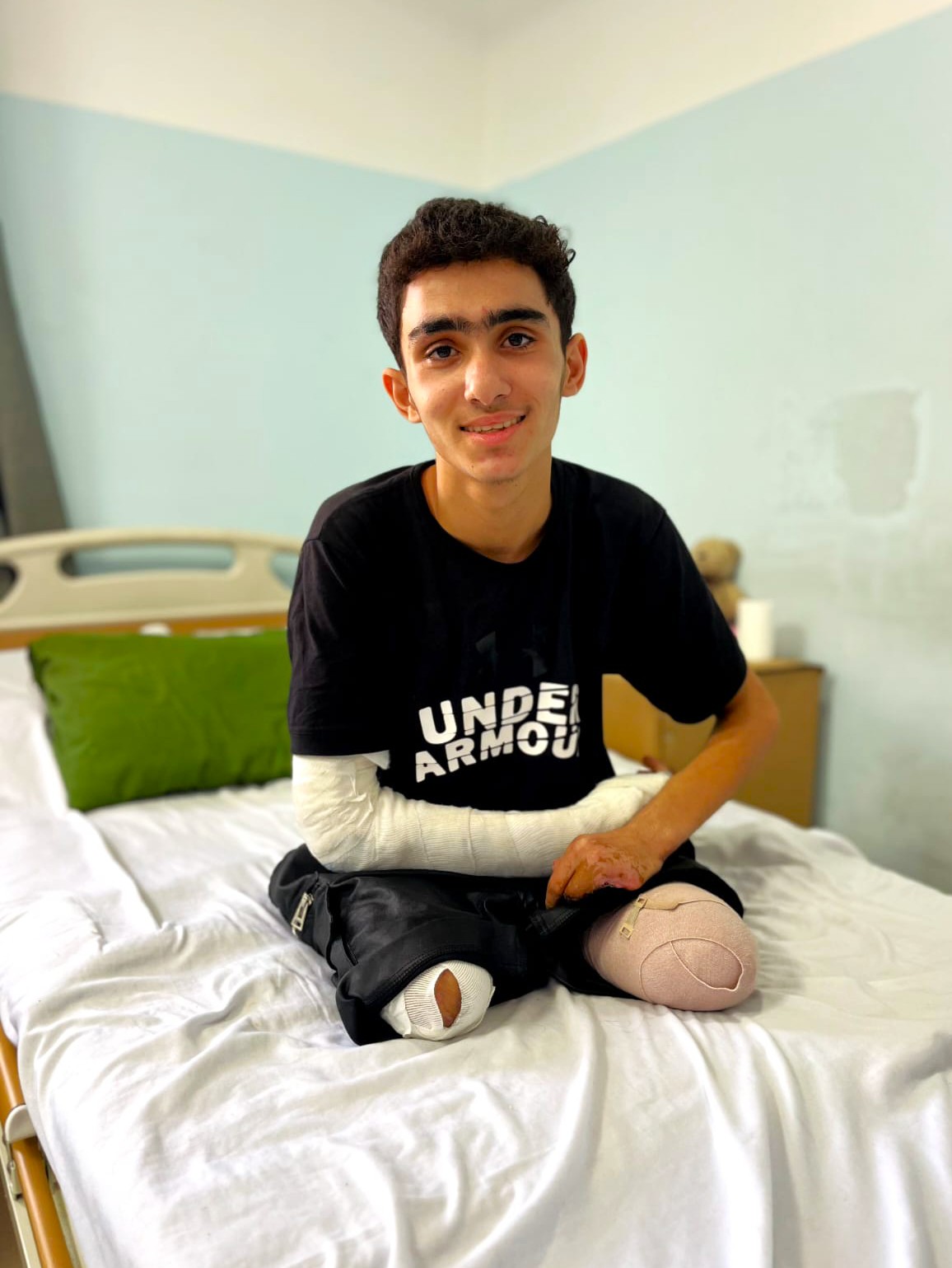
Before the war, I lived in Beit Lahiya with my father, ‘Abdallah al-Ghalban; my mother, Amneh Salem, 40, and my three siblings: my twin brother Muhammad, my sister Alaa, 19, and my brother Qusai, 14. We had to leave our house right at the beginning of the war and move to a-Nuseirat R.C. in central Gaza because the shelling intensified and the army ordered us to evacuate Beit Lahiya. We lived in a tent there for four months. Then we moved to the al-Mawasi area in Khan Yunis, and then to Rafah, where we stayed for another three months. In all these places, we lived in a tent that we would take down, carry and set up again each time. Life was very difficult. In the summer, we suffered from the heat inside the tent, and in the winter, it was freezing cold. There was barely any food or water. Every time there was shelling nearby, we were terrified.
After the army invaded Rafah and ordered us to evacuate, we went back to a-Nuseirat, set up the tent again, and lived in harsh conditions. There was shelling, and people were killed near us. I was really scared I’d get hurt, or die, or lose a family member. In January 2025, during a ceasefire, we returned to Beit Lahiya. Our house was partially destroyed, and what was left was burned. My father, Muhammad, and I cleaned the burned parts, and we stayed there for about 50 days. When the war resumed in March 2025, the army again ordered us to leave. We didn’t know where to go. Nowhere is safe in Gaza. At that point, my father was working in the south of the Gaza Strip, so my mother and I decided to leave.
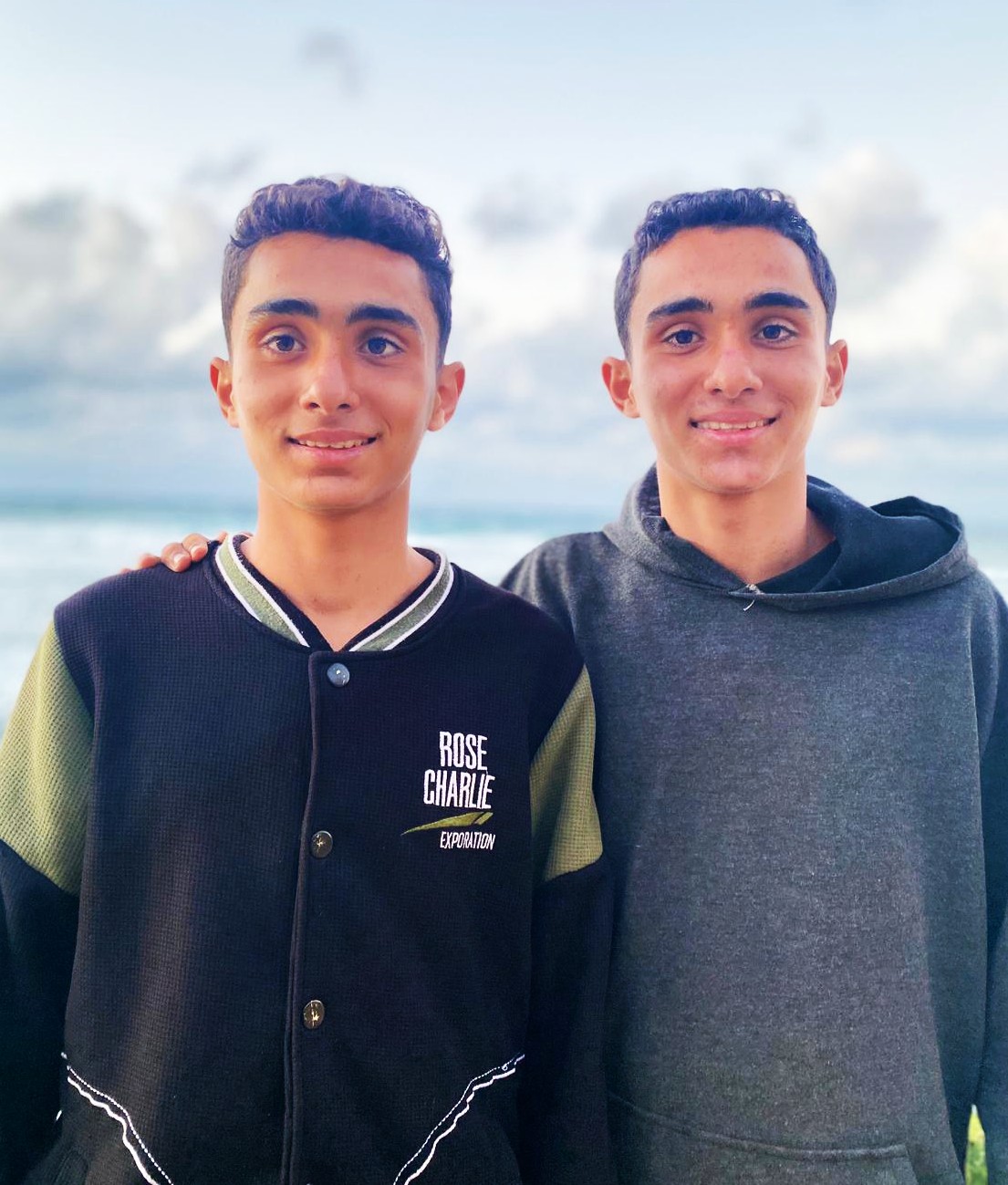
That was on 22 March 2025. We started packing up our things with my uncle Iyad Salem, 33, and his daughter Hibah, 6. Around 2:30 P.M., as we stepped into the street with our things, the army fired shells, and one hit us. I was seriously wounded. Muhammad was dying next to me, and my uncle Iyad was torn to pieces. Hibah, my mother, my sister Alaa, and my brother Qusai were about ten meters away. I lay on the ground, bleeding. I looked at my legs and couldn’t believe what I saw. I told myself, “This is a dream.” My mother screamed and called for help. Five minutes later, a man arrived, and when he saw we were still alive, he put Muhammad and me in a tuk-tuk and took us to the Indonesian Hospital, along with my uncle, my mother, and the others.
On the way, Muhammad recited verses from the Quran and the Shahadatain prayers [recited before death], but I didn’t realize he was taking his last breaths. At the hospital, I was taken into surgery right away. It lasted four or five hours. When I woke up from the anesthesia, I found out they had amputated both my legs and four fingers on my left hand. My right hand was also broken, and they put a metal implant in it. I had shrapnel all over my body. I stayed in the ICU for five days.
I didn’t know Muhammad had died. I kept asking about him, but my mother said he was hospitalized in critical condition at a-Shifaa Hospital. She was afraid to tell me because I was in a very fragile physical and mental state. I kept telling her, “I want to see Muhammad.” And every time I asked, “Why don’t you go visit him?” she said the doctors wouldn’t let her. After two weeks, when I was doing better emotionally, she told me Muhammad had died. I cried a lot because Muhammad was a friend, too. He was my twin brother. I couldn’t believe he was gone. I cried nonstop for five days. I never imagined I would lose him, or that I would lose both my legs.
I stayed at the Indonesian Hospital for nearly 20 days. Then I was transferred for one day to al-Quds Hospital in western Gaza for skin graft surgery on my legs. The next day, I was taken back to the Indonesian Hospital. My family was there with other IDPs. At that point, the army was surrounding the hospital. Tanks and robots began advancing, and the entire area was evacuated. Those were the hardest days and nights of my life. I was very scared and wanted to leave the hospital. My father decided to get me out, and my uncle took me. He walked, and I was in a wheelchair. I left my family under siege at the hospital and moved to western Gaza, living in a tent on the grounds of the destroyed Islamic University with some friends. I was away from my family for three days, speaking to them on the phone. There was constant shelling, and they were having a very hard time. After three days, my family joined me in the tent at the Islamic University. We are still here in the tent today, living in terrible conditions.
I’m still getting treatment at the Patient’s Friends hospital in the a-Rimal neighborhood. It’s really hard to get there because of the rubble and debris in the streets. My father tries to get me painkillers from the pharmacy, but they are very expensive. The hospital has no ointments or bandages. We buy everything ourselves. I suffer from severe pain, and I’m in bad shape emotionally. I’ve lost a lot of weight due to hunger. There’s no meat, no vegetables, no fruit, only lentils and chickpeas. To heal from my injuries, my body needs nutritious food. I spend my time in the tent on my phone, and sometimes my parents take me outside in the wheelchair. I live with deep sorrow and pain. I’m waiting for a ceasefire so I can receive treatment outside Gaza. Heal Palestine has contacted me and offered treatment outside the Strip and prosthetic fittings. I am waiting for the crossing to open or for the World Health Organization to coordinate for me to exit through Karam Abu Salem [Kerem Shalom Crossing].
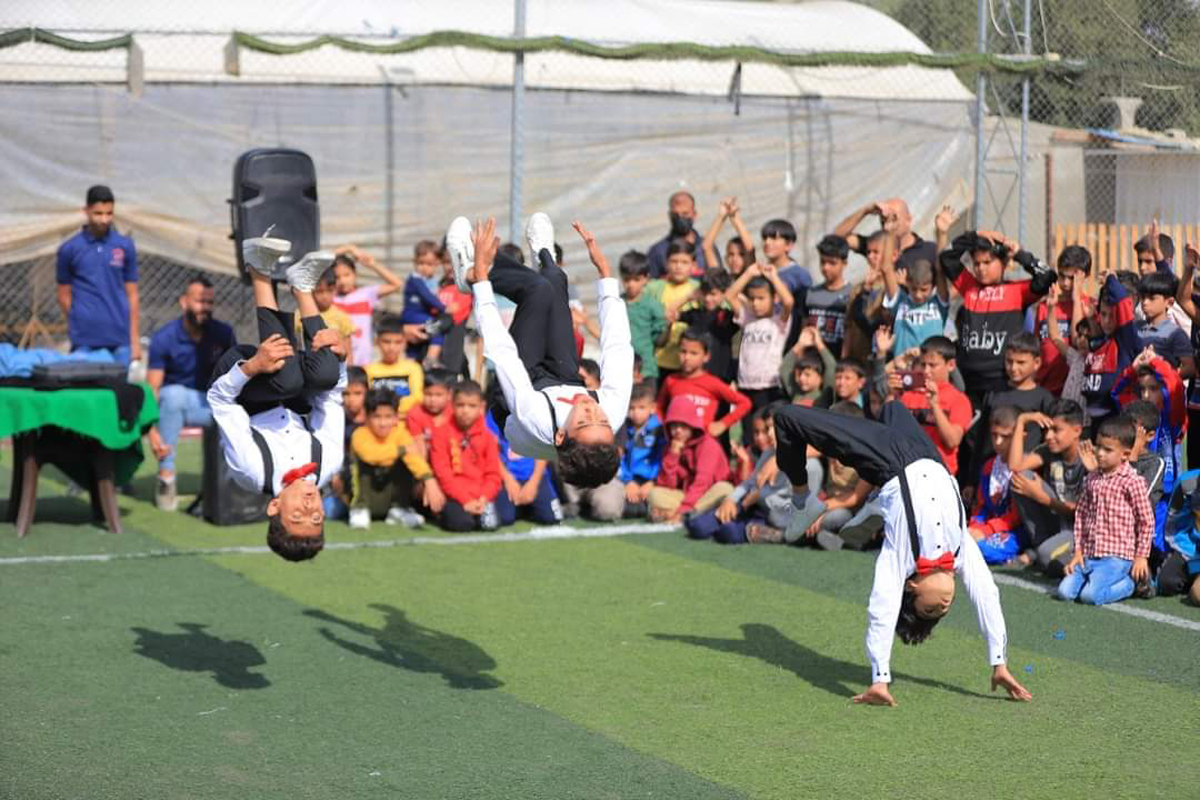
Before my injury, I was a professional gymnast. Muhammad and I competed in competitions and events. We were among the top in northern Gaza. But the occupation stole everything from me: my twin brother, my legs, my ability to do anything. My soul is broken. I’m just a kid; I was a danger to no one. I got hurt. I lost Muhammad and my uncle Iyad before my eyes. I’ll never forget it. I can’t stop thinking about what happened, the blood, Muhammad dying, my uncle’s dismembered body. All these images. I miss Muhammad. I wish he were here with me these days. I think about him all the time.
* Testimony given to B’Tselem field researcher Olfat al-Kurd on 1 June 2025