Israeli soldiers shot from inside armored jeep and killed a 15-year-old Palestinian who had tried to throw a stone at them from several dozen meters away
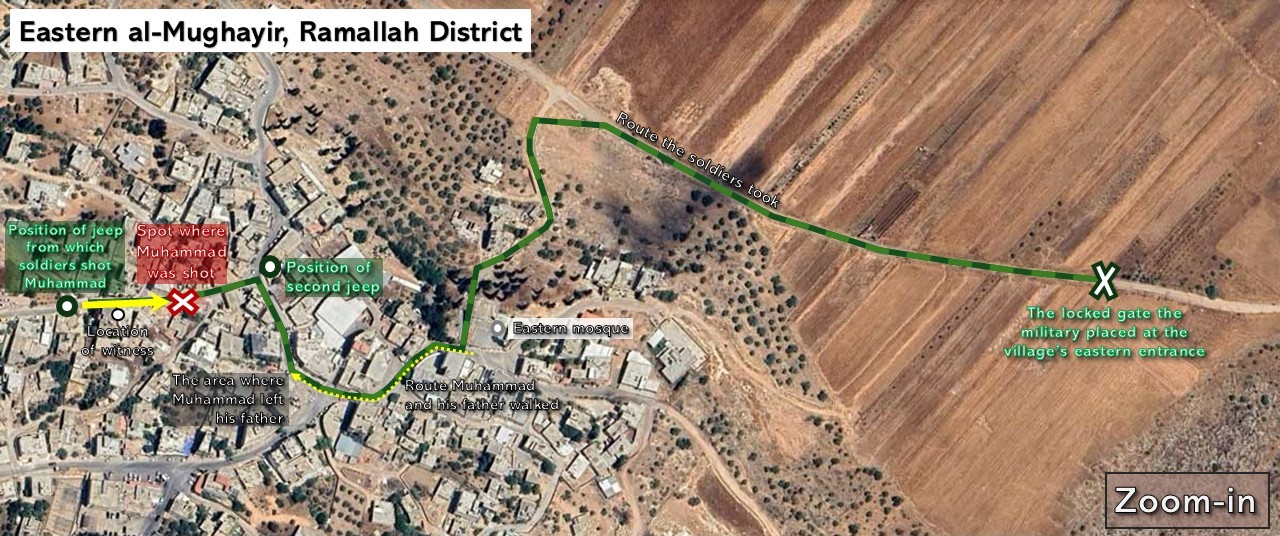
On Friday, 16 January 2026, at around 9:20 A.M., a group of Israeli settlers led a flock of sheep onto privately-owned Palestinian land on the southern side of the village of al-Mughayir, about 300-350 meters from the village homes. About 10 minutes later, residents arrived from the direction of the village and threw stones at the settlers to drive them away. A few minutes later, soldiers entered the village through the eastern entrance, which leads to Route 458 (Alon Road). The military blocked this entrance shortly before 7 October 2023, and it has since been used only by military forces. The force advanced to the area south of the village and moved both the settlers and the residents from the spot.
At around 10:45 A.M., while the settlers were leaving with the flock, another group of settlers arrived on motorcycles. Clashes soon broke out again, during which a resident fired fireworks at the settlers. The soldiers, who were still present, again drove both parties away. They then left the village through the gate at the eastern entrance.
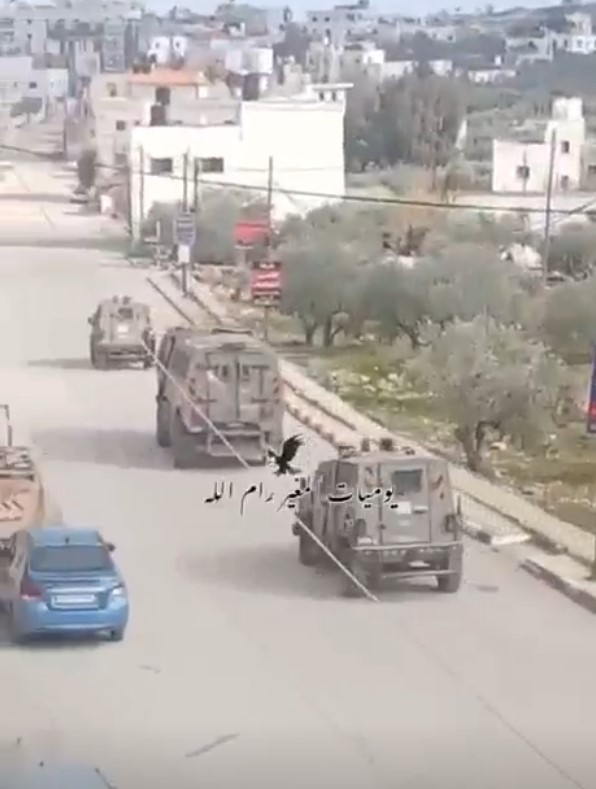
A short while later, at around 1:30 P.M., during Friday prayers, soldiers again entered the village through the eastern entrance. They threw stun grenades toward the eastern mosque in the village, while the area was calm and many residents were inside the mosque, praying. When the prayer ended and worshippers began leaving the mosque, three military jeeps drove past the entrance to the mosque, toward the center of the village.
Military jeeps entering the village. Used under section 27a
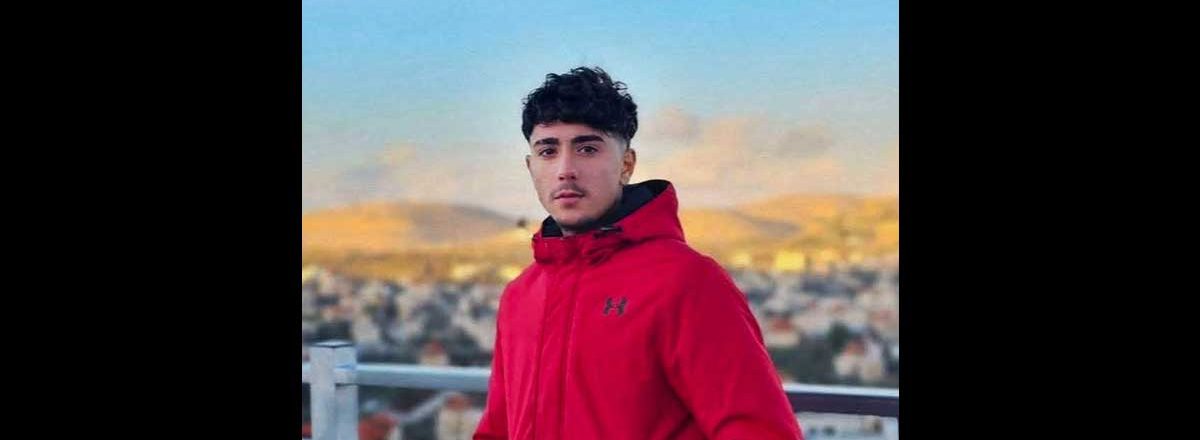
Muhammad Na’asan, 15, and his father, Sa’ed, who were among the worshippers leaving the mosque. They started walking home. When they had gone about 200 meters, Muhammad left his father’s side and went over to a group of children who were throwing stones at one of the jeeps. At around 1:30 P.M., when he was about 65 meters away from the jeep, he bent down to pick up a stone from the ground to throw. Just then, soldiers inside the armored jeep fired a single shot at him. The bullet hit the left side of Muhammad’s chest and exited through the left side of his waist, and he fell to the ground.
A volunteer paramedic from the village who lives near the spot where Muhmmad was shot took him in his car to a clinic in the nearby village of Khirbet Abu Falah, where he arrived with no vital signs. Attempts to resuscitate him there failed, and he was taken by ambulance to the Palestine Medical Complex in Ramallah. Resuscitation attempts there failed as well, and he was pronounced dead at around 2:00 P.M.
After the incident, the military blocked the western entrance to the village, which is the only one Palestinians are permitted to use. Forces raided the village, patrolled the streets, imposed a curfew and prevented Sa’ed Na’asan from bringing his son’s body back to the village until the evening, opening the entrance only at 8:00 P.M. Na’asan’s funeral was held the next day, 17 January 2026. During the funeral, the military again blocked the western entrance and arbitrarily chose which vehicles to allow through and which to block. Over the three days of mourning that followed, military forces raided the village several times, fired live shots and threw stun grenades and tear gas canisters at the hall where mourners gathered.
Over the past decade, al-Mughayir, like other villages in the area, has become a target for repeated settler and military attacks. Since 2006, B’Tselem has documented another 10 cases in which village residents were killed by Israelis. Six of them were killed by soldiers, two were shot by settlers, and two more were killed in incidents in which the shooters’ identity is unknown as both settlers and soldiers fired shots. In addition, since 2021, B’Tselem has documented dozens of settler incursions into the village. In the second half of 2025, the UN Office for the Coordination of Humanitarian Affairs (OCHA) documented 64 attacks on the village, including assaults on residents and damage to infrastructure and property. In many of these cases, soldiers safeguarded the settlers carrying out the attacks, actively participating in some. Last August, the Israeli military uprooted thousands of olive trees in the village in an official act of collective punishment, as expressly stated by the West Bank’s military commander, Avi Bluth, at the time.
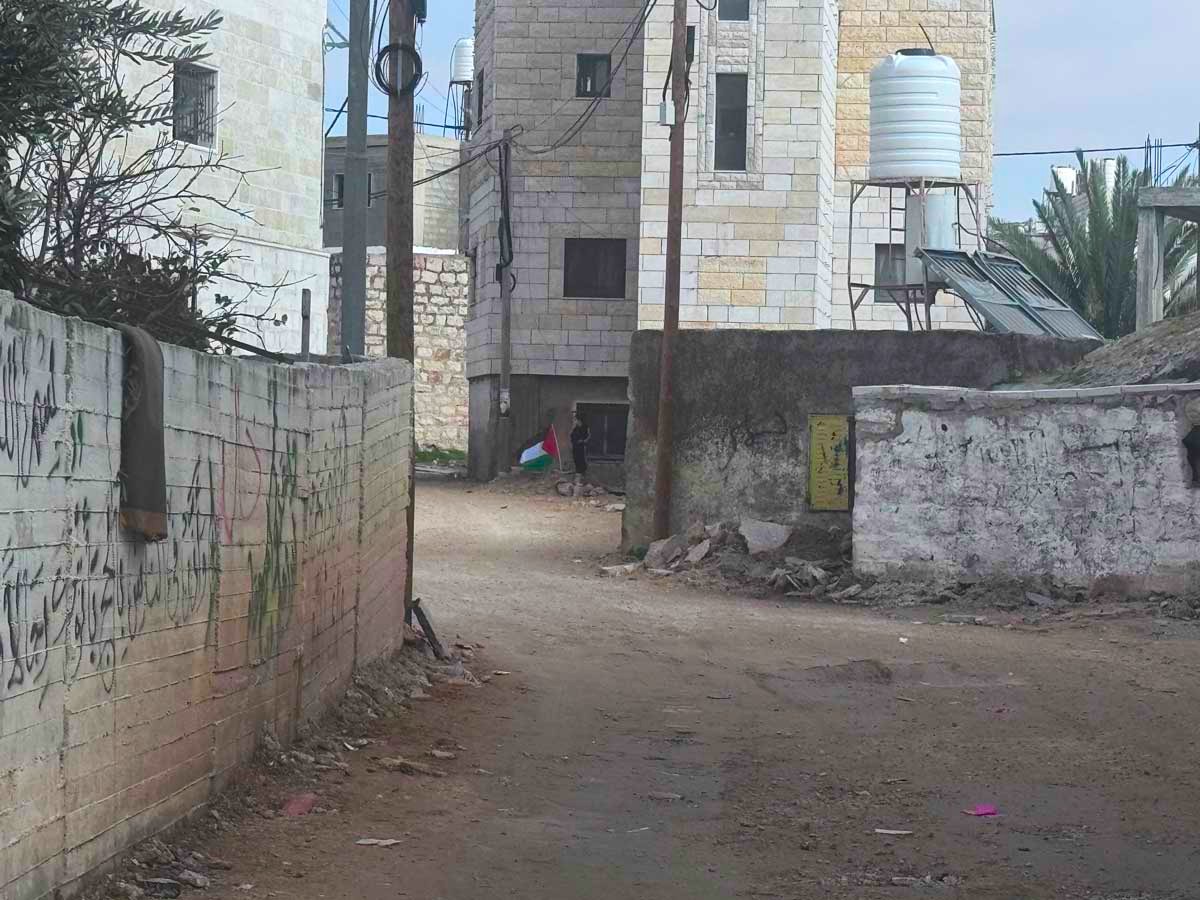
Location where soldiers shot Muhammad (marked with flag). Photo: Mohammad Romaneh, B’Tselem
In a statement the military issued following the incident in which soldiers killed Muhammad Na’asan, it said: “Today (Friday), IDF forces were deployed to the area of the village of al-Mughayir, in the Binyamin Brigade, following a report received retroactively regarding several terrorists who threw stones at Israeli civilians, set tires on fire and blocked the access road to the area. Upon the forces’ arrival, a report of gunfire directed at the Israelis was received. There were no casualties in the incident. When the forces arrived in the area, dozens of stone-throwing terrorists were identified, including one terrorist who was running toward the forces with a rock. In response, the forces fired several shots in the air and then fired to eliminate the danger and killed the terrorist holding the rock. IDF forces continue to search the area and are blocking and encircling the village of al-Mughayir in order to apprehend the suspects in the shooting.”
Yet the only fire from Palestinian was fireworks, and in any case, it occurred more than two hours earlier. In addition, at the time Na’asan was shot, he was dozens of meters away from the soldiers, who were inside an armored vehicle, and the claim that they were in any danger is utterly unfounded.
B’Tselem field researcher Mohammad Romaneh collected the testimonies:
M.L., a resident of the village, related in his testimony:
On Friday, 16 January 2026, I found out from social media that settlers had arrived in the early morning in the al-Khalayel area, near the Abu Humam family’s residential compound, and tried to prevent the family members from reaching the compound in their car. Later, there were reports that the settlers had called in occupation military and police forces, and they removed international activists who supported the family from the area and arrested a Jewish activist.
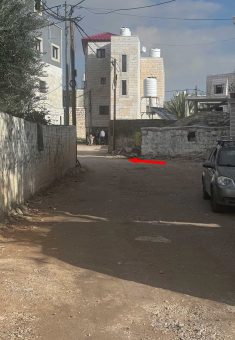
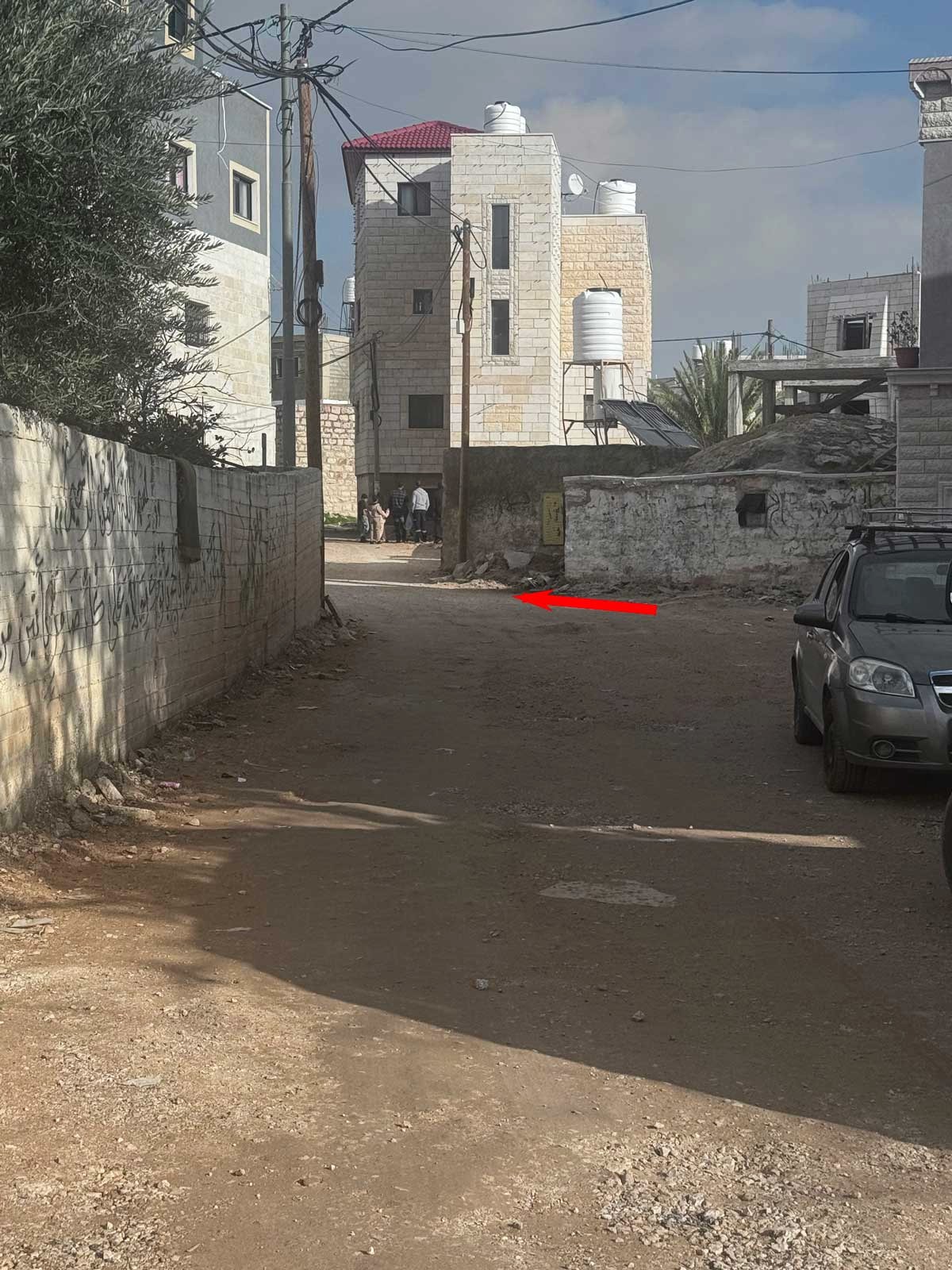
View from the location of the jeep from which the soldiers fired toward the spot Muhammad was shot. Photo: Mohammad Romaneh, B’Tselem
I understood that the military stuck around for a long time, even though the settlers withdrew, and at around 10:30 A.M., an update came in that settlers were again in the al-Khalila area, south of the village. I went out and walked over to a nearby spot overlooking the al-Khalila area. Several young men from the village were standing in a spot overlooking the southern part of the village. When I arrived, I saw a group of settlers riding around on motorcycles in the hilly area south of the village. At the same time, a group of young men from the village approached the area where they were, and one of them fired fireworks at them. Then, reports came in that military forces had raided the village through its eastern entrance.
As soon as we found out that the military was in the village, I started going back towards the village home with the other young men and residents who were there. On the way back, I saw three military vehicles driving through the village streets, and then I saw updates that they had driven to the southern part of the village and driven the young men away from there, and then the settlers on the motorcycles also left. A short time later, there were reports in the news group that the forces that raided the village left through the eastern entrance.
By that point, it was almost time for Friday prayers. I got ready to go to the eastern mosque in the village, even though I could hear explosions from my house that sounded like stun grenades. I drove to the mosque in my car, like I do every Friday. When we finished the prayer and left the mosque, I saw an occupation army vehicle passing in front of the mosque and driving toward the center of the village. I immediately went over to my car and started driving home along a road that passes between village homes and several shops, and then I remembered that my wife asked me to buy some groceries.
I stopped and turned the car around to go back to the shops, and then, when the front of my car was facing back toward the mosque and Abu Nader’s grocery store was a bit behind me, a military vehicle suddenly stopped about 30 meters behind me, and another one stopped farther down the street where I stopped.
As I was sitting there in the car, I saw a group of children. Some of them were playing, and some were throwing stones at the military vehicle that was standing behind me. I saw a boy trying to pick up a stone from the ground, and as he bent down to pick it up, I heard live ammunition being fired. I think there was only one shot. I didn’t see any of the soldiers get out of the military vehicles, neither the one behind me nor the one in front of me.
Right after I heard the gunfire, I saw the boy who had tried to pick up a stone fall to the ground. The rest of the children fled, and the military vehicle in front of me drove away, and then I saw someone come out of the house next to where the boy had fallen and go over to him. Then a few more people arrived, and together they picked the boy up and put him in a private car that drove toward the village’s main road. In the meantime, I also saw the military vehicle that was behind me drive away.
H.S., a paramedic and resident of al-Mughayir, related in a testimony he gave on 17 January 2026:
On Friday, 16 January 2026, at around 12:40 P.M., I went to the main mosque near my house for Friday prayer. After I finished the prayer, I went home, at around 1:20 P.M. When I got home, reports started circulating in the village’s social media groups that Israeli occupation forces had entered the village through the eastern entrance, which has been closed with an iron gate for more than two years. About five minutes later, residents began reporting that the occupation forces had reached the center of the village, and about five minutes after that, I suddenly heard live fire. It was only a single shot, and the sound was very close to our house. Then reports started coming in on the group that someone had been injured. Less than a minute later, my son Ahmad, 5, came into the house and started shouting: “They shot a kid!” When I asked him what he meant, he said that there was an injured child in front of our house.
I went outside right away, and the neighbors started shouting: “Don’t come closer! The military is there!” I looked ahead and saw an Israeli military vehicle parked about 60–65 meters west of my house. From where I was standing, I didn’t see any soldiers and didn’t know where they were, but I went out anyway. I saw a boy lying on the ground on his right side, near the northern wall of our house. He was bleeding, but not heavily. I immediately picked him up with the help of three other young men, and we put him in my car to take him to the clinic in the neighboring village of Khirbet Abu Falah, because we don’t have a clinic in our village.
I started driving toward the street where the boy had fallen, but then I remembered that a military vehicle was standing there, west of my house, so I backed up and drove along a street that leads to the village’s main road, and from there to the western entrance to the village. When I reached an intersection near the village gas station, a military vehicle tried to pull into the road and block my way, but I drove fast and managed to get around it, and then I came across another military vehicle that had arrived from the western entrance and was heading toward the center of the village. I slowed down until I passed it, and then I sped up again.
On the way to the clinic in Abu Falah, the boy started making death rattles. When I picked him up in front of my house, he showed no signs of life at all. So after he started gasping, I sent a message to the group of Civil Defense and first aid coordinators in the villages around eastern Ramallah, describing the boy’s injury: a bullet that entered from the left side of the chest and exited from the left side of the waist, a narrow entry wound and a wide exit wound. I sent the message to ask ambulances that were near the clinic in Khirbet Abu Falah to go there so the boy could be taken to the Palestine Medical Complex in Ramallah.
When I arrived at the clinic in Khirbet Abu Falah, I helped the medical team in their attempts to resuscitate the boy and give him first aid. But despite all our efforts, his body no longer responded. Afterwards, an ambulance from the Silwad municipality arrived and took him to the medical center in Ramallah. Less than five minutes after he arrived there, the Palestinian Ministry of Health officially announced that the boy had died of his wounds. It’s worth mentioning that he also had several scratches on the right side of his face, likely from his fall when he was hit by the gunfire.
When the boy, Muhammad Na’asan, was shot on our street, my son Ahmad, who is only 5 years old, was playing right in front of the house. He was very close to Muhammad Na’asan when he was shot, and when he came into the house and told us that a boy had been injured and fallen to the ground, he was terrified. This is the daily reality in our village. The village is attacked at least three times a day by settlers or soldiers, and all the village children are exposed to these incidents.
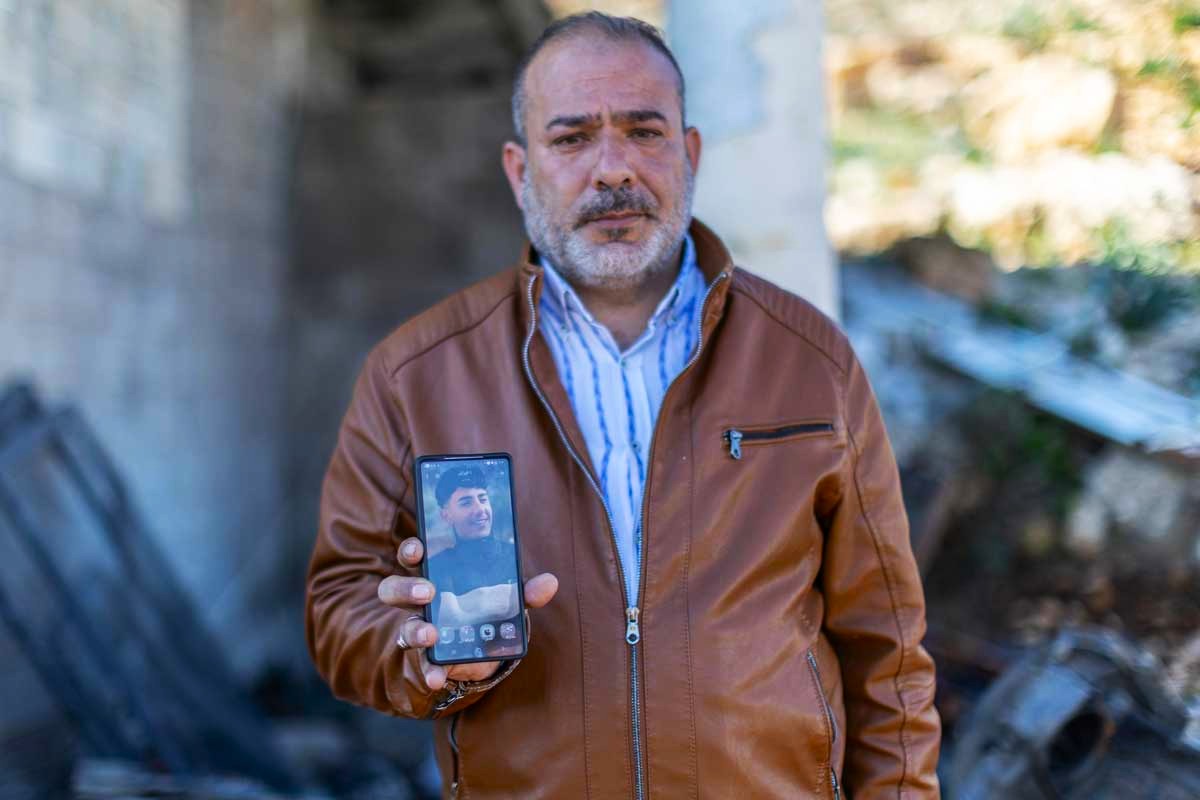
Muhammad’s father, Sa’ed Na’asan, 43, a father of six, related on 21 January 2026:
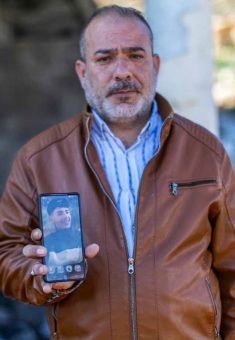
Sa’ed Na’asan with a photo of his son. Photo: Avishai Mohar, B’Tselem
I work at al-Quds Open University in Ramallah. Three of my children are still minors, and Muhammad was the eldest of them.
On Friday, 16 January 2026, like every Friday, we woke up and had breakfast. Later on, Muhammad and I started getting ready to go to Friday prayer at the mosque on the eastern side of the village, and we headed there.
We arrived at the mosque at around 12:30 P.M., but shortly after we started praying, I started hearing stun grenades. I assumed that the occupation forces raided the village, as they’ve done during Friday prayers in the past. The explosions were continuous and close by. As soon as we finished the prayer and left the mosque, I saw three military vehicles speeding past. After they passed the mosque, they turned toward the old part of the village.
Muhammad and I left the mosque and walked about 200 meters, and then Muhammad wandered off from me without my noticing. After a minute, at most, I heard live fire, followed by young men and children shouting: “Sa’ed’s son’s been shot!” I immediately understood that Muhammad had been hit by occupation army gunfire and ran toward the place the voices were coming from. When I got there, I was told that young men from the village had taken Muhammad in their car to a clinic in Khirbet Abu Falah.
I went to the clinic with a friend who happened to pass by in his car. When we arrived, I found out that my son was already dead, but I couldn’t believe it. A few minutes later, an ambulance from the Silwad municipality arrived. We put Muhammad in it and drove to the Palestine Medical Complex in Ramallah.
When we got there, the doctors tried to resuscitate Muhammad but couldn’t. The medical staff pronounced him dead about ten minutes after we arrived, maybe less. The bullet that hit Muhammad entered from the left side of his chest and exited from the left side of his lower back. The injury was fatal, and later I realized that he had died on the spot. We tried to bring his body back to the village so we could bury him that same day, but the occupation army closed the western entrance, the village’s only entrance, and prevented all residents from entering, and at the same time, soldiers raided the village again. Meanwhile, residents of Khirbet Abu Falah hosted us in a guesthouse that belongs to their village, and we had to place Muhammad’s body in a refrigerator there while we waited for the entrance to al-Mughayir to reopen. At around 8:00 P.M., we were informed by the Palestinian DCO that the occupation soldiers had reopened the village’s western entrance, so we drove back there, but we decided to leave Muhammad’s body and bury him the next day.
On Saturday, 17 January 2026, at around 11:00 A.M., we brought my son’s body to the village. The occupation soldiers set up a checkpoint at the village’s western entrance again. They prevented some vehicles from passing and allowed others through. They took down the checkpoint only after the funeral procession ended.
During the three days of mourning, the occupation forces raided the village every day, fired live rounds and threw stun grenades and tear gas canisters at the hall where the mourners were gathered. The bullets hit the walls of the hall and forced us every day to clear out two hours earlier than the usual time. On the second day of mourning, they also fired live rounds at young men and children who were outside the hall, near the main street of the village.
I still can’t believe that my son is dead. I’m still in shock. Muhammad was a very sociable boy, and he was loved in the village. He was a regular kid who dreamed of going to live in the United States with his older sister, but the occupation military’s bullets took him away from me and took his dreams away from him.
Since he died, my wife has been suffering from palpitations and has trouble sleeping, and Muhammad’s younger siblings can’t sleep in their room anymore and sleep between my wife and me. One of my sons is so scared he’s started wetting the bed.
Israel’s regime of apartheid and occupation is inextricably bound up in human rights violations. B’Tselem strives to end this regime, as that is the only way forward to a future in which human rights, democracy, liberty and equality are ensured to all people, both Palestinian and Israeli, living between the Jordan River and the Mediterranean Sea.
Since the Hamas attack on 7 October 2023, Israel has acted in a coordinated and deliberate manner to destroy Palestinian society in the Gaza Strip, committing genocide against its residents. In light of Israel’s actions in Gaza, the public statements made by Israeli decision-makers, and the international community’s failure to take effective action, there is a serious risk that the Israeli regime will expand the genocide to other areas under its control—first and foremost, the West Bank.
B’Tselem calls on the Israeli public and the international community to use every tool available under international law to bring an immediate end to Israel’s genocide against the Palestinian people.