On Tuesday, 27 January 2026, at around 6:00 P.M., three military jeeps drove along a road near the old Halal market in the town of a-Dhahiriyah, Hebron District. Soldiers who got out of the vehicles set up an ambush in a yard with olive trees on one of the streets in the area. At about the same time, Muhammad Nasrallah, 17, and his cousin Hassan Nasrallah, 18, left to visit a friend who lives near the market. At around 8:00 P.M., they decided to go to Muhammad’s house. The two went their usual route, taking a shortcut via a dirt path, which ends at a stone wall separating it from the road. According to Hassan Nasrallah, the two did not know there were military forces in the area and did not see the soldiers, who were hiding among the olive trees on the other side of the street.
Muhammad was first to climb over the stone wall, which is about three meters tall on the side of the dirt path and about one meter on the side of the street. According to testimonies collected by B’Tselem, as he was climbing, three or four shots were fired at him. One of the bullets struck him in the left side of the abdomen, and he fell on Hassan, who was still on the other side of the wall. Muhammad told Hassan that he had been wounded, but when Hassan lifted his shirt, he did not see the injury or any bleeding. Hassan tried to pull Muhammad up, but a soldier standing on the other side of the wall aimed his weapon at him and shouted at him. Knowing he would not be able to carry his cousin and fearing that the soldiers would shoot him too, Hassan ran toward the field. As he fled, the soldiers fired about eight shots at him, by his estimate, and two bullets hit his right leg. Despite his injury, he managed to escape into a nearby house. The occupants called in a local doctor, who bandaged Hassan’s leg, after which they took him to a hospital in the town. From there, he was transferred to ‘Aliya Hospital in Hebron.
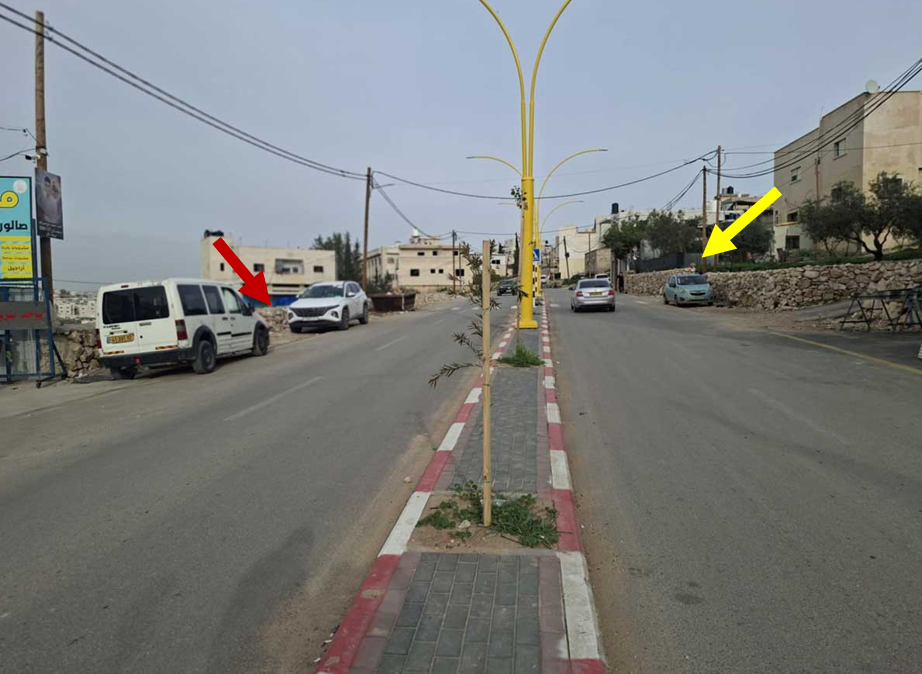
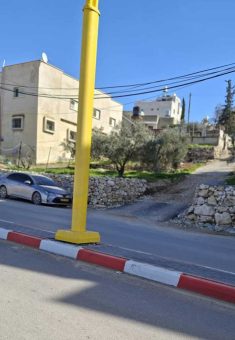
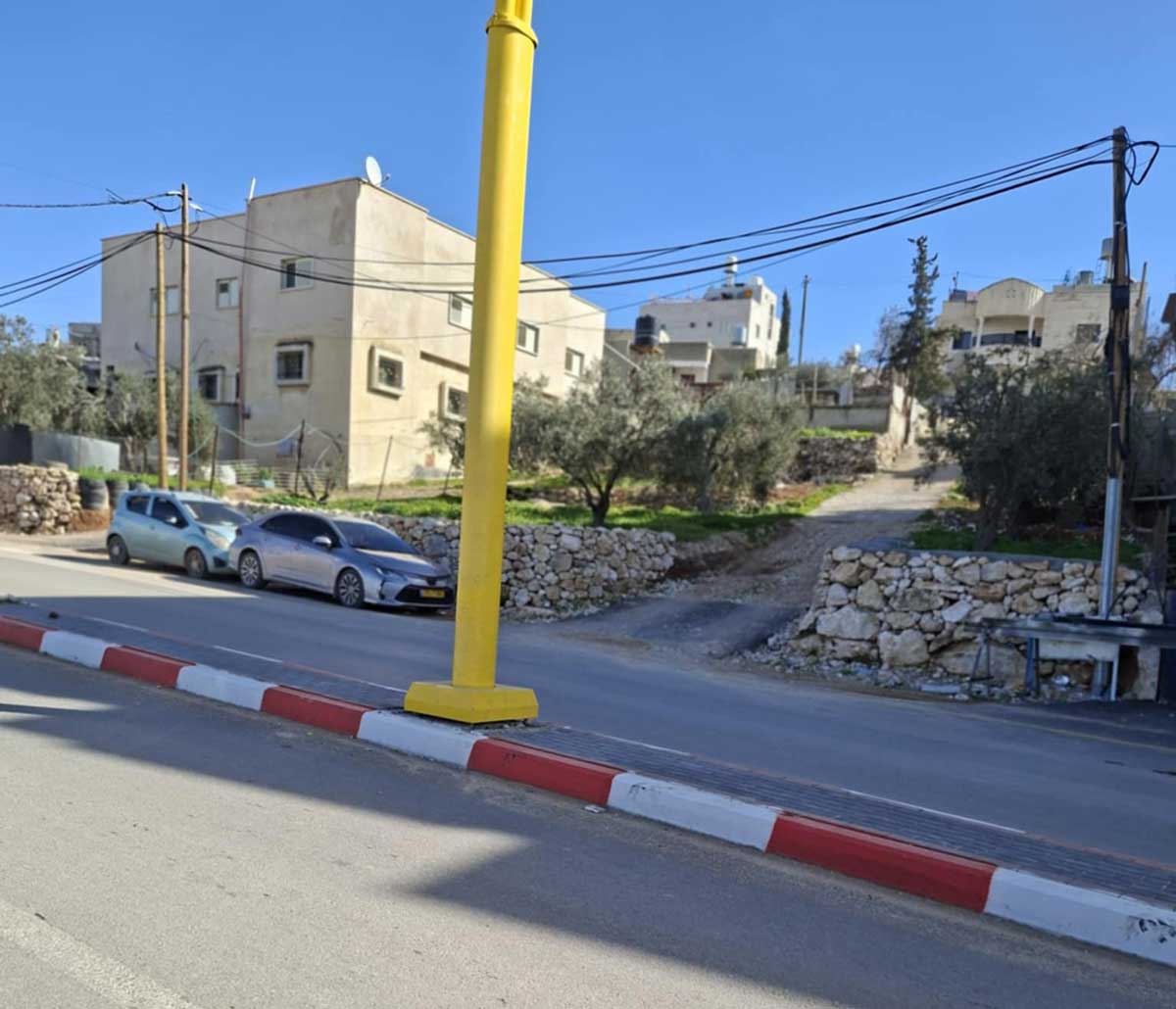
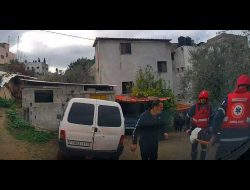
Right: The olive trees behind which the soldiers lay in ambush. Left: The wall Muhammad Nasrallah climbed. Photo: Manal a-Ja’bari, B’Tselem
A little after 8:00 P.M., a Red Crescent ambulance arrived at the scene. The soldiers aimed their guns at the crew and ordered them to turn off the siren and approach Muhammad slowly. The driver got out of the ambulance first and climbed over the wall to reach Muhammad and give him first aid, while the paramedic brought a stretcher and other equipment from the ambulance. She asked for the soldiers’ help to transfer the stretcher and equipment over the wall, but they refused. Later, after the two paramedics had passed the equipment over and put Muhammad on the stretcher, they again asked the soldiers for help several times, until they finally relented and helped carry the stretcher over the stone wall. The paramedics rushed Muhammad to the medical center in a-Dhahiriyah, and from there he was transferred to the government hospital in Dura. He was taken into the operating room, but at around 10:00 P.M., the doctors were forced to pronounce him dead.
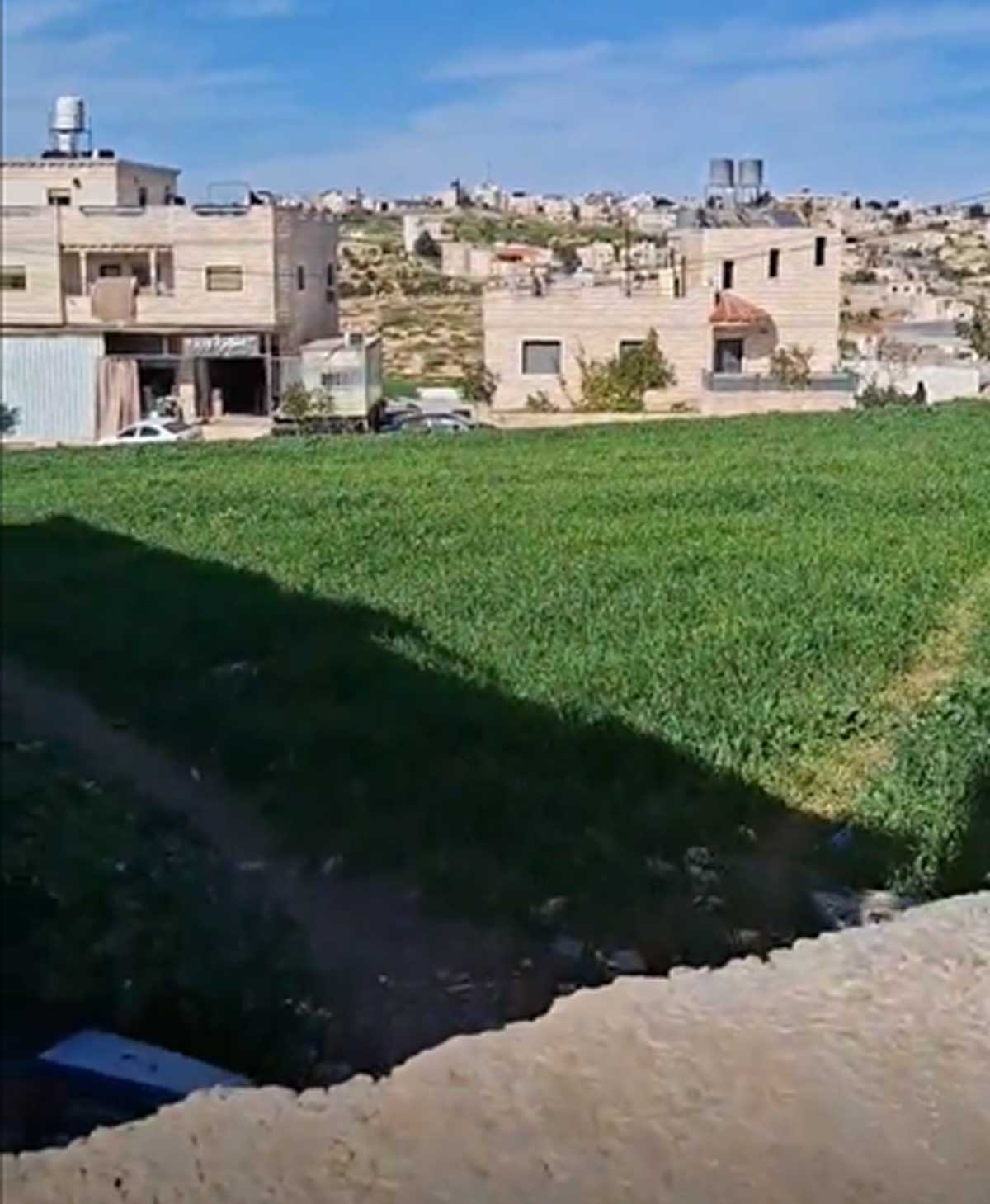
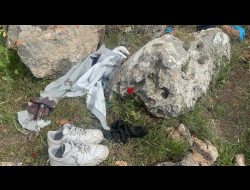
The dirt path Muhammad and Hassan walked along, and the wall Muhammad was climbing when he was shot. Photo: Manal a-Ja’bari, B’Tselem
The military claimed that “during an operational activity by IDF forces in the Dhahiriyah area of the Yehuda Brigade, the forces identified a terrorist throwing a Molotov cocktail at them. The fighters responded with live fire and killed the terrorist. In addition, another terrorist who threw stones at the forces was detected. The fighters responded with live fire, and a hit was identified. There were no casualties among our troops.” This claim is not only unfounded, as B’Tselem’s investigation indicates, but also illogical, because Israeli vehicles do not travel on this street at all and because the two were unaware of the soldiers’ presence in the area.
This incident illustrates how the Israeli military continues to raid Palestinian communities, put civilians in danger without any justification, shoot pursuant to a reckless open-fire policy that enables the killing of Palestinians, including children, even when they pose no danger, and cover up such killings with false allegations that the victim was a “terrorist” who posed a threat to the forces.
B’Tselem field researcher Manal a-Ja’bari collected the testimonies:
Hassan Nasrallah, 18, related on 5 February 2026:
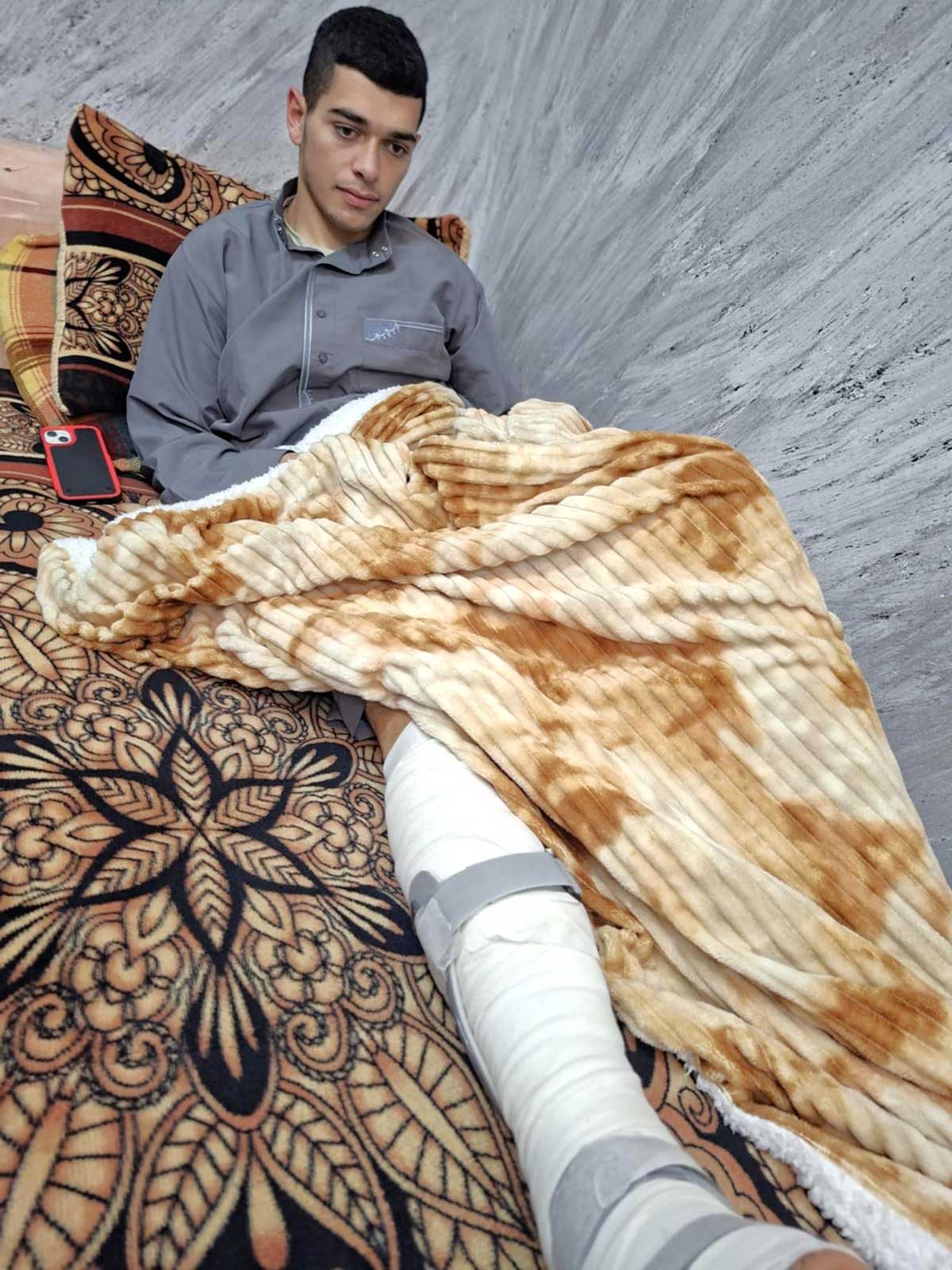
Hassan Nasrallah at home after the injury. Photo: Manal a-Ja’bari, B’Tselem
I live in the Karam al-Ashqar area, southwest of the town of a-Dhahiriyah, with my parents and my brother Baraa, 25. I finished tenth grade in 2022 and then dropped out to join my father and learn car upholstery.
On 27 January 2026, at around 6:30 P.M., my cousin Muhammad, 17, came to my house, and we decided to go to our friend who lives near me. Afterwards, at around 8:00 P.M., we decided to spend the rest of the evening at Muhammad’s house.
We took the shortcut we always use when we visit each other, a dirt path that leads to the old Halal market. We didn’t know the Israeli military was raiding the town.
When we got to the wall that separates the dirt path from the street, Muhammad climbed it first, and then I heard gunfire, and he fell on top of me. He said to me, “I think I’ve been hit, lift my shirt up.” I lifted his shirt, but couldn’t see where he was hurt. I tried to lift him up, and then I saw an Israeli soldier behind the wall, aiming his rifle at me and yelling at me. I couldn’t lift Muhammad. He slipped from my hands.
I started running away, but the soldier shot me. I was hit by two bullets in my right leg, one below the knee and the other in the middle of the leg. Both bullets went through the muscle and exited on the other side. Luckily, they didn’t hit the bone.
I managed to run into one of the nearby houses. The people living there called a doctor who lives close by. He bandaged the wound and stopped the bleeding. Afterwards, the people from the house took me to the Red Cross hospital in the town, and from there I was transferred to ‘Aliya Governmental Hospital in Hebron, where they ran tests and X-rays that confirmed two bullets had gone into my right leg.
I didn’t find out Muhammad was killed and that the Israeli army said he threw a Molotov cocktail at the soldiers until after midnight. That claim is completely baseless. The soldiers were simply startled by Muhammad when he climbed the wall, while they were hiding among the olive trees on the other side, and they shot him for no reason. We had no idea there were soldiers there.
The next day, I had surgery on my leg, and I stayed at ‘Aliya Hospital for eight days. I was discharged two days ago, but I’m still getting treatment at home. I’m still in shock from the incident and can’t find any reason why the soldiers shot us, especially since there were no clashes in the area at that time.
Muhammad’s father, Rajeh Nasrallah, 49, father of seven, related on 5 February 2026:
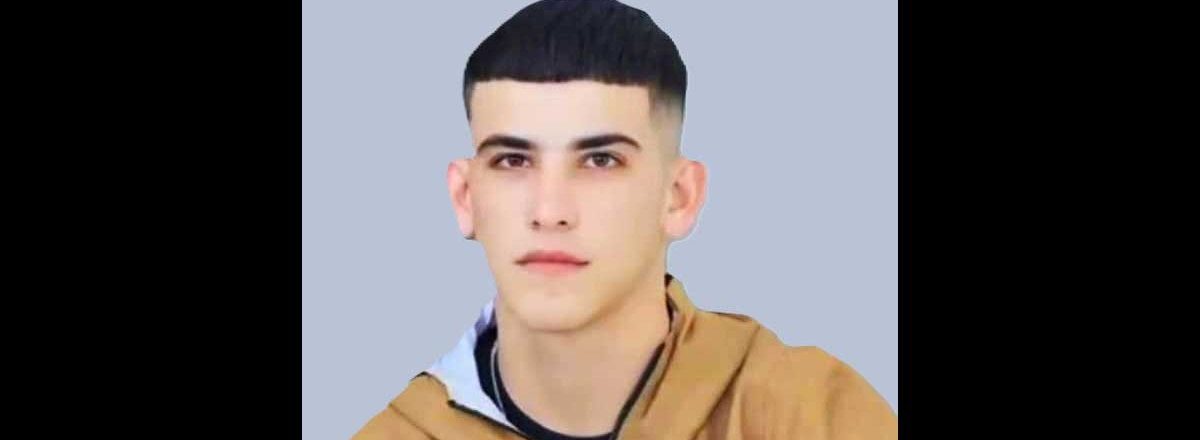
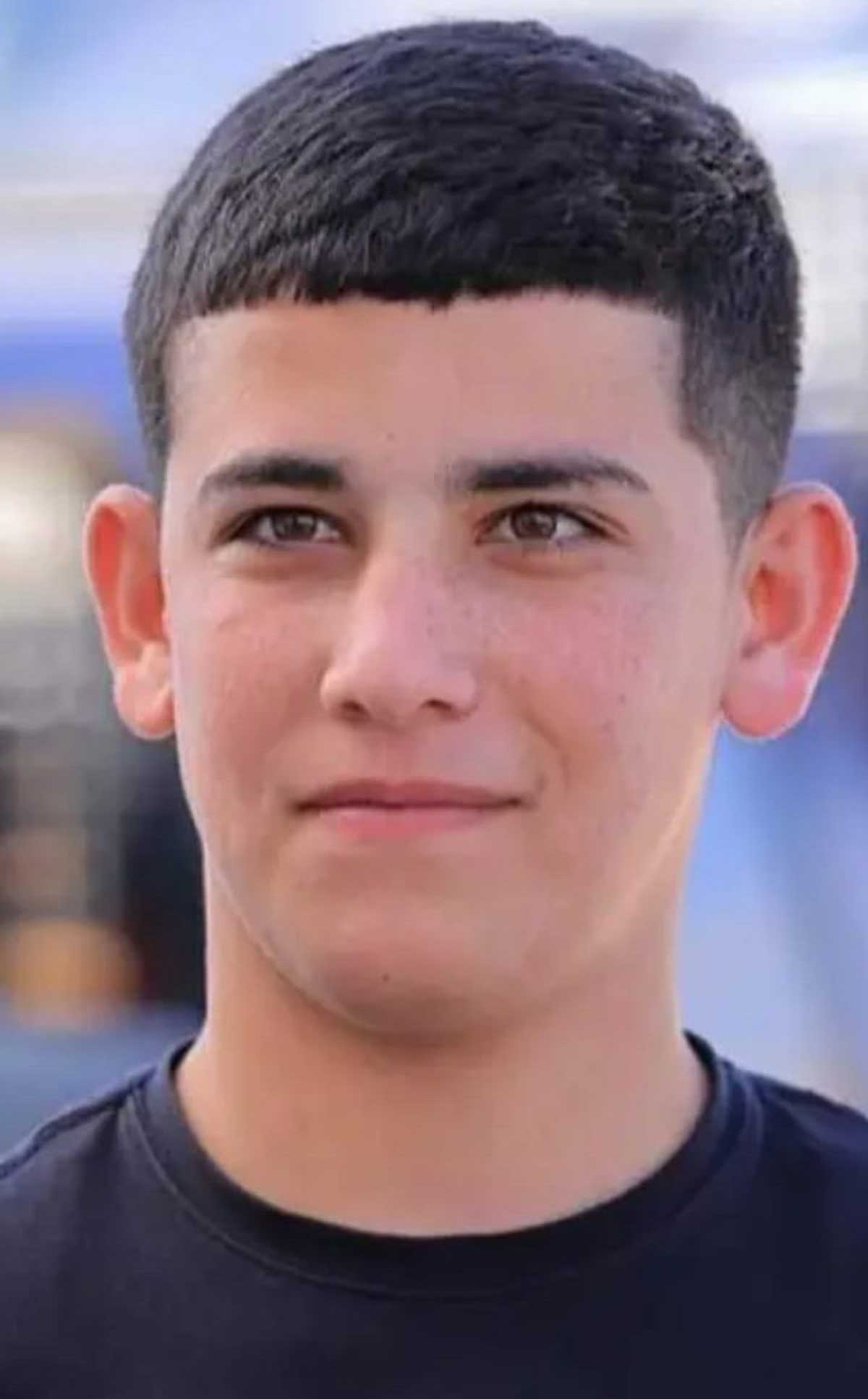
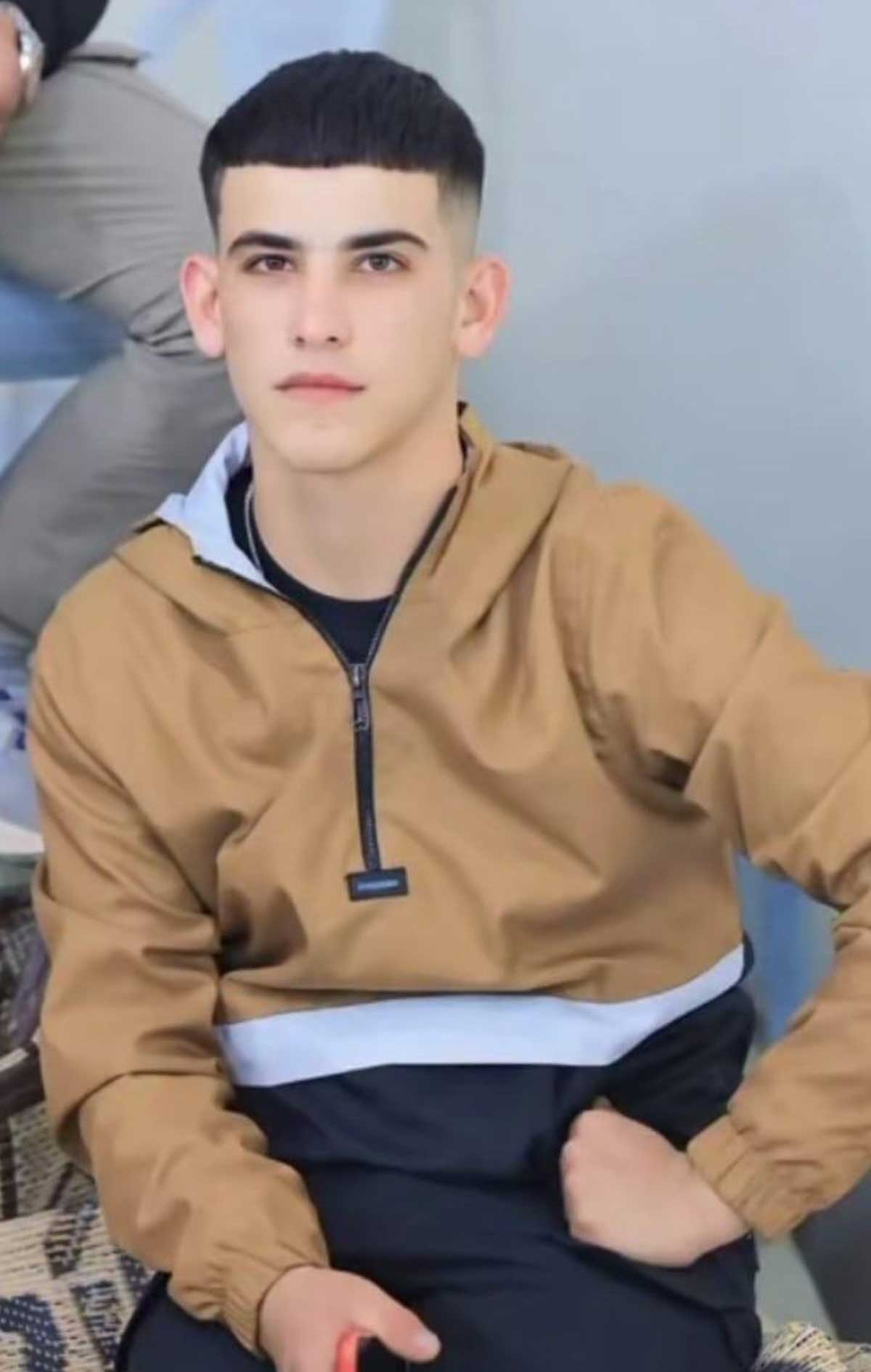
Muhammad Nasrallah. Photo courtesy of the family
I live in the ‘Aqbat a-Tarshah area (the old Halal market) in the town of a-Dhahiriyah, with my wife and our seven children, including Muhammad, 17, who was the middle son in the family. Muhammad dropped out this year and started working in the car upholstery business with his cousin.
On 27 January 2026, at around 6:00 P.M., we had dinner at home, and afterwards Muhammad went to his uncle’s house in the Karam al-Ashqar area, about 300 meters from our house, to hang out with his cousins, as he usually did. I rested at home after dinner, and after about an hour and a half, I went out to the market to buy vegetables.
When I got to the greengrocer’s stand near the old Halal market, while I was choosing vegetables, three Israeli military jeeps suddenly drove in. I stopped and watched them for about 20 minutes, and then the jeeps left the area, and I thought all the forces had withdrawn. A few minutes later, I heard gunfire, about four single shots, followed by another burst of about eight bullets. I realized then that the jeeps also had ground forces with them that had set up an ambush in the area. The soldiers closed off the area, and I stood by the greengrocer’s stand watching what was happening.
Right after the shooting, a Palestinian ambulance arrived, and the crew said they had received a report of casualties. I saw from a distance the medical crew carrying a wounded young man, who had been behind the wall, toward the sidewalk. The soldiers helped them put him on a stretcher, and they evacuated him from the area. It took about 15 minutes.
A paramedic in the crew that evacuated Muhammad Nasrallah related on 8 February 2026:
The olive trees behind which the soldiers lay in ambush. Photo: Manal a-Ja’bari, B’Tselem
On 27 January 2026, at around 8:00 P.M., we received a report at the dispatch center about gunfire in the area of the old market (‘Aqbat a-Tarshah). My colleague, A., a paramedic, and I drove there in an ambulance and arrived in less than a minute, because the dispatch center is no more than 200 meters away.
When we arrived, the Israeli military closed off the area and prevented civilians from reaching the casualties. We didn’t see the wounded, but we knew from residents that there were two injured people in the area. As soon as we arrived, the soldiers aimed their rifles at us, and one soldier came over to the ambulance. A. tried to step out of the ambulance to speak with the soldiers, but the soldier aimed his rifle at him and ordered him to get back into the ambulance and turn off the siren. A. complied with the soldier’s order, and then he allowed us to proceed slowly. We drove forward until they stopped us again, about 20 meters away from the wounded man, who was behind the stone wall. There were several soldiers in the area, and they were aiming their rifles at us. I was afraid they’d shoot us.
A. and I got out of the ambulance, and A. rushed over to where the soldiers pointed. He asked me to bring the stretcher and equipment from the ambulance. He climbed the wall, which is about a meter high on the side of the road and about three meters on the other side. When he got to the other side, he saw a wounded young man lying on the ground, still alive. I rushed back to the ambulance and tried to lift the equipment and the stretcher, but they were heavy, and I couldn’t lift them alone. I asked the soldiers for help, but they refused. In the end, I managed to bring the equipment, but I couldn’t climb the wall to help A. or pass the stretcher down. I asked the soldiers to help me again, but they ignored me. I kept lifting and pushing the stretcher until I reached A., but he couldn’t lift the stretcher with the wounded man on it by himself. He asked the soldiers to help him, but again they refused. In the meantime, A. tried to give first aid to the wounded man, who still had a pulse at that point.
About three minutes later, the officer who was there finally ordered two soldiers to help A. lift the stretcher and transfer the wounded man to the ambulance. We drove as fast as we could to the nearest medical center in town, knowing his condition was very serious. We reached the al-Hakim Center downtown, where an internal medicine doctor examined him and decided to rush him to the government hospital in the town of Dura. The doctor rode with us in the ambulance to the hospital in Dura. When we arrived there, the wounded man was still alive, but by the time we reached the emergency room, his heart had already stopped. The doctors tried to resuscitate him and then quickly transferred him to the operating room, but about half an hour later, they had to pronounce him dead.
While we were at the scene, we understood from the soldiers that there was another wounded person who had fled toward nearby houses. Later, I found out that the second wounded person was the victim’s cousin and that he had been evacuated by car to al-Ahli Hospital in Hebron. The soldiers deliberately delayed medical assistance to the young man we evacuated. It took us about 15 minutes to evacuate him from the scene from the moment we arrived there, enough time for him to die.
Muhammad’s father, Rajeh Nasrallah, described the moment he learned his son had been wounded:
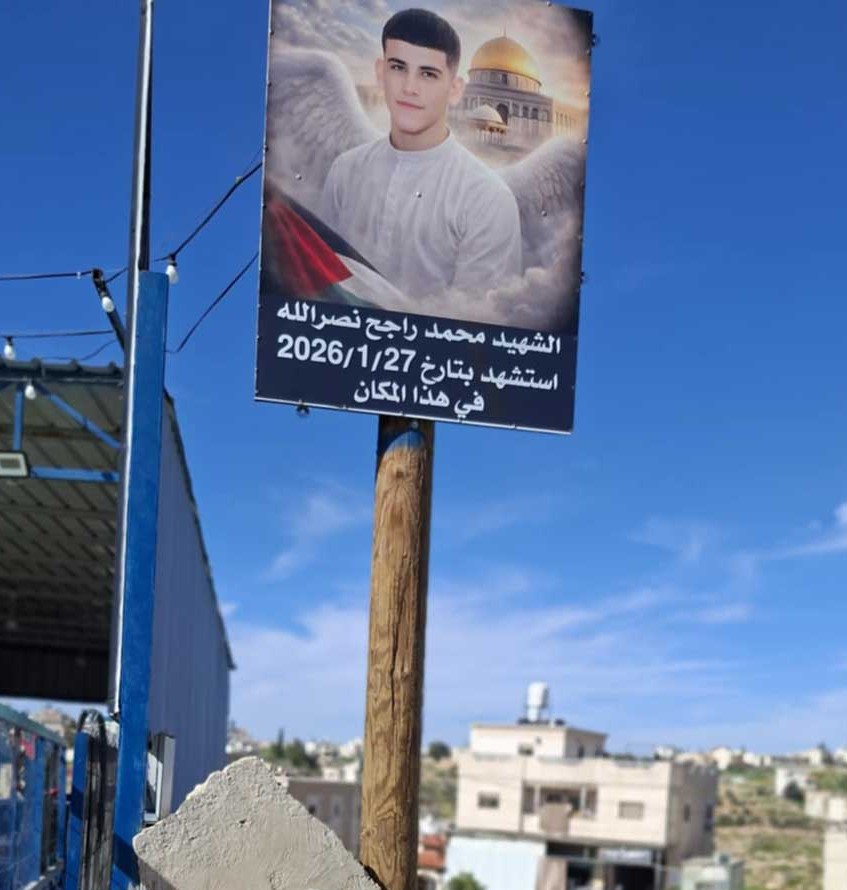
A poster memorializing Muhammad Nasrallah at the spot where the soldiers shot him. Photo: Manal a-Ja’bari, B’Tselem
Later, I heard from residents that the wounded person’s name was Muhammad Nasrallah. I was horrified and meant to call my brother to ask whether Muhammad and his cousin Hassan were with them, but he called me first. He said that soldiers had shot Muhammad and Hassan when they were on their way to our house. He told me that Hassan had been wounded and was hiding in a nearby house, and that Muhammad had been evacuated by ambulance to the government hospital in Dura.
I was in shock and very anxious, and I asked a friend to drive me in his car to the hospital in Dura. When I got there, I saw several relatives and friends of Muhammad’s. They looked pale and sad, and I realized his condition was very serious. I asked the doctors if he had died, but no one answered me, and everyone tried to reassure me. At around 10:00 P.M., the doctors informed us that Muhammad had died.
I could not believe it really happened until I went into the room and saw Muhammad. The doctors said he had been shot in the side of his body, and that the bullet had entered his abdomen and caused severe damage to his internal organs.
The next day, after the noon prayer, we buried Muhammad, heartbroken. The incident occurred when the area was very quiet and there were no clashes at all. No one even knew there were soldiers around. They were apparently hiding among the olive trees on the other side of the street.
Israel’s regime of apartheid and occupation is inextricably bound up in human rights violations. B’Tselem strives to end this regime, as that is the only way forward to a future in which human rights, democracy, liberty and equality are ensured to all people, both Palestinian and Israeli, living between the Jordan River and the Mediterranean Sea.
Since the Hamas attack on 7 October 2023, Israel has acted in a coordinated and deliberate manner to destroy Palestinian society in the Gaza Strip, committing genocide against its residents. In light of Israel’s actions in Gaza, the public statements made by Israeli decision-makers, and the international community’s failure to take effective action, there is a serious risk that the Israeli regime will expand the genocide to other areas under its control—first and foremost, the West Bank.
B’Tselem calls on the Israeli public and the international community to use every tool available under international law to bring an immediate end to Israel’s genocide against the Palestinian people.