On Friday, 13 December 2024, around 12:30 P.M., Israeli Border Police officers entered the village of Beit ‘Awwa in a van bearing Palestinian license plates and stopped near the homes of the Masalmeh family in the village center. At the time, some members of the family were sitting in a workshop belonging to Muhammad Suliman Maslameh – his 33-year-old nephew, Muhammad Ahmad Masalmeh, who has special needs, his six-year-old grandson Hussein, and H.M., a friend of the family. The other members of the family were having lunch in their respective homes, which are adjacent to the workshop.
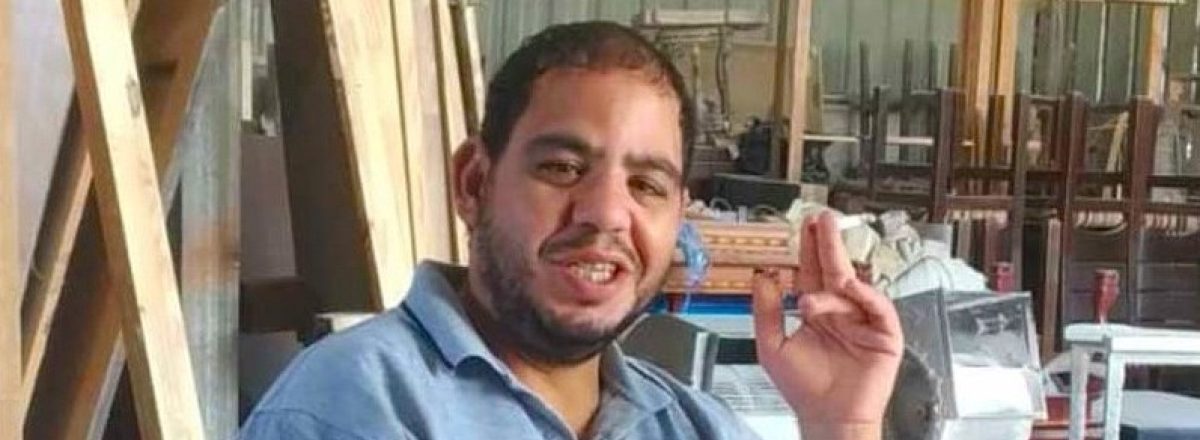
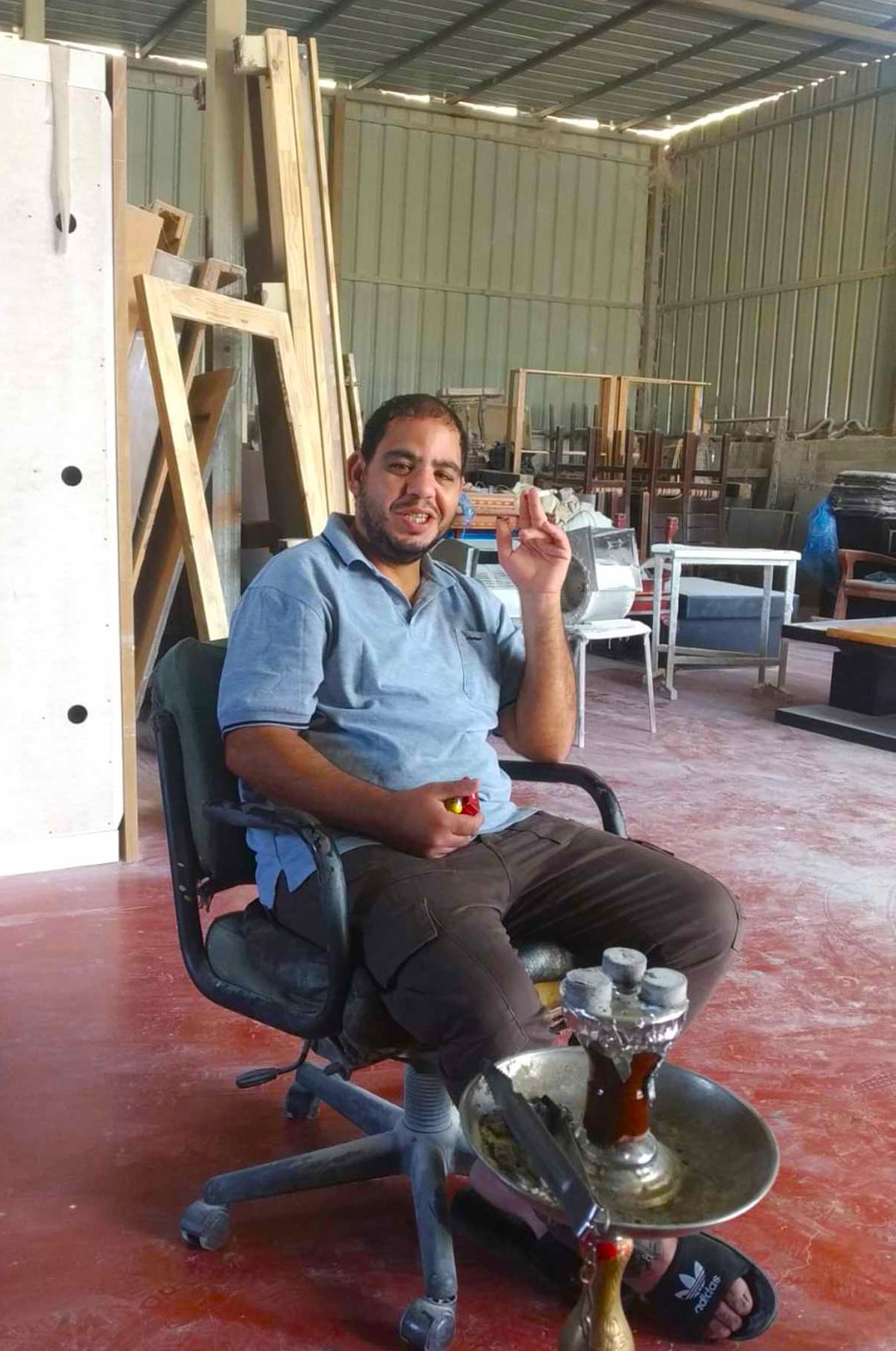
Muhammad Masalmeh. Photo courtesy of the family
When the Israeli forces arrived, Muhammad Ahmad, who heard movement and voices outside, went to the door to see what was happening. A Border Police officer shot him and he fell to the floor. H.M. rushed to him and called for help, and within a short time, Muhammad Suliman arrived and checked where his nephew, who was losing blood rapidly, was injured.
Immediately after that, the officers entered the workshop, hit H.M. and Muhammad Suliman, separated them from Muhammad Ahmad, who was still bleeding, and drove the sobbing six-year-old Hussein out of the workshop. They then took the two men out of the workshop while beating them. Outside, about 15 officers attacked Hudayfa and Suliman, Muhammad Suliman’s sons, and their cousin Ibrahim, Muhammad Ahmad’s brother, who had come out of their homes upon hearing the commotion.
The officers left the bleeding Muhammad Ahmad alone in the workshop without offering him any help, and prevented family members from approaching him. Meanwhile, military forces arrived. The Border Police and soldiers beat the family members and detained all the men in the family for about an hour and a half. They locked them in a room in one of the extended family’s apartments for about an hour and a half, tied their hands and continued to abuse them. The forces locked the women and children in another room.
Thabet, another one of Muhammad Suliman’s sons, who came out of his apartment with his wife and children upon hearing the commotion, was separated by the forces from the other men and locked in the kitchen, where he too was assaulted. Some of the forces conducted violent searches in the family’s apartments.
About two hours after the raid began, around 2:30 P.M., the forces left, taking Thabet with them. He is still in custody. The entire time, Muhammad Ahmad lay wounded, alone, in the workshop, while soldiers denied an ambulance called by women in the family from accessing him. The ambulance crew managed to reach him only after the forces left, and found him dead. Muhammad Ahmad was taken to the government hospital in Dura, where he was pronounced dead. His funeral was held the next day.
B’Tselem field researcher Basel Adra collected the testimonies on 15 December 2024:
H.M., said in his testimony:
On Friday, after I had lunch, I went to hang out at Muhammad Masalmeh’s workshop. When I got there, his six-year-old grandson Hussein and his nephew Muhammad Ahmad Masalmeh were there. I smoked a hookah and chatted with Muhammad. I liked talking to him. He was a simple man with special needs. We waited for Muhammad Masalmeh’s sons, who were still having lunch in their homes, and for the friends who usually hang out with us there on Fridays.
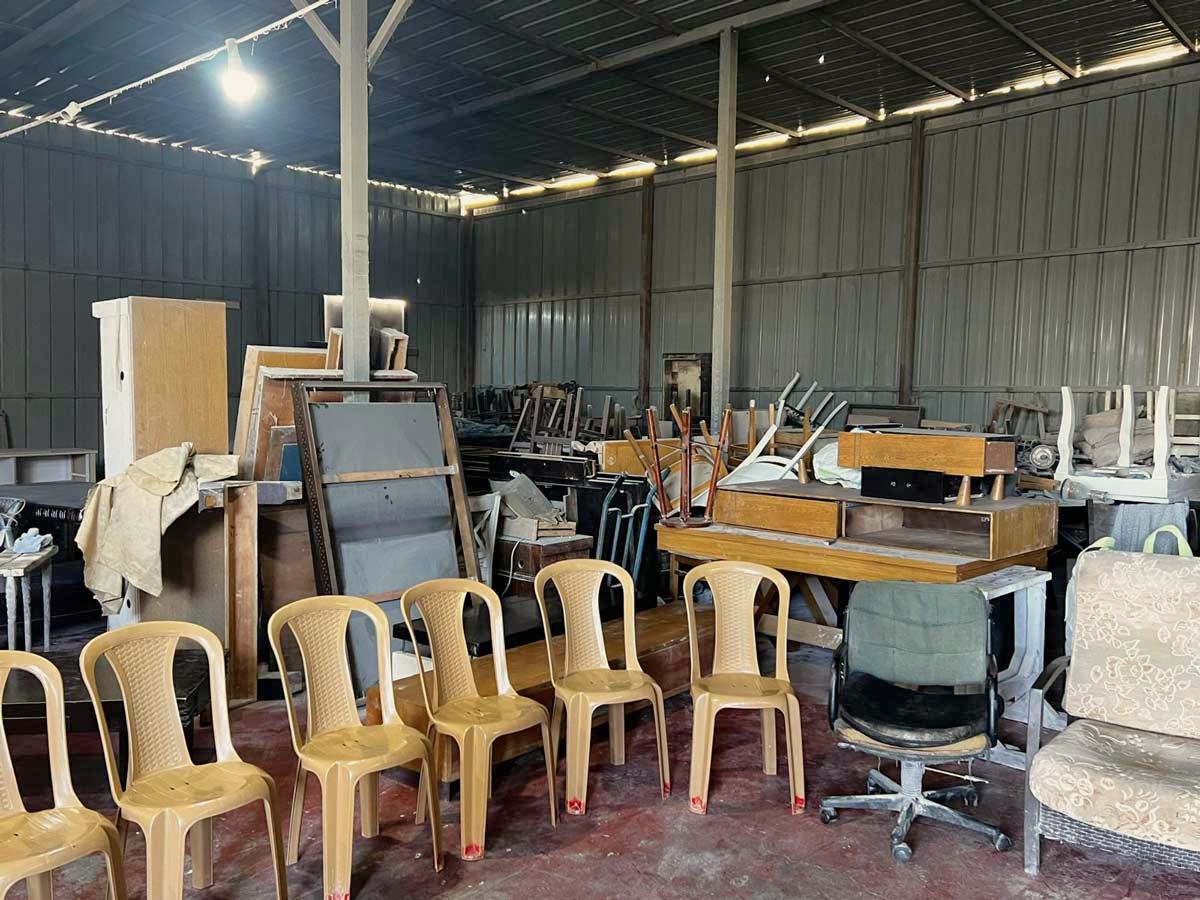
The workshop. Photo: Basel Adra, B’Tselem
Around 12:30 P.M., we heard vehicles and people outside the workshop. The door was partially open, and Muhammad Ahmad went to see who was coming. Suddenly, I heard a gunshot and saw Muhammad stumble. I rushed over to him to support him, and we both fell to the ground. I was in shock. He was bleeding heavily. Hussein got very frightened and started screaming hysterically. I looked outside and saw three police officers standing there. I started shouting “Wounded man, wounded man.”
Muhammad Ahmad’s uncle, Muhammad Suliman, came out of his house and walked over to us with his hands up. We undid Muhammad Ahmad’s jacket to see where he was hit and saw blood gushing out. Then the police officers came inside, grabbed me and Muhammad Suliman, and dragged us to the wall by the door. They hit us and slammed my head against the wall. We asked them to call an ambulance for Muhammad Ahmad, but they ignored us. They kicked Hussein out screaming and crying.
The officers tied our hands with zip ties, led us out, and took us to Muhammad Ahmad’s front door. There were more armed forces outside. Some of them were searching Muhammad Ahmad’s and Muhammad Suliman’s houses. They knocked us to the ground and the three police officers attacked us. They kicked our arms and legs and hit us with the butts of their rifles, while we were screaming for an ambulance. Then they stopped beating us, and left us there, lying face down, while some of the officers joined the searches in other houses belonging to the family.
The officers also handcuffed Muhammad Suliman’s two sons, Hudayfa and Suliman, and his nephew Ibrahim – Muhammad Ahmad’s brother, who had followed him out of the house. They made them lie face down too. They beat all of us and yelled at us: “No talking. No looking up.” They were extremely violent. There were women and children around, in the open space between the houses, and they were crying and screaming.
One of the officers ordered me to go into Muhammad Suliman’s father’s house and get another son of his, Thabet. But, Thabet was already coming down the stairs, and he came over to us. The officer pointed his gun at him and ordered him to put his hands up. He did, and they immediately handcuffed him and put him next to us. They kicked him and hit him with their guns too.
Then they made us go into Muhammad Suliman’s house, shoving us and yelling at us. They put the five of us in one room in there, and Thabet in the kitchen. They brought the women and children through another entrance into another room in the same house. They kept on hitting, kicking and swearing at us inside the house, too. At one point they brought Wafa, Thabet’s wife and Muhammad Ahmad’s sister, into the room with her hands tied in front of her with zip ties. She saw them throwing mattresses in the room at us and shouted at them to stop hitting us. Then one of them took her to get her house to get her and Thabet’s phones and his ID card.
After they brought Wafa back, an officer who introduced himself as ‘Imad came and told Muhammad Suliman: “If you play with fire, I’ll burn you.” Then they took Thabet and left, together the rest of the armed forces. We went quickly back to the workshop’s front door, where we found an ambulance crew. Before that, the police officers left Muhammad Ahmad, bleeding in the workshop for an hour. Later, I found out from the paramedics that the soldiers wouldn’t let them go in and treat him and held them up on the outer street. They took Muhammad Ahmad to the ambulance and the paramedic told us that the bullet had penetrated his chest and come out around the shoulder, and that he’d lost a lot of blood and was dead. They took him to the government hospital in Dura.
Muhammad Ahmad’s uncle, Muhammad Suliman Masalmeh, 64, a father of three, said in his testimony:
On Friday, around 12:30, I was at home having lunch with my family after I got home from prayers. Suddenly, I heard one shot nearby. I ran to my workshop, which is next to the house, and as soon as I stepped out, I was surprised to see police officers in front of me pointing their guns at me and at my sons, Hudayfa and Suliman, who had followed me. There were about 15 police officers there. I heard H., a friend of my sons, shouting from inside the workshop: “He’s hurt, Muhammad’s hurt.” I ran over there with my hands up, and as soon as I went in, I saw my nephew Muhammad Ahmad lying on the floor, bleeding heavily. I shouted: “Ambulance, ambulance.”
I undid his jacket to see where he was hurt. He said: “Uncle, my arm is injured.” That was the only sentence he said. My grandson Hussein, 6, was there and he was screaming in terror. After a few minutes, the police officers came in and attacked me and H., beating us with their guns. I shouted for them to get Muhammad first aid and call an ambulance. I told them, “He’s a poor guy, he’s not right in the head,” but they didn’t care.
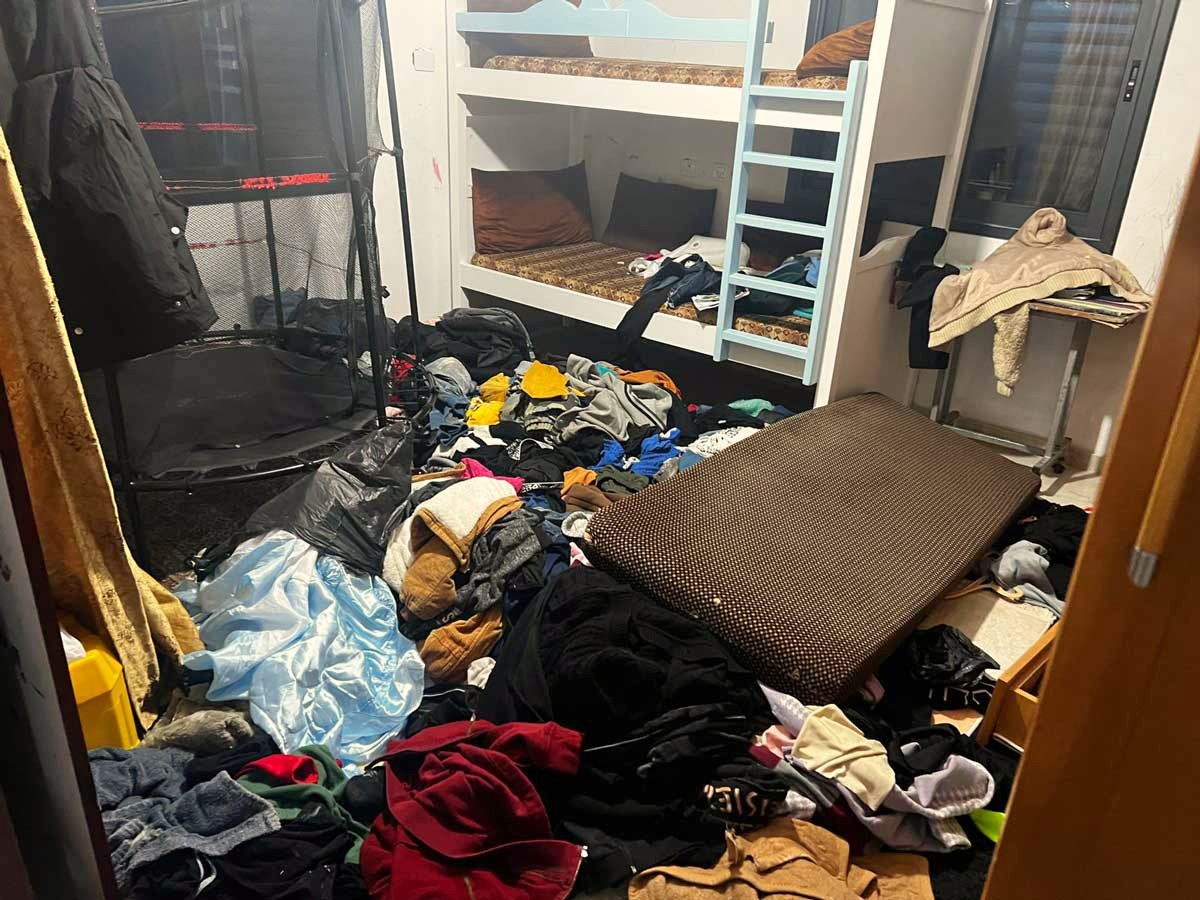
The children’s room in Wafa and Thabet’s home after the forces searched it. Photo: Basel Adra, B’Tselem
I heard screams and stun grenades exploding outside. There were three police officers inside with us. I was sitting with Muhammad Ahmad’s head on my knee. After a few moments, I started shouting that he was dead. The police officers demanded that I put his head on the floor, and after I did, they pushed H. and me against the wall of the workshop. Then they led us to the entrance to the house of my brother Ahmad, Muhammad’s father, about 10 meters from the workshop. Outside, I saw four police officers beating Suliman and Hudayfa. Near the entrance to Ahmad’s house, the officers beat up Ibrahim, Muhammad Ahmad’s brother, too. They tied all of us with our hands behind our backs and kept on kicking and hitting us with the butts of their rifles. Meanwhile, more forces arrived and spread out in the houses and on the rooftops.
One of the officers ordered H. to go get my son Thabet. But before he could move, Thabet came from the direction of his house, which is 10 meters away, with his hands up. The officers tied his hands behind his back, beat him and made him sit next to us. My daughters and Thabet’s wife shouted at the police to stop beating us and call an ambulance for Muhammad, who stayed alone behind the closed door of the workshop. The police wouldn’t let anyone get close to him. They pushed all of us into a room in Ahmad’s house and the women and children into another room. They put Thabet in the kitchen alone. We asked the police to get Muhammad first aid, and I tried to explain to them that he had a disability, but they just swore at us, beat us and told us to shut up.
After a few minutes, the soldiers brought Wafa, Thabet’s wife, who is also Muhammad Ahmad’s sister, into the kitchen. I heard her yelling at the soldiers to stop beating Thabet. After 10 minutes, they brought her into a room where we were sitting, with our hands tied in front with zip ties. They kept swearing at us and her, and Wafa kept screaming and asking for first aid for her brother Muhammad.
While we were sitting there in the room on the floor, handcuffed, two police officers threw mattresses and blankets at us and ordered us to keep our heads down. We almost suffocated under the heavy weight they put on us. Wafa yelled at them and eventually they took it off.
Muhammad Ahmad’s sister, Wafa Masalmeh, 34, a mother of five, said in her testimony:
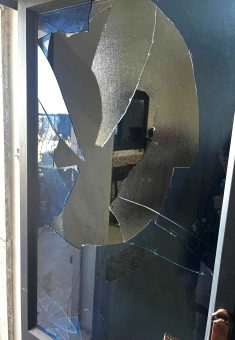
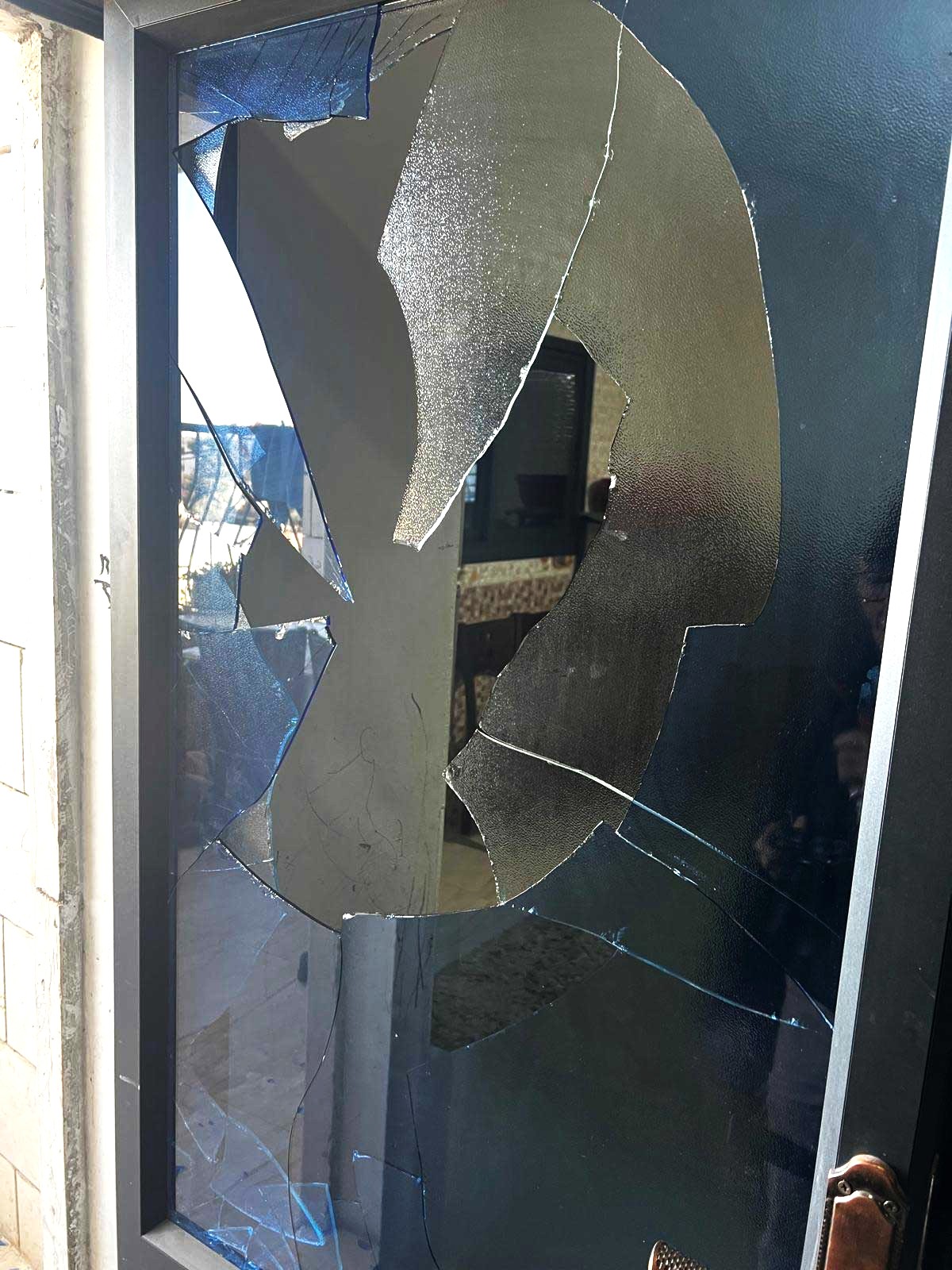
A door that the forces broke in Wafa and Thabet Masalmeh’s home. Photo: Basel Adra, B’Tselem
My brother Muhammad has special needs, and until my mother passed away when we were children, he went to a special school in al-’Eizariyah. After that, we moved with our father to an old house in Beit ‘Awwa, near my uncle Muhammad Suliman’s house. Everyone was always considerate about Muhammad’s condition and helped him. He had an intellectual disability, and I took care of him. Muhammad would spend the day in the workshop of our uncle Muhammad Suliman and his sons. I married my cousin Thabet, Muhammad Suliman’s son, and we live above my uncle’s house. But I continued to take care of my brother after I got married.
On Friday, at 12:30 P.M., I was at home eating with my husband and our five children when suddenly, I heard shouting and an explosion near the house. I ran to the balcony and saw several police officers standing between our house and the workshop, pointing their guns at my husband’s brothers, who were shouting: “Muhammad is hurt, Muhammad is hurt.” A few minutes later, my husband, the children and I went down the stairs. When the police saw my husband, they pointed their guns at him and told him to put his hands up. They immediately put him with the other detainees, handcuffed him, kicked him, and hit him with their guns. Meanwhile, more forces arrived. The other women in the family and I shouted at them to stop beating the men and get Muhammad an ambulance.
We, the women and children, were very afraid. We cried and screamed and tried to protect our men from the constant beatings, and the police officers were violent with us too, pushing us back.
Then they led the men from our family and H., handcuffed, to a room in the house and took us through another door into another room. There were about twenty children and women. The police pushed us to get in faster and swore at us. We sat on the floor. The children were crying. One of the police officers scared the children, waving plates over their heads as if he was going to hit them with them.
After ten minutes, an officer arrived and asked: “Where is Wafa?” I told him that was me, and he ordered me to come with him. I got up, and he tied my hands with zip ties. He took me to the kitchen and made me sit next to my husband Thabet, who was lying face down on the floor, and police officers kept coming in and beating him. They threw kitchen utensils at his head. One of them took a shirt from the closet, covered Thabet’s face with it and choked him, while hitting him with the other hand on the head and other parts of his body. I yelled at him to stop, and then he got up and punched me in the back of the head. Then he took me to the room where the other men were.
The police officers were beating them in there, too, and throwing mattresses and blankets there at them. After a while, an officer who spoke broken Arabic came in and told me to come with them to take the phones and Thabet’s ID card. I went to my uncle’s house with six police officers. On the way, I saw that the door of the workshop was closed, and it didn’t seem like anyone was taking care of Muhammad. I asked them several times to get Muhammad Ahmad an ambulance, but they told me to shut up.
My husband’s phone was on the table at my uncle’s house, and I gave it to the officers. I asked them again to get Muhammad Ahmad an ambulance. I tried to explain to them that he had an intellectual disability. The officer hit me on the head and said I was a liar. Then he demanded that I give him my ID card and my family’s other phones. Then an officer arrived and said he was from the Shin Bet and his name was ‘Imad. I asked him to get Muhammad Ahmad an ambulance. He asked me if it was Muhammad or Thabet who was hurt, and I told him it was Muhammad and that he had an intellectual disability.
They started checking ID numbers on their tablet. The officer told me that I was right, that it was Muhammad, and that I could take care of him after they were gone. Then he asked me about Thabet’s health and whether he was sick or taking medication. I told him he was healthy.
Then they went up to my house, and I heard things breaking. After 15-20 minutes, they came down with my husband’s ID, my phones and the children’s phones. They took my phone, the children’s phones and 800 shekels from the house. Later, I saw they had broken several windows in our house, torn up sofas, and damaged some furniture.
They took me back to the room where the detained men were. The Shin Bet officer threatened my uncle Muhammad, telling him: “Those who play with fire get burned.” After 20 minutes, they started making their way out of there, taking Thabet with them. One of them hit him on the head with a water bottle. After they left, I ran to the workshop; there were already paramedics there, around Muhammad, who was naked in a pool of blood. The paramedics told me he was dead. It was 2:19 P.M. When we asked them why it took them so long to arrive, they said the army wouldn’t let them through. Muhammad was transferred to the Dura government hospital. It’s been two days now, and we haven’t heard anything about Thabet. We don’t know where he’s being held. As far as we knew, he wasn’t wanted by Israel.
Israel’s regime of apartheid and occupation is inextricably bound up in human rights violations. B’Tselem strives to end this regime, as that is the only way forward to a future in which human rights, democracy, liberty and equality are ensured to all people, both Palestinian and Israeli, living between the Jordan River and the Mediterranean Sea.
Since the Hamas attack on 7 October 2023, Israel has acted in a coordinated and deliberate manner to destroy Palestinian society in the Gaza Strip, committing genocide against its residents. In light of Israel’s actions in Gaza, the public statements made by Israeli decision-makers, and the international community’s failure to take effective action, there is a serious risk that the Israeli regime will expand the genocide to other areas under its control—first and foremost, the West Bank.
B’Tselem calls on the Israeli public and the international community to use every tool available under international law to bring an immediate end to Israel’s genocide against the Palestinian people.