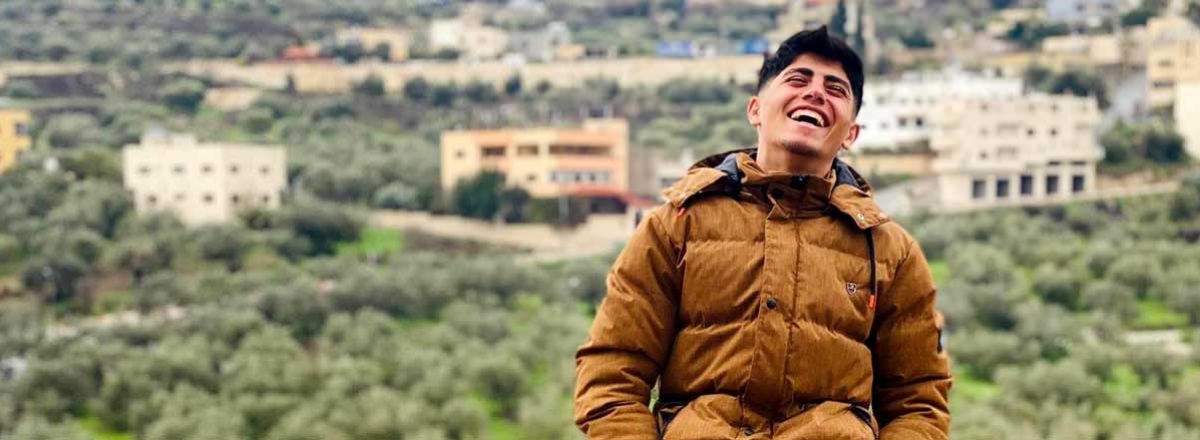
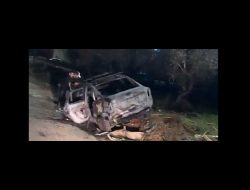
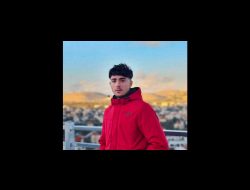
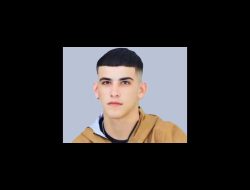
On Friday, 21 July 2023, at around 11:00 P.M., about 12 Israeli soldiers arrived in the Palestinian town of Sabastiya, Nablus District, in two military jeeps. They parked the jeeps by the town’s western entrance, came out and started walking toward the center of the town. Fawzi Makhalfeh (18) and his friend Muhammad Mukheimar (19) were driving down a road that leads to the street where the soldiers were walking at the same time. The two were driving from the center of town to Makhalfeh’s workplace at his father’s factory in the village of Deir Sharaf. Makhalfeh, who was driving, turned onto the street where the soldiers were walking. One of the soldiers shouted “stop” to them, and immediately after, the soldiers fired live fire rounds at the car. The car was hit, collided with the fence of one of houses on the street and stopped. Makhalfeh sustained a head injury, and Mukheimar was injured by a bullet in his arm and shrapnel in his head, shoulders and hips. The soldiers ordered Mukheimar to exit the vehicle and lie on his stomach and then searched him. Makhalfeh, who was hit in the head and suffered a skull fracture, remained in the car. Gunshot wounds and shrapnel were found on his arms, stomach, knees, shoulder, neck and thigh.
At that point, more soldiers and an officer arrived at the scene in two military jeeps. The officer interrogated Mukheimar, and, after he explained he and Makhalfeh were on their way to the factory, Mukheimar heard one of the soldiers say “oops.” A Palestinian medical team that arrived on the scene pronounced Makhalfeh dead and took his body away in an ambulance.
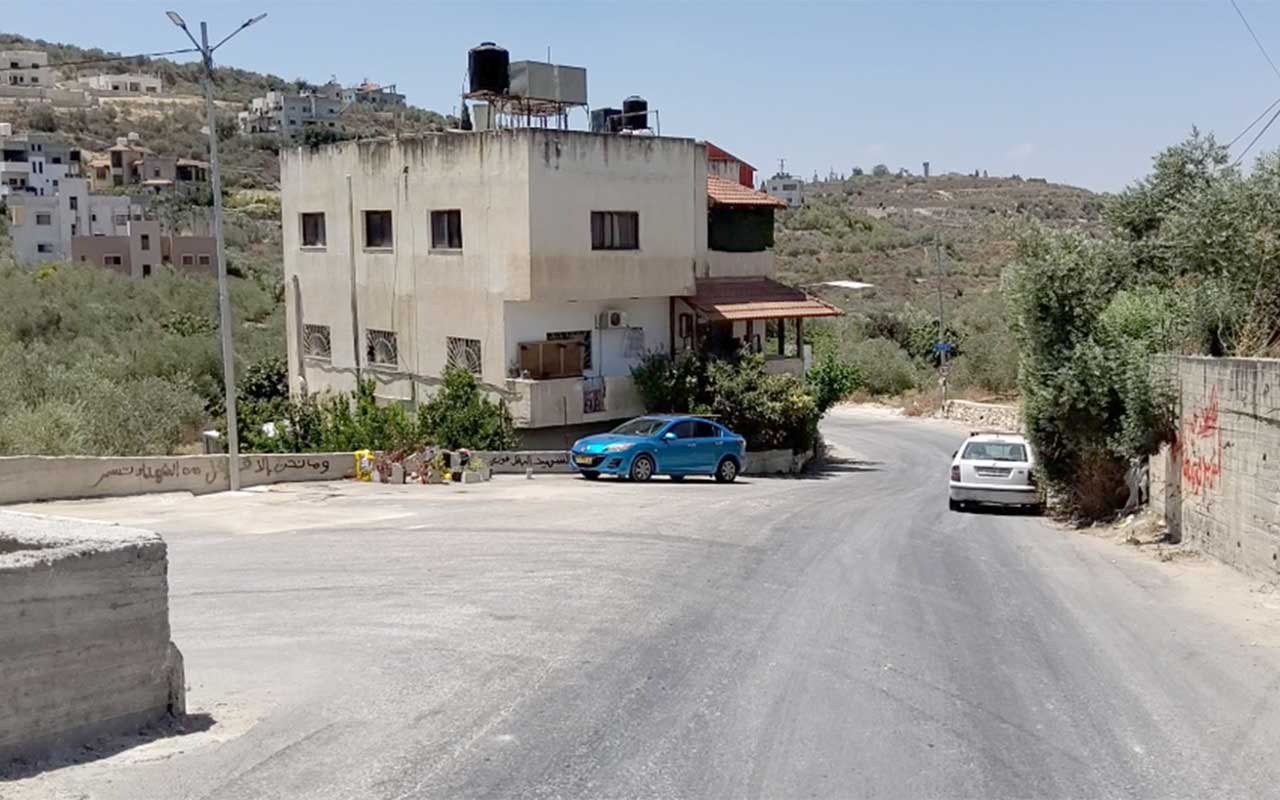
View from the direction from which Makhalfeh’s car arrived towards the direction from which the soldiers arrived and the makeshift memorial where Makhalfeh crashed into the wall. Photo: Salma a-Deb'i, B'Tselem
The soldiers tied Mukheimar’s hands behind his back. By then, residents of the town had gathered at the scene, and some of them threw stones at the soldiers, who threw tear gas canisters at them. The soldiers then left the town, taking Mukheimar with them and setting off an ordeal of abuse that lasted hours. They punched Mukheimar, hit him with the butts of their rifles, kicked him, and then blindfolded him before continuing the beatings. The soldiers then put Mukheimar in the jeep, laid him on the ground and stepped on him. He was taken to a military infirmary in the settlement of Shavei Shomron, examined and transferred to a hospital in Israel, where he was kept overnight. The next day, he was interrogated at a police station in the settlement of Ariel concerning allegations he had aided an attempted car-ramming attack against soldiers. Mukheimar denied the allegations. He was arrested and transferred between prisons, until he was released on bail of 1,000 NIS (~265 USD) on 30 July 2023.
Immediately after the incident, the Israeli military claimed the case involved an attempted car-ramming attack. This time, however, though it took ten days, even the court rejected this version and ordered Mukheimar’s release. About a month before this incident, soldiers fired at another Palestinian car and then falsely claimed the driver had tried to run them over. Luckily, in that instance, no one was killed. And so, Israel proves time and time again that Palestinian lives are worthless in its eyes: soldiers can spray Palestinians with bullets, injure and even kill them, all in broad daylight, in front of eyewitnesses, knowing not a single one of them will be punished and that their commanders, the military’s top leadership and government officials have their backs.
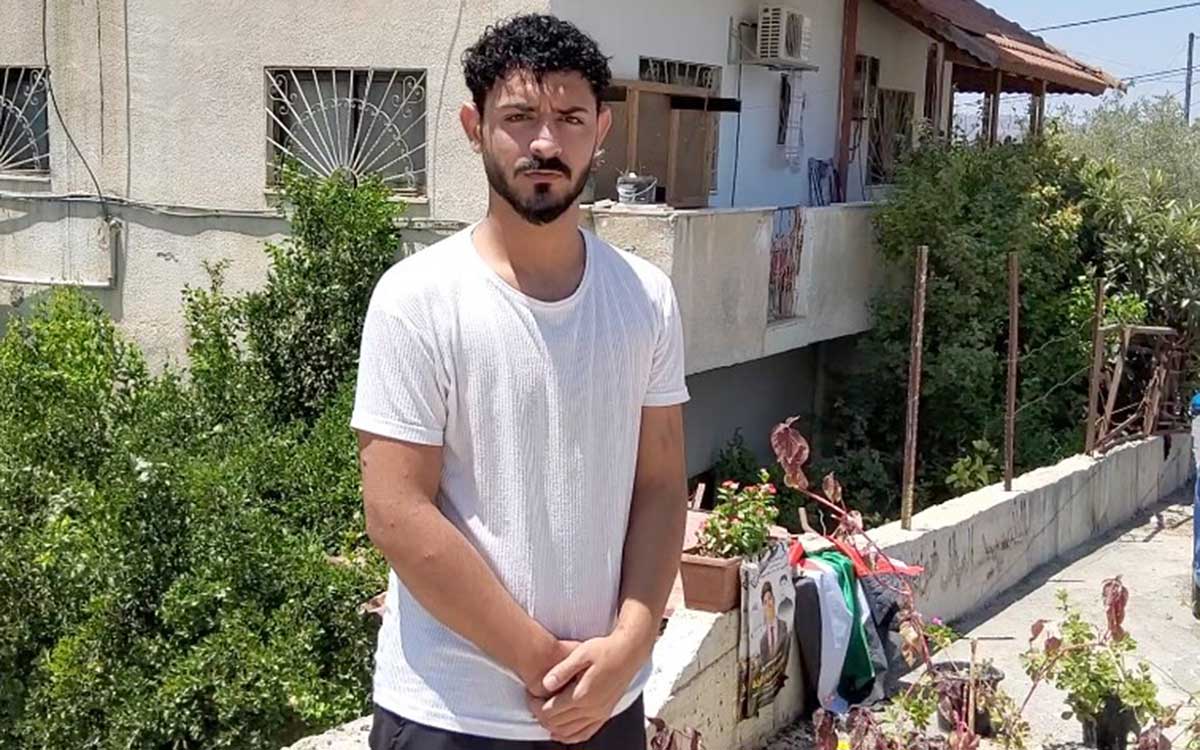
Qassam a-Sha’er (19), from Sabastiya, spoke about the incident on 30 July 2023:
Qassam a-Sha’er on his rooftop. Photo: Salma a-Deb'i
On Friday, 21 July 2023, at around 11:00 P.M., I was with my mom on the roof of our house, which is next to the road that leads to the western entrance of the town. We went up there after my mom said that the army was on the street because we wanted to see what was going on. I saw 12-15 soldiers who had come from the direction of the town’s entrance and were walking on the sides of the road towards the center. They were about 80 meters away from our house. I saw a car coming from the direction of the center of town and driving in front of the soldiers. I heard a soldier say: “stop!” and at the same time, he shot at the car, which stopped. There was a loud noise from the engine. The driver must have pressed the brake and gas pedals at the same time. The soldiers shot heavy fire at the car for a long time.
My mom and I lay down on the roof because we were afraid of getting hit, and then we went down into the house. My dad was out at the time, and two of my sisters were at my grandfather’s house in ‘Anabta. My mom, Sanaa a-Sha’er (41), my three younger sisters and I were the only ones home. My mom and sisters went into the living room, and I went into the bedroom that overlooks the street to peek outside and see what was happening. I figured the car had hit the fence on the side of the road. The soldiers took a young man out of the car and had him sit on the ground next to the car. I heard him saying: on my mother’s life, we weren’t going to do anything, just go to my friend’s father’s factory in Deir Sharaf. I was in shock because I immediately recognized that it was my friend Muhammad Mukheimar (19) from the town. I also figured that he was probably talking about our friend Fawzi Makhalfeh, whose father has a plastic bag factory in the village of Deir Sharaf. I also recognized the car, which was Fawzi’s father’s. Fawzi used it sometimes. I couldn’t believe what had happened, and I couldn’t utter a word.
After seven or eight minutes, a Red Crescent ambulance arrived from the direction of Nablus, but the soldiers didn’t let it through. After that, another ambulance came. The paramedics took the driver out of the car and put him on a gurney. I couldn’t see his face. I only saw his legs. I didn’t know what state he was in. But there had been a lot of shooting, which didn’t bode well. More soldiers came in two jeeps, and residents started to gather there. Some of them threw stones at the soldiers, and the soldiers threw tear gas canisters at them. After about 50 minutes, the soldiers transferred the body to the Palestinian ambulance and left.
The soldiers who fired left the area on foot, with Muhammad Mukheimar. Fawzi Makhalfeh had been my friend since preschool. That very morning, we saw each other at Friday prayers and spoke. He told me about his accounting studies at al-Quds Open University. He was a well-mannered guy who loved life, and everyone loved him. It is a great loss for the town.
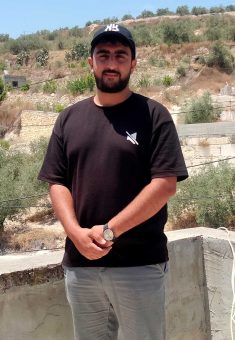
Muhammad Mukheimar next to the makeshift memorial for his friend. Photo: Salma a-Deb'i
Muhammad Mukheimar (19), from Sabastiya, said on 1 August 2023:
On Friday, 21 July 2023, I was in the al-Biadr area with my friends. At around 10:30 P.M., Fawzi Makhalfeh joined us. We usually hang out together on Fridays because it’s our day off. Even though we are both university students, we both work. I have a clothing store in Jenin, and Fawzi works in his father’s factory that produces plastic bags, in the village of Deir Sharaf. We hung out together, and afterwards, we both drove in his father’s car to the factory, as we had done many times, because Fawzi worked there in the evenings, and I would join him.
On the way there, we stopped at a supermarket and bought soft drinks and cigarettes. It was a few minutes after 11:00 P.M. We got to the road that leads to the town’s western entrance, near Route 60. I was busy with my phone, trying to connect the Bluetooth to the car’s sound system so we could listen to some music, so I wasn’t paying attention to what was happening in front of us. Suddenly, I heard a very loud sound. It was shooting. I didn’t understand where it was coming from. I didn’t know where they were shooting from. The car windows were open. The car hit a wall. I saw a soldier pointing his weapon at me from the left window, and another soldier also aimed at me, from the right window. I thought they were going to shoot me. I immediately put my hands up and shouted, “there’s nothing, there’s nothing. We’re just driving to the factory. I swear on my mother’s life.” The soldier instructed me in Hebrew to get out of the car. At first, I didn’t understand him, but then he pointed at the door. I didn’t know what state Fawzi was in. The last thing he had said was “oh God,” when we hit the fence. That was the last thing that I heard from him.
When I got out of the car, the soldiers shouted at me in Hebrew, and I didn’t understand what they were saying. They pointed towards the ground, so I got down on the ground and lay on my stomach. I noticed that my right hand was covered in blood. They searched the car and, at that moment, my cell phone rang. One of the soldiers stepped on my neck several times and swore at me in Hebrew.
After that, a jeep came, and more soldiers got out of it. I was still lying on the ground. One of them, who looked like an officer to me, pulled me and sat me down. He asked me what had happened. I said to him that we had been on our way to my friend’s father’s factory, and we hadn’t been driving fast. He turned to the soldier who was next to him, and the soldier said, “oops,” and raised his hands and made a gesture, like he was saying “what should we do now?” Paramedics came. Two of them went over Fawzi, and one came over to me. He bandaged my right hand and said it had two wounds. At that moment, I saw Fawzi. His head was smashed. I wanted to go over to him, but the paramedic grabbed me and said, “your friend has been martyred. Don’t go near the car. They’ll shoot you.” At that same moment, the soldier approached me and yelled at me. He pushed me to the ground forcefully, and I fell, and then he handcuffed me behind my back with zip ties. While I was lying on the ground on my stomach, with my hands tied behind my back, I saw them taking Fawzi’s body to the ambulance.
After that, they led me on foot to the checkpoint in the Shavei Shomron settlement. On the way, they pushed me, and the soldier squeezed the wound in my hand, which really hurt, and then a different soldier hit me with his rifle on the back of the head, and I fell. After that, the soldiers kicked me. Two soldiers picked me up off the ground and pushed me forward. When we got to the checkpoint, they had me sit on the ground, blindfolded me and started slapping me, and hitting my body with their hands and the butts of their rifles, and cursing me. The beating went on for a few minutes. Then one of them said something in Hebrew, and then they stopped hitting me. One of the soldiers pulled me up, and then started to lead me, and while this was happening, threw something at my legs. I fell to the ground again, and the soldiers attacked me again, hitting me and kicking me. Then they took me a few meters forward to their military jeep and forcibly pushed me towards it, throwing me into it. I lay on the floor of the jeep. The soldiers went into the jeep with each one stepping all over me my body as they did.
The jeep drove and stopped after a few minutes. I think we were still in the Shavei Shomron settlement. They took me into a room that looked like an infirmary, and one of the soldiers took off my blindfold and handcuffs. They stripped me. I had many wounds on my body from shrapnel and glass. I stayed in the infirmary for about an hour, until an ambulance came and took me to a hospital whose name I don’t know.
The next afternoon, they took me from the hospital to the police station in Ariel, where they let me talk to my dad on the phone. They interrogated me about what had happened, and the interrogator asked me how we had planned to carry out the terror attack and why we drove quickly. I denied everything – we had no intention of carrying out a terror attack, and we hadn’t driven quickly. The interrogator told me I was suspected of participating in an attempted car-ramming attack against soldiers. I denied it.
After the interrogation, I was driven to Ofer Prison and the next day to Ramle Prison. I stayed there for the night, and in the morning, they drove me to Megiddo Prison, where I stayed until Tuesday. That day, I had a hearing at the court in Salem, and when I got there, they told me the hearing had been postponed to Sunday, 30 July 2023. I was taken back to Megiddo, and I stayed there until the hearing. In the end, the court hearing last about two minutes, and then a lawyer told me I was released. My dad and my aunt and uncle were there, and they immediately took me to the Rafidya hospital in Nablus. They did a lot of tests and took care of a lot of shrapnel that had gotten into my right hand and back from the shooting. After that, I went home to Sabastiya.
Israel’s regime of apartheid and occupation is inextricably bound up in human rights violations. B’Tselem strives to end this regime, as that is the only way forward to a future in which human rights, democracy, liberty and equality are ensured to all people, both Palestinian and Israeli, living between the Jordan River and the Mediterranean Sea.
Since the Hamas attack on 7 October 2023, Israel has acted in a coordinated and deliberate manner to destroy Palestinian society in the Gaza Strip, committing genocide against its residents. In light of Israel’s actions in Gaza, the public statements made by Israeli decision-makers, and the international community’s failure to take effective action, there is a serious risk that the Israeli regime will expand the genocide to other areas under its control—first and foremost, the West Bank.
B’Tselem calls on the Israeli public and the international community to use every tool available under international law to bring an immediate end to Israel’s genocide against the Palestinian people.