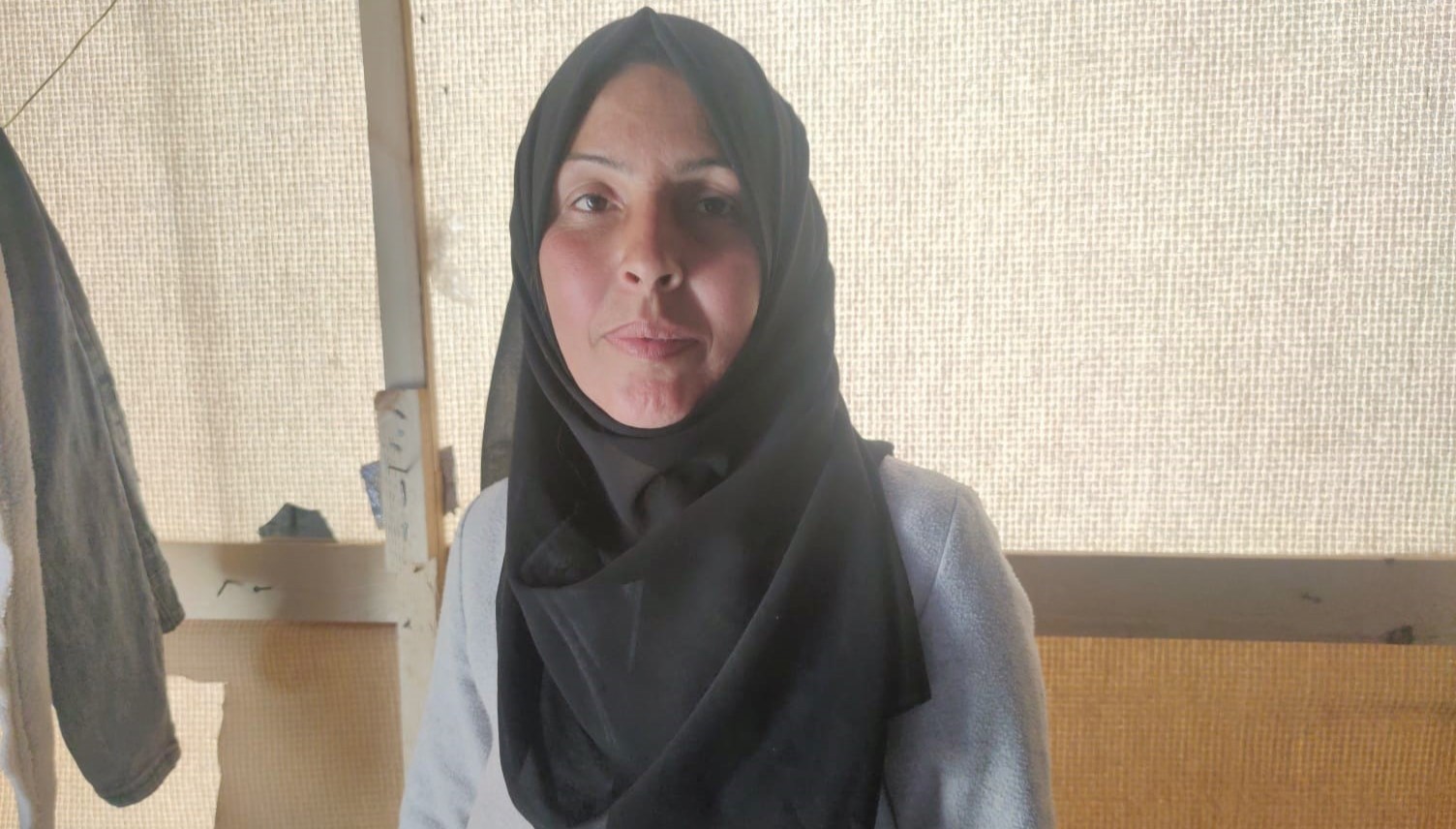
A 37-year-old mother of two young children from Beit Hanoun, speaks about an unhappy Ramadan in the IDP camp in Rafah:
A week after the war, my husband, Raed Baker, 51, our two children, Muhammad, 4, and Kinan, 2, and I moved from our house in Beit Hanoun to a rented apartment in Deir al-Balah. We stayed there for two and a half months and then we ran out of money and had to move to an IDP camp in the city of Rafah, close to the border with Egypt. We can see the Egyptian soldiers across from us. We’ve been here at the camp ever since, in a tent made of plastic sheeting. My husband’s five children from a previous marriage are here too.
There are nine of us in the tent, without water, electricity, medications, and almost no food. Life here feels like a disaster. We’re living in the desert, in conditions unfit for human habitation. It’s hard to get potable water or even water for cleaning. There is no way to bathe, and we don’t do laundry either. We’re very cold because we have no warm clothes. There are insects everywhere here - mosquitoes and flies, and reptiles too. We’ve all lost a lot of weight and feel weak and exhausted all the time. We barely sleep at night.
We have health problems. Kinan has a calcium deficiency and is supposed to get an injection once a month. I’ve managed to get the injections only twice during the war, because they cost NIS 30 (~ USD 8.15) a month and we can’t even afford that. My husband was unemployed even before the war and our financial situation is very bad. Muhammad has hepatitis and there is no cure for it. He needs to stick to a healthy diet, but we can’t provide him with that. I try to get him food from institutions and charities.
Now, Ramadan is here, and we are far from home. It started just four days ago, but we’ve essentially been fasting for months now. We have the fast-breaking meal at the IDP camp soup kitchen. Sometimes it’s lentils, sometimes peas, sometimes a tomato and pepper stew. For the meal before fasting, we eat canned food.
The canned food is unhealthy and gives us indigestion. The soup kitchen food isn’t that healthy either, and it’s also not clean, but we have no other choice. We’re exhausted and hungry and our health is deteriorating.
I go to the market and just look at the vegetables and food sold there, and I can’t buy any. I ask about the prices, give up and leave. Everything is so expensive.
Ramadan this year is nothing like the past. We’ve been displaced from our home. We live in a miserable tent, in constant fear of the bombs. The family is scattered and can’t get together. I can’t make the dishes and sweets I usually make: There is no sumptuous table with different kinds of food, soups, meats, qatayef. There is no holiday spirit, no joy, only hunger that takes over everything. The kids ask for foods they like, chicken, soups, cookies. There’s nothing. You can’t even get sugar here, so I can’t make them any treats.
I dream about food too: grilled chicken, couscous, meat. I miss gatherings with family, with friends and neighbors, my house, which I used to decorate for Ramadan.
I’m totally hopeless and I feel on the verge of collapse.
* Testimony collected by B’Tselem field researcher Olfat al-Kurd 16 March 2024.