Publications
Filter publications:
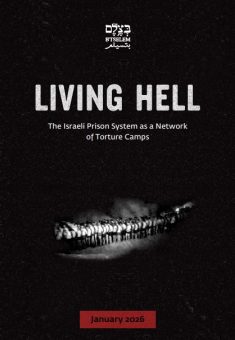
Living Hell
Living Hell: The Israeli Prison System as a Network of Torture Camps
“Living Hell” follows on B’Tselem’s August 2024 report “Welcome to Hell.” Building on the extensive research and analysis carried out for the previous report, it provides updated figures and new testimonies from 21 Palestinians released from Israeli prisons in recent months, and draws on data from other Israeli and international human rights organizations. The updated information indicates that Israeli prisons continue to function as a network of torture camps for Palestinians, with the systematic abuse even more extensive than before. This includes physical and psychological abuse, inhuman conditions, deliberate starvation and denial of medical care, all of which has led to numerous deaths. Some witnesses also described undergoing or witnessing sexual violence and abuse. The transformation of prisons into a network of torture camps is part of the Israeli regime’s coordinated onslaught on Palestinian society, aimed at dismantling the Palestinian collective.
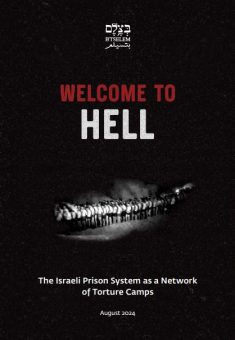
Welcome to Hell
The Israeli Prison System as a Network of Torture Camps
“Welcome to Hell” is a report on the abuse and inhuman treatment of Palestinians held in Israeli custody since 7 October 2023. B’Tselem collected testimonies from 55 Palestinians held during that time and released, almost all with no charges. Their testimonies reveal the outcomes of the rushed transformation of more than a dozen Israeli prison facilities, military and civilian, into a network of camps dedicated to the abuse of inmates as a matter of policy. Facilities in which every inmate is deliberately subjected to harsh, relentless pain and suffering operate as de-facto torture camps.
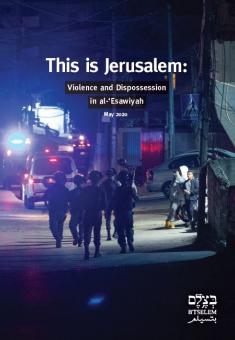
This is Jerusalem
Violence and Dispossession in al-‘Esawiyah
The report describes life in the Palestinian neighborhood of al-‘Esawiyah 53 years after East Jerusalem was annexed to Israel. Over the past year, al-‘Esawiyah has become a flashpoint due to a police operation designed primarily to harass residents. In the report, B'Tselem analyzes Israel’s policy of dispossession, deliberate neglect, lack of planning and police violence in the neighborhood, which is an extreme example of its actions throughout East Jerusalem.
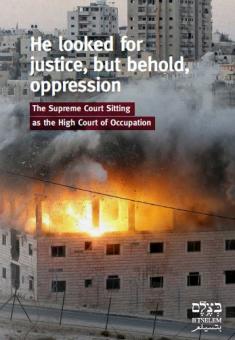
He looked for justice, but behold, oppression
The Supreme Court Sitting as the High Court of Occupation
This publication is comprised of four analyses of the Supreme Court rulings that B’Tselem published on its website throughout 2019, on a range of issues: house demolitions, the rights of persons in interrogation, prisoners and their families, and the use of corpses as bargaining chips. These rulings demonstrate how easily the court accepts the state’s position and engages in legal acrobatics in order to sanction a severe violation of human rights. In essence, these analyses demonstrate how Israel’s Supreme Court does not seek to serve justice, but rather to serve the occupation.
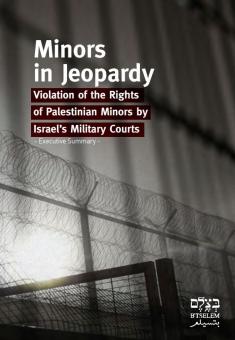
Minors in Jeopardy
Violation of the Rights of Palestinian Minors by Israel’s Military Courts
Every year, Israel arrests and detains hundreds of Palestinian minors, routinely and systematically violating their rights throughout: during arrest and interrogation, and at the military juvenile court. The minors undergo this process completely alone, cut off from their family and without legal counsel. Israel boasts of changes instituted in the military juvenile justice system in recent years, claiming significant improvement to the protections afforded minors. In practice, these changes have not helped safeguard minors’ rights and are no more than superficial matters of form designed to legitimize the military justice system and the occupation regime.
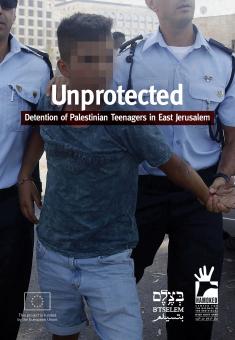
Unprotected
Detention of Palestinian Teenagers in East Jerusalem
Joint report with HaMoked, Center for the Defence of the Individual
The report reveals broad, systemic abuse by Israeli authorities of the human rights of hundreds of Palestinian teenagers arrested every year in East Jerusalem. Affidavits were collected from 60 such boys: they described being pulled out of bed in the middle of the night, handcuffed, interrogated in violation of their rights, then kept in custody under harsh conditions, sometimes for extended periods of time. These practices are part of Israeli policy, which considers the Palestinians living in East Jerusalem unwanted residents.
Backed by the System
Abuse and Torture at the Shikma Interrogation Facility
Joint report with HaMoked, Center for the Defence of the Individual
Sleep deprivation; prolonged binding; verbal and sometimes physical abuse; exposure to heat and cold; poor, meager food; small, foul-smelling cells; solitary confinement; unhygienic conditions. A new report by HaMoked and B’Tselem shows these to be standard in interrogations at Israel Security Agency’s (ISA) facility at Shikma Prison. The report is based on affidavits and testimonials by 116 Palestinians interrogated there from Aug. 2013 to March 2014, including at least 14 who had been interrogated under torture by the Palestinian Authority shortly before. The ISA’s interrogation system is run with the approval of Israeli authorities, including the High Court of Justice.
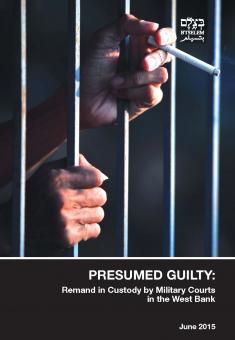
Presumed Guilty
Remand in Custody by Military Courts in the West Bank
A new report B’Tselem published today indicates that remand in custody is the rule rather than the exception for Palestinian defendants. Most cases, therefore, end in plea bargains. To all intents and purposes, the Israeli military court appears to be a court like any other. There are prosecutors and defense attorneys. There are rules of procedure, laws and regulations. There are judges who hand down rulings and verdicts couched in reasoned legal language. Nonetheless, this façade of propriety masks one of the most injurious apparatuses of the occupation. The rules of Israeli law, ostensibly applied to the military court, have been rendered essentially meaningless - merely serving to whitewash the flaws of the military court system.
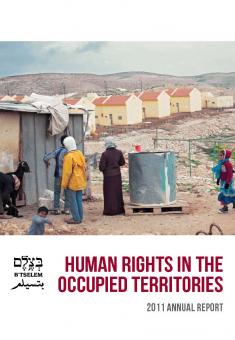
Human Rights in the Occupied Territories
B'Tselem 2011 annual report
The report surveys the broad spectrum of issues regarding the Israeli authorities' human rights record in the West Bank and Gaza Strip over the past year, the 44th year of the Israeli occupation. An interactive version of the report is available online and distributed through social media. The report documents a sharp increase in the number of uninvolved Palestinians killed by the Israeli security forces in the Gaza Strip in 2011. There was also an increase in the number of Israeli civilians killed by Palestinians, compared to 2010.

No Minor Matter
Violation of the Rights of Palestinian Minors Arrested by Israel on Suspicion of Stone-Throwing
The report reveals for the first time official data on treatment of Palestinian minors in Israeli military court system in the West Bank: 93% of all minors convicted of stone throwing were given jail sentences. The report shows how that the rights of these minors are violated severely throughout the criminal justice process.
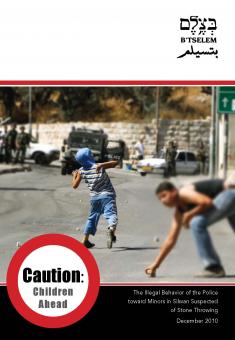
Caution: Children Ahead
The Illegal Behavior of the Police toward Minors in Silwan Suspected of Stone Throwing
The report shows that, over the past year, at least 81 Palestinian minors from Silwan, East Jerusalem, have been arrested or detained for questioning on suspicion of stone throwing. Many were arrested at night, some were questioned without a parent present, and many said the arrest was violent. These methods breach Israel's Youth Law and other laws it applies to East Jerusalem.

Kept in the Dark
Treatment of Palestinian Detainees in the Petach- Tikva Interrogation Facility of the Israel Security Agency
The report exposes routine ill-treatment of Palestinians in interrogations. The findings, based on testimonies of 121 Palestinians, show they were subjected to cruel, inhuman, and degrading treatment, and in some cases, also to torture. The report calls on Israel to cease the illegal practices, punish the offenders, and compensate the victims.
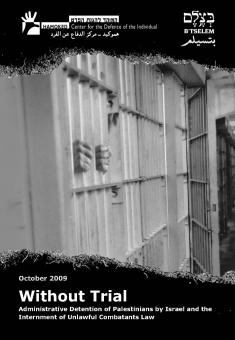
Without Trial
Administrative detention of Palestinians by Israel and the Incarceration of Unlawful Combatants Law
According to the report Israel is holding 335 Palestinians in lengthy administrative detention. Nine Gazans are being held pursuant to the Internment of Unlawful Combatants Law. The organizations call on Israel to release the administrative detainees or prosecute them in accord with due process.
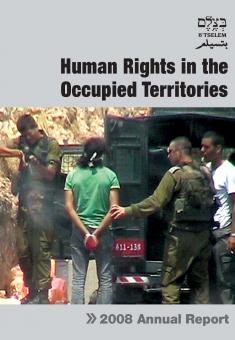
2008 Annual Report
Human Rights in the Occupied Territories
B'Tselem's annual report surveys a wide range of Israeli human rights violations in the OPT in 2008, until Operation Cast Lead. As house demolition and lack of law enforcement on violent settlers continued, Israel largely refrained from holding members of the security forces accountable for their actions.
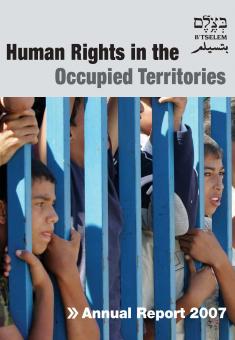
2007 Annual Report
Human Rights in the Occupied Territories
According to the report, the number of Israelis and Palestinians killed in clashes in the West Bank and the Gaza Strip dropped. However, there has been deterioration in many other measures of the human rights situation in the Occupied Territories.
Israel’s regime of apartheid and occupation is inextricably bound up in human rights violations. B’Tselem strives to end this regime, as that is the only way forward to a future in which human rights, democracy, liberty and equality are ensured to all people, both Palestinian and Israeli, living between the Jordan River and the Mediterranean Sea.
Since the Hamas attack on 7 October 2023, Israel has acted in a coordinated and deliberate manner to destroy Palestinian society in the Gaza Strip, committing genocide against its residents. In light of Israel’s actions in Gaza, the public statements made by Israeli decision-makers, and the international community’s failure to take effective action, there is a serious risk that the Israeli regime will expand the genocide to other areas under its control—first and foremost, the West Bank.
B’Tselem calls on the Israeli public and the international community to use every tool available under international law to bring an immediate end to Israel’s genocide against the Palestinian people.