On the Agenda
Filter updates:

Toddler against background of ruins in Khirbet al-Halawah, Masafer Yatta. Photo by Hagai El-Ad, B’Tselem, 4 Feb. 2016
New wave of demolitions in West Bank: Another phase in policy of expelling Palestinians from vast portions of West Bank
As of Jan. 2016 Israeli authorities stepped up efforts to expel Palestinian communities in the South Hebron Hills, Ma’ale Adumim area and the Jordan Valley, demolishing 73 homes and 51 other structures, some donated by aid agencies. Israel recently announced plans to demolish many more structures in Kh. Susiya, expel Abu a-Nuwar’s residents, and reported its failed mediation with Masafer Yatta. All are part of a policy whereby Area C is to serve Israel rather than West Bank Palestinians. Restrictions Israel imposes in Area C force all West Bank Palestinians to live in crowded enclaves without land reserves for building, farming, infrastructure, health and education services or freedom of movement.

Stranded UN vehicle on razed access road to Khirbet ‘Ein Karzaliyah. Photo by ‘Aref Daraghmeh, B’Tselem, 10 February 2016.
In a three-day demolition campaign in the Jordan Valley, the authorities left 59 people, including 28 minors, homeless
Over three days during the past week, the authorities demolished 22 dwellings in the Jordan Valley, along with 41 other structures used for storage and livestock, leaving 59 people, including 28 minors without a roof over their heads.

Military tanks in fields cultivated by the community. Photo by ‘Aref Daraghmeh, B'Tselem, 27 Jan. 2016
Israeli military trains, fires shells near homes of Kh. a-Ras al-Ahmar, northern Jordan Valley
In mid-Jan, 24 Palestinian families in the Jordan Valley were informed they would be temporarily displaced at month’s end for military training in the area. The evacuation was cancelled due to weather conditions, but the military did conduct training very close to one community, causing panic among residents, especially children, and crushing crops. Military training in the Jordan Valley is illegal. Israel must immediately stop it and all other measures employed in an attempt to force Palestinian residents of the Jordan Valley out of the area.
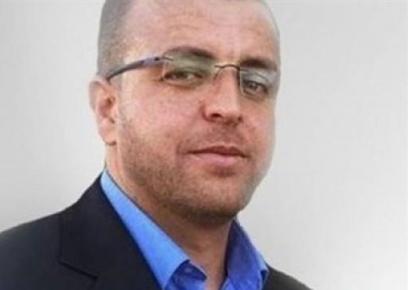
Muhammad al-Qiq. Photo: courtesy of the family
Israel’s HCJ refuses to rescind administrative detention of hunger striker Al-Qiq; his condition notwithstanding, HCJ orders a vague “suspension”
On 4 Feb. 2016 the High Court of Justice “suspended” the administrative detention of Muhammad al-Qiq, who has been on hunger strike for 72 days. This vague decision is essentially meaningless: The ruling states that his relatives may visit him in hospital in Israel, but does not oblige Israel to issue them entry permits. Administrative detention orders are subject to judicial review, but the courts usually approve the orders, rarely questioning the security establishment’s position. Even so, in view of al-Qiq’s condition, the HCJ’s evasive legal solution and the refusal to rescind the order are extreme.

Field damaged by military's spraying. Photo by Khaled al-'Azayzeh, B'Tselem, 31 December 2015
Israel sprays Gazan farmland close to border fence, destroying crops and causing heavy losses
In December 2015, Gazan farmers reported that Israel had sprayed their land with herbicides, seriously damaging crops in areas where farmers were supposedly permitted to work. The military frequently changes the scope of the “no-go” zone by the border fence, but does not bother to mark it or inform farmers. Israel cannot treat the Gaza Strip as its part of its territory and ignore the residents. If the military believes that there is a need for a “security zone” along the border, it must establish this zone within Israeli territory.

Civil Administration bulldozer razing a livestock pen in al-Mkassar in the northern Jordan Valley. Photo: ‘Aref Daraghmeh, B’Tselem, 4 February 2016
Another day in Area C: Israeli demolitions in two Palestinian communities leave 27 homeless
On 4 Feb. 2016, Civil Administration (CA) officials came to the Palestinian community of al-Mkassar in the northern Jordan Valley with bulldozers and a military escort. They proceeded to demolish four tents that were home to two families – a total of 19 people, including 12 minors and eight livestock pens. These families had already lost their homes in a previous demolition in June 2015. Later that the day, CA and military forces came to the community of Khirbet Susiya in the South Hebron Hills, where they dismantled and confiscated two tents that were home to a family of 8, including 6 minors. The tents were donated to the family after their two previous tents were demolished about two weeks ago, on 20 Jan. 2016.

Demolition in Khirbet Jenbah, 2 Feb. 2016. Still from video by Nasser Nawaj'ah, B'Tselem.
Israeli authorities demolish homes of 22 Palestinian families in Firing Zone 918
Yesterday, 2 Feb. 2016, Israeli authorities demolished a total of 22 homes in two Palestinian communities in the South Hebron Hills, leaving 110 people, including 64 minors, homeless in mid-winter. The communities lie in an area declared by the military as Firing Zone 918. This comes immediately after the end of unsuccessful mediation between Israeli authorities and the communities, which now plan to renew their legal battle against attempts to expel them from their land.

Civil Administration demolishing structures in Khirbet Jenbah - Firing Zone 918
The authorities have begun demolishing structures in the village of Khirbet Jenbah, in the 918 Firing Zone, in the Southern Hebron Hills. This is following the termination of the arbitration process between the residents and the state.
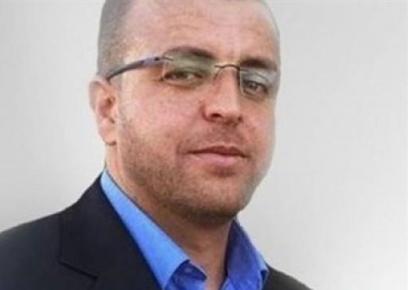
Muhammad al-Qiq. Photo: courtesy of the family
Life of journalist Muhammad al-Qiq, administrative detainee on hunger strike for 65 days, in danger
Palestinian journalist Muhammad al-Qiq, 33, has been on hunger strike for 65 days (as of 28 Jan) to protest his arrest. He has been in administrative detention for over a month. According to medical literature, his life is by now in danger. Last week, the Israeli Supreme Court rejected Al-Qiq’s petition for release and refrained from determining, as yet, whether he should be released due to his medical condition. According to recent Israel Prison Service data, 527 Palestinians are currently being held in administrative detention – the highest figure since 2009.

Demolitions in Khirbet Susiya. Photo: Nawa'jah family, 27 Jan. 2016
Israeli authorities demolish ten Palestinian homes in Area C in January, leaving 59 homeless, incl. 37 minors
Since the beginning of 2016 Israel has demolished eight Palestinian homes in the area defined as E1 and two homes in the South Hebron Hills, including one in Khirbet Susiya, where residents have struggled for years against expulsion and settler takeover. These demolitions serve Israel’s policy to create immutable facts on the ground ahead of any future agreement. This longstanding policy, which creates an impossible daily reality for Palestinians in Area C, constitutes forced transfer of protected residents within the occupied territory.

Young woman injured in stabbing attack yesterday in settlement of Beit Horon dies of her injuries
It was reported this morning that Shlomit Kriegman, 23, who was stabbed yesterday by a Palestinian in the settlement of Beit Horon, died of her injuries. According to the reports, two Palestinians came to Beit Horon yesterday and stabbed two women – Shlomit Kriegman, 23, and another woman aged 60 who was moderately injured. The two attackers were shot and killed by a security guard on the settlement and another armed civilian. B'Tselem wishes to express its profound sorrow on Shlomit Kriegman’s death and extends its condolences to her family and hopes for a speedy recovery to the other woman injured in the attack. Dliberate targeting of civilians undermines every moral, legal and human standard.

Nasser Nawaj'ah brought to extension of detention hearing at Jerusalem Magistrate's Court, which ordered his release on Jan. 21, 2016. Photo: Oren Ziv, Activestills
B'Tselem field researcher Nasser Nawaj’ah released after six day arrest
Judge finds that authorities failed to produce sufficient evidence that Nawaj’ah endangered a land dealer. Ofer Military Court yesterday (Jan. 24, 2016) ordered the release of B'Tselem field researcher Nasser Nawaj’ah, who was arrested on the night between Tuesday and Wednesday (Jan. 20, 2016) but delayed the execution of his decision for 24 hours in order to allow the police to appeal. The police announced this afternoon it will not pursue an appeal, which clears the way for his release in the coming hours.
Israel’s regime of apartheid and occupation is inextricably bound up in human rights violations. B’Tselem strives to end this regime, as that is the only way forward to a future in which human rights, democracy, liberty and equality are ensured to all people, both Palestinian and Israeli, living between the Jordan River and the Mediterranean Sea.
Since the Hamas attack on 7 October 2023, Israel has acted in a coordinated and deliberate manner to destroy Palestinian society in the Gaza Strip, committing genocide against its residents. In light of Israel’s actions in Gaza, the public statements made by Israeli decision-makers, and the international community’s failure to take effective action, there is a serious risk that the Israeli regime will expand the genocide to other areas under its control—first and foremost, the West Bank.
B’Tselem calls on the Israeli public and the international community to use every tool available under international law to bring an immediate end to Israel’s genocide against the Palestinian people.