Al-Mughayir, Ramallah District: Hundreds of settlers attacked the village for two days. A young Palestinian defending a house was shot and killed by settlers or Israeli forces
Al-Mughayir, Ramallah District: Hundreds of settlers attacked the village for two days. A young Palestinian defending a house was shot and killed by settlers or Israeli forces
On Friday, 12 April 2024, searches for Binyamin Ahimeir, an Israeli teen from the outpost of Malachey Hashalom who was killed by a Palestinian and whose body was found the next day, were underway near the village of al-Mughayir. Around 7:00 A.M., hundreds of settlers gathered on the Allon Road (Route 458), about two kilometers northeast of the village. Seven to 10 jeeps with soldiers and Border Police officers also participated in the search, and two military helicopters and four drones circled in the air.
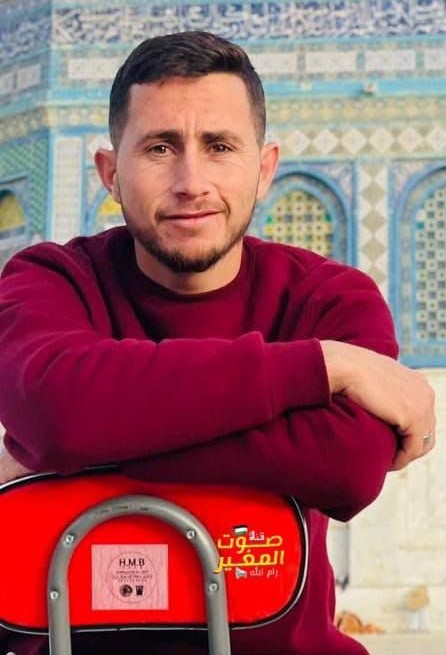
Jihad Abu ‘Alia. Photo courtesy of the family
In the morning, settlers and Israeli forces spread out in olive groves and on the village outskirts. Palestinian residents were told they were searching for the missing teen. Around noon, dozens of armed and masked settlers advanced towards a cluster of houses on the northeastern edge of the village and began pelting them with stones. Residents who arrived at the scene to defend their homes managed to fend off the settlers, who left the village. Meanwhile, about 10 Border Police officers arrived in four jeeps and fired tear gas canisters and live rounds at the Palestinian youths who fended off the settlers, wounding one of the youths in the leg.
Around 2:30 P.M., hundreds of settlers returned, accompanied by about 10 members of Israeli forces, and attacked the houses with stones and Molotov cocktails. Residents who came out of their homes tried to fight off the settlers with stones, and about 30 of them holed up on the roof of one house, at which settlers, protected by the forces, were throwing stones and firing live shots. The forces were also firing. Jihad ‘Afif Abu ‘Alia, 25, who was on the roof, was shot in the head by the settlers or the forces. Young men who carried him away were attacked by Border Police officers, but managed to get him to an ambulance that was waiting in the area and took him to a hospital in Ramallah. He was dead on arrival.
Around 4:30 P.M., hundreds of settlers attacked the nearby village of Khirbet Abu Falah.
Over the course of the two days, settlers uprooted and cut down approximately 80 olive trees and torched 93 vehicles (including three motorcycles and about 74 “mashtuba” cars, which are unlicensed cars used for driving inside villages). They also set fire to 12 houses (10 burnt down and two were damaged), as well as dozens of dunams of agricultural land. The settlers also smashed windows in about 16 houses, stole about 150 sheep and goats, killing some of them, and burned and destroyed 18 sheep pens, chicken coops and other agricultural structures (completely destroying 15 and partially destroying three). Twenty-six residents were wounded by shots fired by the settlers and forces; 15 were injured by rubber-coated metal bullets fired by the forces, and one was injured in the leg by a stun grenade thrown by the forces. The military claimed that during the attack on the village, Palestinians threw stones and Molotov cocktails, lightly wounding three soldiers, and that a settler was shot in the leg. The military did not specify who shot the settler.
The settlers remained in the area until around 7:00 P.M. on Saturday, and then left with the soldiers and police officers.
Muhammad al-Haj, 24, said in a testimony he gave B’Tselem field researcher Iyad Hadad on 13 April 2024:
I was away from the village and when I heard about the settler attack, I went back. I got there at 3:00 P.M. and things were tense. Everyone was on high alert and just around that time, hundreds of settlers began attacking one of the northern neighborhoods of the village. A few families live in that area in a shared compound, and there were women and small children there.
Muhammad al-Haj at the hospital. Photo courtesy of al-Haj
I went there with some other people to protect them, and when we got close to Abu Jaber’s house, I saw hundreds of settlers, some masked and some armed with rifles or handguns. Some of the settlers wore military pants and regular shirts, and some had tzitzits [garment worn by religious Jewish men]. The settlers attacked the houses with sticks and stones, destroyed and broke things, vandalized cars and started fires.
There were soldiers there protecting them and clashing with dozens of people from the village who came to defend the houses. The soldiers fired live shots but the people still insisted on protecting the family and getting them out, because they were afraid the settlers would burn them alive inside the house. We managed to get them out and then, while I was escorting one of the women away from her house, soldiers chased after us firing live shots. They hit me in the left thigh from about 100 meters away. The bullet went in and sort of paralyzed me, but somehow I managed to walk another 10-20 meters.
An ambulance that was in the area took me to Dr. Iyad Na’asan’s private clinic in the center of the village. There were two other wounded people there, a 16-year-old boy who was shot in the thigh and a 50-year-old man who was hit in the head by a stone.
We were given first aid and taken together to the Mujama Falastin Medical Center in Ramallah. They found the bullet had hit a nerve, so I was kept in the hospital for more testing.
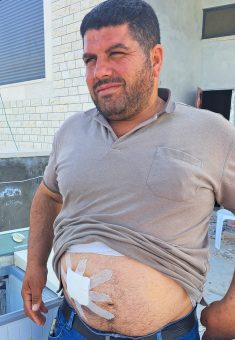
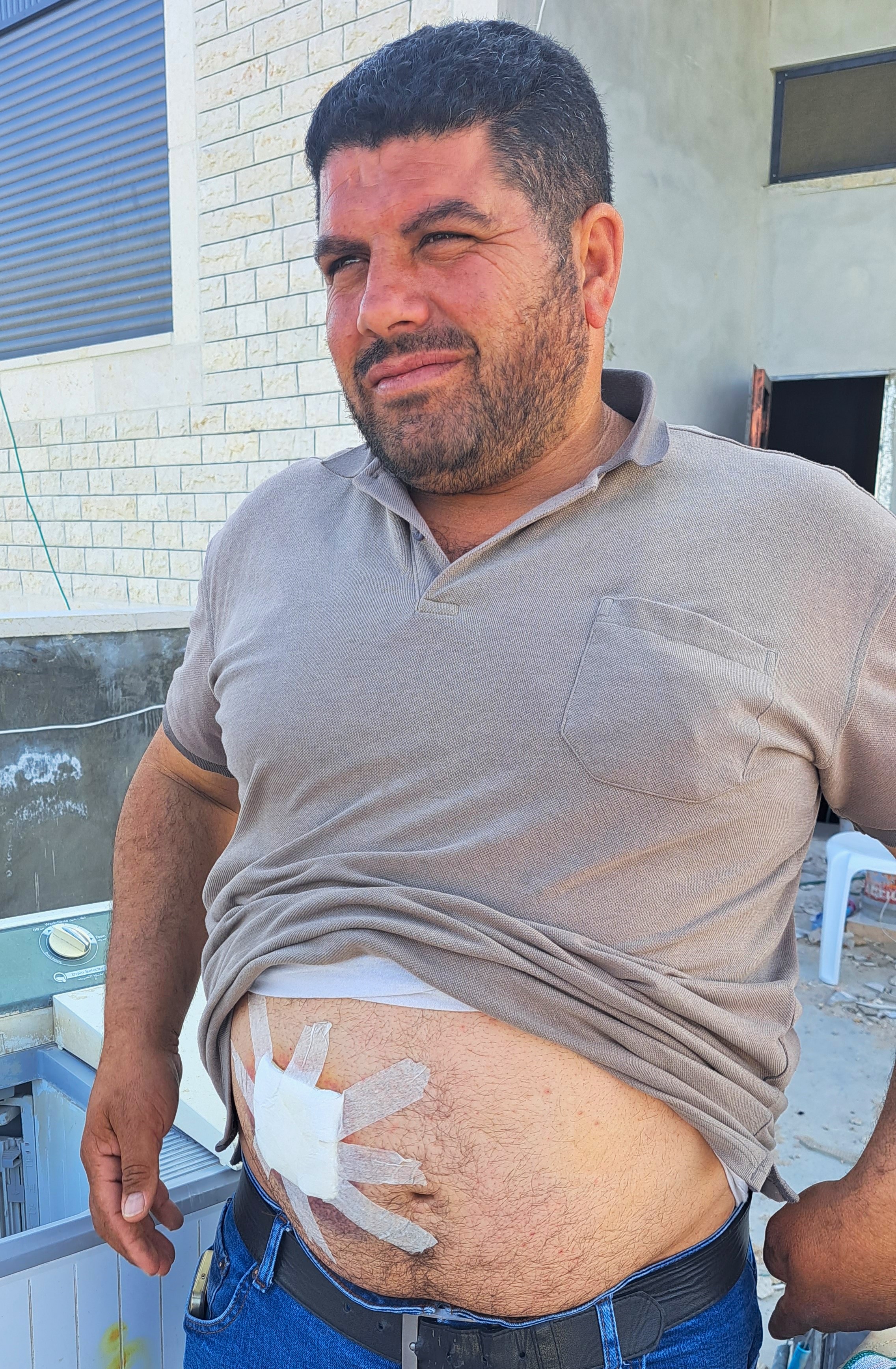
Nidal Abu ‘Alia, 36, said in a testimony he gave B’Tselem field researcher Iyad Hadad on 19 April 2024:
We heard cries for help from one of the homes and went over to help the family right away. The soldiers pushed most of us away and only 15-17 guys managed to reach them. We went up to the roof of the house, where there were about 10 people from the family, to fight off the settlers. The soldiers were behind the attacking settlers, protecting them and block any attempt by residents to come and help.
Nidal Abu ‘Alia. Photo: Iyad Hadad, B’Tselem
There were about 25-30 of us on the roof, including Jihad Abu ‘Alia (25), who was killed during the incident.
The settlers attacked us from four directions with stones and live shots. We tried to fight them off with stones and shelter behind the roof’s railing. The bullets and stones hit the windows and walls. Lots of bullets hit the water tanks on the roof, and the water burst out on us with force.
People who were with us started getting hurt. Rasmi Abu ‘Alia (55) was the first – he was hit by a bullet fragment in the hand and a stone in the head. Then Muamen (20), ‘Abd a-Latif’s son, was hit in the head by a stone. The attack was so savage and violent, it’s hard to describe. We didn’t know if we’d make it out alive. We kept calling everyone we could for help, but no one could come, because the army had surrounded the area and blocked access. Meanwhile, the settlers managed to force their way into the front yard of the house and torched two vehicles parked there and another vehicle parked in the side yard of Rasmi’s house.
At around 4:15 P.M., while Jihad Abu ‘Alia and I were hiding behind the roof’s south-facing railing, he got up for a second to see what the settlers were doing and his head peeked over the railing. At that moment, several bullets were fired at him, one of which hit him in the head. Pieces of his skull splattered along with a lot of blood and brain tissue, and he fell down.
I didn’t see who shot him exactly, because I was hiding behind the railing, but during the incident, every time I managed to take a peek, I saw that the people with guns who were shooting were settlers in army pants and white shirts with tzitzits, and most of them were masked.
We were shocked at the sight of Jihad bleeding, and when we went over to him, we realized he was in critical condition. One of the guys held his jaw open so he could breathe. He was unconscious but still breathing.
We tried to call for an ambulance, but they were still shooting at us and no one could make it. We took care of Jihad for 20 minutes and gave him first aid. We wrapped his head with a pillow and then with sheets and took him inside the family’s house. A few guys took a risk, went down to the first floor, opened the door and shouted, “There’s someone injured here! Wounded man! Is’af!” But as soon as they opened the door leading to the outside stairs, the settlers fired three or four bullets at them, one of which hit the wall next to the door, and the guys came back inside.
After another 10 minutes, after the settlers moved to another part of the village, we decided to take a chance and go outside with Jihad. The soldiers were still there. I saw four soldiers among the trees, about 100 meters away from us.
We put Jihad on a makeshift wooden stretcher and started walking. When we were 30 meters away from the soldiers, they pointed their guns at us, so one of us told them in Hebrew, “We have a wounded man with us,” and they let us pass.
After about 50 meters, we saw two military jeeps, so we turned and kept walking through the olive trees so the soldiers wouldn’t see us. We kept walking until we got close to ‘Atef Abu ‘Alia’s house, where we saw a vehicle burning after settlers torched it. There were five military jeeps and several soldiers and Border Police officers there. They pointed their guns at us and the guy who knew Hebrew told them: “We have a wounded man with us!” Wounded!” They only allowed the four or five guys who were carrying the “stretcher” through. I was one of them.
We kept walking until we came across Border Police officers. Some of them pointed their guns at us and attacked some of us, beating us. They beat us hard with the butts of their guns, hit us with their hands, and also kicked us. I shouted at one of them to let us take Jihad to the ambulance and he told me: “Get out of here, or I’ll shoot you.” I lifted up my shirt and told him, “Shoot me!” And he really did shoot a rubber bullet at me that hit me in the stomach and wounded me, from a distance of half a meter. It hurt a lot, and I writhed and screamed in pain. The place of the injury swelled up. In the meantime, the other guys managed to get Jihad into the ambulance, which drove away. Jihad’s evacuation from the house to the ambulance took 15-20 minutes.
The other guys and I wanted to go back to the home of the family where we were before, but the officers chased us, beat us, and threatened us at gunpoint, so we ran into the village. From there, I followed the news about the settlers’ movements and the attacks on social media. They caused a lot of damage to homes, vehicles, farms, and livestock, fired live rounds, and injured dozens of young men and other residents. Around 6:30 P.M., I heard that Jihad died of his wounds. May God embrace him with mercy and receive him in heaven. What can I say? God, the true judge, will hold these barbaric murderers accountable.
Israel’s regime of apartheid and occupation is inextricably bound up in human rights violations. B’Tselem strives to end this regime, as that is the only way forward to a future in which human rights, democracy, liberty and equality are ensured to all people, both Palestinian and Israeli, living between the Jordan River and the Mediterranean Sea.
Since the Hamas attack on 7 October 2023, Israel has acted in a coordinated and deliberate manner to destroy Palestinian society in the Gaza Strip, committing genocide against its residents. In light of Israel’s actions in Gaza, the public statements made by Israeli decision-makers, and the international community’s failure to take effective action, there is a serious risk that the Israeli regime will expand the genocide to other areas under its control—first and foremost, the West Bank.
B’Tselem calls on the Israeli public and the international community to use every tool available under international law to bring an immediate end to Israel’s genocide against the Palestinian people.