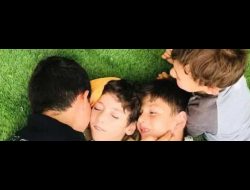
Nabila Hamad, mother of four

I live on the second floor of a three-story house. On 23 October, around 11 o'clock at night, the sound of footsteps near the house woke me up. My four children were sleeping. My husband, who works in Israel , was not at home. Right after I heard the sound of steps, there was intensive shelling of the house. I immediately woke up the children, and we went to the living room. The children were shaken and frightened, but I made sure they didn't scream. I became very frightened when I heard the sound of broken glass in a room on the northern side of the house. I smelled tear gas, and we went to the bedroom. I sprayed perfume in the room and on the children's hands so that they wouldn't suffer from the smell of the tear gas.
We stayed in the room until 1:30 A.M. Then I heard someone call my name on a loudspeaker and order me to go outside. I listened carefully to make sure what they were saying, and then went outside with my children. When we got to the entrance to the building, I saw soldiers standing next to my brother-in-law 'Abd al-Razeq Hamad's house, which is a few meters from our house. Lots of soldiers aimed their rifles at us. One of the soldiers shined a spotlight at me. When I got to where the soldiers were standing, one of them, who was of medium build, tall, dark-skinned, in uniform and carried a rifle, began to talk to me in Arabic. He said there was a man hiding inside our house. I told him that the children and I had been sleeping, and that I didn't know if there was anyone hiding in the building. The soldier told me not to be afraid, and that if I told him someone is inside, he wouldn't tell that personthat I had told the army. I replied that, "If you don't believe me, then let's go, you and me, into the house to make sure that nobody is there." He refused, saying that the man was armed, and that he was shooting at them. The soldier insisted that I tell him whether somebody was in the house. I told him that the children and I were sleeping and that we woke up only when I heard the firing at the house. While I was talking with the soldiers, I heard intensive gunfire at my house.
After I had been talking to the soldiers for about a half an hour,, I saw fire break out in my house. I asked one of the soldiers if the fire was coming from inside my house. He said that it was, and that it would be possible to repair the damage later. Another brother-in-law of mine, Yusuf, who was in his house, started shouting at the soldiers from the window, telling them that my house was on fire. The soldiers then let the children and me go to Yusuf's house, because there was fire and smoke coming from our house. The smoke began to penetrate Yusuf's house, and we had to go outside and wait by the side of the road.
Morning came, and the soldiers forced us to go and stay in the al-Ghoul's house until the military action ended. Around 8:00 A.M., after the soldiers left, I left the al-Ghoul's house. My relatives were already standing around our house. Everything in the house had been burned. The house is uninhabitable because of the fire and the cracks in the house [that resulted from the army's action].
Nabila Ahmad Muhammad Hamad, 35, married with four children is a resident of Nur Shams refugee camp. Her testimony was given to Abd al-Karim a-S'adi on 6 November 2005