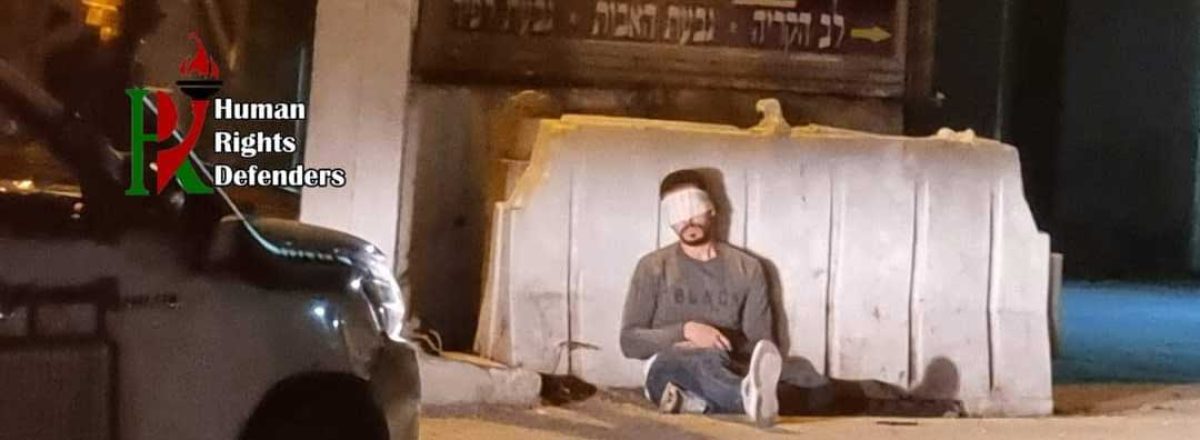
On Sunday, 23 October 2022, at around 10:00 P.M., brothers Rajeh (24) and Bassem (21) a-Razem set out from their home in the Jaber neighborhood in the Hebron city center to deliver goods to the family store, which is located about 200 meters away. As they approached the Jaber checkpoint, the brothers saw several soldiers chasing youths from the neighborhood. Bassem got scared and ran back towards the house, while Rajeh kept walking towards the store. One of the soldiers suddenly approached Rajeh, pushed him, knocked him down and pressed his knee into his neck, choking him. More soldiers arrived. They handcuffed and blindfolded Rajeh and made him sit by the checkpoint.
Bassem and Rajeh’s parents, who heard the commotion, rushed to the scene to rescue Rajeh, but the soldiers pushed them, swore at them and did not allow them to come near. The soldiers also attacked neighbors who came to the family’s aid, including: Ahmad Jaber (19), who was also handcuffed; his father, Minwer Jaber (48), who told the soldiers he was a member of the Palestinian security apparatus; and Minwer’s brother, Munzer Jaber (56), and his son Mu’taz (36). The soldiers also detained ‘Aref Jaber (48), who came to the spot to document the event.
About half an hour later, an officer arrived at the checkpoint and released everyone except Rajeh, whom the soldiers held at the checkpoint, handcuffed and blindfolded, until 12:30 A.M.
The Israeli media reported that two soldiers and an officer were suspended following the incident, which the IDF Chief of Staff described as a “a flagrant departure from IDF values.” Yet this case is no exception. It is part of the violent routine that is all too familiar to Palestinians in downtown Hebron – and throughout the West Bank. The only exception here was media exposure. Even then, how did the military choose to penalize soldiers who were documented verbally and physically assaulting Palestinians and falsely arresting one? By suspending them from operations. This is no mistake: the soldiers did not misinterpret orders and the Chief of Staff did not misunderstand the severity of the incident. It is Israel’s policy.
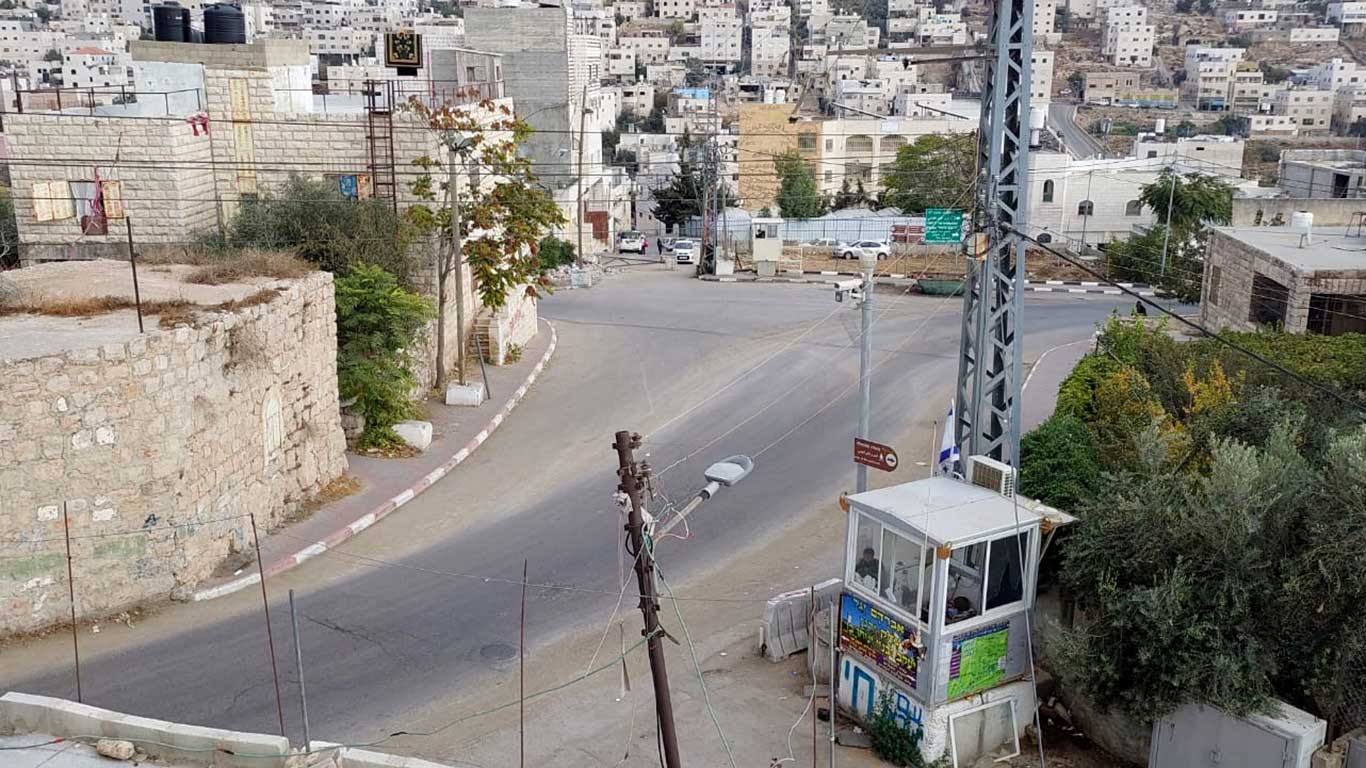
B’Tselem field researcher Manal al-Ja’bari took testimonies on 25 October 2022 from some of the residents attacked:
Rajeh a-Razem (24) from the a-Salaimeh neighborhood said:
On 23 October 2022, at around 10:00 P.M., my father asked my brother Bassem and me to take goods to the store. Because we’re not allowed through the Jaber checkpoint by car, we have to transport goods with a small cart. We finished transporting the first batch and were taking the rest when we saw about four soldiers near the checkpoint yelling at some young guys on the street and chasing them. Bassem ran towards home, and I continued with the goods towards the checkpoint. Suddenly, one of the soldiers attacked me, knocked me down and sat on top of me, pressing his knee into my neck. He was choking me. Another soldier pointed his rifle at me. The soldiers asked me in Arabic about Bassem, who he was and why he ran away. I was afraid they’d hurt my brother, so I told them I didn’t know him, and then the soldier who was pointing his rifle at me shouted something in Hebrew that I didn’t understand. I told him I didn’t understand and he hit me, slapped me and shouted at me that I was a terrorist. The other soldier, who was still pressing his knee into my neck and choking me, also slapped me. Then, he pulled me to my feet and led me towards the checkpoint, where he tied my hands in front of me with zip ties, blindfolded me and made me sit in front of the checkpoint.
Meanwhile, my parents arrived. I heard them talking to the soldiers. The soldiers were shouting at them and swearing at my mother. It sounded as if they were attacking my father, too. At some point they lifted me to my feet, dragged me a few steps and then made sit back down on the ground. I heard other people from the neighborhood shouting and it sounded like there was a struggle going on. I think the soldiers hit one of the residents, and I heard him tell them in English he was a police officer. I couldn’t see what was happening because I was blindfolded.
They held me like that until about 12:30 A.M., and then they let me go and I went home. My family told me the soldiers had attacked Minwer Jaber and his family when they tried to help me.
Ibtesam Jaber, a 37-year-old mother of six from the Jaber neighborhood, said:
At around 10:30 P.M., my husband Minwer and I were at home. Suddenly, I heard shouting out on the street. Minwer went outside to see what was going on and our son Ahmad, who was woken by the shouting, followed him outside. I looked out the window and saw Rajeh a-Razem handcuffed and blindfolded. The soldiers had him sitting on the ground near the Jaber checkpoint. I saw his parents trying to get them to let him go, but the soldiers were pushing them and swearing at them. My husband came back inside to call the Palestinian DCO and get help for the young man. Meanwhile, I heard my son Ahmad shouting. Minwer rushed back out, barefoot. I saw three soldiers leading Ahmad to the checkpoint, hitting him as they went. They pulled the hood of his sweatshirt down over his face, tied his hands behind his back with zip ties and sat him down at the checkpoint, too. Afterwards, they pulled him and Rajeh to their feet and started dragging them, but Minwer blocked their path and asked why they were taking Ahmad, who had been asleep at home and had done nothing.
One of the soldiers got angry and aggressive and said in Arabic that Ahmad was a Palestinian terrorist. The soldiers pushed my husband and ordered him to go home, but he refused to back off until they released both young men. One of the soldiers assaulted my husband and beat him. I yelled at them from the porch to let my husband and son go. One of the soldiers pointed his weapon at me, started swearing at me in Arabic and ordered me to go inside, while another soldier kept beating my husband. He pushed Minwer up against a wall, and his body and head got hit. Minwer shouted at the soldiers in English that he was a member of the security apparatus, but it didn’t help. In the meantime, my brother-in-law Munzer and his son Mu’taz came to help, but the soldiers attacked them too, handcuffed them and made them sit on the road.
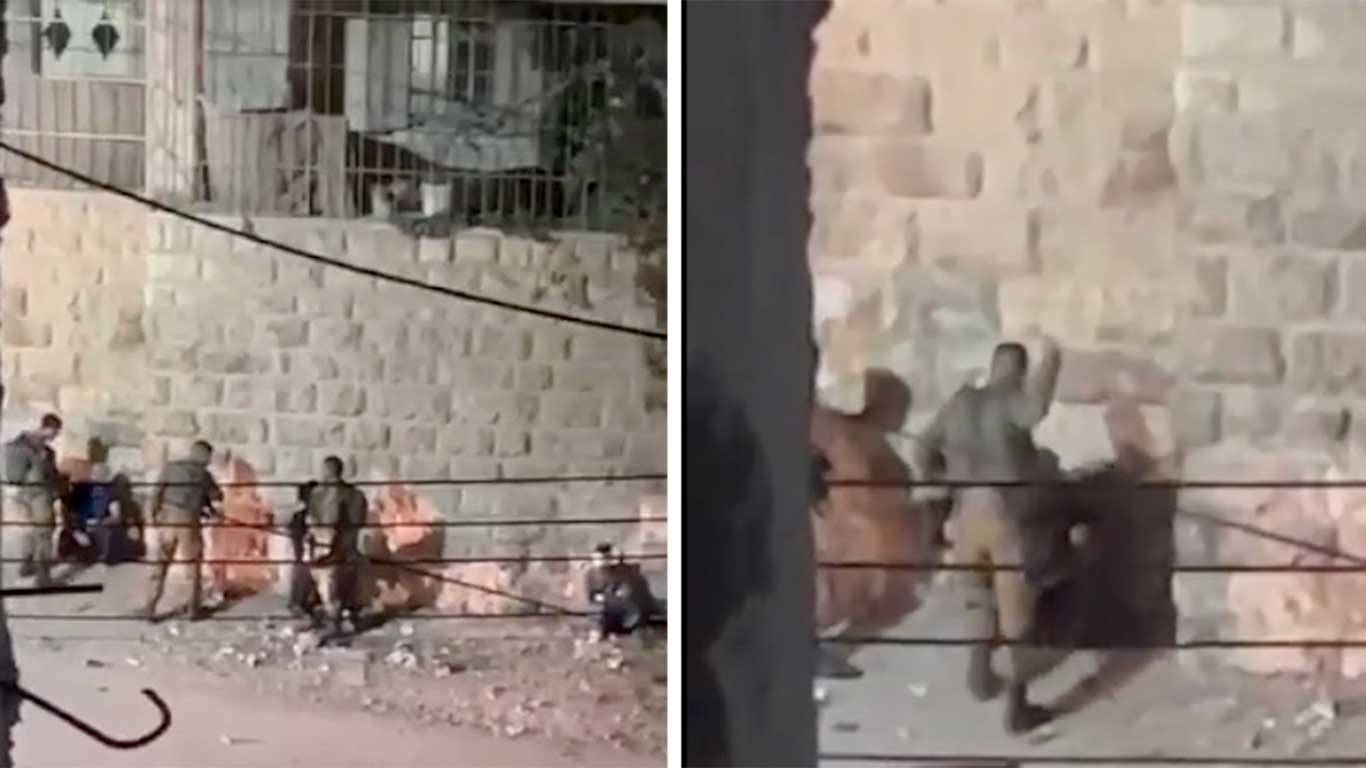
Ahmad Jaber (18) from the Jaber neighborhood said:
I started heading downstairs to see what was going on, and before I even got to the street, three soldiers attacked me. One grabbed me by the shoulder, pulled the hood of my sweatshirt down over my face and started dragging me to the Jaber checkpoint, swearing at me and kicking me. He told me I was a Palestinian terrorist. Then he pushed me against the wall of a building. He started talking to me in Hebrew, and I didn’t understand what he wanted. Then he pulled my leg, knocked me down to the ground, trod on my legs and slammed my face into the wall. I heard my father’s voice and tried to raise my head, but the soldiers wouldn’t let me speak. They were very aggressive.
The soldier punched and hit me several times on the head and kicked me. Then he tied my hands behind my back with zip ties and made me sit next to the checkpoint. A few minutes later, the soldiers pulled me and Rajeh up and led us a few steps on foot until my father blocked their way and asked why they were detaining us. The soldiers attacked my father, pushed him and ordered him to go home. He refused to back away, and then the soldiers started beating him. My mother shouted at the soldiers from the porch. One of the soldiers pointed his weapon at her and swore at her. Another soldier pushed my father against the wall, and he hit his head against it. My father shouted at the soldiers in English that he was a member of the security apparatus, but they didn’t stop.
Meanwhile, my uncle Munzer and his son Mu’taz came to help, and the soldiers attacked them too. They handcuffed them and made them sit down next to the same building by the roadside. After about half an hour, an army officer arrived. He talked to us and let all of us go except Rajeh. A Palestinian ambulance arrived, and the crew gave my father first aid. He had bruises all over his body. Rajeh was only let go around 12:30 A.M. That evening, soldiers went up to our roof. They stayed there all night, making noise and disturbing our sleep.