Ethnic cleansing of Palestinian communities and lone families in the West Bank (65 communities as of 08 Jul 2026)
Demolitions and confiscations in communities facing expulsion
Thousands of people – residents of dozens of Palestinian communities located throughout Area C, the West Bank – face imminent expulsion by Israeli authorities on a variety of pretexts. The live blog will pool the regular updates we get from B’Tselem field researchers regarding the communities and any attempts by authorities to expel them. Click on the number of a community cluster and then on the tent icon marked on the map for further information about communities facing the risk of expulsion.
The information in the blog reflects the latest state affairs known to us and is updated as we receive new data from the field. For more on the communities facing expulsion, click here.
The information in the blog reflects the latest state affairs known to us and is updated as we receive new data from the field. For more on the communities facing expulsion, click here.
8 Sep 2026
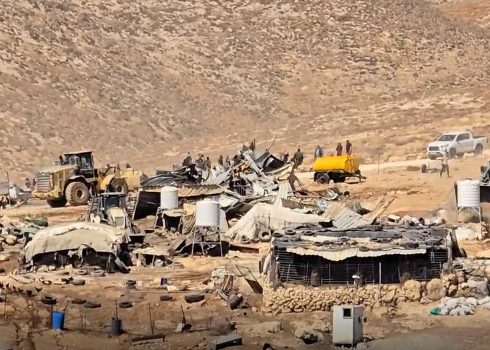
Photo by Nasser Nawajaa, B'Tselem
Civil Administration continues demolishing Masafer Yatta communities, demolishing all the homes in the northern section of Khirbet al-Fakhit and a home in Khirbet Khallet a-Dabe’
On Tuesday morning, 8 September 2026, Civil Administration personnel, accompanied by soldiers and equipped with four diggers, arrived at the community of Khirbet al-Fakhit in Masafer Yatta. The forces demolished five residential structures belonging to four families numbering 32 people, including 11 minors, leaving them homeless. The forces also demolished nine sheep pens, two livestock enclosures, five external toilets, 18 water tanks, solar panels, two water cisterns and five chicken coops, and confiscated a car.
The forces then continued north to the community of Khirbet Khallet a-Dabe’, where they demolished the home of a family of seven, including four minors, leaving them homeless. The forces also demolished an outdoor kitchen structure.
2 Sep 2026
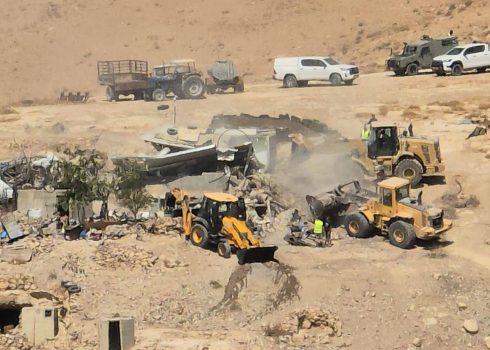
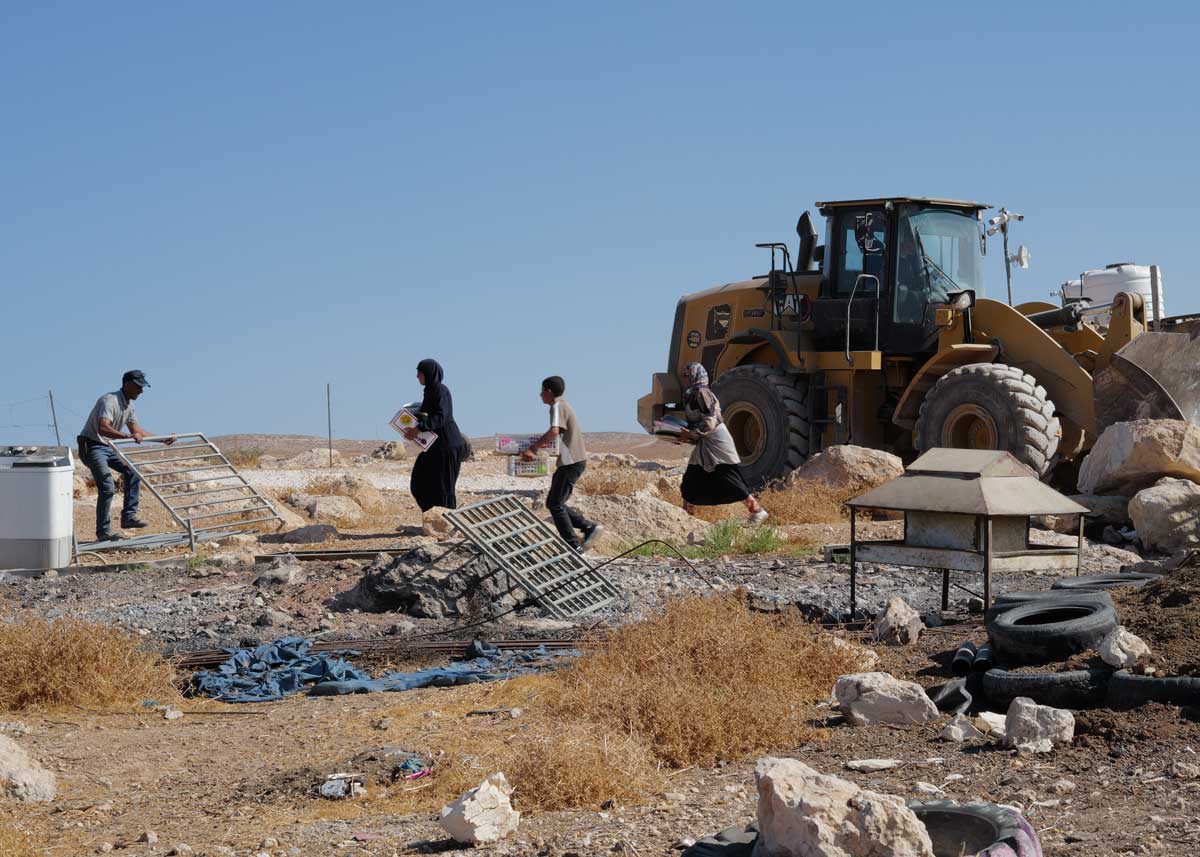
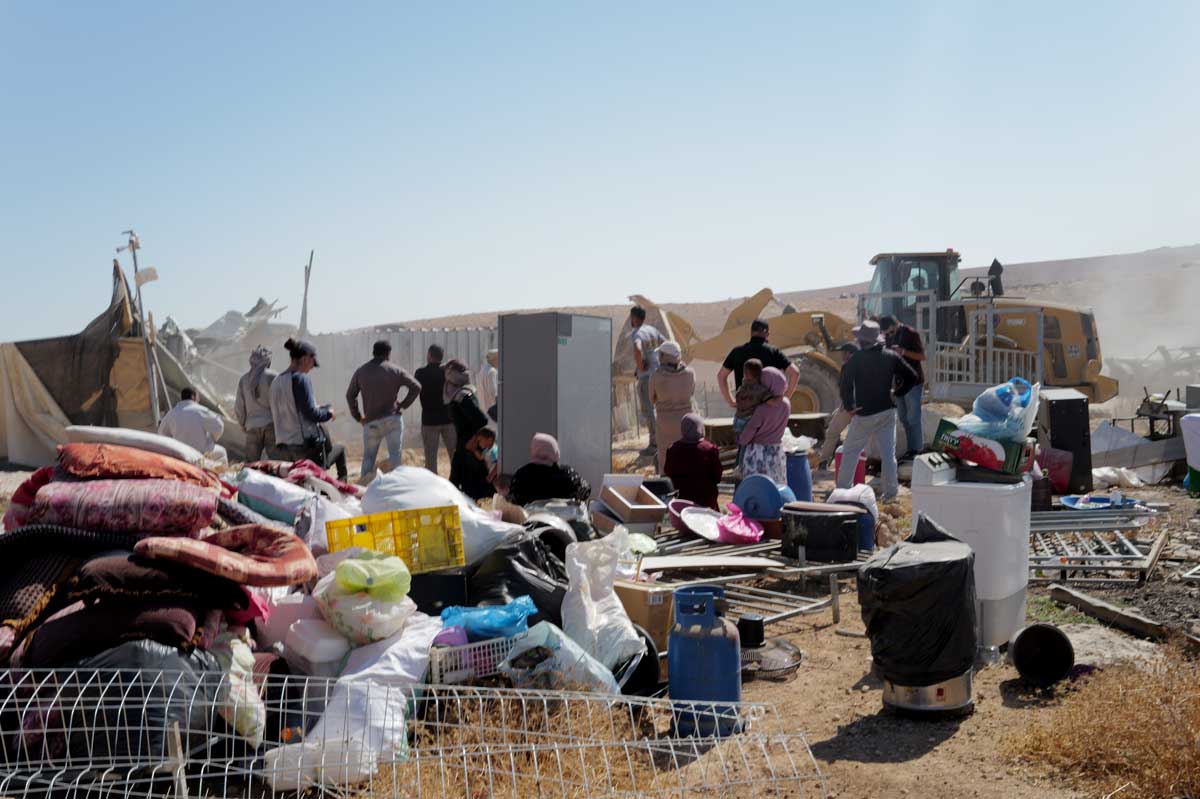
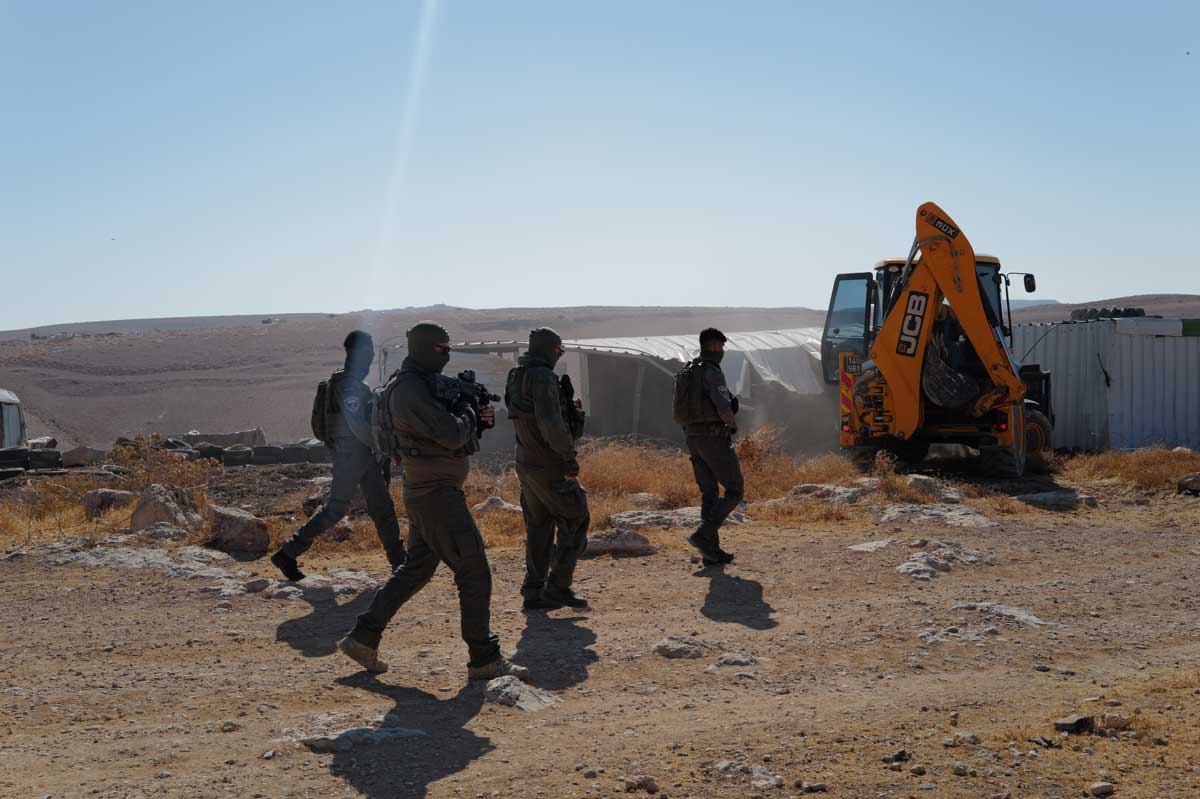
Demolition of homes in Khirbet a-Taban. Photo by Nasr Nawaj’ah, B’Tselem.
Civil Administration demolishes all homes in Khirbet a-Taban, Masafer Yatta, South Hebron Hills, without warning, attempting to expel the community
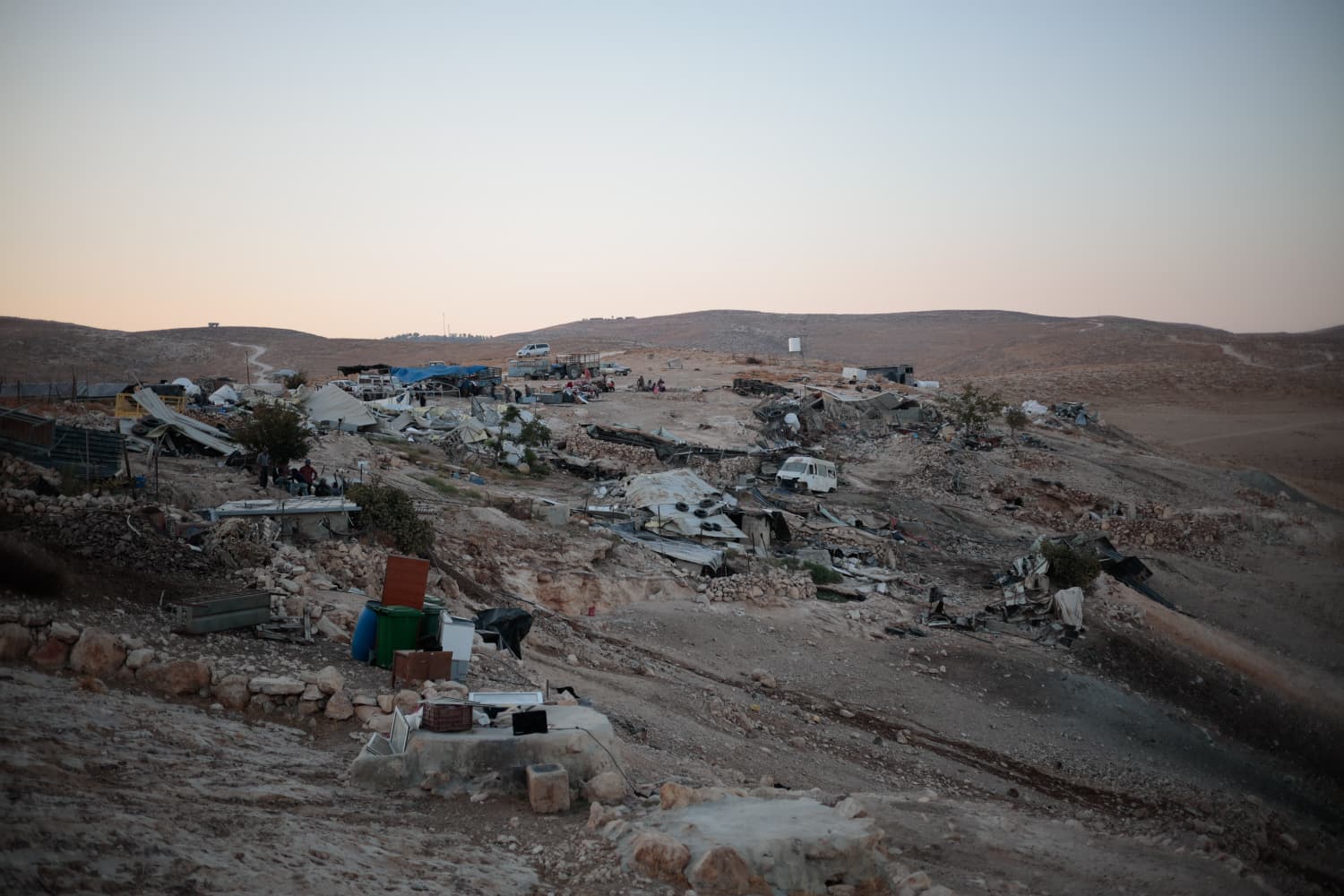
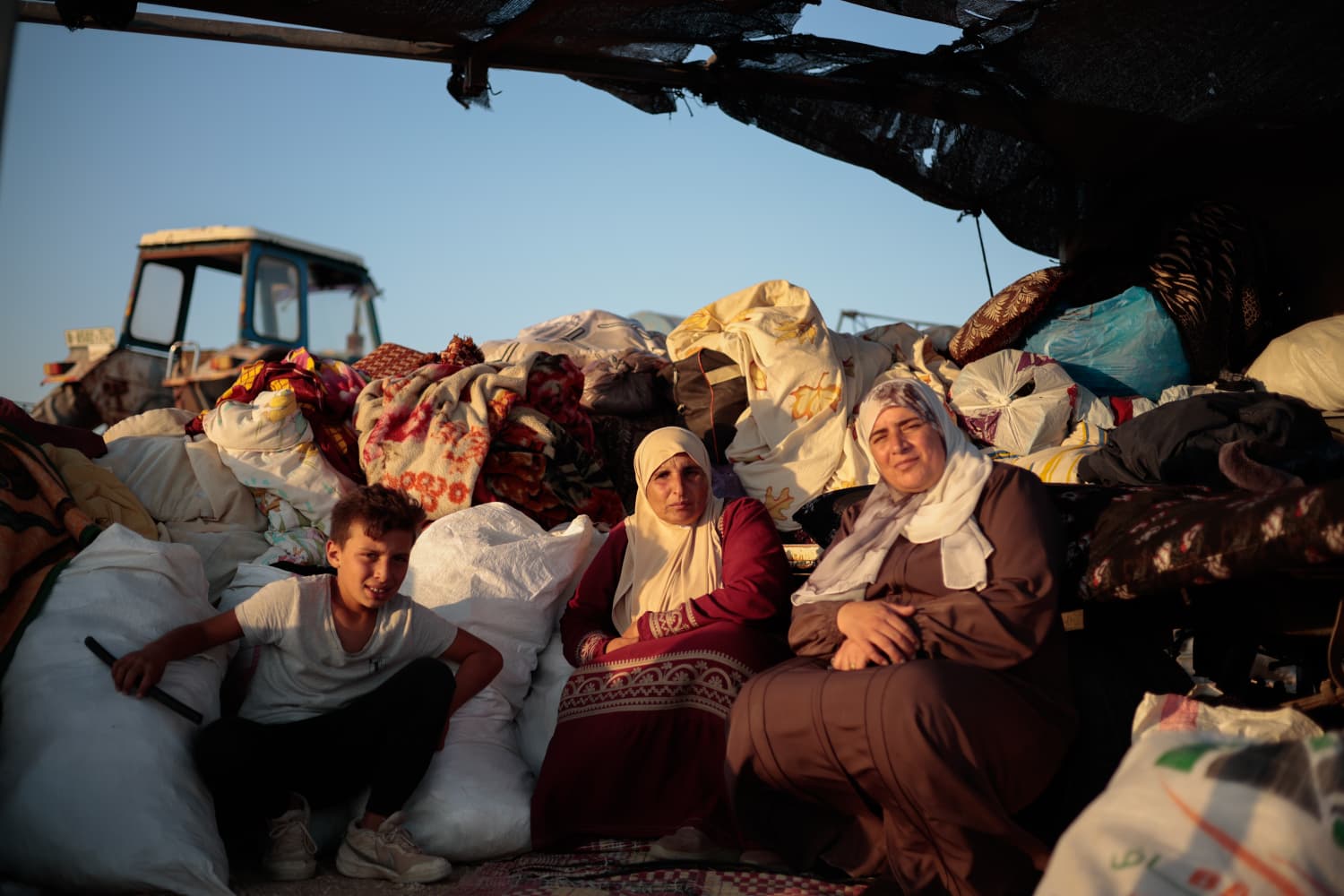
On Wednesday, 2 September 2026, Civil Administration personnel arrived at the community of Khirbet a-Taban, in Masafer Yatta in the South Hebron Hills, with a military and Border Police escort and diggers. They demolished all 12 homes in the community and almost all its other structures, leaving the residents homeless. The residents were given no warning prior to the demolition and were not allowed to remove their property.
The community was home to 12 families, numbering 70 people, including 28 children. The residents made their living from farming and raising some 600 head of livestock.
The homes that were demolished were cinder-block structures roofed with sheet metal. The forces also demolished 12 outhouses, four water cisterns, 10 livestock pens, seven tarpaulin and sheet-metal structures used to store fodder, three facilities for growing azolla, 15 water tanks, a towed water tanker and two sheep-milking stations. The forces also destroyed the entrances to four caves and blocked the entrances to four others, all of which were used for storage.
Only one sheet-metal structure, used as a metalworking shop, remains in the community. A stop-work order for the structure was issued today, 2 September 2026.
About two months ago, the Civil Administration rejected a master plan submitted for the community, on the grounds that the military commander had not approved planning for the area.
Since October 2023, Israel has already expelled 65 Palestinian communities, in addition to 18 communities that have been partially expelled.
Background
In the early 1980s, the Israeli military declared an area of about 30,000 dunams [3,000 hectares] in the South Hebron Hills, which includes the community’s land, a restricted military zone, and dubbed it “Firing Zone 918.”
In October and November 1999, the military expelled all 700 or so residents of 12 villages in the area on the official grounds that they were “illegally living in a firing zone”. This flimsy argument blatantly ignored the fact that the families had been living in the area for many years, since before Israel occupied the West Bank and afterwards, with the full knowledge of Israeli authorities.
Following the expulsion, the Association for Civil Rights in Israel (ACRI) and Attorney Shlomo Lecker filed petitions to the High Court of Justice (HCJ) on behalf of some 200 families from the villages. In March 2000, the HCJ issued an interim injunction permitting the villagers to return to their homes and graze their livestock in their fields pending a ruling in the case.
Ultimately, the HCJ rejected the residents’ petition. In early May 2022, it also rejected additional petitions filed by residents of the area, after accepting each and every one of the state’s arguments. Cherry-picking facts and relying on an absurd legal interpretation, the court made it clear there was no crime it would not find a way to sanction.
The justices held that the petitions must be rejected outright, as they were filed many years after the firing zone was declared and as the petitioners came to court “with absolutely unclean hands”, having built structures without permits over the years. The justices also held that regarding the matter itself, the petition should be rejected as, in their opinion, the military commander has the power to declare closed military zones in the occupied territory that supersedes the provisions of international law. Finally, the justices held that the petitioners were not “permanent residents” of the area before it was declared a firing zone and rejected the petition. In doing so, they allowed the state to immediately expel the residents and destroy their communities.
The State of Israel cites formal arguments such as “living in a firing zone” and “violating planning and building laws” to justify its policy in Masafer Yatta. These are false claims, meant to conceal Israel’s aspirations to take over the land for its own purposes and use it to benefit the Jewish population only.
***
In 2013, village resident Jabriyeh Hamamdeh, then 45, described in testimony she gave B’Tselem field researcher Musa Abu Hashhash the harsh living conditions resulting from Israel’s prevention of development and the repeated attempts to expel the village’s residents.
31 May 2026

Israel dismantled and confiscated three residential tents and agricultural structures in the village of al-Jiftlik
On Sunday, 31 May 2026, Civil Administration personnel arrived with a military escort and two trucks at the village of Jiftlik in the Jordan Valley, and dismantled and confiscated three residential tents owned by a family of 19, including 12 minors. The forces also dismantled and confiscated two tents used as a sheep enclosure and a sheepfold, five water tanks, and two outhouses.
10 May 2026
Israel demolished two agricultural structures in the village of Khashm a-Daraj in the South Hebron Hills
On Sunday, 10 May 2026, Civil Administration personnel arrived with a military and Border Police escort and a digger at the village of Khashm a-Daraj in the South Hebron Hills, and demolished a single-room agricultural structure and a hut used as a sheep enclosure.
7 May 2026
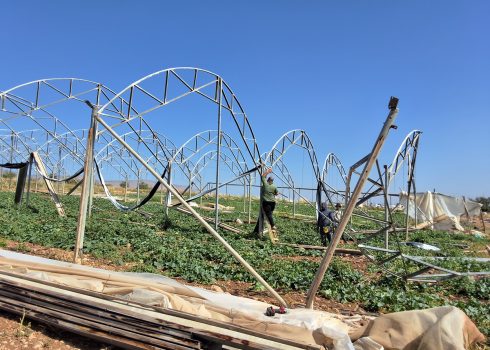
Greenhouses taken down in Bardalah, 7 May 2026 Photo: 'Aref Daraghmeh, B'Tselem, A Civil Administration bulldozer demolishing a greenhouse in Bardalah, 7 May 2026. Still from video footage, 'Aref Daraghmeh, B'Tselem
Israel demolished greenhouses in the village of Bardalah in the Jordan Valley
On Thursday, 7 May 2026, Civil Administration personnel arrived with a military escort and two diggers at the village of Bardalah in the Jordan Valley and demolished five vegetable and fruit greenhouses. The owners dismantled two additional greenhouses themselves to avoid demolition by Civil Administration personnel.
7 May 2026
Greenhouses taken down in Bardalah, 7 May 2026 Photo: 'Aref Daraghmeh, B'Tselem, A Civil Administration bulldozer demolishing a greenhouse in Bardalah, 7 May 2026. Still from video footage, 'Aref Daraghmeh, B'Tselem
Israel demolished greenhouses in the village of Bardalah in the Jordan Valley
On Thursday, 7 May 2026, Civil Administration personnel arrived with a military escort and two diggers at the village of Bardalah in the Jordan Valley and demolished five vegetable and fruit greenhouses. The owners dismantled two additional greenhouses themselves to avoid demolition by Civil Administration personnel.
5 May 2026
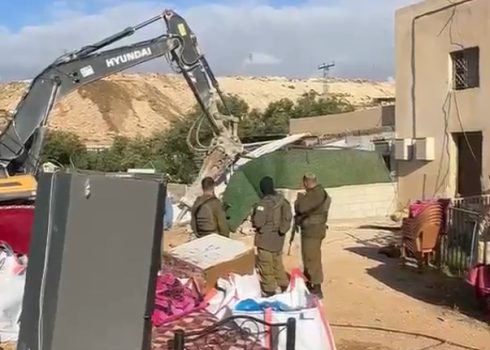
The demolition of the family home in Maghazi Jaba’. Still from video footage, 'Amer 'Aruri, B'Tselem
Israel demolished a home in the community of Maghazi Jaba’, leaving a family of 10 homeless
On Tuesday, 5 May 2026, Civil Administration personnel arrived with a military escort and a digger at the community of Maghazi Jaba’, and demolished an old stone structure housing a family of eight, including five minors, leaving them homeless.
16 Apr 2026
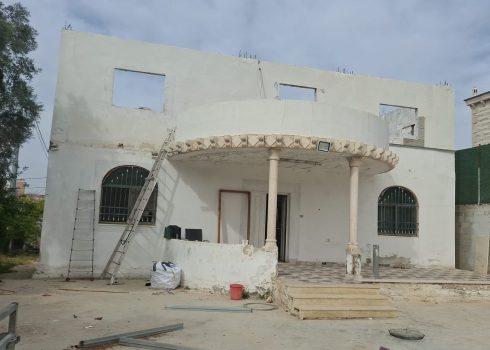
The vacation home before it was destroyed. Photo: 'Aref Daraghmeh, B'Tselem, The ruins of the vacation home. Photo: 'Aref Daraghmeh, B'Tselem
Israel demolished a vacation home in the village of 'Ein a-Duyuk a-Tahta in the Jordan Valley
On Thursday, 16 April 2026, at around 7:00 A.M., Civil Administration personnel arrived with a military escort and diggers at the village of 'Ein a-Duyuk a-Tahta, west of Jericho, and demolished a two-story vacation home owned by a resident of East Jerusalem.
16 Apr 2026
The vacation home before it was destroyed. Photo: 'Aref Daraghmeh, B'Tselem, The ruins of the vacation home. Photo: 'Aref Daraghmeh, B'Tselem
Israel demolished a vacation home in the village of 'Ein a-Duyuk a-Tahta in the Jordan Valley
On Thursday, 16 April 2026, at around 7:00 A.M., Civil Administration personnel arrived with a military escort and diggers at the village of 'Ein a-Duyuk a-Tahta, west of Jericho, and demolished a two-story vacation home owned by a resident of East Jerusalem.
12 Apr 2026
Israel demolished two residential tents, leaving a family of 16 homeless for the third time
On Sunday, 12 April 2026, Civil Administration personnel arrived with an Israel Police and Border Police escort and a truck at the neighborhood of Khirbet Qalqas in southern Hebron. They dismantled and confiscated two tents set up by a family of 16, including 10 minors, after the Civil Administration demolished their home in February, and then dismantled and confiscated the tents they had set up in March, leaving them homeless for the third time.
24 Mar 2026
Israel demolished agricultural structures in Khirbet Jamrurah
On Tuesday, 24 March 2026, Civil Administration personnel arrived with a military escort and a digger at Khirbet Jamrurah, northwest of Hebron, and demolished an agricultural single-room structure, a water cistern, a sheepfold, and a storage shed owned by a family of six.
22 Mar 2026
Israel demolished a house, leaving a family of 10 homeless
On Sunday, 22 March 26, Civil Administration personnel arrived with a military escort and a digger at Khirbet al-Marajim, southwest of Duma, Nablus District, demolished a house and left a family of 10, including eight minors, homeless.
Israel’s regime of apartheid and occupation is inextricably bound up in human rights violations. B’Tselem strives to end this regime, as that is the only way forward to a future in which human rights, democracy, liberty and equality are ensured to all people, both Palestinian and Israeli, living between the Jordan River and the Mediterranean Sea.
Since the Hamas attack on 7 October 2023, Israel has acted in a coordinated and deliberate manner to destroy Palestinian society in the Gaza Strip, committing genocide against its residents. In light of Israel’s actions in Gaza, the public statements made by Israeli decision-makers, and the international community’s failure to take effective action, there is a serious risk that the Israeli regime will expand the genocide to other areas under its control—first and foremost, the West Bank.
B’Tselem calls on the Israeli public and the international community to use every tool available under international law to bring an immediate end to Israel’s genocide against the Palestinian people.