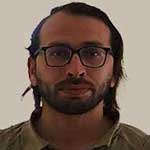
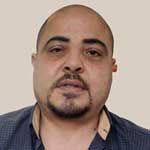
A 23-year-old from the city of Rafah, whose home was bombed and fully destroyed in August 2022
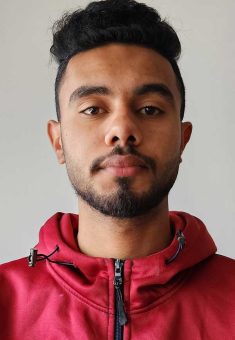
On Saturday, 6 August 2022, at around 9:30 P.M., I was in our house, on the first floor of the building, behind the Kuwaiti hospital in the a-Shu’ot refugee camp, west of the Rafah city center. My parents, Ayman (48) and Ilham (47), my brother Samir (24) and my sisters Soheila (20), Maysoun (19) and Hala (14), who has Down syndrome, were also at home. Suddenly, the Israeli army bombed houses in the area, including ours. Samir was injured in his legs, and my mother’s head was injured. They have both since recovered. Some of our neighbors were killed in the bombing.
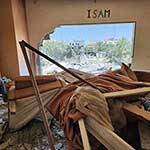
Our home was almost completely destroyed, and it is no longer inhabitable. We will need to rebuild it, but we have not yet received compensation from anyone. Immediately after the bombing, we were forced to split up, because we didn’t have a place where we could live together. I moved between friends’ homes, and my parents, my brother Samir and my sisters moved to live with our aunt in Rafah.
After a few weeks, we found a temporary place we could all live in together in Bir Salem. We stayed there only a few days, and then we moved to another house in the Burqah area for two months and from there to the Abu Zubeideh building in the area our home had been in, where we still live. We pay 600 NIS [~160 USD] in rent a month, and we’re still waiting to get the grant that families whose homes were destroyed receive from UNRWA for rent. (The family eventually received the grant.) In the meantime, we’re constantly tense, especially at the end of the month, when rent is due. We ask our landlord to be patient, but it doesn’t always help, and sometimes he gives us a hard time.
I am trying to find work in photography, but it’s hard to make a living from it, and I have no stable income. My brother Samir sells falafel in Rafah, and together we barely make 600 NIS [~160 USD] a month. It’s barely enough to buy food for the family. We have no money at all for other expenses. A few months before the bombing, the Welfare Ministry stopped giving us the 1,800 NIS [~485 USD] support we’d received every three months. In the first months after the bombing, some organizations donated mattresses, a refrigerator and a washing machine to us. We rescued our sofas from under the rubble and reupholstered them.
On 7 November 2022, two months after the bombing, Samir got married, and since then, he and his wife have lived with us. We owe about 1,000 USD for wedding expenses and 2,000 NIS [~540 USD] to the pharmacy and a few other stores.
We had bought the building that was bombed for around 20,000 dinar [~100,000 NIS or 27,000 USD] just three months before the attacks started. We were so happy that we finally had our own home. Part of the building was still a skeleton, and we were planning to build it up and replace the asbestos roof with concrete. Samir had already started renovating the second floor so he could move there after his wedding, and I was supposed to build another floor above it for myself. In moments, all our dreams were destroyed.
* Testimony given to B'Tselem Field Researcher Khaled al-’Azayzeh 14 March 2023.
Read more testimonies of residents of the Gaza Strip whose homes were damaged in Israeli strikes in August 2022 or May 2023: