A 45-year-old married father of six from Khan Yunis, Jibril recounted being arrested while displaced with his family, severe torture in detention that led to the amputation of his leg, the sexual assault he suffered in Israeli prison, and losing his son
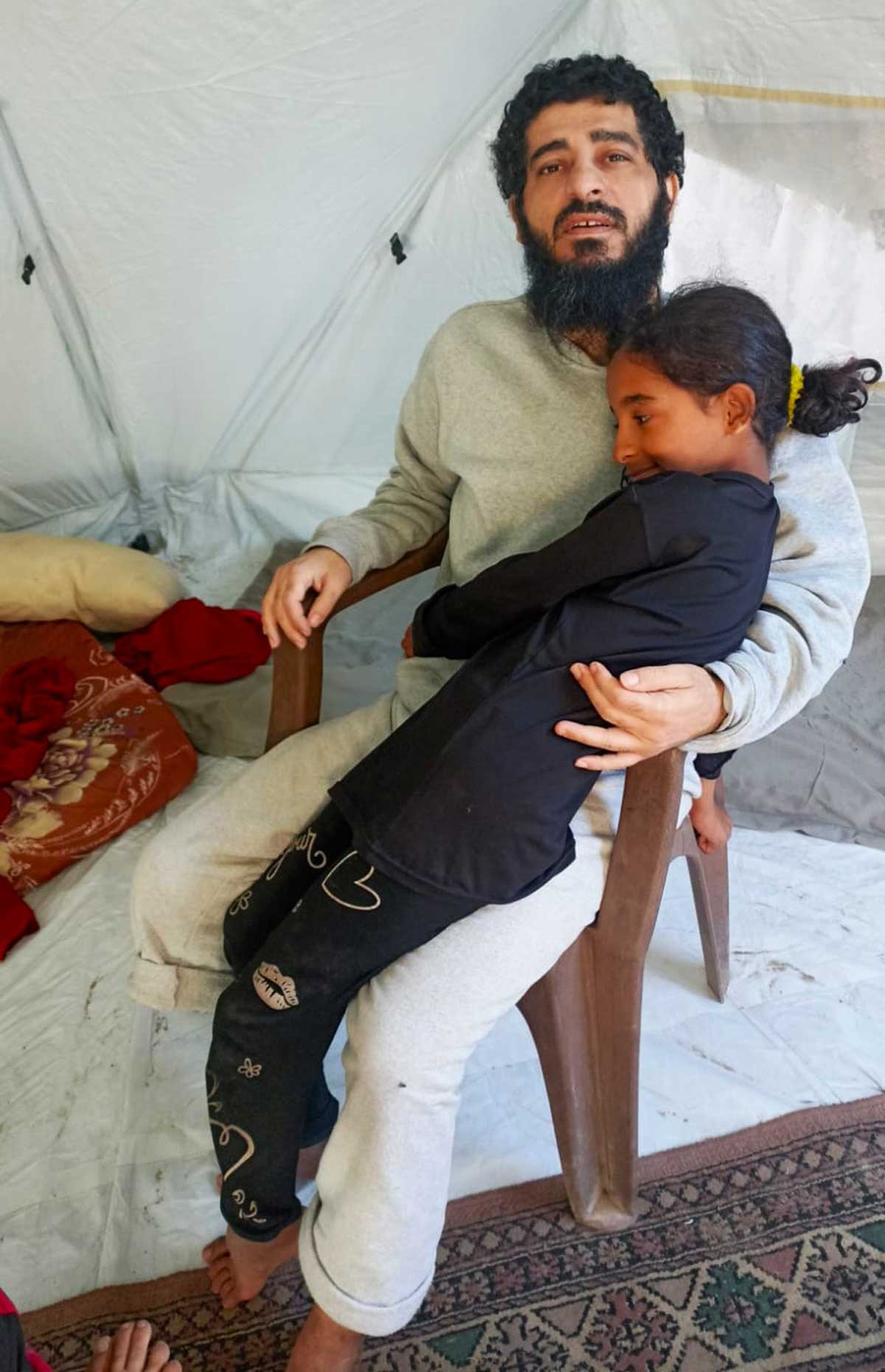
Until the war, I lived with my wife and our six children, Yihya, 22, Sali, 20, Sujud, 18, Dima, 15, Nasmah, 12, and Riwaa, 10, in an apartment on the fifth floor of a building in the Madinat Hamad housing project in Khan Yunis, in the center of the Gaza Strip. Our apartment was destroyed when the army bombed the building.
I am employed as a civil servant in the Gaza government. I grew up in a poor family in a-Daraj neighborhood in Gaza City and lived my whole life as a poor, simple man, struggling to provide for his family. More than five years ago, I developed diabetes.
On the first day of the war, my children’s classes at school and university were canceled. In the days that followed, the bombings began across the entire Gaza Strip. The situation escalated very quickly, and residents of the northern Gaza Strip started leaving their homes and fleeing south. But even the southern Gaza Strip wasn’t safe, and people were bombed and killed.
My family and I stayed home and followed the news, hoping the war would end quickly. We stayed like that until the army invaded Khan Yunis in early December 2023. When they started bombing and destroying buildings in our area, we decided to leave. We gathered all the belongings we could and fled south, to the IDP camp in Tel al-Sultan neighborhood in Rafah. We set up a tent there and stayed in it. Life in the IDP camp was very hard: we struggled to get water and food, and there were long lines for the shared toilets.
On 16 February 2024, we heard that Madinat Hamad was now safe and that some of the residents had decided to return. We decided to go back to our apartment, and the area really did feel safer. We stayed there until 3 March 2024. That night, around 9:00 P.M., we heard heavy gunfire and intense shelling inside Madinat Hamad. A few minutes later, we were shocked to see Israeli tanks rolling into the neighborhood and surrounding it on all sides. I peeked out the window and saw a military tank parked right in front of our building. I was stunned. Even so, we stayed home until the next morning, under shelling. In the morning, the soldiers began ordering us to come out of our houses and leave the area through a military checkpoint they had set up near the northern Asdaa Gate.
On 4 March 2024, we left the house and walked until we reached the checkpoint. There, the soldiers called out to me and said in Arabic: “You with the glasses, son of a bitch, come here!” I left my wife and children and went over to the soldiers. They searched me and found that I had 8,000 shekels (~ USD 2,500) and a mobile phone. They took my money and my phone and ordered me to take off all my clothes. From there, they led me to an empty pool, dressed me in a white jumpsuit, blindfolded me, tied my hands behind my back and made me kneel in the pool. They started bringing more detainees into the pool.
I stayed there, kneeling, for about two hours. Then, some soldiers came over to me and started beating me badly. They slammed
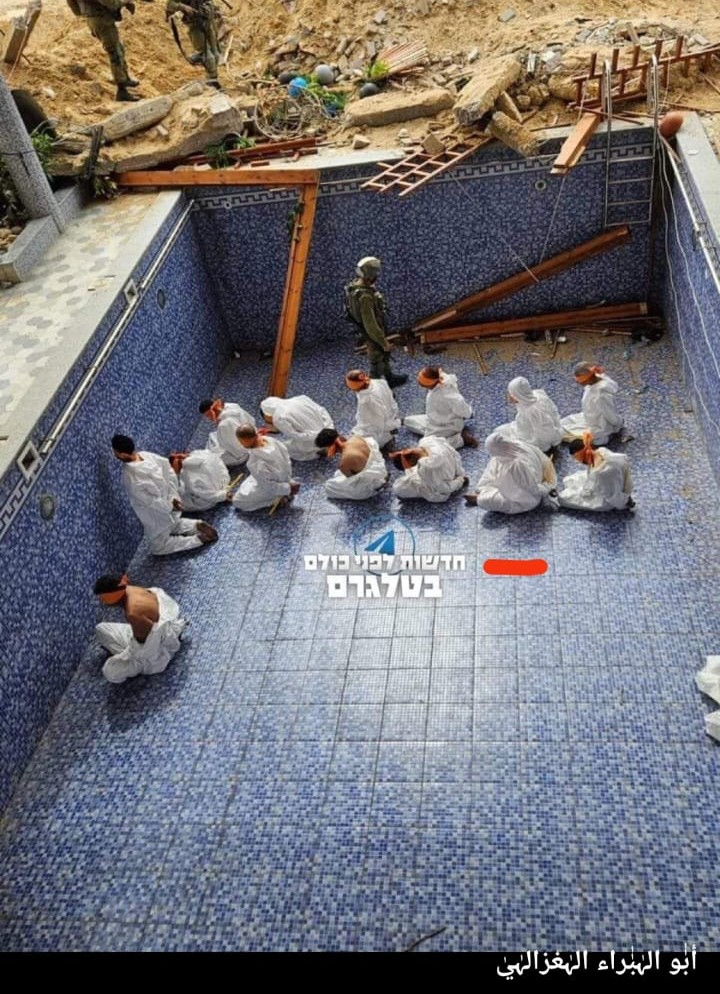
my head into the pool walls more than ten times in a row, and I started bleeding. They continued to beat me all over my body: in the chest, stomach and kidneys, until I finally passed out. I woke up to loud screams of other detainees who were being beaten nearby and to the sound of loud blows. The soldiers forced me to lie face down, and two soldiers stepped on my back and kicked me hard in the head. I started screaming in pain, and they let go. I stayed like that, lying there, until dawn the next day.
The next day, two soldiers took me with four or five other detainees, all of us handcuffed and blindfolded, and put us inside a tank. I managed to see a little from under the blindfold. The soldiers started hitting us in the face. We drove in the tank for about 20 minutes until we got to a place I later learned was called al-Hasmah (a gravel-covered compound), near Sde Teiman Prison. When we got there, they replaced the zip ties on my wrists with metal handcuffs.
After that, they put us on a bus and chained us to the seats. The entire drive, we were subjected to torture, beatings and curses. The soldiers ordered us to howl like dogs and cats. The beatings we received were so severe that some of the prisoners were taken straight to hospital when we arrived.
They put wristbands with numbers on our hands, and the number I got was 901739. Then we understood we had reached Sde Teiman Prison. There were large shacks there, divided into small cells that looked as if they were meant for animals. There were dozens of detainees in each cell.
A day after we arrived at Sde Teiman, I started feeling excruciating pain in my feet. Gradually, I lost the ability to stand. The detainees who were with me would carry me, for example, when I needed to use the bathroom. I asked the soldiers to see a doctor, but they denied me medical treatment and didn’t even give me a single painkiller.
On my eighth day in Sde Teiman, still handcuffed and blindfolded, my body temperature shot up. I started screaming in agony: “Get me a doctor! Get me a doctor!” In response, the soldiers swore at me and said in Arabic: “Shut up, son of a bitch! Shut up, son of a bitch!” On 14 March 2024, I woke up and found myself lying in a large pool of blood. I was shocked. I looked at my feet and saw that they were bleeding. It was a horrific sight, and I started screaming and crying hysterically, hoping someone would come to help me.
I was taken to the prison hospital. I heard the doctor tell the soldiers I’d suffered severe blows to the kidneys, which had also caused wounds in my feet. I stayed in the hospital for 10 days and had seven operations on my legs. I was shackled and blindfolded the entire time. I was confined to bed and couldn’t move or walk at all. After ten days, the doctor came up to me and told me that they were going to send me to another, larger hospital. They took me there by ambulance, and the entire way they beat me brutally on my body and head and swore at me: “We’re going to fuck you, son of a bitch! And we’ll fuck your wife too!”
I arrived at a hospital. I don’t know the name of it. They operated on my legs for an hour. From there, they took me back in a jeep to Sde Teiman. About a week later, a doctor in uniform told me: “Listen, your life is in danger. You have to choose between having both your legs amputated and dying.” I started crying and screaming, hoping someone would hear my pain, my torment, my grief. They handed me a document and forced me to sign that I agree to have both legs amputated.
A week later, they took me by ambulance to the hospital. The whole way there, I kept asking the doctor: “Why do you want to amputate my legs? They’re fine!” but he didn’t answer me. They knew there was no need to amputate my legs but they did it anyway, deliberately. They put me on a hospital bed and gave me an anesthetic. When I woke up, I was back in an ambulance, and I discovered they had amputated only my right leg. They took me back to Sde Teiman.
After they amputated my leg, I couldn’t move or walk. They gave me diapers so I could relieve myself, and the other detainees in my cell helped me a lot with using the bathroom and washing. One day, they took me for interrogation in a Shin Bet (ISA) room. They sat me on an iron chair and tied my left leg to it. The officer started questioning me about my family, about my wife and my children. He asked me where my son Yihya was, and I answered that he was in the southern Gaza Strip with his mother and siblings.
The interrogator started cursing me, calling me “son of a bitch” and “son of a whore,” and hit me in the left leg and in the face. The soldiers tied my hands to the back of the chair, and the officer started bending my back backwards. They called it “banana torture.” I screamed in pain. The soldiers didn’t care about my condition, about my pain or my amputated leg. After the interrogation ended, the soldiers took me back to a cell full of other detainees, all shackled and handcuffed. The officer said to me: “This is what we’ll do to you, you son of a whore [...] I promise you, you won’t be released. You will rot in here.”
After some time, I had a court hearing that was held over a cell phone. They accused me of being an “unlawful combatant” and belonging to a terrorist organization. My detention was extended indefinitely.
After that, I was transferred, with nine other detainees, to Ofer Prison. We went there by bus. The drive took about three hours, and for a whole hour out of it, they beat us brutally.
In Ofer Prison, they put me in cell number 5. I stayed there for about a month. After that, they gathered us, especially those of us whose legs had been amputated, about 11 people, and took us back to Sde Teiman for about two and a half more months.
I suffered terribly during the transfers from place to place. I wore diapers all the time, and the pain did not stop for a moment.
One day in Sde Teiman, they picked me up and took me to the “disco room”. I was interrogated and beaten there for two whole days. They sat me on a chair where they gave me electric shocks, and they shackled me. The officer questioned me about tunnels in Madinat Hamad, about weapons caches and about resistance fighters. I kept telling him that I was just a civil servant and didn’t know anything about these things. They showed me a photo of a-Daraj neighborhood in Gaza, where I grew up, and said: “This is your family’s home, right? It will turn into ashes, and we will kill your entire family.” I answered: “May God have mercy on them.”
The officer started hitting me hard in the face. He had a senior officer with him who introduced himself as “Officer Sami”. “Sami” bent my back and beat me hard until I bled from the head and face. They cursed and humiliated me. They also showed me a photo of Madinat Hamad neighborhood, and the officer said: “This is your home in building F4. We will destroy the whole tower and turn your home to ashes.” The officer assaulted me, beat me brutally again, this time on the back, and threatened to shove a stick into my anus if I didn’t tell him which of my family members were involved in the resistance. I swore to him that none of them were involved. After about eight hours, two soldiers arrived, one male and one female. They filmed me and told me: “This is for Facebook and TikTok.”
From Sde Teiman they took me back to Ofer Prison, where I was held in a ward they called “hell”. I was in cell number 7, and they did oppression raids against us twice a week. I caught scabies there, which was very common in all the prison wards. I suffered from scabies for two months and didn’t receive treatment or medication. We begged the guards for medicine, but it was no use. They deliberately humiliated us, oppressed us and killed us slowly.
We stayed like that until 10 October 2025, and then we were transferred from Ofer Prison to Nafha Prison (Ganot). There, Red Cross representatives arrived and told us we were being released. They took down our personal details.
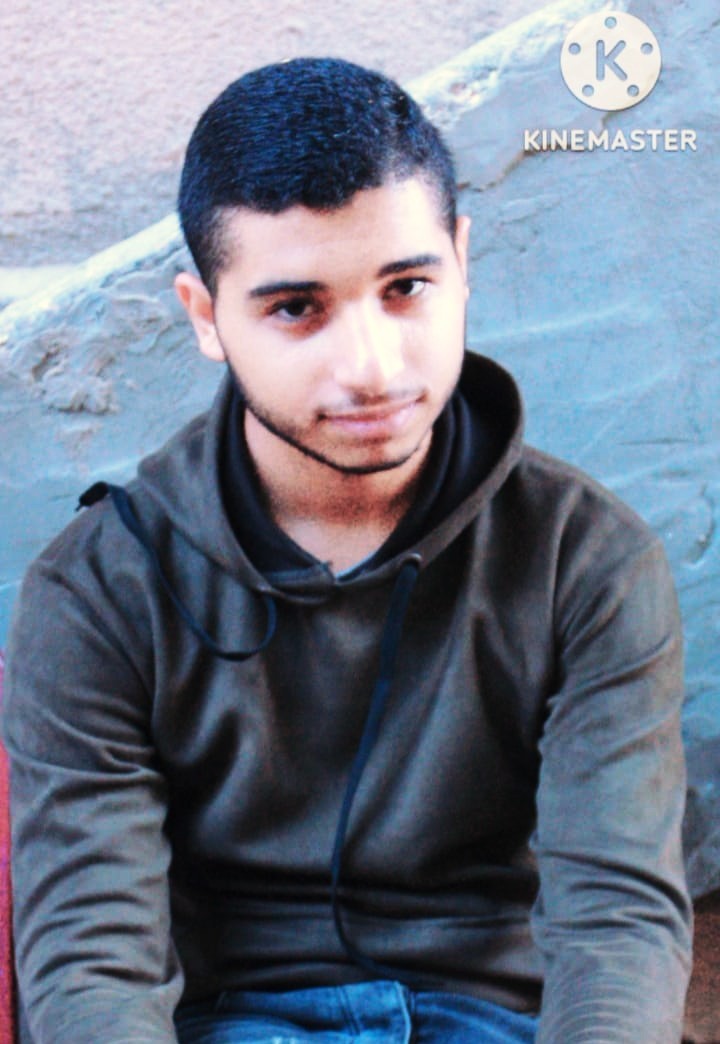
On 13 October 2025, at around 6:00 A.M., they put us on buses that took us from Nafha Prison to Karam Abu Salem (Kerem Shalom) Crossing. From there, we entered the Gaza Strip and were taken to Nasser Hospital in Khan Yunis. Since the officer had threatened to kill my family, I had been very worried about them. But when I got off the bus, my whole family was waiting for me there, everyone except my son Yihya. I asked my wife where he was, and I was shocked when she told me that after we were displaced from our home and I was arrested, he had gone back to Madinat Hamad to try to get clothes and blankets, and was hit in a drone strike that killed him on the spot. It happened on 14 March 2024. Yihya’s body stayed there, on the ground, along with four people who were with him. It was impossible to reach him, and the body completely decomposed. After the army withdrew from Madinat Hamed, my wife managed to identify Yihya by a broken tooth in his jaw. They buried only his skull, because his body had completely fallen apart. When I heard the news of my son’s death, it was a severe shock. I didn’t expect such awful news. I went from one pain to another, from one sorrow to an even greater sorrow, when I found out I had lost my only son, who I had hoped would be by my side all my life.
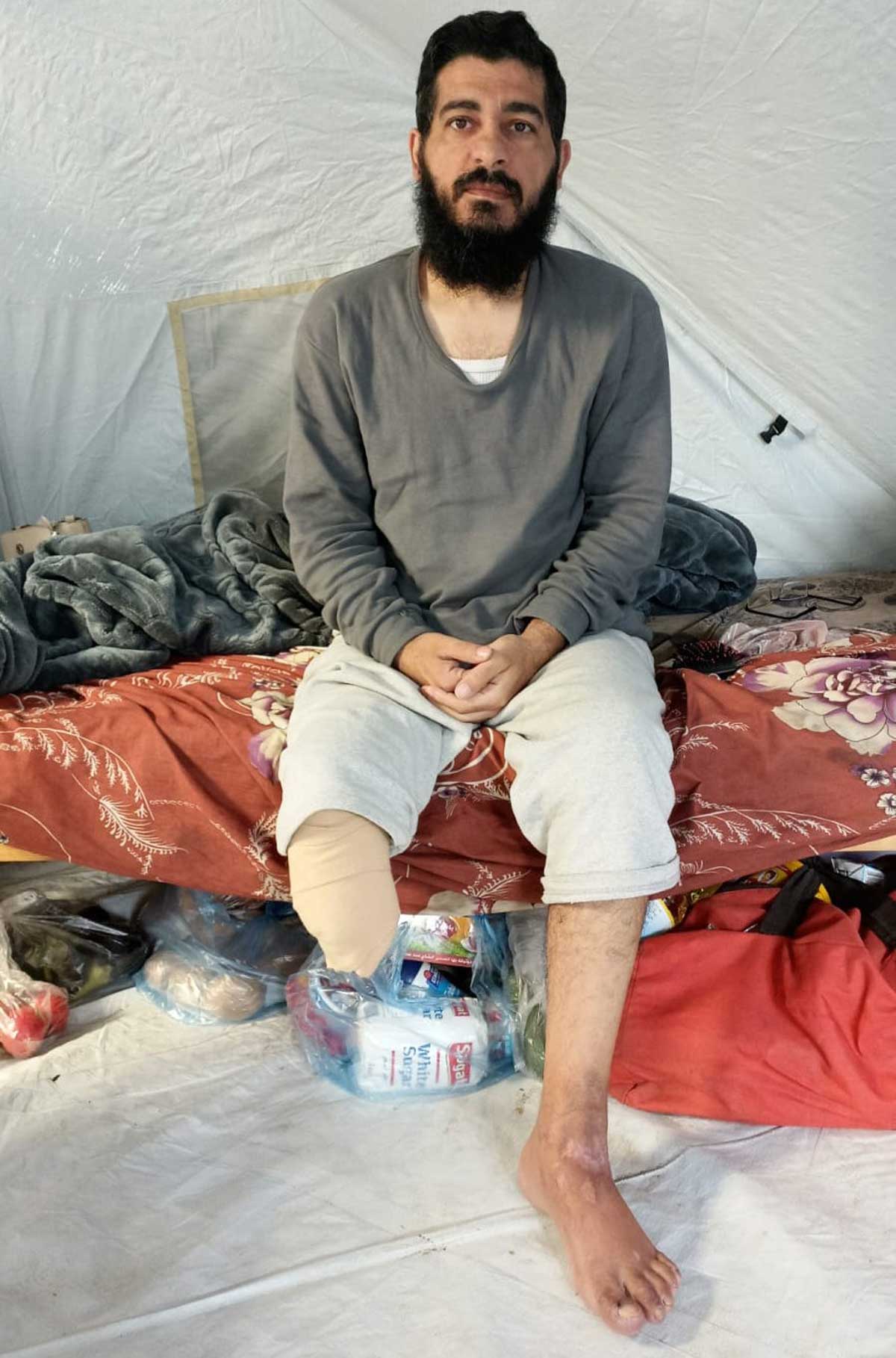
I was released from prison after severe abuse and oppression, and after having my leg amputated. Tests I had done found I’d also lost 80% of the hearing in my right ear, and have permanent curvature of the spine. My right leg was amputated below the knee, and I have no sensation in my left leg, which was operated on more than 20 times in prison. They damaged it so that I wouldn’t be able to walk. I left prison a cripple, and I need treatment and to have a prosthetic fitted so I can walk and get around. I lost my health, I lost my only son, Yihya, I lost my home, and I lost all hope in life. I now live in a tent in al-Mawasi, in Khan Yunis.
* Testimony given to B’Tselem field researcher Muhammad Sabah on 14 November 2025