A 40-year-old father of eight from Jabalya Refugee Camp in the northern Gaza Strip, Hayel recounted his abuse in Israeli prisons and learning upon his release that his son was killed by a shell fragment:
When the war started, I stayed at home with my wife and our eight children, between the ages of five and 19. We chose to stay even though it was so dangerous, because there were so many displaced people in the area and nowhere to go. Going south looked too dangerous. Our house was next to an UNRWA school, so we felt a bit safer.
Even when the situation escalated, we stayed in the northern Strip. During the first invasion into Jabalya Refugee Camp, at the end of October 2023, we stayed home despite the heavy shelling and massive destruction, because the tanks didn’t reach our neighborhood. That was when severe hunger started in the northern Strip. We suffered unbelievably, more than I can describe. I had to go with my children to dangerous areas to collect firewood and khubeza plants to eat. One time, when we were picking khubeza, shells landed close to us. We ran away and by sheer luck were not hurt.
In May 2024, the second attack on the camp began. The shelling grew heavier and we fled to the western part of the camp. We stayed there, displaced, for about a month. After the army withdrew from the camp, we went back to our house and found it almost completely destroyed. I managed to repair parts of it. I sealed partially destroyed walls and windows with plastic sheeting, and we moved back in. Even then, I had to walk long distances to find food and water for my family. We lit fires every day to cook.
In October 2024, the army invaded the camp again. That invasion was the hardest. The shelling was very intense. My family and I hid inside our ruined house, but when we heard the tanks approaching, we decided to escape again and go west. We stayed there for 15 days, but the situation was hard there, too: the shelling was relentless and kept getting heavier. When we realized the invasion wasn’t ending and a lot of people were being killed and wounded, we fled again, this time to Beit Lahiya in the northern Strip.
At some point, a drone dropped leaflets ordering everyone in the area to gather near the “Civil Administration” checkpoint east of Jabalya Refugee Camp. From there, we were supposed to move to the western part of Gaza City. On Thursday, 31 October 2024, we set out towards the checkpoint. There were masses of displaced people there. The soldiers separated us: women and children in one line, and men of 15 and up in another. The soldiers checked our ID cards and called out our names.
When my turn came, they detained me. When I got near the soldiers, they asked if I was from Hamas. I told them I didn’t belong to the organization and worked for the Palestinian Authority. The soldiers told me: “You’re going to be executed.” They ordered me to strip down to my underwear, took my ID card and phone, blindfolded me, tied my hands, and ordered me to get down on my knees with my head on the ground, next to a tank that was there. Then they dragged me to an abandoned house and held me there for about seven hours, with my hands tied and my eyes covered.
Later, they moved me to a structure they called “the refrigerator,” where they interrogated me. The interrogator kept repeating that I belonged to Hamas and threatening me: “If you don’t confess, you’ll be sent to hell. Choose: hell or home.” I told him again that I wasn’t a member of Hamas and asked him to check with the Shin Bet. The soldier interrogating me answered: “We are the Shin Bet.” Another soldier poured diesel fuel on me and tried to set me on fire with a lighter, but an officer who was there stopped him. Then another group of soldiers came and beat me. I think they broke my ribs, and they hurled obscenities at me.
One of the soldiers asked me if I wanted water. When I said “yes,” another soldier took a bottle of water and threw it on the ground. Then they put me in a jeep and transferred me to another place, where there was a different group of soldiers. There, they stripped me naked, without even my underwear, asked about the hostages and about Hamas, mocked me and beat me.
Later, an officer came and introduced himself as “Abu ‘Ali” or “Abu Lahab.” He hit me and put me in another jeep. In the end, I was taken to Sde Teiman Prison. I arrived there exhausted, at about 4:00 A.M. There, they gave me a white prison uniform, beat me again, took my photo and threw me into a cage with other detainees.
I was held at Sde Teiman for four months, and for 25 of those days I was handcuffed and blindfolded. The conditions were horrific. There was daily violence, they set dogs on us, it was very cold, and we were given very little food. We were also forbidden to speak with other detainees. I slept on a thin mattress that I shared with other detainees. Every day at 4:00 A.M., they took the mattress away and only brought it back at 11:00 P.M. Sometimes, they also forced us to kneel for hours without moving.
After 17 days in detention, they interrogated me in a place called “the disco.” They beat me and threatened me in there, too. It was very cold there, and the clothes and blankets we were given were paper-thin. I shared a mattress with five or six detainees.
On 16 February 2025, I was transferred to Negev Prison [Ketziot], where I was held for about eight months. There wasn’t enough clothing and food and there was an outbreak of scabies, which caused festering wounds all over our bodies. The prison administration gave us no medical treatment for the scabies. I was held there in cages for about six months. We had no access to toilets – there was only a bucket in the cell.
On 24 June 2025, the Metzada Unit attacked me and I was injured by a rubber bullet. I was sent to hospital for 15 days, and on the way there they beat me. They questioned me again about Hamas, about the hostages, and about booby-trapped houses. They threatened that if I didn’t give them information, they would arrest and rape my wife and my mother. I was badly beaten and humiliated almost every day. Sometimes they showed us a black body bag and said: “This is the only way you’ll leave this place,” and again demanded that we’d given them the locations of Hamas and of tunnels – things we had nothing to do with.
Three days before my release, a detainee who came back from interrogation said he’d been told there was a deal and that prisoners would be released. That was the first time we heard about it. Two days later, the army moved us to another area in the prison, where the cells were clean. There were 10 detainees in each room, and we were all shackled. An intelligence officer warned us not to cooperate with “terrorist organizations” after our release, otherwise we and our families “would be hurt and killed.” Representatives of the Red Cross came and told us we were expected to be released in the coming days.
On the day I was released, 13 October 2025, they tied my hands so tightly it was very painful. They put us on buses with our hands and feet bound. After about an hour and a half, we arrived at the Kerem Abu Salem [Kerem Shalom] Crossing, where they untied us. We entered the Gaza Strip and boarded Palestinian buses.
We were taken to Nasser Hospital, where crowds of people received us. We had medical exams done and they gave me some medication. When I came out, my brothers and some other relatives were waiting for me. I was so happy. I couldn’t believe I’d been released from prison. From there we went to my family, who were in Deir al-Balah. My wife and children were sharing a tent there with my brothers and my cousins.
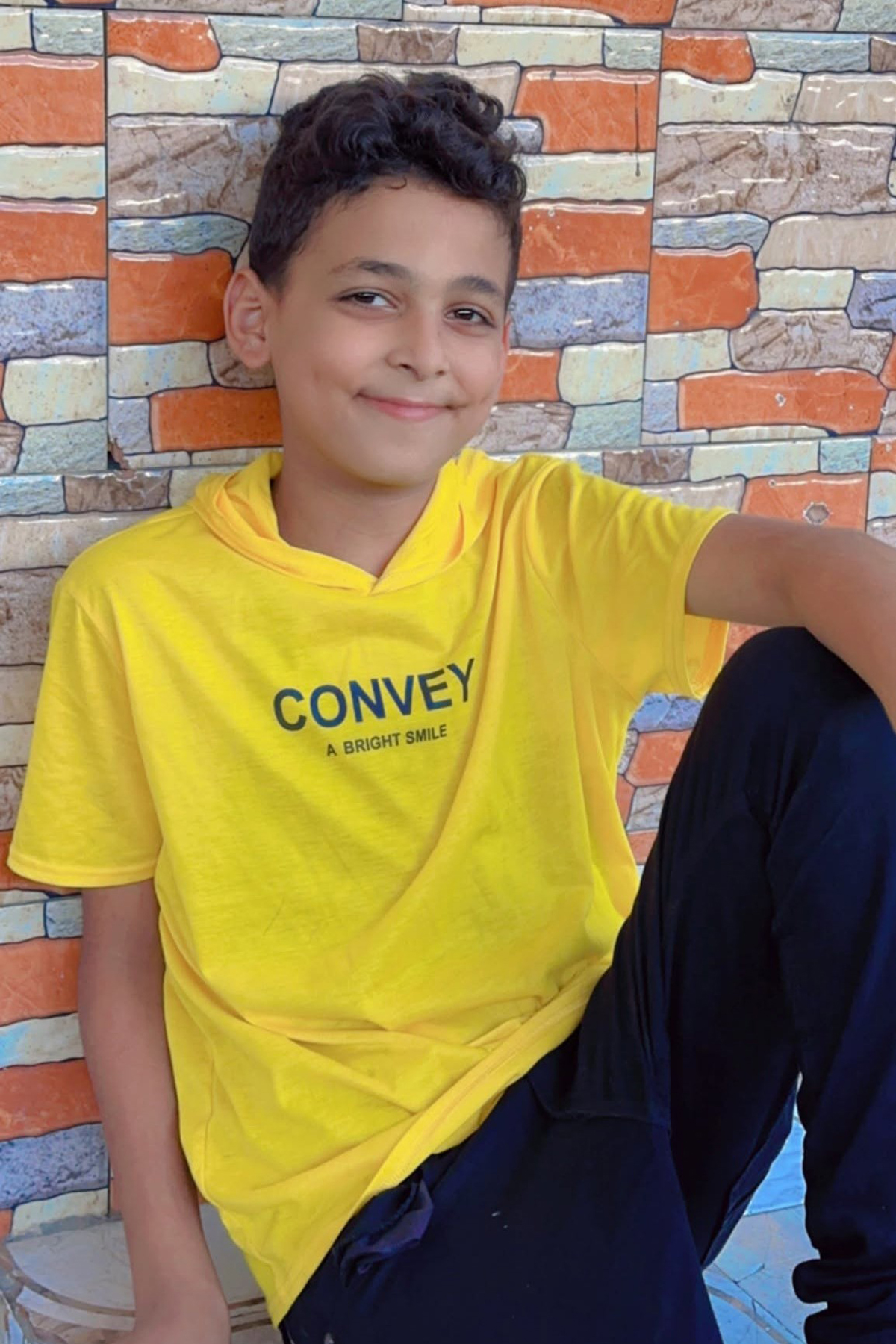
When I got there, I met my 12-year-old son ‘Abd a-Rahman and then my other children. When I asked about my 14-year-old son Mahmoud, no one answered. I went into the tent and asked my wife, and she told me that Mahmoud had been killed by a piece of shrapnel that hit his head while they were staying in a tent in the northern Strip. She said he’d been in the ICU for three days with a brain injury and had died of his wounds. She said she was still in shock over his death. I didn’t even get to say goodbye to him, and I haven’t come to terms with losing him.
A year of detention, displacement, losing our home, and all the immense suffering – it’s all nothing compared to losing my son. When I was in prison, I thought about my family all the time, about Mahmoud and my other children, and also about my mother and my brother Haitham, 42, who has special needs. Now I’m with my family in Deir al-Balah. We are all alive and healthy, but I miss Mahmoud.
* Testimony given to B’Tselem field researcher Olfat al-Kurd on 11 November 2025