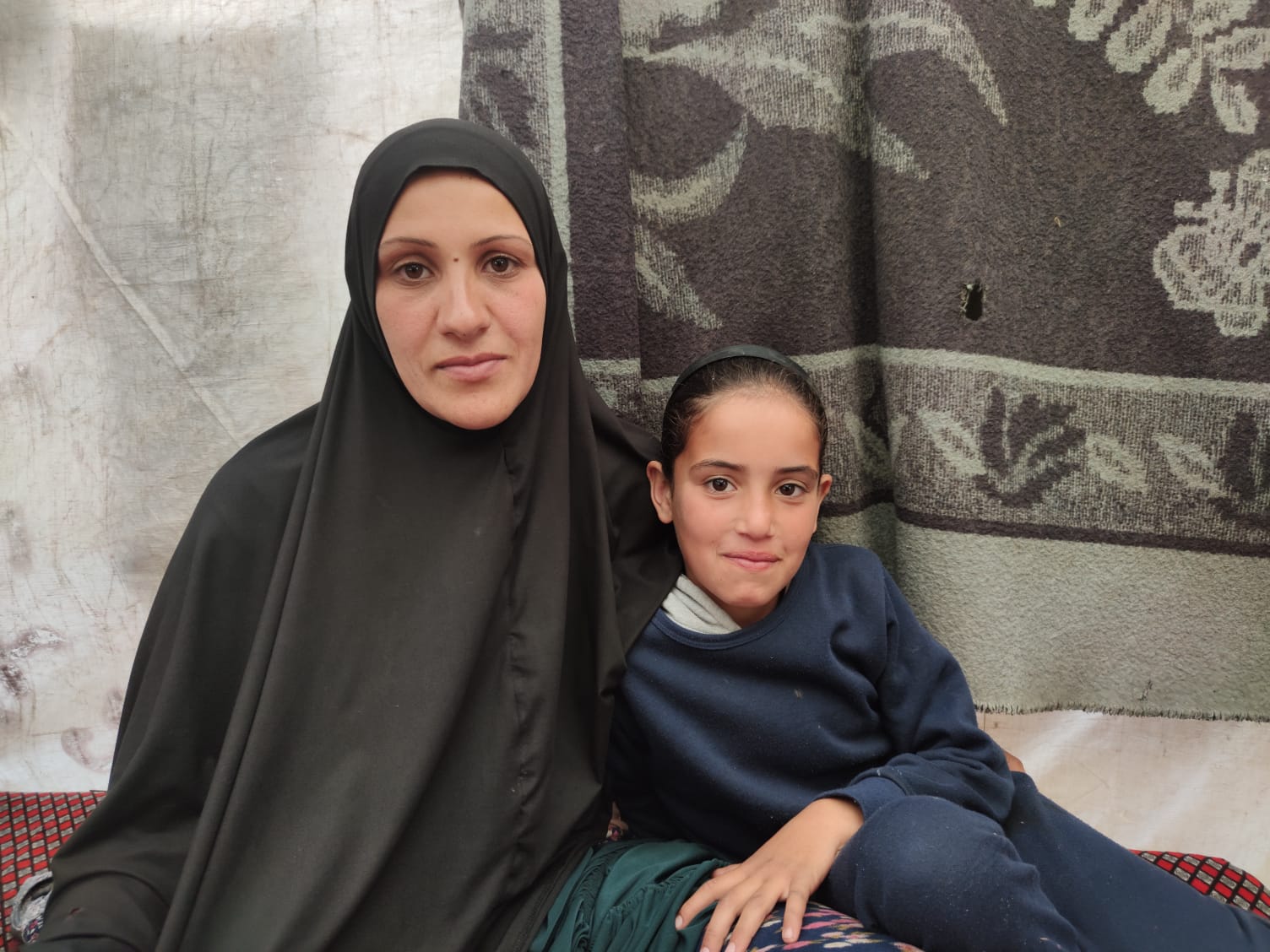
A 35-year-old mother of six, Hala recounted her husband's injury in an explosion while passing through the street, how she was forced to move with the children to an IDP camp in southern Gaza without him and his arrest by the military
At the beginning of the war, my husband Shadi, 37, and I fled with our children Malak, 16, Sanaa, 14, Khatab, 13, Fadi, 11, Salsabil, 10, and Salim, 7, from our home in the a-Shuja’iyeh neighborhood after there were heavy bombings nearby. We went to an IDP camp in a school in the neighborhood of a-Zeiton, but situation there was terrible. There were constant bombings and everyone was in panic all the time. There were about 30 people in a classroom. The children were very scared all the time, and I couldn't do anything. There was a shortage of food, people were hungry, and there was no electricity.
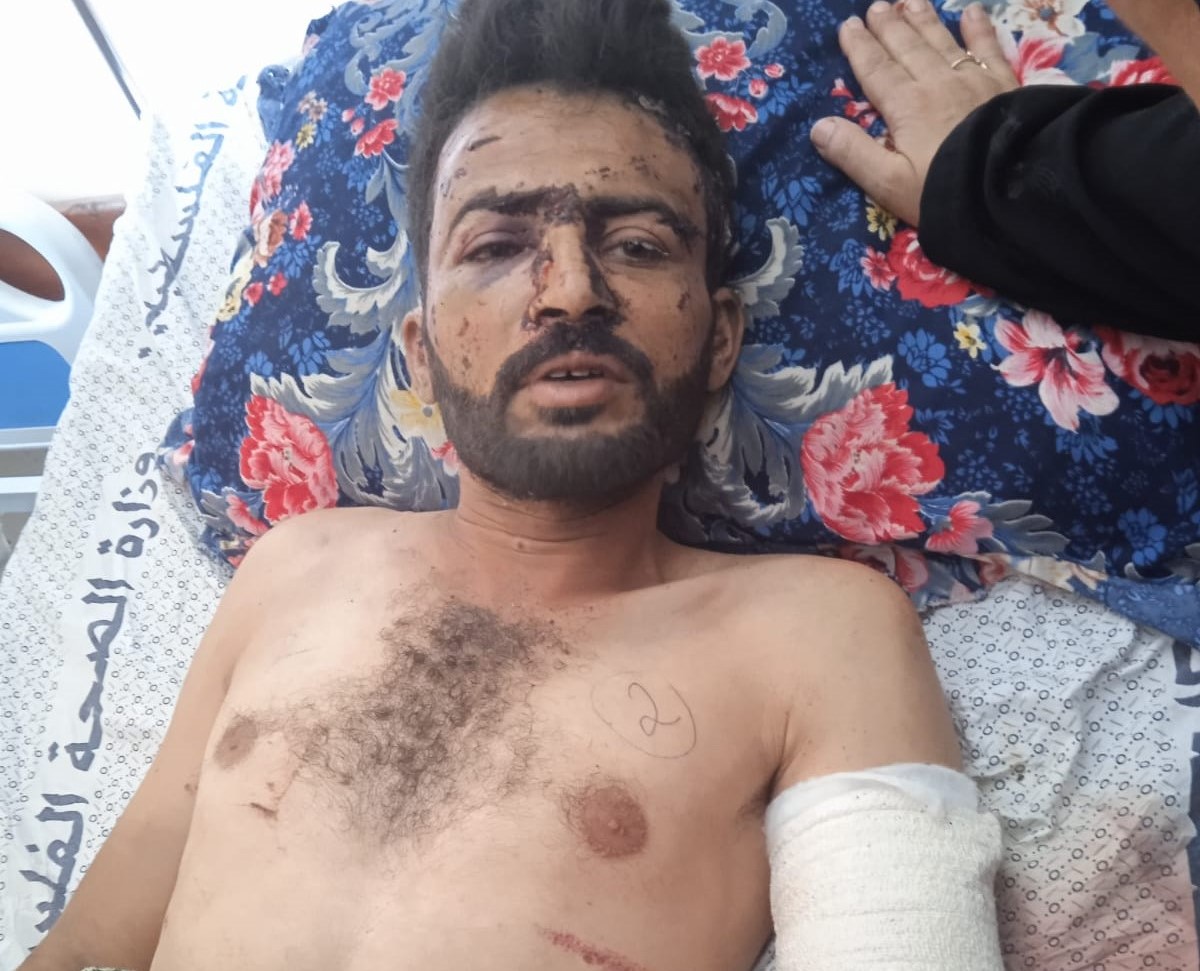
On our third day there, Shadi went out to fill up a gas container and was hit by a bombing of a house as he was passing along the street. He was seriously injured and taken to a-Shifaa Hospital. Later, I found out that when they first brought him to the hospital, they thought he was dead and put him in the morgue, because he wasn’t moving and had a sticker on him that said “Martyr” and that his identity was unknown. Thank God one of the nurses noticed he had a pulse and put him on ventilation, and he survived.
He had fractures in his right hand and left leg, and had platinum plates put in at the hospital. He also had severe burns on parts of his body, and a wound to his head that the doctors couldn't stitch up. He had treatment and surgeries for five days, and during that time I couldn't visit him because the bombings didn't stop, both in a-Zeitoun and near a-Shifaa. Luckily, his brother Suliman was with him at the hospital.
After about 15 days, Shadi was brought back to school by ambulance. Doctors at the school continued to monitor his condition, but by November it was too dangerous to stay there because of all the bombings in the area. A lot people were killed or injured, so we decided to leave and go south. We didn't have a wheelchair for my husband, so his brothers laid him on a mattress on an iron ladder, and dragged him to a horse-drawn cart. The cart took us to the Netzarim checkpoint, where there were crowds of people. We had to split up, and I lost sight of my husband and his brothers. I went with the children, my husband's sister Ayah, 32, and my mother-in-law Sanaa, 58.
We walked to an IDP camp in a school in al-Bureij and stayed the night there. The next day we went to another IDP camp, in Khan Yunis. I was surprised to meet my brother-in-law’s wife Randa, 38, there. She said she and her husband tried to help get my husband through Netzarim checkpoint that day and when it didn't work, they made sure someone would safely take him back to a-Zeitoun. They said he was taken to the home of his grandfather Sharif Rajabi, 85.
It took me two weeks to reach him by phone, and he said he was fine.
We stayed at the Khan Yunis camp for a month. It was a time of terror and daily suffering. When I heard that area was also under threat of a military attack, I decided to leave. I took the children and fled to Rafah with other family members. We had almost nothing – no blankets or food, and of course, no money to buy anything. We put up a tent and all slept in it together.
Soon after we got there, relatives told me the Israeli military had invaded a-Zeitoun, where my husband was staying. They said he went to stay with his uncle Samir and that soldiers entered the house and arrested Samir, seven of his sons and my husband. Until yesterday, I hadn't heard any news from Shadi. Then, one of his cousins, Jawad, 17, who was arrested and released yesterday, called me. He told me that on the day of the arrest, the soldiers took all the men out of the house and ordered them to strip, and told all the women to go south. He told me that they tied the hands of all the men behind their backs, blindfolded them with bits of cloth, beat them, and poured cold water on them. Shadi was still injured, and Jawad said the soldiers beat him, too. They took them to a prison in Jerusalem, and for the first three days they left them without food and water. Then they put them in separate cells, and after that Jawad didn’t have any information.
I feel terrible, because I don't know how Shadiis. I don't know under what conditions they’re holding him in and worry about him all the time. The children also ask about him all the time. Our youngest daughter, Salsabil, who is 10, told me she dreamed that he was sleeping with us in the tent. It's terribly hard for us to live without him, especially now, during Ramadan. We all leaned on him and since he was separated from us, I haven’t stopped crying for him. I also feel sorry for myself because of the heavy responsibility of raising the children in these awful conditions. The situation here is catastrophic. We have no food or drink. We live on the food provided by charity organizations.
I’m sure that Shadi is still injured and that they’re still torturing him in the Israeli prison. I tried to get details through the Red Cross, and they said it's hard to get information about detainees from Gaza, and that in general it’s hard to reach the Israeli military. I just pray that makes it out of this safely and comes back to us. It's been three months since we last saw him. Tomorrow is his birthday, and it's going to be a tough day for all of us. We used to celebrate together, and now that’s not going to happen.
Testimony given to B’Tselem field researcher Olfat al-Kurd on 14 March 2024