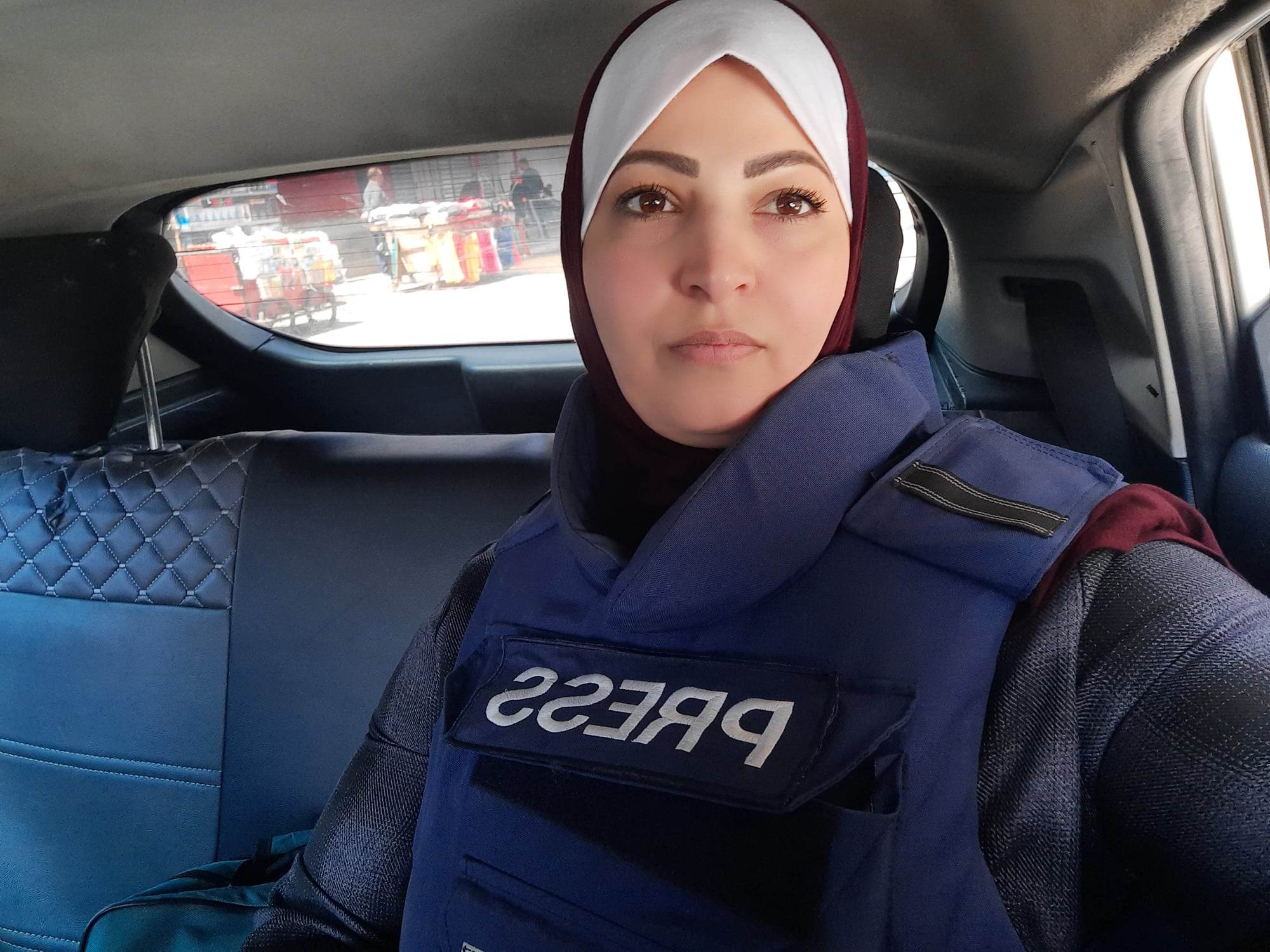
40-year-old journalist and mother of four children ages three to 15, from Gaza City
Because I’m a journalist, I’m usually not home with the kids when there’s an escalation or a war, because I cover the events. My husband, or someone else from the family, stays home with them, or Layan, our eldest daughter (15), looks after the little ones, and sometimes they stay by themselves.
Those are very scary times. My job is scary, and I am also constantly afraid for the children, especially when I leave them home alone. My head and heart stay with them, and I constantly call them to see if they’re okay. The fear is indescribable. Every morning like this, when I have to leave, I cry and hug them and feel that I might not come home. As a Palestinian-Gazan journalist, I am not protected in any way, and there is no safe place in the Gaza Strip anyway. I go out to cover events in the streets of Gaza as planes bomb the Strip above my head and destroy houses around me. There is a sense of great fear.
Every time there’s a bombing, I fear that my family or friends are among the victims.
Layan tries to bottle up the fear. Sometimes she screams and cries suddenly. Our son Adam (12) sleeps through the bombings, like he’s escaping them, and Karam (7) has facial tics and shakes during bombings.
I try to give myself opportunities to express the fear and worry, let some of it out so I can work with a clear head, but I can’t really manage it. The fear is inside me all the time, and it breaks me down. When I’m at work, I can’t stop thinking about the kids and constantly take breaks to send them messages, especially when there’s a bombing close to our house. I look at their photos on the phone and think of their laughter. But I constantly feel like I’m going to lose them or they’re going to lose me.
We essentially have no protection. There are no shelters to put the children in during the bombings, and the army does not distinguish between fighters and civilians or minors. The bombings target houses, streets, hospitals and markets. They don’t try to avoid hurting journalists either, who are actually more vulnerable than anyone else. I feel like the Israeli army intentionally harms journalists in order to prevent knowledge from reaching the world. At night, at home, I constantly go in to check that the children are okay. I have nightmares, and I constantly relive the things I reported about during the day.
I can’t forget any of the houses I entered, the dead, the grief, the destruction, the people left without a roof over their heads. I keep in touch with many of the victims because after I report on their suffering, their stories stay etched in my mind. Being unable to forget increases mental stress. I often feel like screaming and crying. I feel like I’m going to burst.
The fear, anxiety and worries that are with me during wars don’t really go away when they’re over. I stay alert and anxious, waiting for the next escalation. There is no stability and no peace, but life has to go on despite the horrors of the bombings, killing and destruction. At home, with the kids, I try to switch things up and stay away from the news, watch other things on TV, laugh, joke around, and try to get the children’s minds off the state of war they live in. It’s hard, but I try.
We’re trapped in the Strip. We can’t even go on vacation because it’s hard to get permits and also because of the cost. I don’t believe that the Israeli side will give me a permit, and leaving through Egypt is also an ordeal.
No words can express the extent of the loss, pain and grief each war brings. As soon as you start relaxing a little and forgetting, another escalation or war begins. We live here, more than two million people, in fear and terror. I’m doing much better than the people who’ve lost those dearest to them, their children, or people who’ve been left homeless. That’s why I still manage to support other people and work.
* Testimony given to B'Tselem Field Researcher Olfat al-Kurd on 15 June 2023.