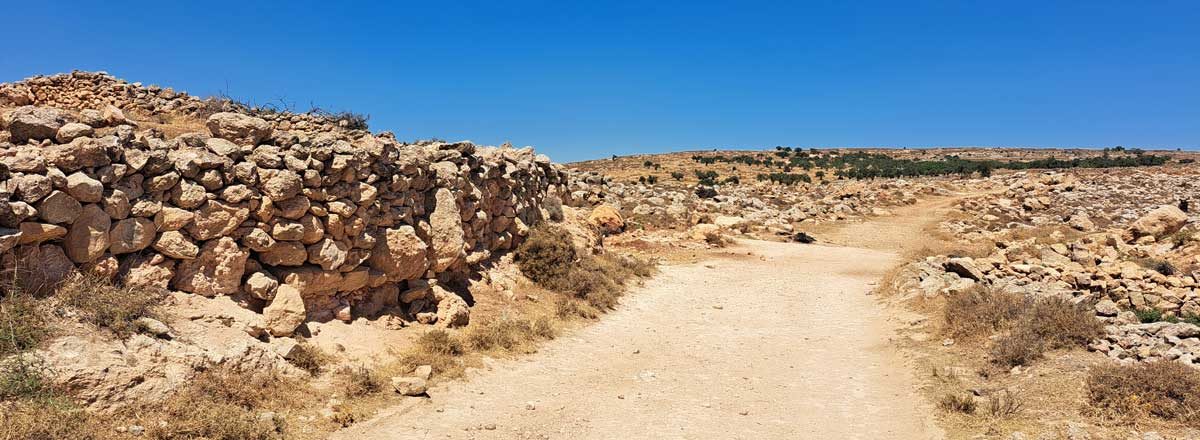
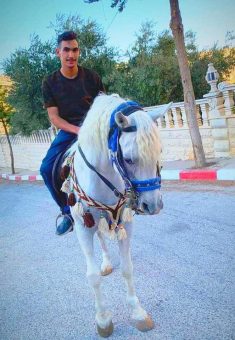
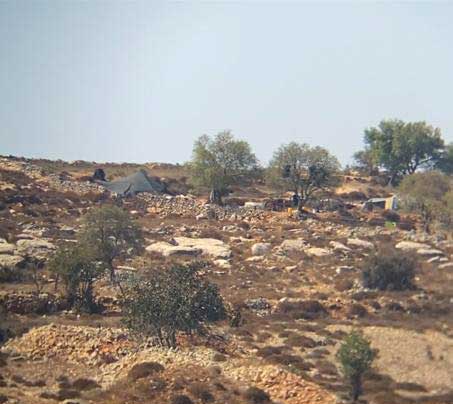
In early August 2023, Israeli settlers established a new “agricultural farm” on lands owned by residents of the Palestinian village of Burqah, Ramallah District. The settlers began grazing their flock on village lands and harassing the residents. This has included terrorizing a family who raises their flock of sheep in the area during the summer months, causing them to move to their winter residence earlier than usual.
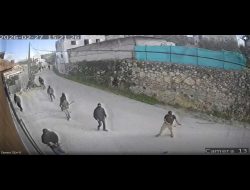
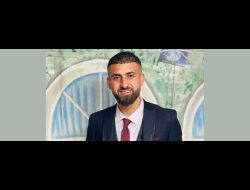
On Friday, 4 August 2023, at around 6:00 P.M., about five settlers appeared on the lands adjacent to the village homes while several young men from the village were having a picnic. The men, including 18-year-old Qusai Mu’tan, noticed the settlers from approximately 500 meters away and advanced toward them in order to drive them off. Meanwhile, five more masked settlers arrived at the scene, attacked the young men with stones, and started chasing after them. The young men ran back to the picnic site and called other residents, who started gathering in the area.
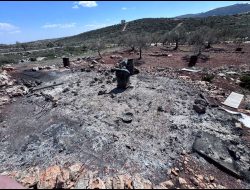
By around 7:00 P.M., dozens of residents had gathered in the area, as well as dozens of settlers, some of them masked. Clashes ensued, including mutual stone-throwing using slingshots from a distance of 30 to 50 meters. Some settlers and village residents also hit each other with clubs. Around 8:00 P.M., as the mutual stone-throwing continued, two settlers arrived at the scene in a white car. Both were armed: one with a rifle and the other with a handgun. They joined the settlers already present and fired live rounds in the air and at the Palestinian residents but did not hit anyone. The clashes continued as settlers vandalized a car belonging to a local resident that was parked at the site and set another vehicle on fire.
At around 8:30 P.M., while the clashes persisted, one of the settlers fired several shots, hitting Qusai Mu’tan in the neck. Mu’tan, who had been taking part in the clashes and standing about 40 to 50 meters away from the settlers, fell to the ground. Fellow Palestinians picked him up and rushed him to the outskirts of the village. From there, he was transported in a car to the Palestine Medical Complex in Ramallah. The clashes continued after Mu’tan was shot. At around 9:00 P.M., the settlers shot another Palestinian, who was also taken to the hospital. Several other village residents and settlers were injured by stones.
At 9:30 P.M., after the Palestinian Health Ministry officially announced Mu’tan’s death, the villagers left the scene, but the settlers remained. The Israeli Border Police and military did not arrive until 10:00 P.M., at which point they dispersed the settlers and declared the area a closed military zone.
The following day, the police arrested two settlers, Yehiel Indore and Eliezer Yered, on suspicion of involvement in Mu’tan’s killing. Indore was arrested while hospitalized, claiming to have been hit by a large stone thrown by a Palestinian during the clashes. Later, the police charged Indore with manslaughter and Yered with obstruction of investigation proceedings and illegal possession of a firearm. On 9 August 2023, the Jerusalem Magistrate's Court ordered Yered placed under house arrest for a week, after which he was released. On 29 September 2023, the military issued a restraining order, barring Yered from most of the West Bank. On 15 August 2023, the court had ordered Indore’s release.
On 7 August 2023, Israeli police officers and soldiers arrived in the village of Burqah and arrested five local residents, claiming they had assaulted settlers during the incident. All five were released on 10 August 2023, after posting bail of 2,000 NIS each (~525 USD). On 12 and 13 August 2023, they were called in for questioning at the police station in the settlement of Ma’ale Adumim. A week after their arrest, police officers and soldiers returned to Burqah and arrested two more residents, who were also released two days later after posting bail of 2,000 NIS each.
The village of Burqah has long suffered from settler violence and abusive practices by the Israeli authorities, including severe restrictions on movement, which have isolated the village from its surroundings, massive landgrab for the benefit of the settlement of Kochav Ya’akov and the outposts of Migron and Giv’at Hayekev, and stifling restrictions on planning and building.
B’Tselem field researcher Iyad Hadad collected testimonies from two of the village residents who participated in the clashes, as well as from Qusai Mu’tan’s father:
On 6 August 2023, H.M. testified:
On Friday, 4 August 2023, at 5:30 P.M., I drove Qusai Mu’tan and another friend to ‘Ein Yabrud to buy meat for a barbecue. At around 6:00 P.M., we drove to meet up with about six other friends who had gotten to the picnic area, about a kilometer west of our village, before us and were supposed to be getting the grill ready. When we arrived, we saw a group of about five settlers approximately 500 meters away from us. Our friends said they had been walking around the area for fifteen minutes. We decided that some of us would go drive them off.
Qusai and I started heading towards them with three other friends, and then we saw five more masked people we thought were Palestinian. We started chasing away the settlers, and suddenly, the masked people started attacking us with stones from a short distance of approximately 20 or 30 meters. They didn’t hit any of us, and we managed to escape. None of the settlers I saw were armed. We went back to where our friends were and called other villagers for reinforcement.
About 15 minutes later, our meat was ready, and we ate quickly, got into our cars and started driving towards the settlers. On the way, we met other young guys, and they joined us. In total, there were about 15 of us in four cars. When we reached the settlers, we saw dozens of young guys from the village clashing with them. The settlers were approximately 30-50 meters away from us, spread over an area of about 150-200 meters, and we spread out across from them. I heard isolated gunshots. There was a settler armed with a handgun and another with a rifle. Some of the bullets were fired towards us, and some into the air. The settlers had very bright flashlights, and some of them used slingshots.
At 8:20 P.M., I was hiding behind some dirt mounds, and Qusai was on the dirt road, about 10 meters to my left and 40 or 50 meters from the settlers. He was completely exposed. I heard five or six shots, one after the other. It sounded like shots from a rifle. I then heard the guys who were next to Qusai shouting that he’d been hit. I went over to help and saw that he’d been hit in his neck. He was moving and talking. The others lifted him and carried him closer to village, where cars go by. From there, he was taken by car to the Palestine Medical Complex in Ramallah.
The clashes continued, and at 9:00 P.M., the settlers shot another guy, who was also then taken to the hospital. Even after that, the clashes continued until 9:30 P.M., when the Palestinian Ministry of Health announced that Qusai had been martyred. We all left the area. At no point during the event did the Israeli army or police intervene. Later, I heard that they came at 10:30 P.M. By then, there were only settlers in the area. The soldiers declared it a closed military zone and removed the settlers.
On 6 August 2023, A.M. said:
On Friday, 4 August 2023, at 7:00 P.M., I went to an elevated area on the mountain that sits northwest of our village, where there are usually shepherds. Two or three days earlier, settlers set up a new shepherding outpost there and started harassing the shepherds, who were forced to leave, even though, usually, they’re still there this time of year. I saw on social media that the settlers were roaming around the area again, so I headed there with 10 or 15 other guys. At first, we saw five settlers. We advanced towards them to drive them off. When we got to a distance of about 100-120 meters from them, we started shouting at them to scare them off, but they didn’t run, so we started throwing stones at them, but they didn’t reach them because we were far. Meanwhile, I saw five more masked settlers join the first group. Later, I understood that there was another group of guys from the village, including Qusai Mu’tan, in the area, but I didn’t see them. I must have arrived after they left. Meanwhile, more groups of settlers and Palestinians from the village arrived, and stone throwing clashes erupted between us and the settlers. They spread out over an area of about 20-30 meters from us, and at times withdrew to 60-70 meters from us.
At 7:30 P.M., I saw a white Toyota pickup truck with flashing lights, probably a settlement security vehicle. Two people in regular civilian clothes got out. One was armed with a rifle. After the incident, I identified him in pictures on social media. The other had a handgun. They started firing live rounds, sometimes in the air and sometimes at us. We started retreating slowly. The number of settlers grew. In less than half an hour, there were more than 70 of them. More people joined us too, and there were more than 100 of us. It got dark in the meantime, but the settlers had five to seven bright flashlights that illuminated large areas. They smashed the windshield of one of the guys’ cars, and at around 7:50 P.M., they set fire to another vehicle. Luckily, I managed to move my car somewhere close inside the village and then went right back to the area.
The young guys were still clashing with the settlers, who were mostly near the dirt road and in the nearby orchards. We split into small groups and spread out across from them, about 120-150 meters from them. There was an open, exposed area between us and them, and they fired at it a few times.
At around 8:00 P.M., Qusai arrived with a group of friends. I later found out they had been in the area before us, having a barbecue in one of the nearby orchards. When they arrived, they joined the clashes. At 8:20 P.M., I heard five or six live rounds. It sounded like a rifle. Then I heard people shouting that Qusai had been hit and that they needed a car, but there were no cars in the area because we had moved them for fear that the settlers would destroy them.
The guys lifted Qusai, and I ran in front of them towards the dirt road where cars can drive, about 300 meters away. There was a pickup truck there that belongs to a guy who doesn’t have a license. I got in, and the others put Qusai in the back seat. His father, brother, and uncle, who had just arrived, got in the back, and two other young guys sat next to me. We left at 8:25 P.M. and headed towards Deir Dobwan. On the way, Qusai didn’t move, but he was still breathing. His breaths gradually weakened. He was injured on the side of the neck, but he hardly bled from there. He bled mostly from the side of his body, and one guy tried to bandage his wounds and stop the bleeding with a shirt.
On the way, we called an ambulance, which met us at the DCO checkpoint and took Qusai to the Palestine Medical Complex. We followed it to the hospital and arrived at around 9:00 P.M. The doctors took Qusai to the ICU and tried to resuscitate him for about 20 minutes, but they didn’t succeed. They announced he had been martyred.
When we were at the hospital, three more wounded people from the village arrived. One was injured in the knee from settler gunfire, and two others suffered injuries and bruises from stones that hit them.
On 10 August 2023, Jamal Mu’tan (51), a father of seven, said:
Qusai dropped out of school last year and didn’t finish high school. He started working at a snack factory owned by people from our village, and was always commuting to Ramallah for work. Like all young people, he wanted to save up money and build a house for himself so that he could get married.
The last time I saw him was on Friday, 4 August 2023 – the day he was killed – at 5:30 P.M. His friends came to pick him up to go have a picnic in the mountains. He got dressed and went out with them. I didn’t know it would be the last time I saw or spoke to him.
In the evening, news started circulating on social media about an attack by settlers on village lands from the northwest. They reported that the village youth were pushing them off. Around 8:00 P.M. – or slightly before, I can’t remember exactly – I started hearing calls on the loudspeakers of the mosques urging residents to come out and defend the village. I went there and got to the area at around 8:20 P.M. On the way, I came across several other villagers, and we advanced uphill together. Then, I saw some young guys walking fast, carrying a wounded person. They said he was shot by settlers. I couldn’t see him in the dark. I asked, and they told me he was from the Abu al-Halawah family. People sometimes refer to my family that way, but at first, I didn’t connect the dots, and I kept walking towards the clashes. I advanced a few more meters, and then one of the young men told me it was Qusai. He didn’t recognize me in the dark before. My thoughts began racing, and suddenly, I was very afraid. I ran after the young men to check on Qusai. I reached them at the last moment, just as they put him in the car, and I got in with them. My other son, Hassan (26) and my brother ‘Ammar (40) were already there. We laid Qusai in our laps in the back seat. Two other young guys sat next to the driver in the front seat.
We started driving at 8:30 P.M. The young guys called the Red Crescent to meet us. At first, Qusai was conscious, but he could barely breathe. Occasionally, I heard weak sighs and moans. He wasn’t moving, and his eyes started rolling back. I opened his shirt around the chest area to make it easier for him to breathe. I didn’t know where he was injured, and I only saw a small hole in his neck, but he wasn’t bleeding from it. He bled mostly from behind his right shoulder or the right side of his body. The young men put a shirt underneath to stop the bleeding, but none of us knew how to really give him first aid. Along the way, we tried talking to Qusai to keep him conscious, but we didn’t succeed. After 15 or 20 minutes, we reached the DCO checkpoint, and there we transferred him to an ambulance that drove to the Palestine Medical complex right away. The rest of us followed the ambulance in the car.
Qusai was gone by the time he arrived at the hospital. The medical team tried to resuscitate him, but eventually had to pronounce him dead. I said goodbye to him when they took his body to do a C.T. scan as part of the forensic documentation process. The next afternoon, we buried Qusai in a dignified funeral. May he be granted the mercy of heaven and the Garden of Eden.
Qusai’s friends and people from the village will tell you that he was handsome and beloved by everyone. He got along with everyone and was always happy to help. He had many friends, and loved riding horses and hiking. He didn’t have big aspirations. Like the other young guys in the village, he wanted to get married and have his own home. But instead, he became a martyr. May he meet martyrs, prophets and righteous men.
I heard that the Israeli police arrested two settlers, one of whom is known in the village for causing trouble and attacking people. His name is Elisha Yered. There is no chance they’ll get the punishment they deserve. I’m sure they’ll find an excuse to release them, as always happens to people who commit crimes against Palestinians. I pray that Allah will punish them and avenge my son’s soul. I can only say:
God is sufficient for me, and He is the best disposer of affairs.