Between 21 and 24 November 2021, B’Tselem documented five incidents in which settlers threw stones at moving Palestinian cars in the Ramallah and Nablus areas. The first incident took place on the evening of 21 November 2021. Settlers blocked the road connecting the villages of Jalud and Qaryut in Nablus District using rocks, threw stones at a car that was driving by and smashed its windshield. In the other four cases, settlers attacked four cars with stones, injuring three passengers, two of them minors. The injured adult, Raed Khraz (48), was trapped in his overturned car and taken by helicopter to Hadassah Ein Kerem Hospital in Jerusalem. He is now hospitalized at the Loewenstein Rehabilitation Medical Center and faces a lengthy recovery.
These are not outlier incidents. Settlers in the West Bank have been engaging in this type of conduct on a routine, daily basis for years, backed by Israeli state policy, which enables this violence even when the outcome – harm, sometimes lethal, to Palestinians and their property – is predictable.
Below are descriptions of four of the attacks:
On 21 November 2021, settlers blocked a road near the village of Yasuf and threw stones at cars, hitting one of them.
On 21 November 2021, at around 10:00 P.M., a convoy of eight cars with about 20 members of the same family, including children, was driving along Route 60. The family members were driving home to Ramallah after paying a condolence visit in the village of Beit Dajan in Nablus District. After they passed through the town of Huwarah and arriving at the Ariel intersection, near which the outpost of Nofei Nehemia was established, the driver of the first car noticed dozens of settlers blocking the road, armed with clubs and stones.
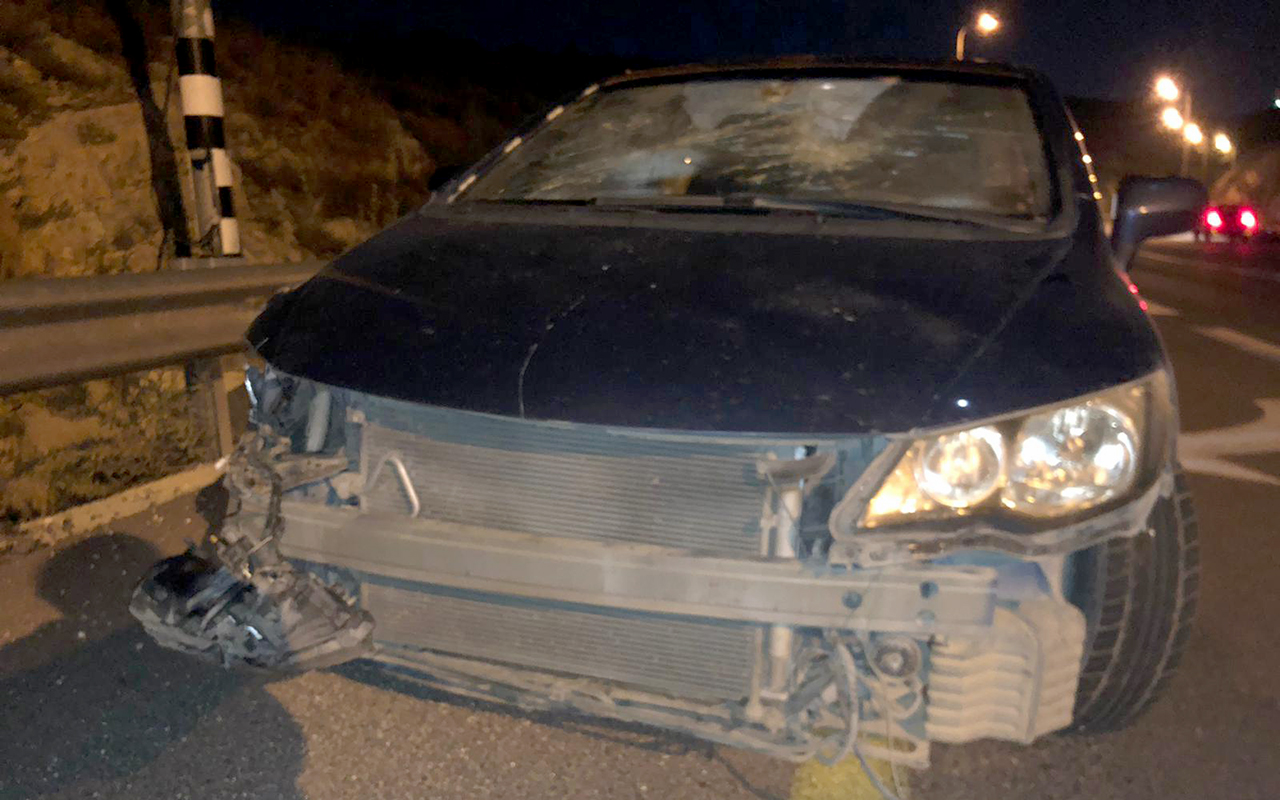
The two first cars in the convoy attempted a U-turn and collided. As a result, the second car broke down and its driver, who was alone in the car, fled into the first car when he saw the settlers advancing in his direction. The cars managed to escape the area and the settlers attacked the abandoned car, smashing all of its windows and scattering its contents on the road.
The family drove back to Huwarah, several kilometers away, and then reported what happened to the police and to the Palestinian DCO. About 20 minutes later, other passengers on the road told them the settlers had left and police cars had arrived at the intersection. The family returned to the site of the attack, where police officers took their statements and asked them to remove the car that had been vandalized.
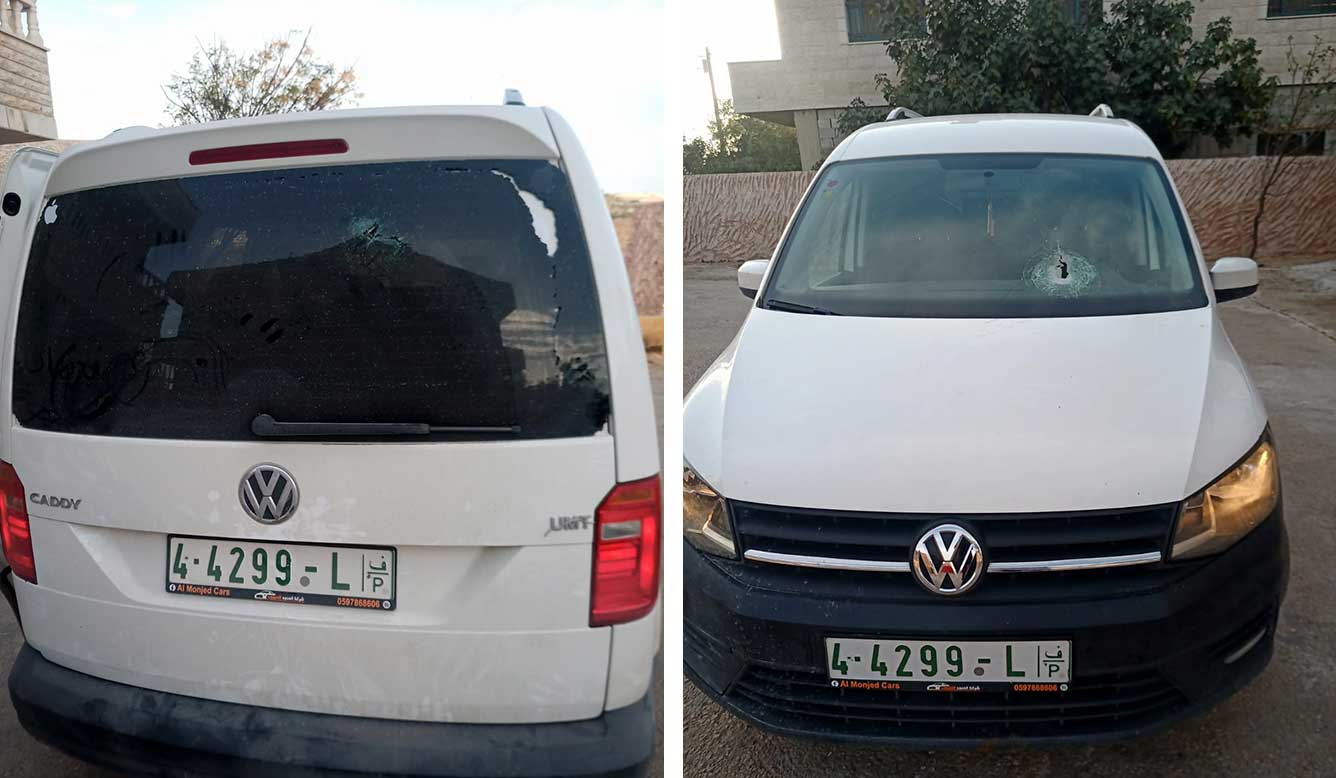
Muayad Abu S’adah’s car, vandalized by settlers. Photo by Iyad Hadad, B’Tselem, 24 Nov. 2021
In a testimony she gave B’Tselem field researcher Iyad Hadad on 24 November 2021, Nujud Qassem (47) from Ramallah said:
I went with relatives to pay a condolence visit in the village of Beit Dajan. We all drove in a convoy because we were worried, since there had been reports of acts of vengeance by settlers on West Bank roads after a Jew was killed and others were injured that day.
We drove in eight cars. It was 10:00 P.M. and my daughter Yafa (20) and my cousin Iftitah Abu Ghneim (49) were with me. We were very scared the whole drive and kept looking in every direction to make sure we weren’t being attacked. You can’t tell where they might spring from. I’ve learned from experience that they can appear all of a sudden from hills by the roadside, or from inside groves in the dark. Sometimes, they block roads and attack people mercilessly. We passed through several intersections where people have been attacked over the years by settlers – the Nablus intersection, the Huwarah intersection, the Za’tara intersection. Once we passed all those without incident, I thought we’d make it home safely, but I was wrong. As we were driving away from Za’tara, before we even reached the road that turns off towards the settlement of Ariel, the first car in the convoy, driven by my brother Khaldun, suddenly stopped. I saw my brother’s car make a U-turn in the middle of the road to turn back, and then I saw a group of settlers running down the middle of the road towards us. They were holding stones and clubs and running towards the convoy. Khaldun, who was about 100 meters away from them, turned around, but it caused confusion and my cousin Mu’aiad, who was in the car behind him, also tried to turn around and crashed into him. The collision must have caused some malfunction in Mu’aiad’s car, and he wasn’t able to complete the turn. Luckily, I managed to brake and so did the cars behind me.
We all turned around immediately in the middle of the road and tried to get away from there. We saw Mu’aiad couldn’t make it, so we yelled at him to leave the car where it was and get inside Khaldun’s car, because we were scared for his life and for our own lives. Mu’aiad did as we asked, and we all managed to drive away from there.
When we got to the area of Huwarah, we felt safe and stopped. Everyone was scared, especially the children. Imagine what we and the little ones went through. We stood there and spoke to other drivers who had come from the same intersection. We called the Palestinian police and hoped they would come and help us, but it didn’t happen. We gathered, from other passengers, that the settlers had left the intersection and that there were police cars and Israeli military jeeps there, next to Mu’aiad’s car. We drove over there, and there were four or five Israeli police and military vehicles and 15-20 members of the security forces there. We talked to them and told them about the settler attack. They took a statement from Mu’aiad, and that was that.
It turned out the settlers had wrecked his car. They smashed the windshield, the back window, a side windows and the lights, and damaged the body. There was a mess inside the car. The police officers took photos of the car and lifted fingerprints off it. After about half an hour, they asked Mu’aiad to call a tow truck to remove it. They told us not to wait for the tow truck and to leave the area. We left and went back to our homes in Ramallah.
It was a terrifying night that I won’t forget. We were all very scared. I don’t know if I’ll dare take that road again at night. Even though I’m a journalist and my occupation is hazardous, I’ve never experienced anything like that before. During the attack, I felt confused and helpless. I didn’t know what to do, even though I train people how to act in situations like that. I felt the gap between theory and practice. My daughter went into mental shock. I think I might have to get her therapy so it doesn’t affect her life in the future.
On 22 November 2021, settlers threw stones at a taxi driving on Route 466 near the settlement of Beit El, north of Ramallah, hitting a 15-year-old in the head.
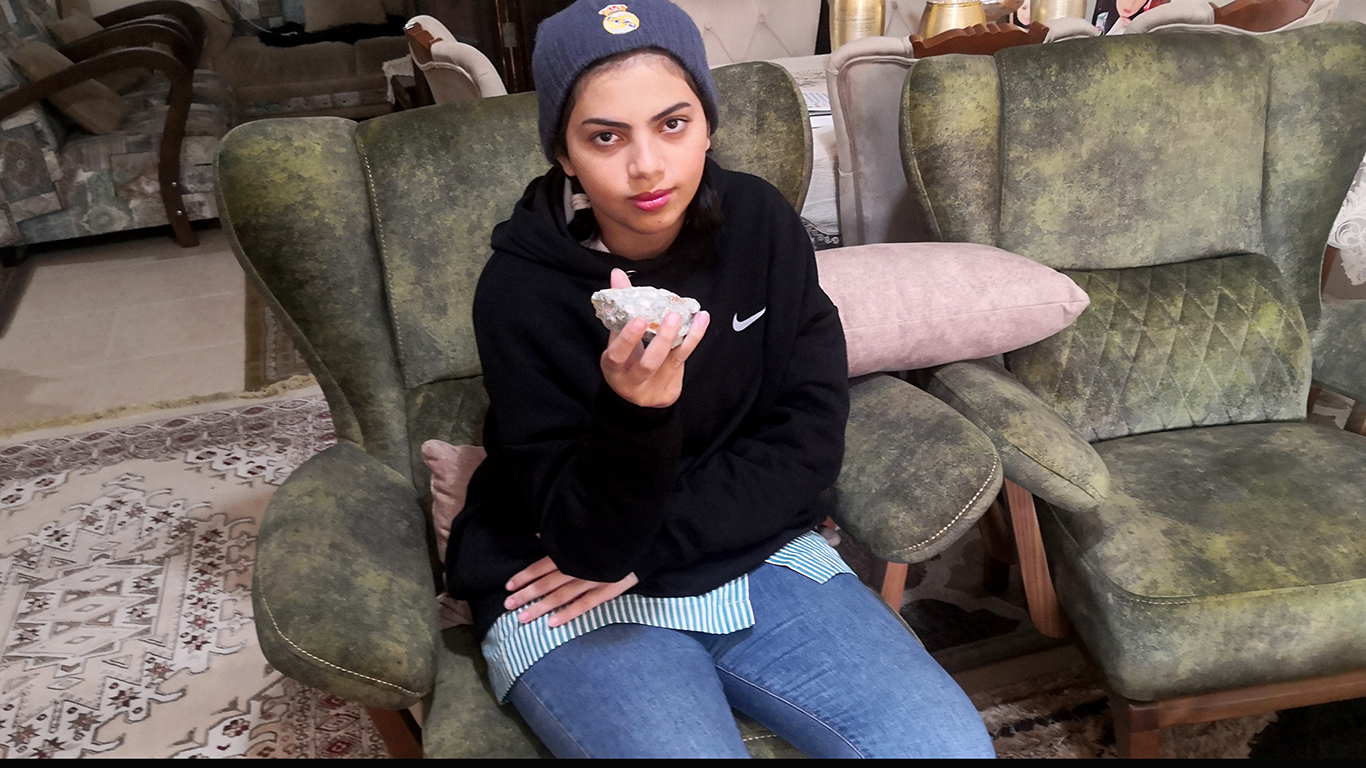
On 22 November 2021, at around 6:00 P.M., Wael Abu Kweik (43) was driving his cousin Lin Faraj (15) in his taxi back home to al-Jalazun R.C. from her Dabke class in the town of al-Birah. As the two drove past Beit El, settlers standing behind the settlement fence threw stones at the car. One entered the car through an open window, hitting Lin in the head and Abu Kweik in the shoulder. Another stone hit the chassis. Abu Kweik carried on driving and took Lin home, where her family attended to her.
Lin Faraj holding the stone that hit her in the head. Photo by Iyad Hadad, B’Tselem, 24 Nov. 2021
In a testimony she gave B’Tselem field researcher two days after the incident, Lin Faraj recounted:
After school, I have Dabke class at the Folk Art Center in al-Birah and go home in my cousin Wael Abu Kweik’s cab.
On Monday, 22 November 2021, at around 6:00 P.M., we were driving to my house as usual. When we passed by the settlement of Beit El, about a kilometer away from the refugee camp, between the old gate to the settlement and the observation tower that’s by the settlement fence, a stone the size of an orange was thrown at us from the direction of the fence. I was talking to Wael and my head was leaning against the window next to me, which was open. The stone hit me in the head and Wael in the right shoulder. I assumed settlers had thrown it, because they’re the only ones who go by there on foot.
When the stone hit me, I felt nauseous. I put my hands on my head and screamed: “No, no, ow, my head, ow, my head, the settlers hit us.” Wael tried to stop so he could check on me, but the cars behind him started honking and he had to keep driving. I wasn’t bleeding, so we realized it was a light injury, but the pain grew stronger. My head swelled up but I didn’t bleed.
Wael kept driving until we reached my house. I got out of the car crying and quickly went inside. I threw my bag down and hugged my mother. I told her what happened. She had friends over, and they all got scared and stressed out. My mother tried to calm me down. She put ice on the spot where I was hurt and massaged it with olive oil. She gave me some water to drink and I calmed down a little, but it still hurt. I’m still in shock from what happened, and I’m frightened. I didn’t go to hospital. We just spoke to the doctor on the phone. I stayed home yesterday because of the pain, but today I went back to school, even though I still don’t feel 100%. I can’t lie on the side that was hurt, and I had nightmares at night.
On 24 November 2021, around midday, settlers attacked two Palestinian cars on the Allon Road.
At around 1:00 P.M., settlers attacked a car near the village of al-Mughayir, Ramallah District, severely injuring the driver, whose 10-year-old son was also in the car.
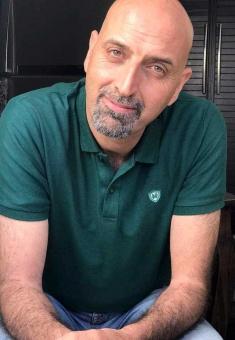
Raed Kharaz before his injury. Photo courtesy of the family.
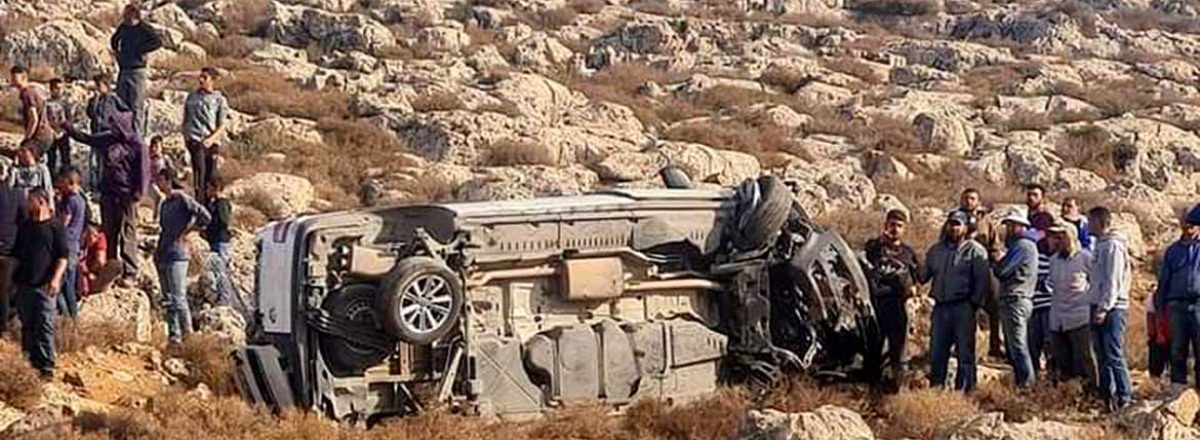
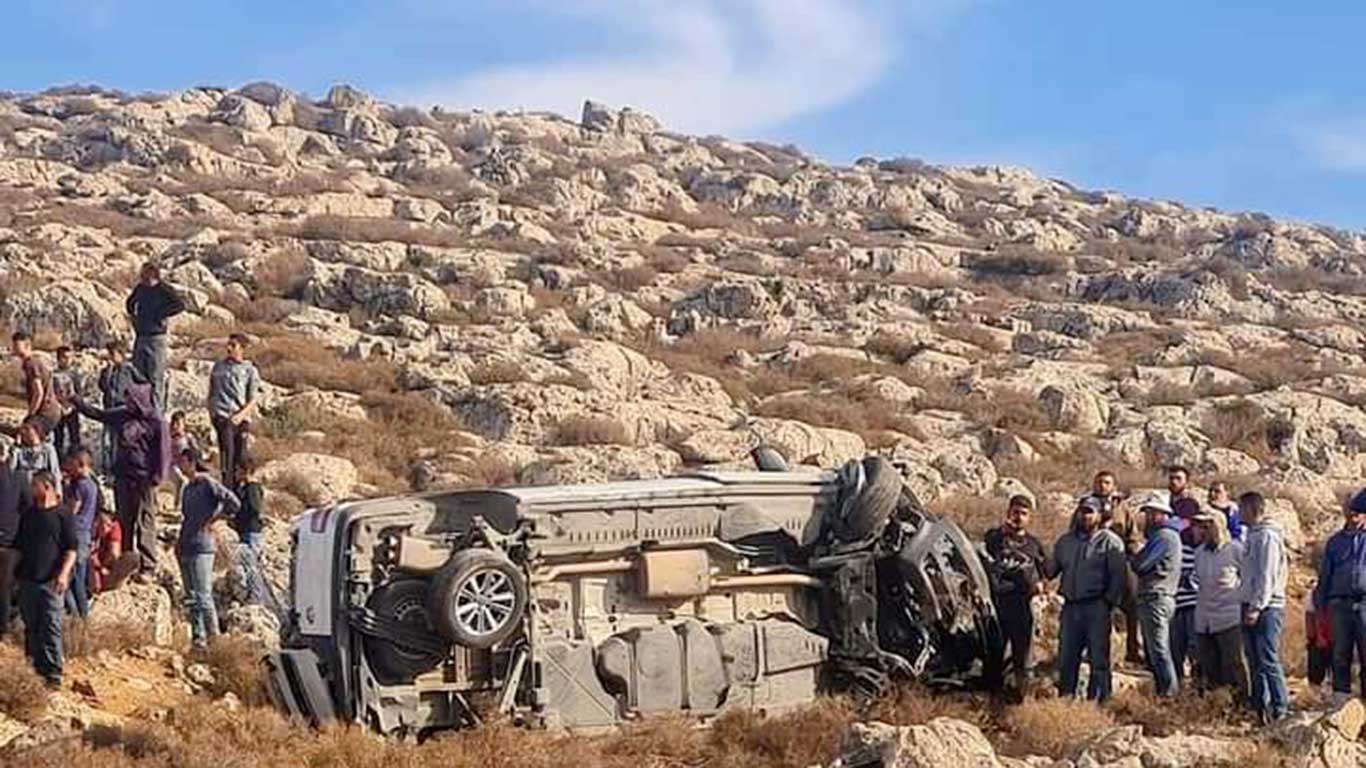
On 24 November 2021, at around 1:00 P.M., Raed Kharaz (48) and his son Muhammad (10) from Nablus were riding in their car from Nablus to Bethlehem along the Allon Road. As they passed by the village of al-Mughayir in Ramallah District, a settler stuck his upper body out of the window of a passing car and threw an object at their car, hitting the windshield. Kharaz lost control of the car, and it flipped over into a field by the road.
Kharaz was severely injured, lost consciousness and aws trapped in the car. His son Muhammad was rescued by a Palestinian who was passing by. Several minutes later, several Israeli military jeeps and an ambulance arrived. The rescue team cut the flipped car open and pulled Kharaz out. He was then taken by helicopter to Hadassah Ein Kerem hospital in Jerusalem. Muhammad, who was suffering from pain in his neck and head and had been lightly injured by glass shards, received first aid in the Israeli ambulance and was then taken to HClinic Hospital in Ramallah.
Raed Kharaz arrived at the hospital with a fractured skull, neck and nose, as well as brain hemorrhaging. He also lost an eye. He is currently hospitalized at the Loewenstein Rehabilitation Medical Center and faces a lengthy, costly recovery.
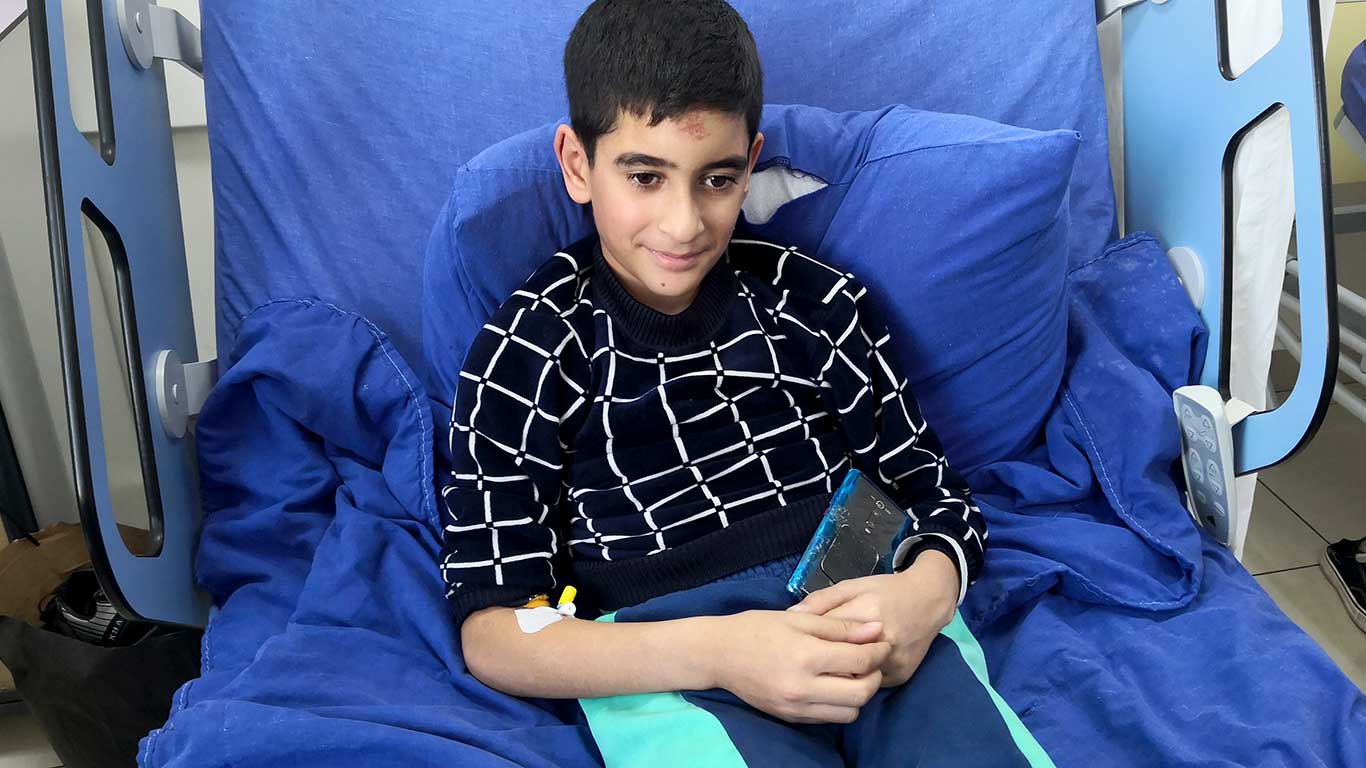
Muhammad Kharaz at the hospital. Photo by Iyad Hadad, B’Tselem, 25 Nov. 2021
Muhammad Kharaz, Raed’s 10-year-old son, spoke about what happened in a testimony he gave B’Tselem field researcher Iyad Hadad the next day:
On 24 November 2021, around midday, I was driving with my father to Bethlehem from our house in Nablus. He sells car accessories and he had an order to supply there. We took the al-Mu’arajat Road (the Allon Road, Route 458) that splits off from Za’tara, because of the scenic view of the Dead Sea. We were listening to music and talking.
When we were across from the village of al-Mughayir, I noticed a car driving in the opposite direction, close to us. I remember it had a yellow license plate and three passengers – the driver, someone in the seat next to him and another person in the seat behind the driver. The person sitting beside the driver had his upper body out the window. He had a kippah on his head and looked about 20-something. He raised his hand, like he was aiming to throw something at us, and when their car was right across from ours, he threw something that smashed our windshield and left a hole the size of an orange in the middle of it.
There was a loud sound, like an explosion, and glass shards flew at us. I was very scared and screamed. Dad got confused and lost control, and then the car turned to the right off the road, where there were rocks and stones, and started turning over. As it was flipping, I felt like I blacked out for a few seconds, and then it was like waking up from a dream and finding out it was real. The car landed on the left side, Dad’s side. I think he was unconscious. He wasn’t talking and his face was covered in blood. We were upside down, with our heads down and our feet facing up.
Raed Kharaz’s car after the attack. Photo courtesy of the family.
I undid the belt and a Palestinian who must have stopped there to help me, helped me open the door and got me outside. Some more people who were passing by came to help. I cried and said to them, it’s a dream, it’s a dream, it isn’t true. Then the man who got me out sat me down on a rock and tried to calm me down.
Two minutes later, a military jeep came. A few minutes after that, an Israeli ambulance came. One of the soldiers took my jacket off and sat me down on it. I was cold and I was shivering. First aid teams started coming, and firefighters, and more military jeeps. I understood that my dad was trapped and they couldn’t get him out. I yelled: Get Dad out, get Dad out, it’s a dream, it’s a dream. I sat there and couldn’t understand what was happening. I was confused and very scared for Dad. I didn’t have any fractures or wounds, but the right side of my neck hurt and I was hit in the head. About 10 minutes after the ambulances came, one of the Jewish paramedics asked me to lie down on the ground and he put a foam brace around my neck. After 10 more minutes, I was put in an Israeli ambulance. When I was in the ambulance, I asked what they were waiting for and they said they were waiting for a helicopter. I didn’t really understand what they meant. Later, I understood Dad was evacuated in a helicopter, but I didn’t see it.
In the end, I was taken in a Palestinian ambulance to Hclinic Hospital in Ramallah, where they examined and treated me. My mother and uncles told me Dad is badly hurt, and the Israeli teams took him to Hadassah Ein Kerem Hospital. I’m very worried about him and I’m scared something bad will happen. Every time I think about him or see a picture of him, I start crying, especially when I remember his face covered in blood when he was trapped in the car.
Bassem Salawdah’s car after the attack. Photo courtesy of witness
About half an hour after the attack on Raed and Muhammad Kharaz, settlers attacked Bassam Salawdah’s car near the village of ‘Ein Samia, Ramallah District.
That same day, at around 1:30 P.M., Bassam Salawdah (43) from the village of Duma, Nablus District, was driving south along the Allon Road to do some shopping in the town of a-Ram. As he drove past ‘Ein Samia, about four kilometers south of where settlers had attacked Kharaz’s car, he too was assaulted. A settler who was sitting in the back seat of a car driving in the opposite direction threw an object at his car, but missed. Seconds later, a settler in a different car threw a stone at Salawdah’s car. It went through the windshield and hit the rear window. Salawdah drove away and then decided to go home, driving north on bypass roads. When he arrived at the al-Mughayir area, he saw Kharaz’s flipped car. Kharaz himself had been evacuated by then. Salawdah approached the officers on site and told them about what happened. He then drove to the Binyamin police station, as they suggested, and filed a complaint.
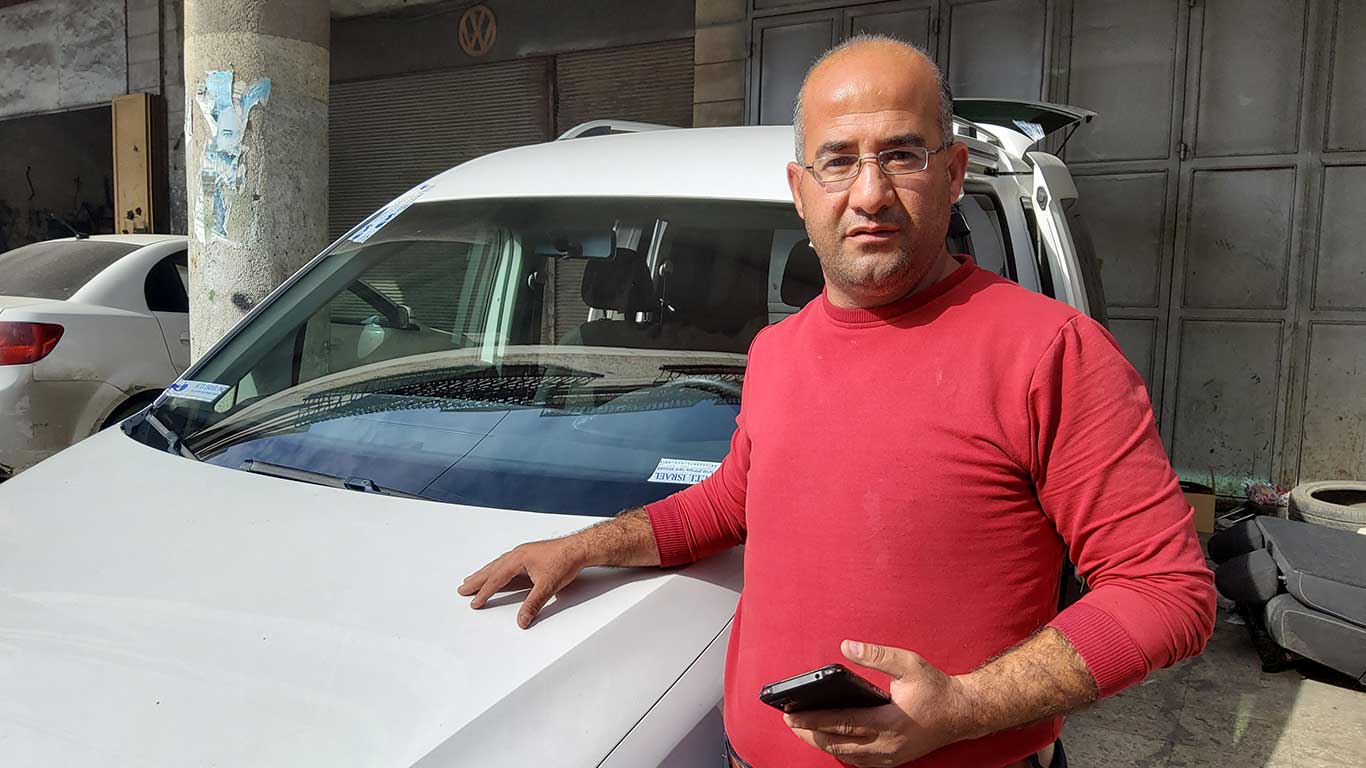
Bassem Salawdah next to his car after the windows were replaced. Photo by Salma a-Deb’i, B’Tselem, 25 Nov. 2021
In a testimony he gave B’Tselem field researcher Salma a-Deb’i the next day, Salawdah (43), a married father of six, spoke about his assault:
On Wednesday, 24 November 2021, at around 1:30 P.M., I was driving in my car to a-Ram to get some merchandise for my small grocery store in Duma.
When I was near ‘Ein Samia, about a kilometer away from the settlement of Kochav Hashachar, I saw a gray car with a yellow license plate coming in the opposite direction. A settler popped out from the seat behind the driver. I gathered he was planning on doing something, and I veered with the car to avoid a hit. He threw something in my direction but thank God, because I veered, it didn’t hit me. The car just passed by me, and then I saw another car with a settler sticking out of the window behind the driver’s seat. He threw a stone at me that went through the windshield and hit the rear window. It sounded like an explosion. Glass shards flew everywhere, at my face and my body. Thank God, I had eyeglasses on. Otherwise, shards would have gotten in my eyes and I would have probably lost control of the car and it would have ended badly.
I mustered my strength and kept driving for about three more kilometers, and then I decided to turn back because I didn’t feel like doing anything anymore. I was worried that if I took the same road back, settlers would attack me again, so I drove through Palestinian villages until I got back to the Allon Road near the village of al-Mughayir. There was a huge traffic jam on the road, and then I saw a car that had flipped over by the side of the road. I drove on until I saw police officers, and then I stopped and told them what happened to me. They suggested I file a complaint at the Binyamin police station, and I went there. When I got there, at first, they didn’t want to let me into the station, but after I explained I had been sent by police officers, they let me in. I gave a statement and then I went home.
I went to have my car fixed today, because it’s impossible to drive it like that. Replacing the windshield and rear window will cost me about 3,500 shekels, which is a big sum for someone who supports a family with a small grocery store. The officers said they’d look for the offenders. Their response seemed strange. When a Palestinian throws a stone at Israelis, he gets caught very fast. There are cameras on all those roads. Why aren’t they doing anything to them? It’s blatant discrimination. What did the man who was on his way to work with his son do? Why did he have to go through what he did?! I can’t process what happened to him and keep thinking, what if it had been me.
Israel’s regime of apartheid and occupation is inextricably bound up in human rights violations. B’Tselem strives to end this regime, as that is the only way forward to a future in which human rights, democracy, liberty and equality are ensured to all people, both Palestinian and Israeli, living between the Jordan River and the Mediterranean Sea.
Since the Hamas attack on 7 October 2023, Israel has acted in a coordinated and deliberate manner to destroy Palestinian society in the Gaza Strip, committing genocide against its residents. In light of Israel’s actions in Gaza, the public statements made by Israeli decision-makers, and the international community’s failure to take effective action, there is a serious risk that the Israeli regime will expand the genocide to other areas under its control—first and foremost, the West Bank.
B’Tselem calls on the Israeli public and the international community to use every tool available under international law to bring an immediate end to Israel’s genocide against the Palestinian people.