On the Agenda
Filter updates:
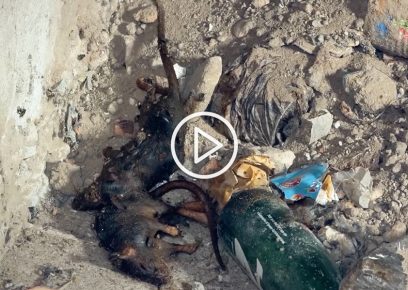
Extreme rodent infestation in Gaza putting millions at risk
Israel’s deliberate devastation of the Gaza Strip’s built environment, including water and sanitation infrastructure, has forced millions into inhumane living conditions. One result is a severe health and sanitation crisis that will affect the lives of Gazans for many years to come, even if immediate rehabilitation steps are taken now. Over the past few months, an extreme outbreak of rats and pests has been documented in displacement camps.
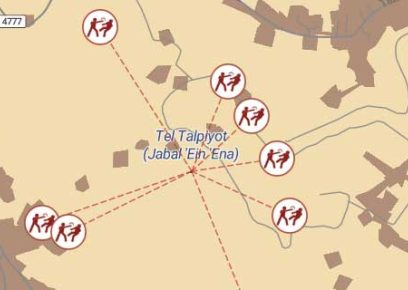
Qusrah, Talfit and Jalud, Nablus District: Residents of three villages subjected to extreme settler violence since a new outpost was established between them
On 21 January 2026, settlers established the outpost of Tel Talpiyot at the top of a hill known as Jabal ‘Ein ‘Ena on Talfit village land. The spot, which lies deep within Area B in the midst of Palestinian villages, is far from Area C and has had no previous settler presence. Since then, the villages of Talfit, Qusrah and Jalud have been suffering from severe violence at their hands...
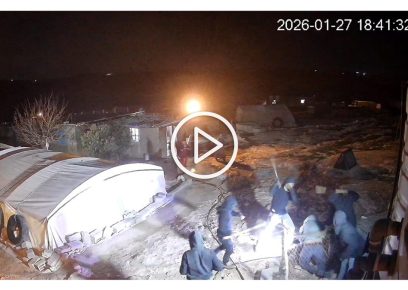
Settlers beating Muhammad Abu Sabhah with clubs as he lies on the ground. Footage from security cameras courtesy of residents
South Hebron Hills, January 2026: Increased Israeli effort to complete ethnic cleansing of Area C
The Palestinian shepherding communities in the South Hebron Hills are among the last of their kind in Area C, which spans about 60% of the West Bank and contains its urban, agricultural and economic development potential. Over the years, communities in this area have been subjected to an ongoing policy of oppression by Israel...
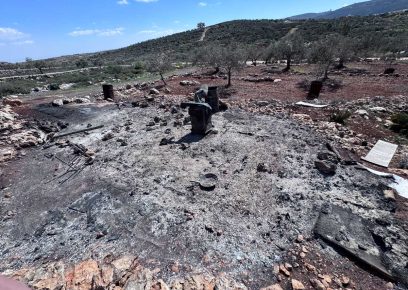
Site of the agricultural structure after it was set on fire. Photo by Mohammad Romaneh, B’Tselem
Two Palestinians killed by gunfire and another apparently died from tear gas inhalation in a combined settler and soldier attack on the village of Khirbet Abu Falah
On Sunday, 8 March 2026, at around 1:15 A.M., a group of about 15 to 20 settlers, most of them masked and armed with sticks and stones, arrived in an area known as al-Widadat in the village of Khirbet Abu Falah, defined as Area B under the Oslo Accords. The settlers spread out on a hill about 200 meters northeast of the vacant Husam Qasem Farm. The owners, residents of the village, were forced to abandon the farm several months earlier due to settler harassment. Meanwhile, residents from the village began arriving in the area, and a group of about 15 of them gathered roughly 40 meters away from the settlers...

Amir ‘Odeh. Photo courtesy of the family
Settlers attacked homes in Qusrah and fired at village residents who tried to fend them off, killing one, injuring two, and beating and stabbing another
On Saturday, 14 March 2026, at around 3:45 P.M., a group of settlers went to the western outskirts of the village of Qusrah in Nablus District and began attacking homes with stones. The settlers also fired several shots at residents. Village residents contacted the Palestinian DCO and the police, and shortly afterwards a military force arrived, including two military jeeps and a white vehicle. The settlers backed away in the direction of the outpost of Tel Talpiyot, which was set up this year in an area known as Jabal ‘Ein ‘Ayna. The military force drove after them.
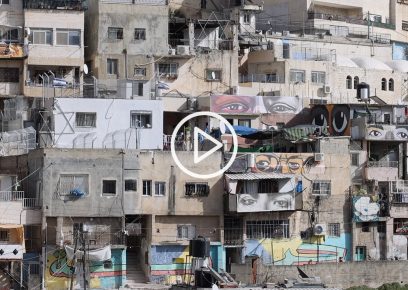
Silwan. Photo: Faiz Abu Rmeleh, B'Tselem
For the first time since 1967, Israel is expelling an entire Palestinian neighborhood in Jerusalem
For the first time since the 1967 occupation, Israel is expelling an entire Palestinian neighborhood in Jerusalem. The Silwan area, located near the "Holy Basin," the Temple Mount, and al-Aqsa Mosque, is home to many archaeological and historical sites of exceptional significance. As of April 2026, approximately 1,800 residents in Silwan are under threat of expulsion, after hundreds have already been uprooted and left homeless in the past two years. In Baten al-Hawa alone, 33 families have already been expelled, and 53 additional families, including 130 children, face a similar fate. In al-Bustan, Israel has already demolished 48 homes and plans to demolish the homes of 123 more families, which will lead to the expulsion of approximately 1,450 people. The expulsion in Silwan is part of a policy of ethnic cleansing throughout the entire West Bank.
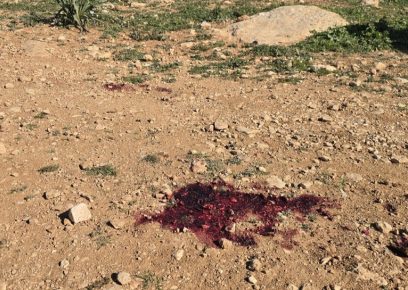
Location where Amir Shinaran was killed, by his family’s field. Photo: Nasser Nawaj’ah, B’Tselem
A settler in military uniform shot and killed a farmer after settlers invaded his family’s land
On Saturday, 7 March 2026, at around 4:00 P.M., farmers from Khirbet Wadi a-Rakhim noticed four settlers on grazing a herd of cattle on their privately-owned farmland. The settlers were carrying clubs and sticks. The farmers called the police and approached the settlers. They started filming them, shouted at them to leave, and tried to drive them and their cattle away from the crops. A confrontation broke out between the settlers and the residents, some of whom were carrying sticks and pipes, during which Muhammad Shinaran was injured. According to right-wing media outlets, one of the settlers was also injured.
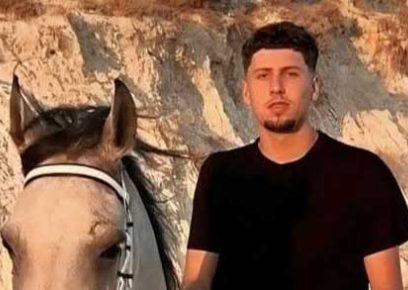
Nasrallah Abu Siyam. Photo courtesy of the family
Settlers harassed Palestinian shepherds in Mikhmas and in ensuing clashes, killed a local teen and stole hundreds of sheep with soldiers securing them
On Wednesday, 18 February 2026, the second day of Ramadan, at around 2:00 P.M., two settlers led a herd of cattle to two sheep farms on the outskirts of the village of Mikhmas, southeast of the city of Ramallah. The settlers, one of them about 15 years old, chased after 'Ayed Abu ‘Ali, 52, the owner of one of the farms, who was grazing his sheep near it. The teen threatened Abu ‘Ali and his flock with a stick, while the other settler filmed what was happening. The two then threw stones at Abu ‘Ali and the sheep. At that point, Abu ‘Ali’s son Mu’aiad, 22, arrived and tried to protect his father and the flock...
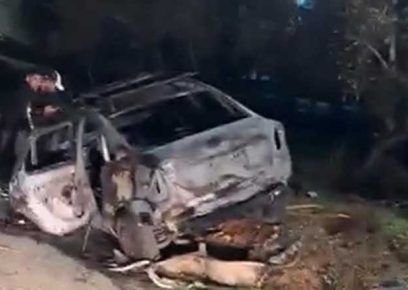
‘Allan’s burned car. Still from video posted on social media, used under Section 27A
Soldiers shot at young Palestinians on a social outing in a car, killed the driver, injured the passengers and beat them
On Wednesday, 28 December 2025, at around 7:20 P.M., Qays ‘Allan, 20, from the village of ‘Einabus in Nablus District, drove three of his friends in his car. The four young men drove toward ‘Allan’s home, which is in the western part of the village, and stopped at a grocery store along the way to buy snacks and soft drinks. When they were about 500 meters away from the house, a bright light suddenly shone on them from the other side of the road, as though someone were signaling to them with a flashlight...

Still from video
A settler in military uniform shot and killed two Palestinian brothers as part of a settler attack on the village of Qaryut, Nablus District
On Monday, 2 March 2026, at around 12:00 P.M., several settlers and a settlement guard known to local Palestinian residents arrived with a backhoe at Qaryut farmland, and began working on private land belonging to village residents. About seven residents who heard the noise the settlers were making gathered at a spot overlooking the land, near their homes on the edge of the village. They watched what was happening from there and shouted at the settlers...
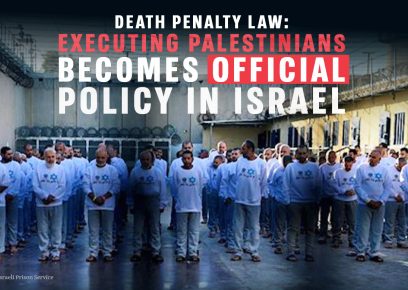
Israel turning execution of Palestinians into official state policy
The death penalty bill, which enjoys broad support from the Israeli public, passed last night in the Knesset. The Israel Prison Service has already begun preparing designated facilities for execution. B'Tselem Executive Director Yuli Novak: "Israel is reaching a new low in the dehumanization of Palestinians, enshrining their cruel treatment in state law. It already kills Palestinians systematically and faces no demands for accountability. Under the leadership of top ministers, the Israeli system is day by day becoming a system that normalizes the killing and injury of human beings."...
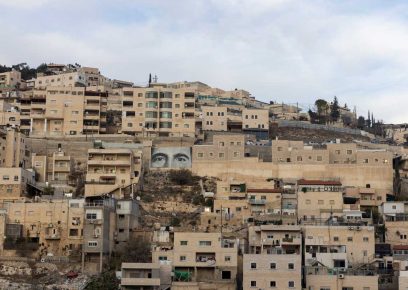
The Baten al-Hawa neighborhood. Photo: Omri Eran-Vardi, Activestills, 4 January 2025
Ongoing ethnic cleansing: Home demolitions, expulsion and dispossession in Silwan
The Silwan area, located south of the Old City of Jerusalem and annexed to the city’s municipal boundaries, is home to some 20,000 Palestinian residents. Its unique location next to the Old City, near al-Aqsa Mosque for Palestinians and the Temple Mount for Jews, puts it at the forefront of the Israeli regime’s campaign of dispossession...
Israel’s regime of apartheid and occupation is inextricably bound up in human rights violations. B’Tselem strives to end this regime, as that is the only way forward to a future in which human rights, democracy, liberty and equality are ensured to all people, both Palestinian and Israeli, living between the Jordan River and the Mediterranean Sea.
Since the Hamas attack on 7 October 2023, Israel has acted in a coordinated and deliberate manner to destroy Palestinian society in the Gaza Strip, committing genocide against its residents. In light of Israel’s actions in Gaza, the public statements made by Israeli decision-makers, and the international community’s failure to take effective action, there is a serious risk that the Israeli regime will expand the genocide to other areas under its control—first and foremost, the West Bank.
B’Tselem calls on the Israeli public and the international community to use every tool available under international law to bring an immediate end to Israel’s genocide against the Palestinian people.