Brukin, Salfit District: After the shooting attack that killed Tze’ela Gez, who lived in a nearby settlement, the military raided the town, abused residents, imposed severe restrictions, damaged property, seized land, and allowed settlers to take over the
Brukin, Salfit District: After the shooting attack that killed Tze’ela Gez, who lived in a nearby settlement, the military raided the town, abused residents, imposed severe restrictions, damaged property, seized land, and allowed settlers to take over the
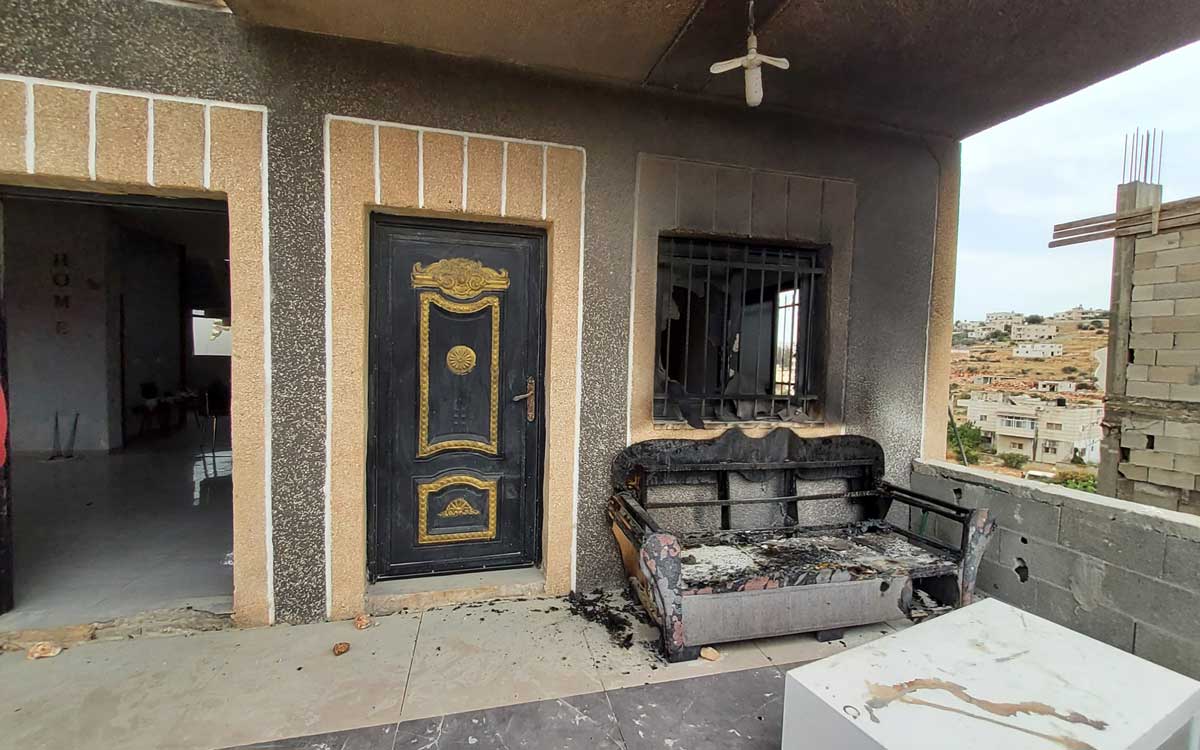
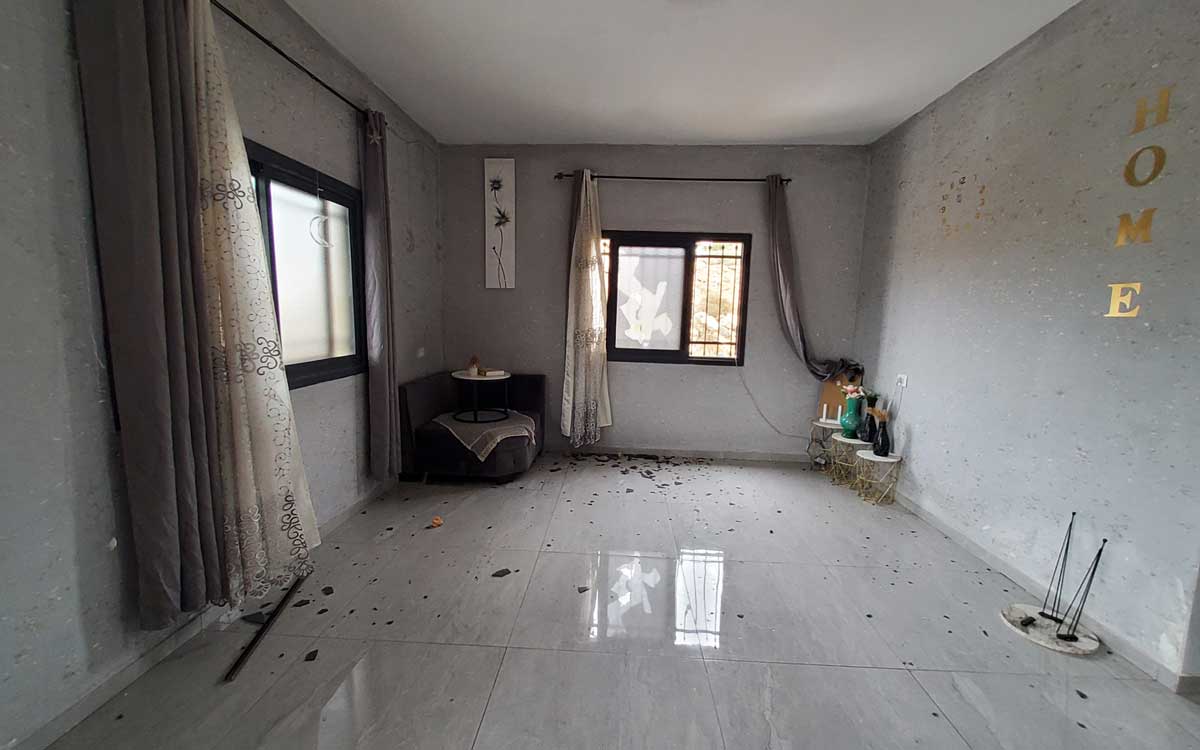
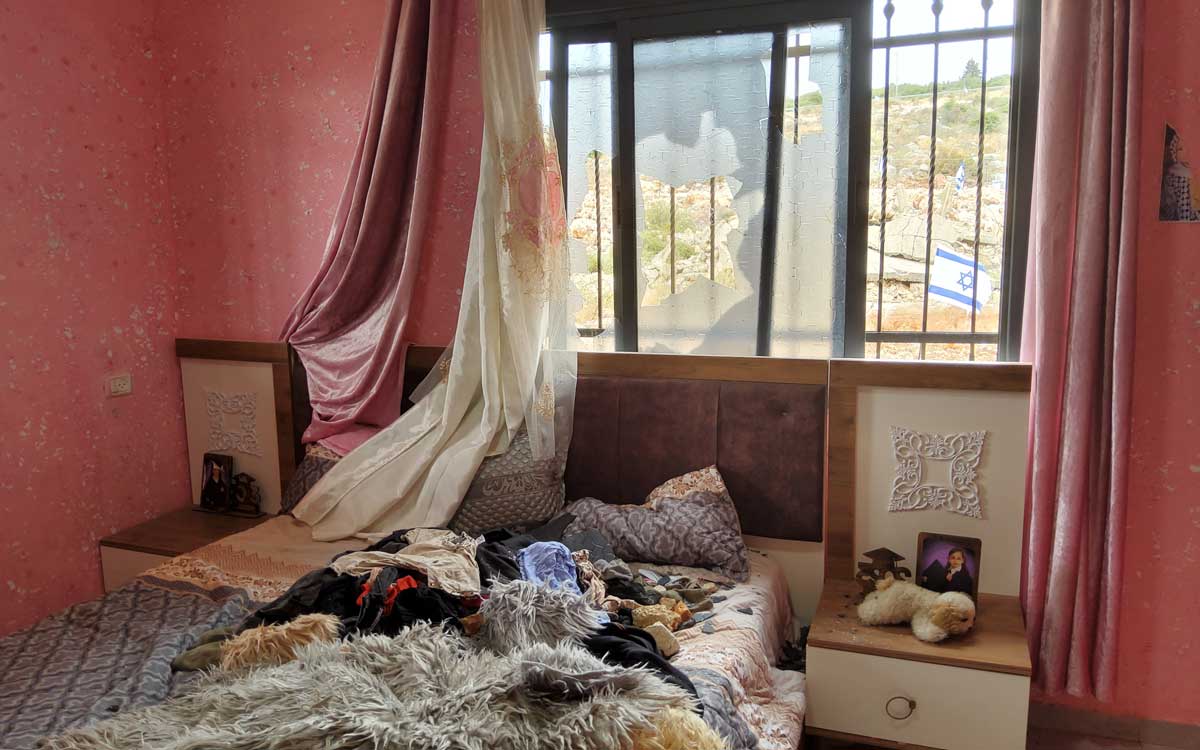
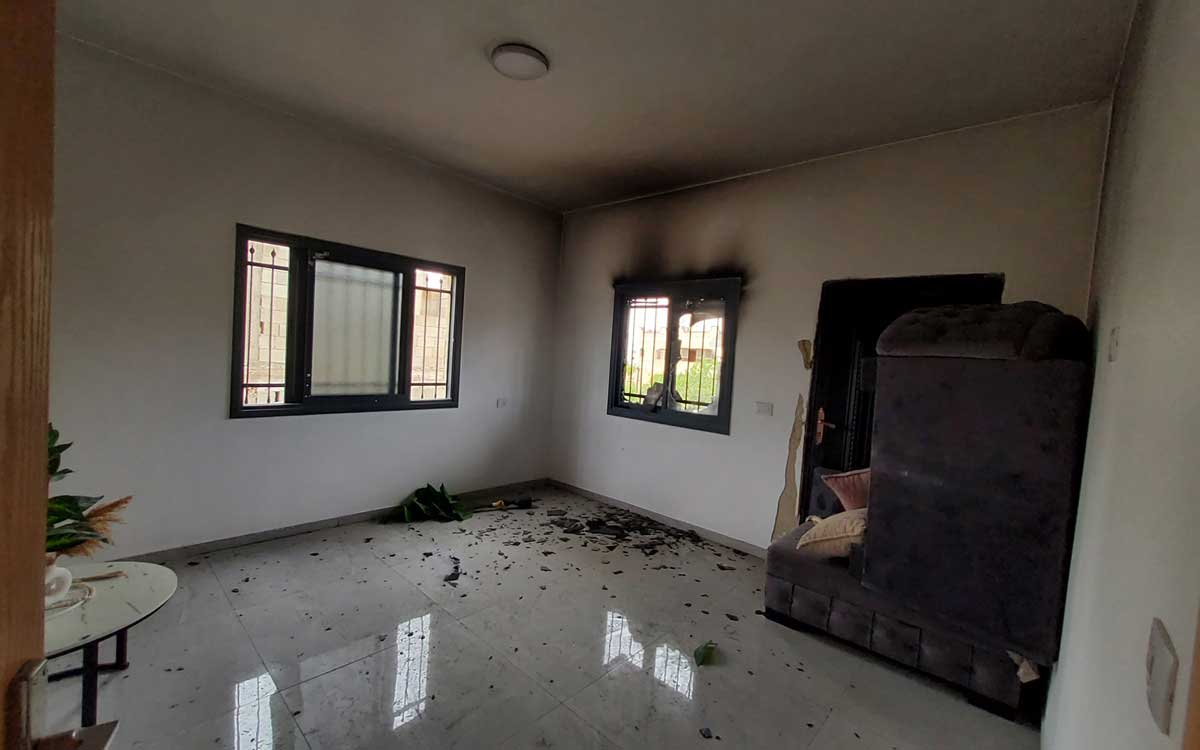
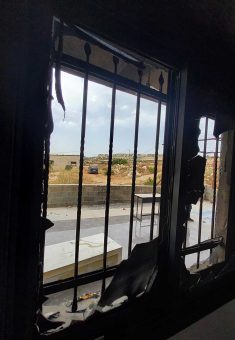
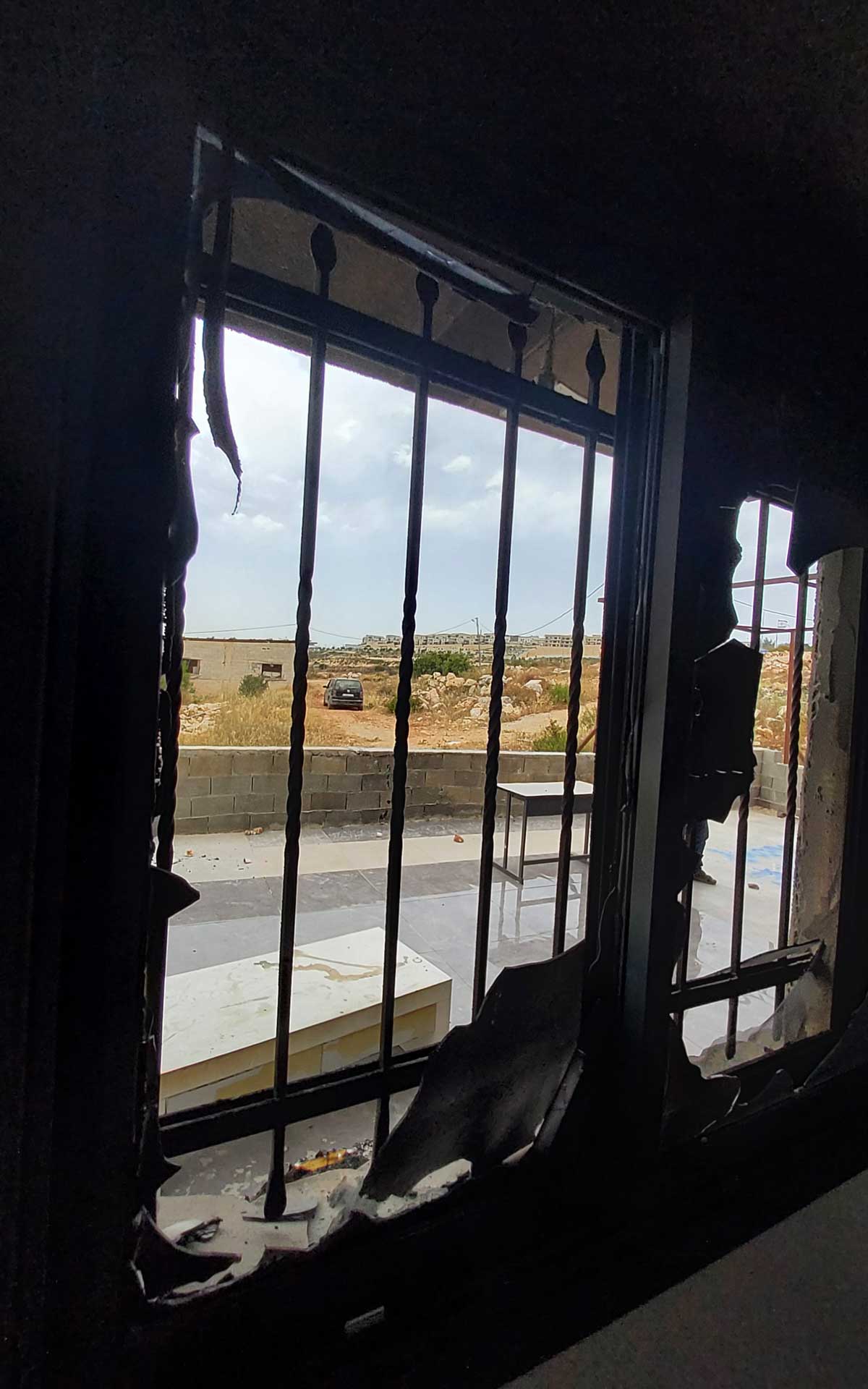
Damage caused to the home of Yafi Barakat. Photo: Salma a-Deb’i, B’Tselem
On Wednesday, 14 May 2025, at around 10:00 P.M., a Palestinian opened fire on an Israeli car driving along Route 446 near the town of Brukin, critically injuring Tze’ela Gez, 33 and lightly injuring her husband. The couple were driving from the settlement of Bruchin to the delivery room. Their baby was delivered by cesarean section and Tze’ela Gez died of her wounds the next day. The baby died on 29 May 2025, at two weeks old.
Immediately after the shooting, the military raided Brukin, blocked all the roads into the town and imposed severe movement restrictions on the residents. Soldiers ordered shop owners to close their businesses for several days, denied residents access to medical services in the town and outside it, and shut down schools.
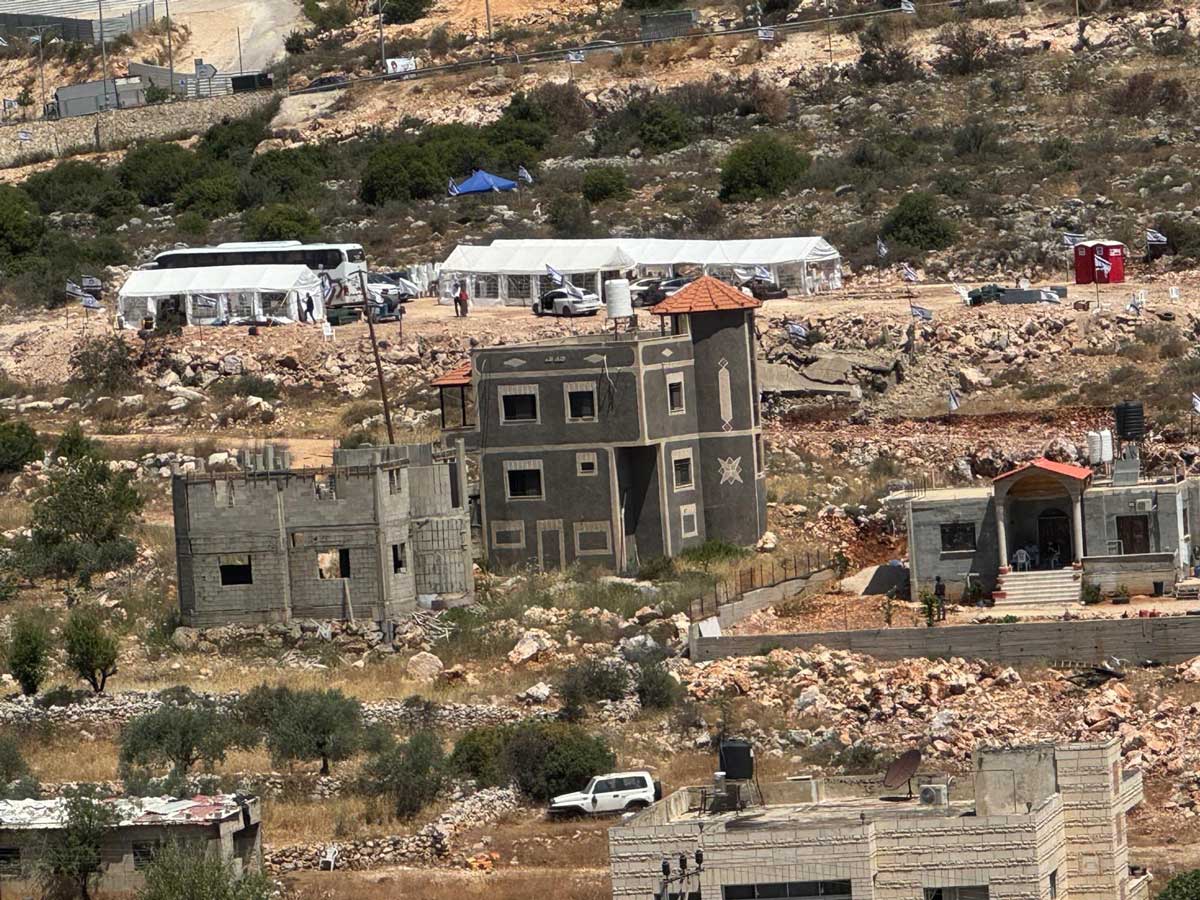
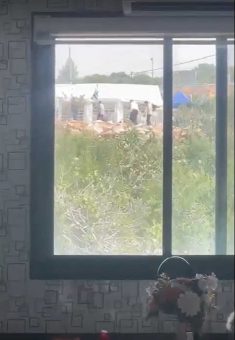
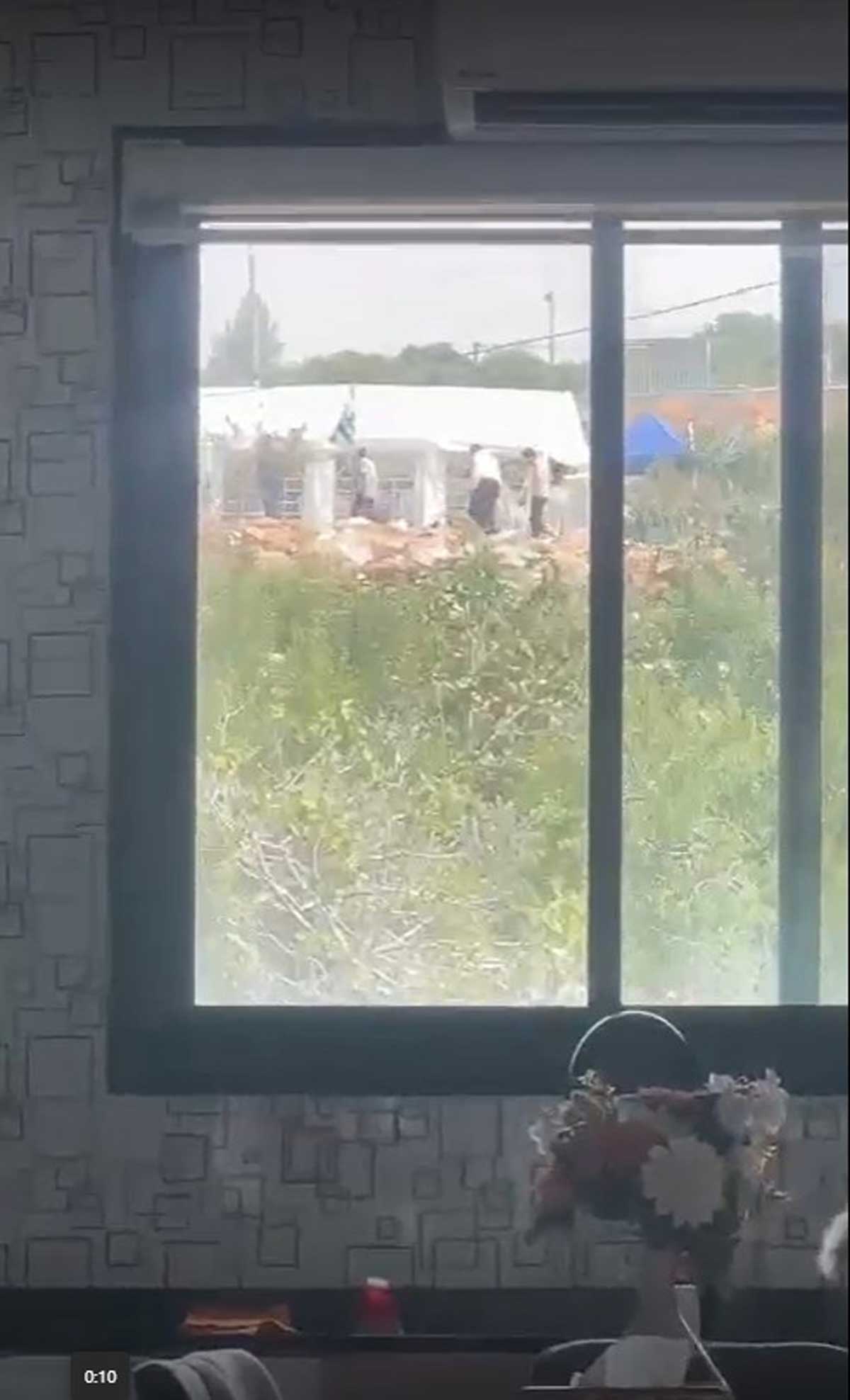
The tent settlers set up on town land. Photo courtesy of the witness
The military raided 23 homes, took over several of them for hours, searched some homes while ransacking them, and vandalized vehicles. One of the homes was seized for five days. The occupants were kicked out and the military used the home as a command post and interrogation center.
While stationed in the town, soldiers allowed settlers to attack Palestinian residents, force families out of their homes, vandalize farmland and clear a road through it, set up tents, and install infrastructure.
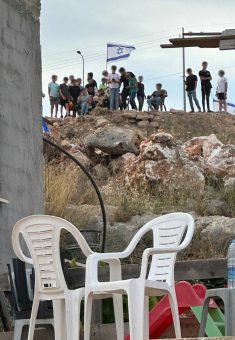
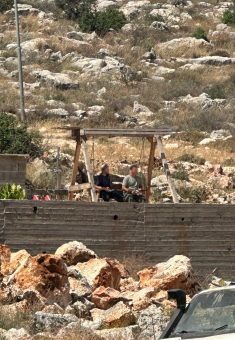
Settlers sitting in Mustafa Khater’s yard. Photo courtesy of the witness
The next day, Thursday, 15 May, the military issued a seizure order and a security order for more than 200 dunams (1 dunam = 0.1 hectares) of land extending southwest of the town along Route 446. The seized area included privately owned plots belonging to Brukin residents, among them nearly 10 dunams of olive groves, and part of it borders the town homes.
That same evening, hundreds of settlers invaded the area accompanied by at least five bulldozers. Some arrived on organized shuttles. They broke into and bulldozed farmland just meters from the town homes, leveled a large area, spread gravel, and erected tents and infrastructure. They lit bonfires, sang, and shouted.
Some settlers entered the town itself, throwing stones at homes, smashing windows, and attacking residents who tried to protect their property. They set eight cars on fire, shattered windows of additional vehicles, and broke into at least two homes whose occupants had fled, stealing belongings. Soldiers on the scene allowed the violence to continue and at times even assisted the settlers, firing live rounds in the air and firing tear gas canisters at residents who tried to defend their properties. At least five families were forced to leave their homes for days or even weeks because of their proximity to the settlers’ encampment.
Soldiers also raided the Brukin town hall, smashing computers, printers, furniture and even the ceiling, causing tens of thousands of dollars in damage.
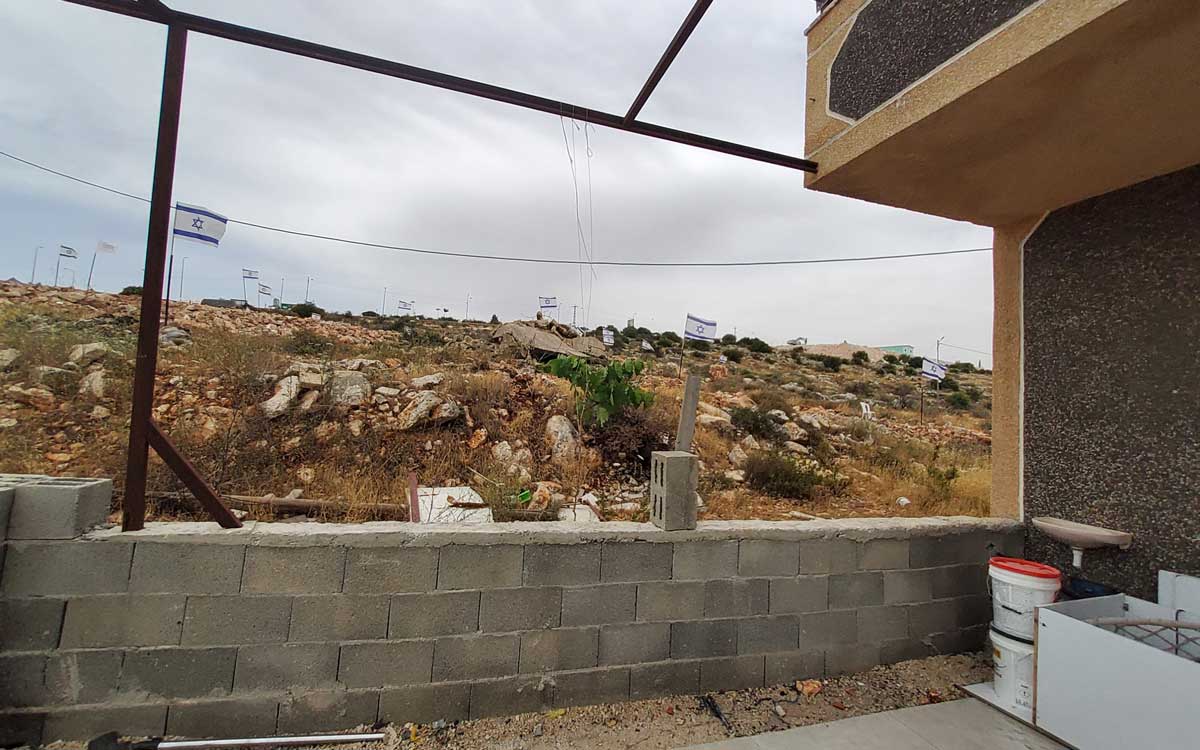
Flags the settlers set up by Mustafa Khater’s house. Photo courtesy of the witness
On 17 May, the military used the raid to demolish a three-story building containing six apartments, claiming it was built without a permit. Three of the apartments were occupied and a total of 15 people, including seven minors, lived in the building.
That same day, soldiers arrived at the home of Nael Samarah, 36, who was suspected of perpetrating the shooting attack. The soldiers removed Samarah from the house with his hands tied and his eyes covered. Shortly afterward, shots were heard, and reports stated that he was killed. The military claimed Samarah had run toward soldiers while holding a bag suspected of containing explosives. His wife, who was detained in the yard, said she heard him shouting. The soldiers assaulted and beat his two sons, his uncle, and other family members.
Damage caused to the home of Yafi Barakat. Photo: Salma a-Deb’i, B’Tselem
B’Tselem field researcher Salma a-Deb’i collected testimonies from Brukin residents.
Yafi Barakat, 30, a father of five from Brukin who works as a metalsmith, said in a testimony he gave on 26 May 2025:
On Wednesday, 14 May 2025, at around 10:00 P.M., I found out from social media that there was shooting against a settlers’ car.I got scared and worried for my family because our house is only about 150 meters from Route 446, which separates the town from the Bruchin settlement. We all went to my parents’ house in another part of Brukin, my wife, Sajedah, 27, and our five children – eight-year-old twins Sila and Silana, Muhannad, 6, Sahar, 4, and Sanad, 2.
Damage caused to the home of Yafi Barakat. Photo: Salma a-Deb’i, B’Tselem
Soon afterwards, the military raided the town and soldiers walked around the streets. I heard from residents that they went into homes and did searches. We stayed in my parents’ small house, where my sister and two brothers also live. My wife and kids and I slept in the living room.
The next day, I heard settlers had attacked my house. Later, I saw they had smashed several windows and stolen chairs, a table, and anything light enough to carry from the yard. They simply picked the things up and left.
Then I heard from residents that settlers had leveled a plot of land just a few meters above my home. Neighbors told me that bulldozers worked there all night. I couldn’t sleep. I was worried about the house because there were hundreds of settlers in the area. They pitched a very large tent, set up portable toilets, lit a huge bonfire, and had a party. Their voices could be heard from far away.
Damage caused to the home of Yafi Barakat. Photo: Salma a-Deb’i, B’Tselem
On Saturday, 17 May 2025, I went with my father, Fahed, 60, to check on the house and take a few things my wife and children needed, but soldiers we came across on the way shouted at us to leave and wouldn’t let us get there. I tried several more times, but the soldiers were always present.
It wasn’t until Thursday, 22 May 2025, that my father and I managed to reach the house. I was shocked by the damage I found in the yard. Some of my brothers and cousins came to help, and we tried to secure the house a little. I welded iron doors shut so they couldn’t be opened and moved the furniture and anything that could catch fire away from the windows . Around 9:30 P.M., my brothers and cousins went to rest, planning to come back later. We wanted to make a show of presence, so the settlers wouldn’t think the house was abandoned.
Damage caused to the home of Yafi Barakat. Photo: Salma a-Deb’i, B’Tselem
Around 11:30 P.M., dozens, or maybe even hundreds, of settlers arrived along with many soldiers, and began hurling stones at my house and at my neighbors’ homes. The soldiers made no attempt to stop them.
My father and I went up to the roof and sat in a corner, thinking it would be safer there if the settlers set the house on fire. Meanwhile, several people from the town who had heard about the attack came to help, but the soldiers fired live rounds, stun grenades, and tear gas at them to keep them away. The soldiers didn’t try to drive the settlers off. They protected them.
I could hear settlers in my yard trying to break into the house. It was terrifying. I thought my father and I were about to die, that this would be our last night alive. I felt so sorry for my father and regretted letting him stay with me instead of insisting he leave with my brothers. We kept our heads down so they wouldn’t see us. We were afraid they’d kill us. I called the Israeli DCO and police, and they warned me not to go outside. I felt like a hostage in my own home. All I wanted was for my father and me to get out safely. I wanted to go back to my family and my children. I didn’t care any more about the house, our possessions, or anything else. What are they worth compared to my children’s safety?
Around 2:00 A.M., the settlers’ noise stopped and they went back to their tents. The soldiers stayed near the house, and my father and I stayed on the roof all night, sitting on the floor, too afraid to even look around. At 6:00 A.M., my brothers told me it was safe to leave and that no one was around, so my father and I left and went back to town.
On Saturday, 24 May 2025, at around 11:00 P.M., I went with my wife and my father to the home of relatives who live near me. From there, we saw that settlers had set my house on fire. Heartbroken, I watched the flames and smoke rising from it. We built that house with loans that I’m still paying off and moved in only a few years ago. Since the war began and my Israeli work permit was revoked, I’ve struggled to keep up with the loan payments, and now I was watching my home burn before my eyes.
My father, several cousins, and I, along with other residents, went to put out the fire. When we were about 20 meters away, a soldier suddenly fired a tear gas canister that landed between my legs. I could barely breathe and felt like I was suffocating. Residents took me to a nearby house and gave me first aid. Then an ambulance came from Salfit, and the paramedics gave me oxygen. Several other residents also suffocated from the gas and were treated. I stayed there until things calmed down the next morning.
Around 10:00 A.M., my father and I went back to the house. What I found was destruction. It broke my heart. After everything I put into that house over a decade, all the years I worked so hard to build it, to see it like that? It was extremely painful. But everyone around me tried to console me, saying I should thank God the house hadn’t burned down completely. The settlers burned the sofas outside, smashed the windowpanes on both sides of the house, and threw flammable materials inside. Fortunately, because I had moved the furniture away from the windows, the fire had little to latch onto and didn’t spread, and the neighbors were able to put it out after the soldiers and settlers left.
Mustafa Khater, 40, a father of four from Brukin, said in a testimony he gave on 20 May 2025:
Settlers in the area they seized. Photo courtesy of the witness
On Thursday, 15 May 2025, the day after the shooting at the settlers’ car, I was afraid that settlers would attack our house because it’s close to the settlement of Bruchin. I asked my wife to take our children to her parents’ home, which is farther from the settlement. As I feared, at around 10:00 P.M., dozens of settlers arrived in buses. What surprised us was that several large bulldozers came with them. They paved a road, leveled a plot of land, spread gravel, and created an open area where the settlers set up large tents. They lit a fire there and burned a Palestinian flag.
My brothers, who live nearby, came to stay with me because they didn’t want to leave me alone. But soldiers arrived and kicked them out, allowing only me to stay. Meanwhile, they didn’t remove a group of about 10-15 settlers who threw stones at us and shouted insults. Around 11:00 P.M., the settlers smashed all my garden furniture and broke several windowpanes in the house.
I couldn’t leave my home. I’ve put everything I have into it, so that my family and I can live in a place of our own. The tent the settlers put up is only 20–25 meters from the house, and the road they paved passes just eight to 10 meters away. They built it on villagers’ land, some of it planted with trees. They don’t care about people or trees.
Settlers sitting in Mustafa Khater’s yard. Photo courtesy of the witness
All night long they pointed blue laser beams at me and the house. I moved the furniture away from the windows, took down the curtains, and removed the carpets because I’m afraid the settlers will try to burn the house down. I can’t fall asleep, can’t allow myself to close my eyes, because anything could happen at any moment. I can’t cook, since I removed the gas cylinders for fear of arson. My brother, who lives about 50 meters away, brings me coffee and cigarettes. I can’t eat anyway. I haven’t seen my wife and children since they left that first night. I won’t let them come back. All the possessions in the world, the house, the car, the whole world, mean nothing compared to my children’s safety.
Yesterday, before sunset, my brother insisted I come to his house to eat and rest a bit. I went, but less than ten minutes later he told me to look at my house. When I looked out the window, I saw two settlers sitting on the swing in my yard, rocking calmly as if they owned the place. I went back home with my brothers and cousins. The settlers left the swing and sat on a rock about 20 meters away. One of the young men asked them, in Hebrew, “Why are you here?” and one replied, “You’re not my father, I don’t have to answer you.” They stayed on that rock for about an hour and then went back to the tent.
I work as a taxi driver, but since they set up the tents I’ve been trapped inside my home. I can’t go to work because of the danger from the settlers and because the town is under curfew. I feel like I’m living in a nightmare. I just want to wake up from it and return to my normal life. I want to wake up in the morning and see my little girl Diana, 2, who usually wakes me by patting my cheeks with her tiny hands. I miss the smell of coffee my wife makes every morning, and the aroma of her cooking filling the house. I miss the loud voices of my children, their laughter, even the noise of their arguments. I miss my family.
Rakez Khater, 50, a father of five from Brukin, said in a testimony he gave on 25 May 2025:
On Thursday, 15 May 2025, at around 2:30 P.M., I saw several military jeeps entering my neighborhood and stopping near my neighbor’s house. I expected them to search the house, but instead the soldiers began moving boxes and equipment into it. Later I found out from social media that they had taken over the house, removed the family living there, and turned it into a military post.
Throughout Friday and Saturday, I heard screams of pain coming from that house. I saw soldiers bringing young men from the town into the it, apparently for interrogation, and then I heard them screaming. At first, there were loud cries of pain, and later, faint moans. The sounds went on from the afternoon until nightfall, between 5:00 and 9:00 P.M.
I couldn’t see what was happening inside, because once the jeeps entered the yard, nothing was visible from outside. But there was constant movement of jeeps to and from the house. The soldiers left on Monday afternoon, 19 May 2025.
It was very hard to hear the young men pleading, “For God’s sake!”, “I’m begging you, leave me alone!”, “Stay away from me!”, and we could do nothing for them except pray for their safety.
Israel’s regime of apartheid and occupation is inextricably bound up in human rights violations. B’Tselem strives to end this regime, as that is the only way forward to a future in which human rights, democracy, liberty and equality are ensured to all people, both Palestinian and Israeli, living between the Jordan River and the Mediterranean Sea.
Since the Hamas attack on 7 October 2023, Israel has acted in a coordinated and deliberate manner to destroy Palestinian society in the Gaza Strip, committing genocide against its residents. In light of Israel’s actions in Gaza, the public statements made by Israeli decision-makers, and the international community’s failure to take effective action, there is a serious risk that the Israeli regime will expand the genocide to other areas under its control—first and foremost, the West Bank.
B’Tselem calls on the Israeli public and the international community to use every tool available under international law to bring an immediate end to Israel’s genocide against the Palestinian people.