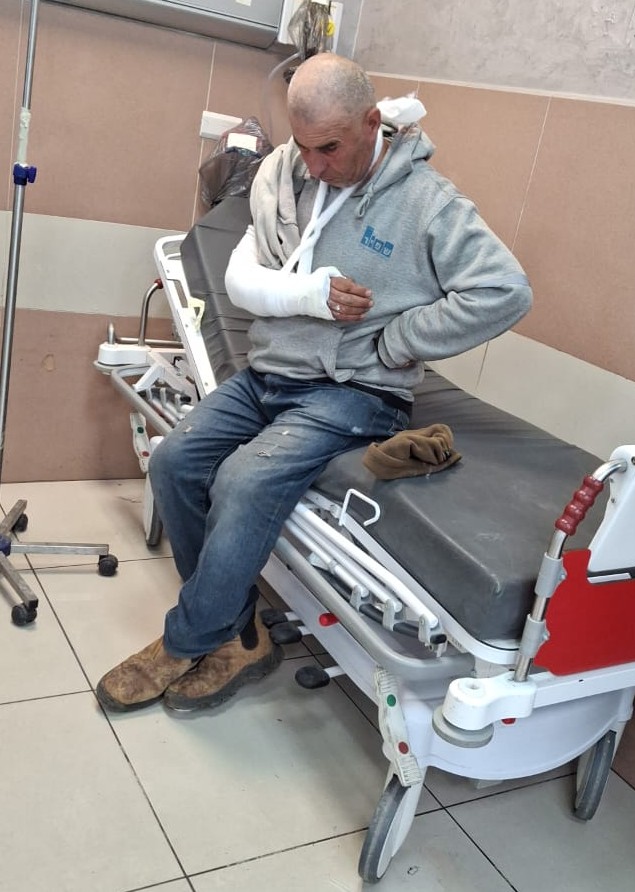
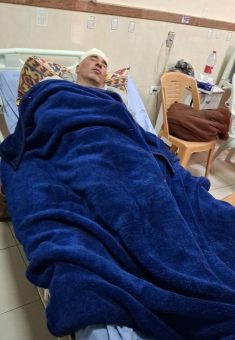
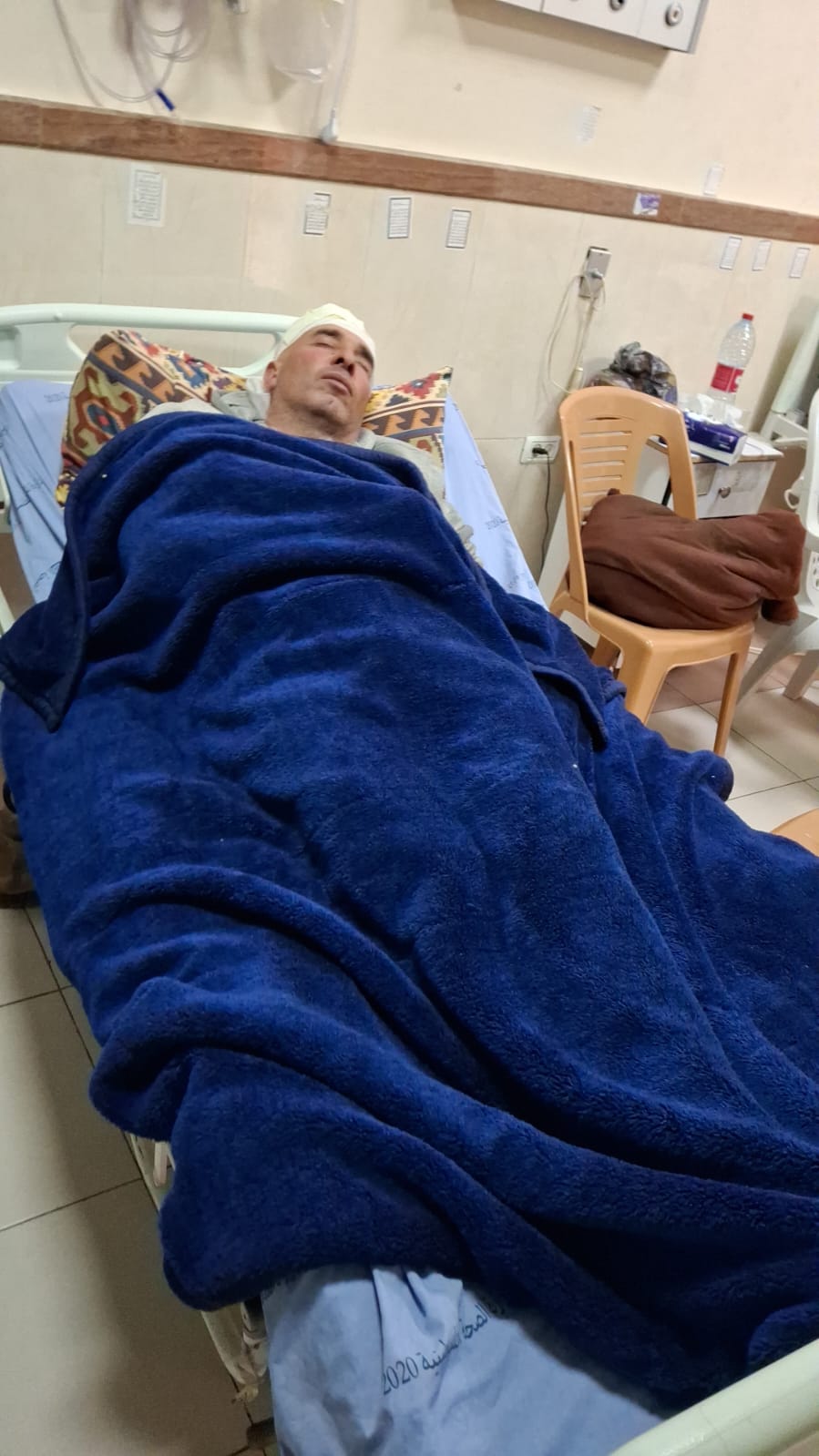
Bilal Mahariq in the hospital after his attack. Photo courtesy of the family
On Monday morning, 27 January 2025, a settler arrived with dogs and a herd of cattle at the Khirbet Abu a-Rish area, north of Rantis. He had his cattle graze near tents belonging to the extended Mahariq family, who live at the site. The settler, known to the Palestinian residents as Eitan, told istrict: Israeli settlers and soldiers attacked Palestinian shepherds, severely beating th them the land and family’s tents belonged to him and that they had to leave, and began threatening them. The four Mahariq brothers were there at the time: Muhammad, 34, Bilal, 46, M’aruf, 38, and Sadam, 34, as well as Bilal’s son, Muhammad Bilal, 23. The brothers’ families moved to homes they have in the town of a-Samu’, Hebron District, in April 2024, after settlers set fire to two of the family’s tents, while the men stayed behind to protect the sheep and tents.
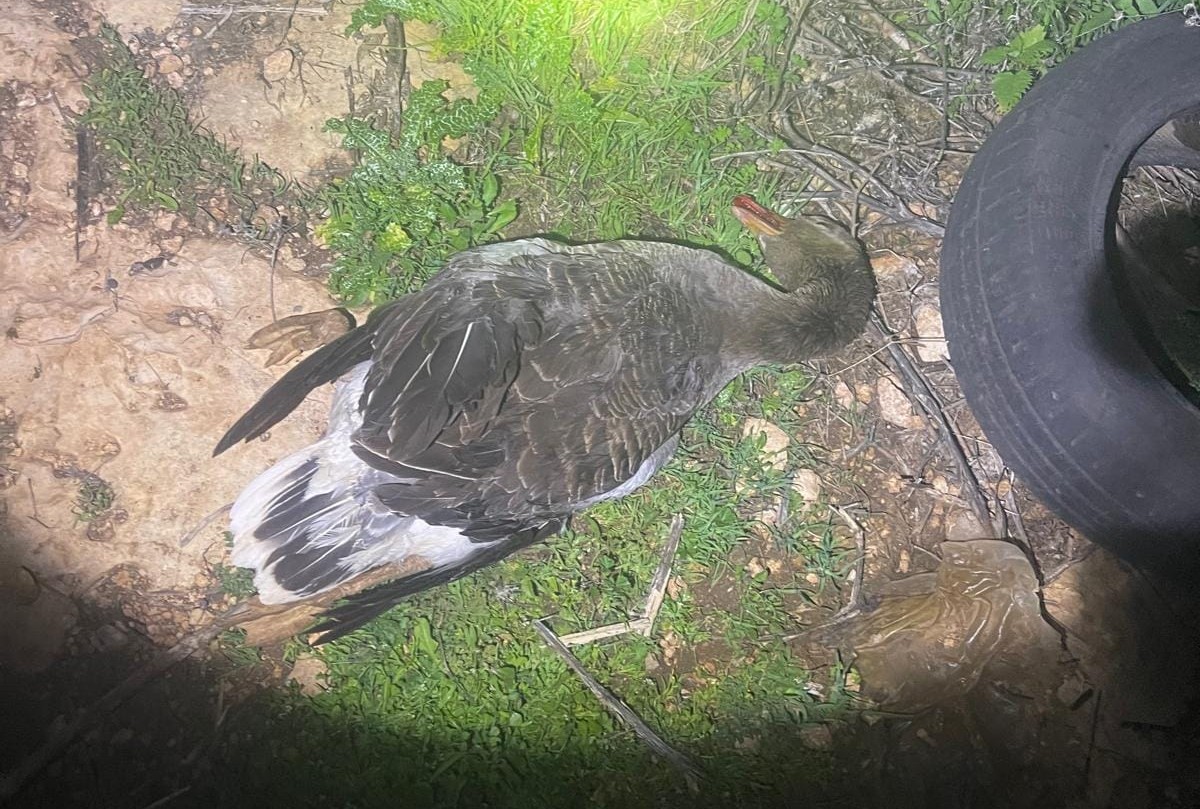
One of the geese killed by the settlers. Photo courtesy of local residents
The settler remained in the area with his herd until the afternoon, and around 3:00 P.M., started setting his dogs at the Mahariqs’ sheep, to scare them away. Muhammad Mahariq and his family confronted the settler in an attempt to get him to back off with his cattle and dogs. During the confrontation, the settler hit M’aruf in the chest with the butt of his rifle, then called for reinforcements, and a short time later, four settlers and six soldiers known to the family as settlers, arrived in an ATV and two all-terrain vehicles. Some were armed with clubs and some with firearms.
The settlers and soldiers began hitting the family members with clubs and rifle butts. After about ten minutes, the family members managed to get away and called the police. When police officers and soldiers arrived, the assailants left without any of them being detained.
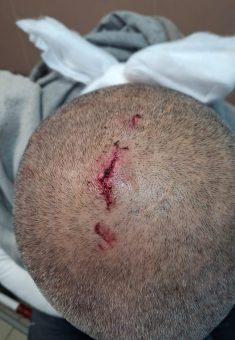
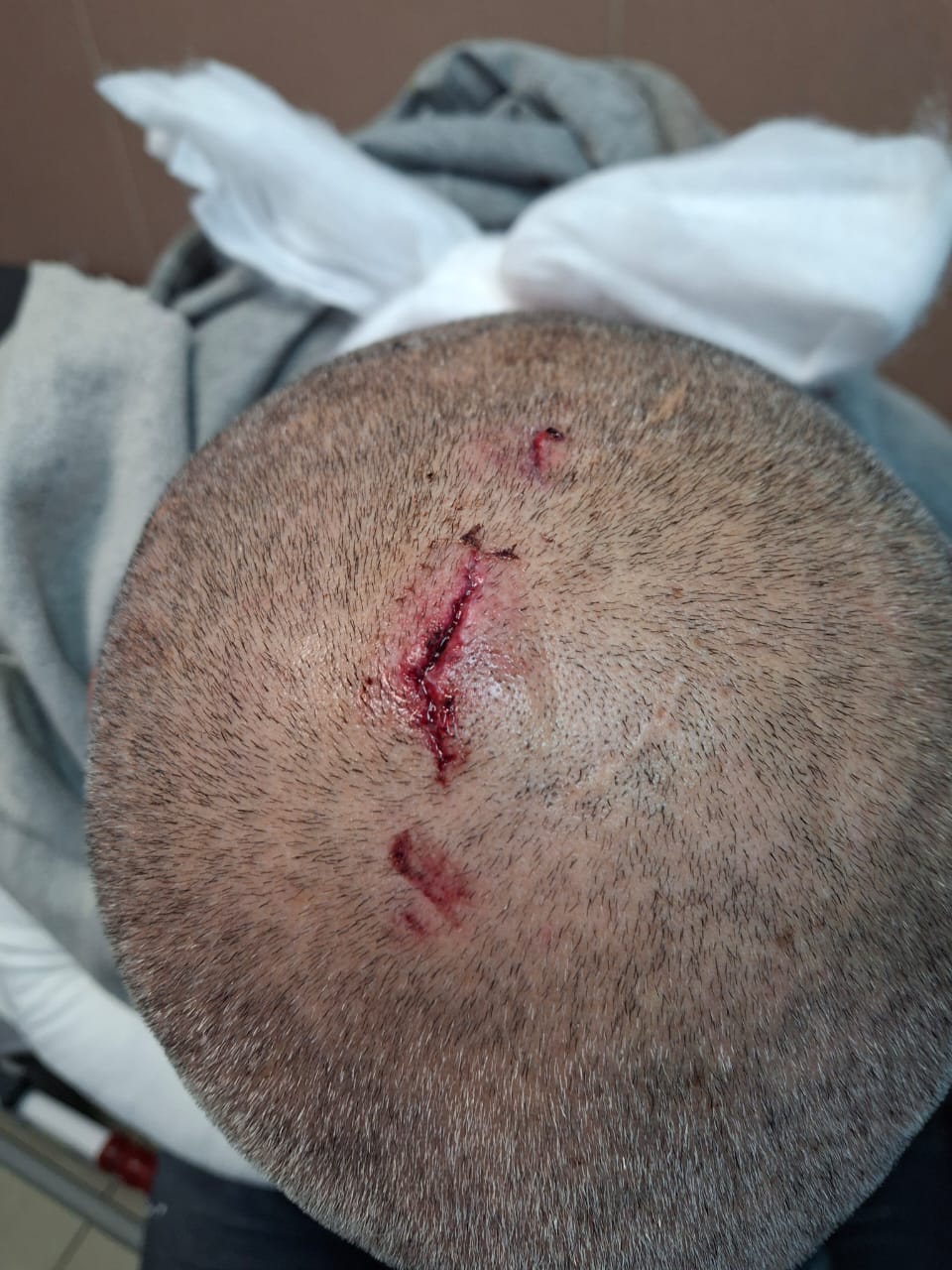
The soldiers then gave the wounded first aid and called a Palestinian ambulance, which took one of the brothers, Bilal Mahariq, 46, who had been hit in the head with a metal bar, to the Palestine Medical Complex in Ramallah.
The other family members returned to their tents to discover the settlers had vandalized them, poured food supplies on the floor of the kitchen, destroyed other household items and killed two geese.
Three of them later sought medical attention due to the beatings they suffered at the hands of the settlers as well. Muhammad Mahariq went to the Palestine Medical Complex later that day, after experiencing pain in the face and chest, while
Saddam, M’aruf and Muhammad Bilal remained in the tents, fearing the settlers would return and cause more damage. M’aruf, 38, who had trouble breathing, sought medical attention at a clinic in the nearby village of Deir Ballut the next day, and Muhammad Bilal, suffering from sharp pain in the knee, went to the hospital.
B’Tselem field researcher Mohammad Romaneh collected the testimony of Muhammad Mahariq, 34:
The settler, Eitan, unleashed his dogs, and they attacked our sheep. Some of them escaped. Others were hurt.
Bilal Mahariq in the hospital after his attack. Photo courtesy of the family
At first, to avoid a confrontation with Eitan, who was armed, we tried to talk to him. My brother M’aruf told him: “Get your dogs away from here,” and Eitan replied: “Stay out of it.” Then, my brother M’aruf threw a stone at the settler’s dogs and hit one of them. We released our four sheepdogs to get Eitan’s dogs away. Eitan told us to keep the dogs away and threatened us and the dogs with his rifle. We called our dogs back.
We still tried not to get into a physical confrontation with him, but then he started pushing my brother M’aruf with the butt of the rifle, hitting him hard on the chest. We all picked up stones to defend ourselves, but we didn’t throw them for fear he would shoot us. Eitan got angry and started yelling at us: “Put down the stones,” so we dropped them. I saw him calling someone and moving nervously.
Immediately afterwards, about ten people arrived on an ATV and two pickup trucks. Six of them were wearing Israeli army uniforms with no rank slides, but I think they were settlers too, because I saw them arrive earlier with Eitan in civilian clothes. Some were armed with metal pipes, and some were armed with guns and rifles.
They came so fast I think it was planned in advance. They appeared to be of various ages. About six looked under 18, and the rest were 20-30 years old.
Bilal Mahariq’s head wound. Photo courtesy of the family
They got out of the vehicles and immediately started attacking us, beating us. I saw them beat my brother Bilal with a metal pipe on the head and arm. He fell to the ground, and they kept beating him all over his body. I saw them attack my brother M’aruf too, hitting him in the chest with the butt of a rifle. He also fell to the ground, and they kept beating him. One of them punched him in the mouth.
I was also beaten and knocked down by the settlers. They kicked me hard and hit me in the face while I was lying on the ground. They hit my nephew, Muhammad Bilal, on the right leg with a pipe. My brother Sadam managed to run away from the settlers. They couldn’t catch him.
After they beat us for about ten minutes, we managed to escape and get away and called the Israel Police. They couldn’t find us, so M’aruf and Muhammad walked over to the main road, about 500 meters from us, to meet the police and soldiers who had arrived and show them the way. By the time they reached us, the settlers were gone. They were on a nearby hill, and even though they were visible from there, the police and soldiers didn’t go after them.
Israel’s regime of apartheid and occupation is inextricably bound up in human rights violations. B’Tselem strives to end this regime, as that is the only way forward to a future in which human rights, democracy, liberty and equality are ensured to all people, both Palestinian and Israeli, living between the Jordan River and the Mediterranean Sea.
Since the Hamas attack on 7 October 2023, Israel has acted in a coordinated and deliberate manner to destroy Palestinian society in the Gaza Strip, committing genocide against its residents. In light of Israel’s actions in Gaza, the public statements made by Israeli decision-makers, and the international community’s failure to take effective action, there is a serious risk that the Israeli regime will expand the genocide to other areas under its control—first and foremost, the West Bank.
B’Tselem calls on the Israeli public and the international community to use every tool available under international law to bring an immediate end to Israel’s genocide against the Palestinian people.