A 34-year-old father of four from Beit Lahiya, Nassim recounted being severely abused and tortured in Israeli custody, and learning upon his release that his wife, three of his children and his father were killed in Israeli strikes
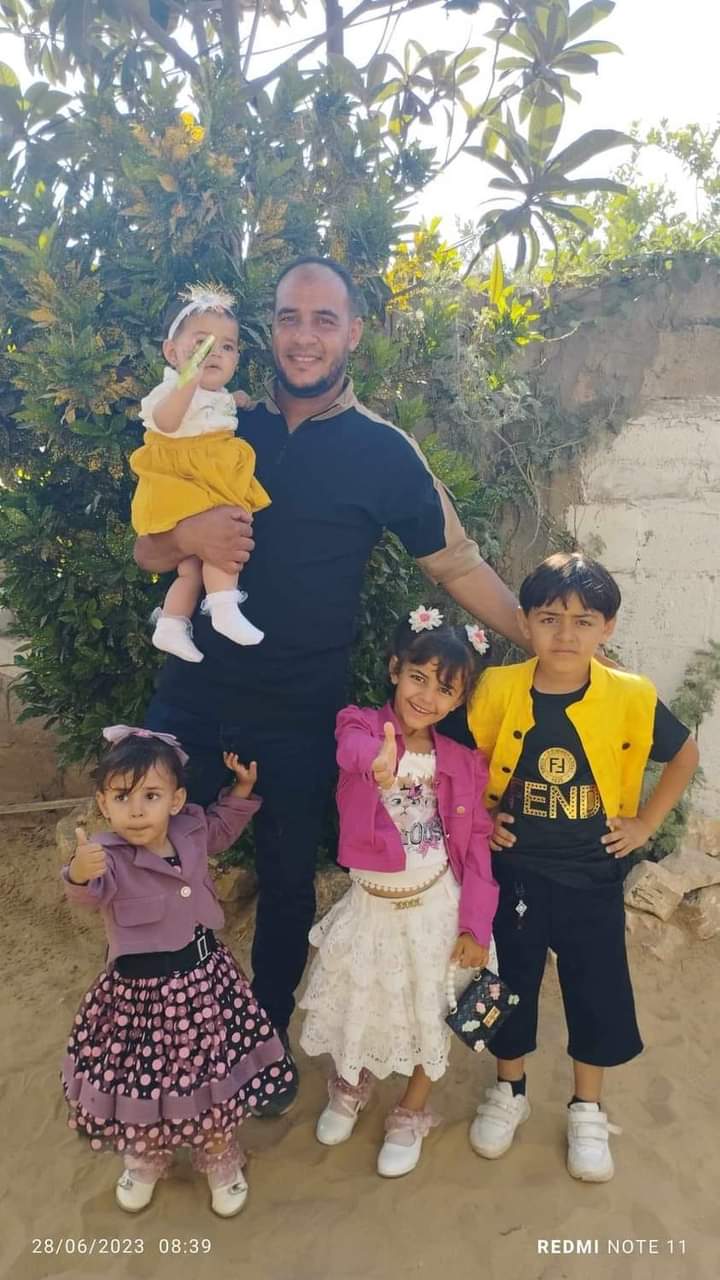
Until the war I lived with my wife, Shuruq al-Masri, 32, and our four children, Muhammad, 9, Shaimaa, 7, Sama, 4, and Siba, 3, in an apartment in a three-story building owned by my family on a-Radi’ Street in Beit Lahiya, in the northern Gaza Strip.
Our life was peaceful and full of love and the warmth of family. Our home was more than just a roof over our heads. It gave us safety and peace of mind. We had a farm, and I supported my family by working as a farmer on our own land and as a hired laborer on other people’s farms.
On Saturday, 7 October 2023, at around 6:30 A.M., I woke up in a fright from explosions while my wife was getting Shaimaa and Muhammad ready for school. When I looked out the window, I saw the Palestinian resistance firing heavy barrages of rockets toward Israel. I turned on the TV and checked online, and realized we should stay home and not go out.
We stayed in the house until Thursday, 12 October 2023, at around 6:00 P.M., when the occupation planes started directly attacking our building. A large part of the building was destroyed. My aunt Salwa a-Radi’, 50, was killed, and my mother, Hiyam a-Radi’, 55, was seriously injured. My daughter Sama was lightly injured.
Because of the bombing, we had to flee to Khalifah bin Zayed School run by UNRWA in the Beit Lahiya Project. My wife’s family joined us there. We stayed in a classroom, in very rough conditions. We had to go without the most basic human needs. There wasn’t enough food or water, and we had no spare clothes and no mattresses or blankets.
On 6 December 2023, the school was attacked and my wife’s uncle, Mahmoud al-Masri, was killed. But we had to stay there because we had nowhere else to go. Then, on Saturday evening, 9 December 2023, the military bombed a “ring of fire” around the school. We were all very scared. They deployed heavy machinery and military vehicles around the school, and snipers took up positions on the roofs of tall buildings around it. Soon after, the occupation soldiers invaded the school and ordered everyone to go down to the yard.
In the schoolyard, they started separating the men and women. They rounded up men between the ages of 15 and 55 on one side, and the women, children and older men on the other. We were all very nervous and scared.
At some point, the soldiers ordered us men to strip down to our underwear. I felt humiliated having to do that in front of all those people, especially in front of my wife and children.
Afterwards, the soldiers led the men in groups of five to the Shadi Habub Mosque north of the school. In the mosque, they tied my hands very painfully behind my back with zip ties and marched us on foot to a military camp near Hamudah Maternity Hospital, on the main street of Beit Lahiya. There were military vehicles and a lot of soldiers all around us.
At the military camp, they put me in front of a camera and took a photo of me for facial recognition. Then they ordered me to sit by a barbed-wire fence, and one of the soldiers also took pictures of me on his phone.
After that, they put me in a Hummer truck where an officer was sitting. He checked my details and then said to me, “Ahlan wa-sahlan” (“Welcome”). Then, they gave me pants and a shirt to wear, blindfolded me and shoved me forcefully into a truck under a shower of curses, such as “son of a whore” and “son of a bitch.” They loaded more detainees onto the truck, and then it drove off. On the way, I think the driver deliberately sped up and braked over and over, making us crash hard into each other.
When the truck finally stopped, they made us get off and stand in line between two lines of soldiers, who beat us one after the other and swore at us. Later, they took us to an open area and left us there until morning, in the rain and cold. I felt my heart was about to stop, I was so cold and afraid.
In the morning, they searched us and took us to a bus, which drove for almost two hours and then stopped. We didn’t know where we were. They took us off the bus while hitting us hard, and then they put us in a cage, where they took off our blindfolds and zip ties.
Then, they gave each of us gray pants and a gray shirt and told us to change into them. When we were dressed, they took us to a clinic and the doctor there asked me if I had any chronic illnesses. Then they blindfolded me again and tied my hands. They took us to a big shed with a lot of other detainees in it. There, I found out I was in Sde Teiman Prison.
The next morning, they did roll call and then gave us breakfast, which was bread and small portions of labneh and jam. For lunch, they gave us bread with small portions of tuna. Dinner was the same as breakfast.
On 11 December 2023, in the morning, during roll call, they called my name and number and then led me somewhere else, beating me severely along the way. We got to a room with hay on the floor. There were an officer and a soldier there, and they ordered me to take off all my clothes and put on a diaper. Then, they tied my hands behind my back, blindfolded me and hung me up (in the “shabah” position) on a Blanco hoist, the kind butchers use to lift sheep after they’re slaughtered. They left me hanging there for almost 10 hours in a row. My shoulders and wrists hurt badly. They hung another guy I know next to me, in the same way. They hit us while we were hanging there, mainly in the chest area. Every blow made me feel like my soul was leaving my body, it was so painful.
Then they took me down and led me to a room where a bald, heavyset man in civilian clothes was waiting. He was sitting in front of a computer and introduced himself as a Shin Bet man. Before they started the interrogation, they tied me to a chair. At first, the man asked for my personal details and my family’s. Then he claimed I was a Hamas fighter and that I had crossed the border on 7 October 2023. I denied it. He asked me where the Israeli hostages were being held, and I told him I had no idea. Then, he started threatening to have my wife and children killed. He also said: “If you insist on not confessing and not talking, we’ll make you talk out of your ass.” The interrogation lasted almost an hour. After that, they took me back to the “shabah” room and hung me up again.
An hour later, they put me on a bus and transferred me to another detention facility, about a 15-minute drive away. When we got there, they put me in a shed like the one in Sde Teiman, with other detainees, and left me there for the night. In the morning, they called me and 16 other detainees. They shackled our hands and feet with metal cuffs, took us out to a yard and put us on a “posta” prisoner transport bus with small isolation cells. They put each detainee in a separate cell.
The bus drove and stopped somewhere, I don’t know where. They took us off, punching us and hitting us with batons and rifle butts. One of the soldiers came up to me and asked what my mother was called. When I said “Hiyam,” the soldier ordered me to say: “My mother is called whore.”
They put me in an isolation cell about one meter by one meter large. They kept me there for almost four hours, and then they took me to an interrogation room where there was a young, blond Shin Bet officer who introduced himself as “Mordi.” As soon as I went into the room, he tied me to an iron chair.
The interrogator told me I was in Kishon Prison (al-Jalameh) and started asking about my personal details, my family and what I’d done before the war. He claimed I belonged to one of the Palestinian organizations and had crossed the border on 7 October, and I firmly denied it. He also asked where the Israeli hostages were, and about the locations of tunnels and Hamas fighters.
The first interrogation lasted about five hours, and when it was over, they took me back to the isolation cell. I stayed there for about 25 days, and one every single day they interrogated me. They alternated between the guy “Mordi” and a female interrogator who said her name was “Avigayil.” They asked the same questions every time, because they wanted to make sure my answers matched.
They gave us very small amounts of food, not enough to satisfy even a small child. It made my physical and mental suffering worse throughout the interrogation period.
After 25 days of continuous interrogation, they told me the interrogation was over and that I was being transferred to Megiddo Prison. Again, the transfer was humiliating, with severe beating, swearing and foul language. When I got to Megiddo Prison, the guards carried out a “Tashrifah” (reception) ritual, which was basically another round of beatings and humiliation.
After that, they put me in a detention cell with five prisoners and six beds, and there was also a TV set. One of the prisoners immediately came over, introduced himself as “Abu Suliman” and said he was on the prisoners’ committee in the prison. He tried to get me to talk and asked me to tell him everything I’d gone through since I was arrested.
They held me in that wing for about five days and then sent me back to Kishon Prison (al-Jalameh), where I was interrogated again. The interrogator repeated back to me every word I said to “Abu Suliman” in the cell at Megiddo. Then I understood it had been a collaborators’ cell, and that they were checking whether I would say the same things I said in the interrogation.
After that, they took me down to underground cells. I was put in a 7-by-3-meter cell with nine other people. IPS repression forces (Keter) would come into the cell with weapons and muzzled dogs. They would beat us badly and throw stun grenades into the cell, and sometimes also tear gas canisters.
In early April 2024, around ‘Eid al-Fitr, I was transferred to Ofer Prison. There, they put me in Cell 15 in Wing 23, which had about 260 prisoners. In our cell there were about 18. When I got there, they left me with my hands and feet shackled, tied to another prisoner, for almost 18 hours. About 20 minutes after I was brought in, soldiers burst into the cell with dogs and beat me and the other prisoners very violently.
On 18 April 2024, they said I was being accused of belonging to Hamas and would stay in prison until the end of the war. In December 2024, I was taken to court, again accused of belonging to Hamas, and told I would stay in prison until the end of the war.
I was held in Ofer Prison for about 15 days, in extremely cruel conditions. They gave us very little food, allowed us to shower only once a week, without soap, and didn’t give us any underwear. After that, I was transferred to Nafha Prison, where they put me in Wing 10. Several doctors I knew from Gaza know were being held there.
At Nafha I caught lice and scabies, like most of the prisoners. We itched terribly and they didn’t give us any treatment.
On 7 October 2024, the guards savagely attacked us all. They beat us brutally and humiliated us physically and verbally. On 14 December 2024, the anniversary of Hamas’ founding, they attacked us like that again.
At Nafha, they moved me between several wings, but the harsh conditions and cruel treatment were the same everywhere. I suffered there terribly. On 16 March 2025, I was taken to court again and charged with the same accusations. They decided to keep me in detention until further notice.
I was held in Nafha until Friday, 10 October 2025, at 5:00 A.M., when they shackled my hands and feet and violently dragged me out of the cell. They took me, together with about 70 other prisoners, to Wing 5 in Ramon Prison. An officer arrived and started checking our information, one by one, and we thought we were about to be released.
At about 1:00 A.M. on 11 October, I was taken by bus with other prisoners to Negev [Ketziot] Prison, where they put me in Wing 14, in a new building that held more than 200 prisoners.
On Sunday evening, 12 October, two Red Cross representatives came and told us we were going to be released. They filled out forms with our personal details.
At 4:00 A.M. on Monday, 13 October 2025, soldiers stormed the wing and brutally attacked us all. Then they shackled our hands and feet with metal cuffs and handed us over to the Israel Prison Service. They gave us tracksuits with the IPS logo and put us on buses. We waited on the buses until noon, and then they drove us to Kerem Abu Salem [Kerem Shalom] Crossing. From there, the Red Cross took us to the European Hospital.
When we got to the hospital, I spotted my brother Jawdat, 23, from the bus. I was so happy and asked him about my wife and children. Jawdat answered that they were waiting for me inside the hospital. He started making his way in and disappeared in the crowd.
A prisoner on the bus next to me was handed a phone through the window by one of his relatives. I asked him to let me call my family. I called my wife’s phone but she didn’t answer, so I called my sister. When I asked about my wife and children, she told me that three of my children, Muhammad, Siba and Shaimaa, were killed. She didn’t tell me my wife was also killed. When I heard the terrible news, I lost it and started screaming in pain. My whole body started shaking and I passed out. The prisoner sitting next to me poured water on me, and I came to.
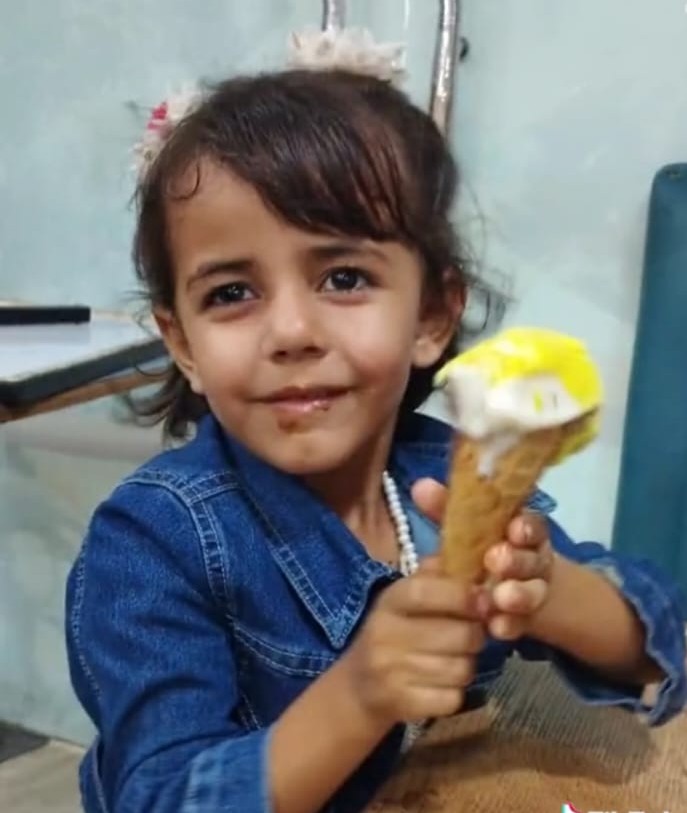
When I got off the bus, I met Jawdat and only then found out that my wife was also killed. He told me that she and three of my children were killed in an apartment in Beit Lahiya near our home. I screamed and cried over the loss, and over the abuse and humiliation I suffered in prison. I passed out again. They sat me down on a chair and my only surviving child, Sama, to see me. She was injured in the same strike and her face was wounded.
I was in shock for three days. When I came around, my sister sat with me and told me how they were killed. She said it was a direct strike on the apartment they were sheltering in, in a relative’s building on the Beit Lahiya Football Club Street. The attack took place on 6 November 2024, at 6:00 A.M. My wife was there with her family. My mother‑in‑law, Ni’mat al‑Masri, 60, and my wife’s brother, Hamed al‑Masri, 35, were also killed. Only later did they tell me that my father was killed in another incident in May 2024, when the Israeli military directly attacked the yard of the Abu Tammam School in the town of Beit Lahiya, where the family was sheltering.
I’ve lost almost everything – my wife, three of our children and my father. My daughter Sama is all I have left. The shock of loss is immense. My mother is in Tunisia now for medical treatment. Thank God, she is feeling well.
Sama and I are in Deir al‑Balah, in a tent with my brother and his family. Sama keeps scrolling through the photos of her mother and siblings on the phone, and asking where they are and why they’re not with us. When I tell her they’re in heaven, she says: “Let’s go to them.”
Sometimes Sama goes out to play with the girls in the camp and then runs back and says: “I want to play with Siba, Muhammad and Shaimaa.” It hurts me so much to hear that, and I don’t know what to say. I also spend a lot of time looking at the photos, staying awake at night and thinking about my wife and children. Why did this happen to them? I choke up and cry over the terrible loss. Their memory is the only thing that keeps me going.
I was released from prison after two years of torture, beatings and severe psychological trauma. My health is not good. I lost a lot of weight in prison, from 93 kg before my arrest to 60 when I was released. My ribs hurt and my eye is injured. My life is ruined. I feel that I was released from prison into a bigger prison – of blockade, suffering, unending war and a life of loneliness and bottomless pain. I also can’t stop thinking about what I went through in prison.
* Testimony given to B'Tselem field researchers Muhammad Sabah and Olfat al-Kurd in November 2025