A 31-year-old mother of four from al-Qararah spoke about her infant daughter’s death from malnutrition and lack of adequate medical care, Khan Yunis, 25 July 2025:
Before the war, I lived with my husband Ahmad, 38, and our three children, Asil, 10, Maryam, 8, and Hamzah, 6, in the town of al-Qararah in eastern Khan Yunis. At the start of the war, when the bombings in al-Qararah intensified, we were displaced to a school near the city of Asdaa, west of Khan Yunis. For ten days, we lived in one classroom with 11 other families. After that, we moved to Rafah for a short time, and then again, to al-Mawasi al-Qararah, where we lived on a chicken farm for an entire year. Life there was filled with suffering and pain. It was not fit for human habitation, filthy and infested with insects. In the summer, the heat was unbearable, and in the winter, we were drenched by the rain and froze with cold.
We’ve been suffering from hunger and the hardships of repeated displacement this whole time. We are completely exhausted. During one of the displacements, we found ourselves out in the street for three days because we had nowhere to go. I wished for death, because people are not meant to live in such misery.
While we moved from place to place, around June 2024, I became pregnant because it was impossible to get contraceptives like pills. It was a very difficult pregnancy. I vomited constantly. There was no food and no vitamins. At every prenatal checkup, the doctor said the fetus was doing well, there were no issues, and that I had to eat to avoid complications. But how was I supposed to find food? There were no vegetables, no meat, no sugars, and no vitamins. Once, I went to a private doctor for an ultrasound, and he told me I was expecting a girl and that she was fine.
My husband helped and supported me the whole time. He would cook over the fire and wouldn’t let me go near it. He did everything he could to get me food. I was constantly worried and afraid for my children. I never imagined they would go hungry and live in terrifying fear of bombings.
When the ceasefire went into effect at the beginning of the year, we returned home and were shocked to discover that the Israeli military had simply erased it from the face of the earth. Ahmad, my husband, pitched a tent where our home once stood.
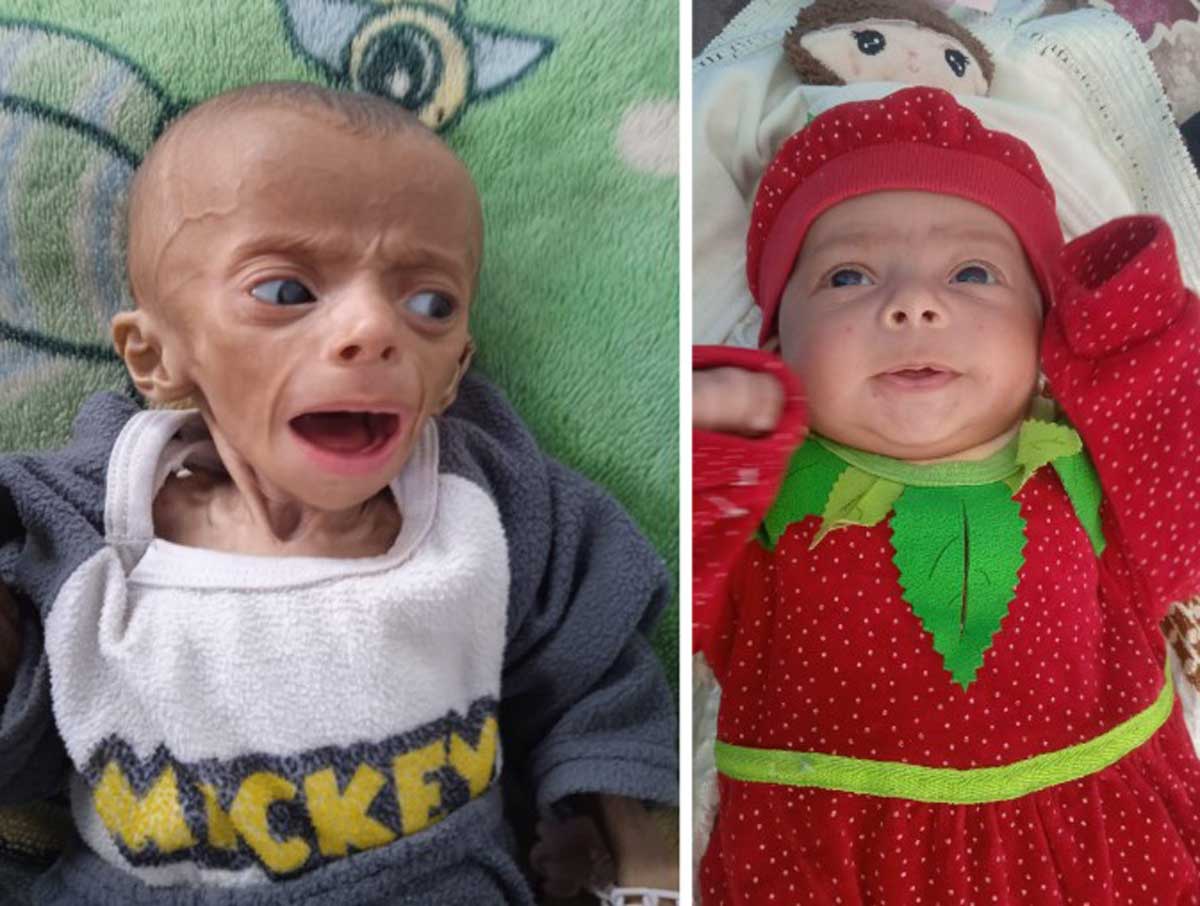
On 15 February 2025, I gave birth to my daughter Zeinab at Nasser Hospital. My husband and I were excited as if it were our first baby. She was born healthy, and her weight was normal. I took her in my arms and went back with her to the tent, where the children had prepared a surprise welcome: they stood by the soup kitchen banging on pots and pans! It saddened me that I couldn’t buy Zeinab new clothes, as I had done when her siblings were born, because I didn’t have enough money. I received some clothes for her from relatives and neighbors, but they weren’t enough for the cold winter.
The doctors at the hospital told me that in order to breastfeed Zeinab, I needed proper nutrition, vitamins, and supplements. When the crossings closed and the war resumed, food again became scarce in the markets, and we suffered from hunger. I couldn’t breastfeed Zeinab and had to find baby formula, but it was difficult to get and extremely expensive.
In mid-April, Zeinab fell ill with diarrhea and vomiting. I took her to Nasser Hospital. The doctors said she had gastroenteritis and gave her IV solutions. That was apparently not the right treatment for her. She refused to breastfeed, and I gave her formula again. I took her back to the hospital every few days for checkups and IV treatment.
On 16 May 2025, the Israeli military bombed al-Qararah, and we had to flee. I left the tent with nothing but Zeinab in my arms, while my husband carried Hamzah. We were displaced to al-Mawasi Khan Yunis.
I kept taking Zeinab to the hospital, where she kept receiving solutions. At Nasser Hospital, she was referred to the European Hospital, which has a pediatric surgery department, and they decided to perform bowel surgery. Five minutes after she came out of surgery, the Israeli military bombed several sites around the hospital, and my husband and I grabbed Zeinab and ran through the streets until we reached Nasser Hospital, where she was admitted to the ICU for several days.
We couldn’t find formula that suited Zeinab. She was fed milk through her nose, with a tube into her stomach, but all types of formula caused diarrhea. She developed symptoms of malnutrition and lived on IV solutions and strong antibiotics. The doctors could not diagnose what she had. They decided to refer her for treatment abroad, and we received the referral form. Zeinab was completely exhausted, on the verge of death, and no one could diagnose her condition.
On 21 July 2025, the doctors discharged Zeinab from the hospital, despite her serious condition, because the Israeli military was approaching the area.
On Friday, 25 July 2025, Zeinab vomited brown-colored fluid, and her eyes looked tired. My husband and I decided to take her back to Nasser Hospital. I ran through the street with her in my arms, and when I looked at her, I thought she was dying. I told my husband, and he found a car to drive us to the hospital. When we arrived, the doctors examined her and told us she had died before we got there.
My husband and I burst into tears and didn’t know what to do. The death of my baby girl stirred up emotions in me that I had never known before. Those were very hard moments for us. Zeinab stayed in the morgue refrigerator, and we returned to the tent, grieving and devastated by the loss of our daughter.
On Saturday morning, 26 July 2025, we went back to Nasser Hospital and said goodbye to Zeinab. The farewell was extremely difficult. Every minute and every second, we remember our beautiful baby. I hung her picture in the tent. Her siblings ask where Zeinab went, and that is the hardest question of all, because I don’t know where she went or what to tell them. I pray that God embraces Zeinab in His mercy and gives me the strength to bear the pain of her loss.
Two days ago, the World Health Organization called us about arranging her treatment abroad, and my husband told them that Zeinab had died.
Before she fell ill, Zeinab weighed 5 kilograms, and by the time she died, she weighed about two kilograms.
* Testimony given to B’Tselem field researcher Olfat al-Kurd on 4 August 2025