A 40-year-old mother of five from Gaza City, Hala described the worsening hunger since Israel blocked all humanitarian aid to the Gaza Strip on 2 March 2025
At the start of the war, on 13 October 2023, I fled with my four children — Layan, 20, Banan, 18, Mahmoud, 17, and ‘Iz a-Din, 9 — to the town of a-Zuwaidah in the southern Gaza Strip. My husband Khaled, 45, stayed behind in our home on al-Wehda Street in Gaza City with his father, Mahmoud Sha’sha’ah, 75, who had heart disease and later died during the war. At the time, I thought we’d be gone for two or three days, so I didn’t take anything with me besides some clothes.
In a-Zuwaidah, we stayed in an apartment owned by a relative. About 47 people — all relatives — were crammed into the apartment. I had nowhere else to go. It was an extremely difficult time. I never imagined I’d live like that: we didn’t have enough clothes or blankets, and not enough food or water. I was far from my husband, alone with the children, unable to provide for their needs. I cried every day.
When there was communication, I stayed in touch with my husband, and when he was able he sent us a bit of money. When there was no communication, I was terrified something had happened to him and worried constantly. He had to flee the house a few times, and would return when things calmed down.
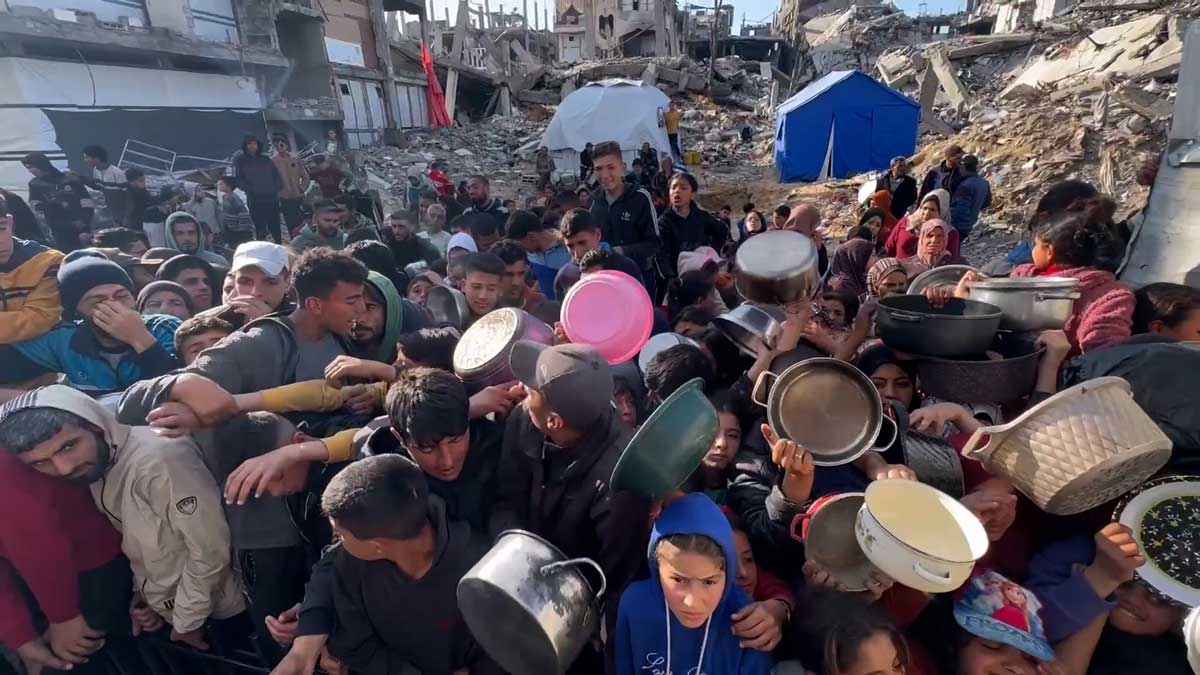
The children and I stayed in a-Zuwaidah until the ceasefire was declared this past January. We suffered terribly that whole time. I lost a lot of weight and my mental state was very bad. I didn’t have enough money to buy food or other necessities. I borrowed some money from friends and relatives just to survive. Sometimes we got food, and sometimes we didn’t. It was especially hard to find vegetables and meat. There was also a flour shortage, and sometimes there was none at all.
My youngest, ‘Az a-Din, cried a lot and kept saying, “I’m hungry.” It broke my heart to hear it, and I cried over his situation — but that was the situation for everyone. I explained to him that everyone was hungry and there was nothing I could do.
In the apartment where we stayed, there was no privacy. We were forced to live on top of other people. We didn’t get food package coupons because we weren’t living in a tent, so we had to pay insane prices for food.
Two of my children, Layan and Mahmoud, came down with viral hepatitis and there was no treatment available. I couldn’t provide them with the healthy nutrition they needed to fight the illness. We were advised to give them foods high in sugar, so we gave them what we could get — halva and jam. They had high fevers, vomiting and diarrhea. Mahmoud cried from the pain and thought he was going to die. We took him to the hospital. Layan also suffered badly and couldn’t stand on her feet for two weeks.
After a year of intense suffering, far from home and from my husband, we went back when the ceasefire was declared. I couldn’t believe I was home with my husband. It was unreal. I felt like I was dreaming, because by then I no longer believed it would really happen. Our house was bombed and is unfit for habitation, but we’re living in it anyway. It’s better than living in a tent, but we’re constantly afraid it will collapse on us.
During the ceasefire, the crossings were opened and some food products were brought in, but in small quantities. Because we have no steady income, I was only able to buy a few things — some vegetables and frozen meat.
But when the war resumed and the crossings were closed again in early March, the situation deteriorated in every sense. We’re once again living in fear and panic, with no security. The markets are empty again, and we’re suffering from hunger. We eat one or two meals a day — usually fava beans, hummus, canned food, canned meat, noodles or rice. That’s what we eat every day. Most of the time we can’t get frozen or canned meat, chicken or eggs — and when they are available, they’re far too expensive for us. Flour is also no longer available. I have a bit left, enough for maybe two days. A single sack now costs more than 250 shekels.
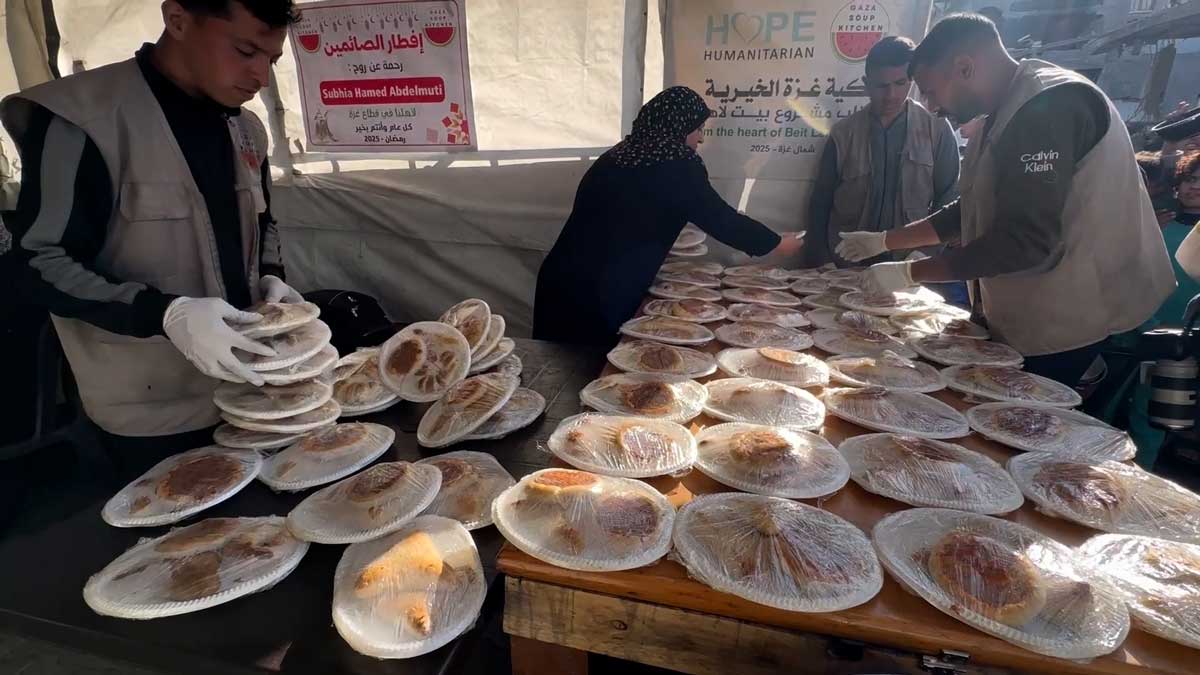
My children long to eat meat, especially chicken. I keep explaining that everyone in Gaza is in the same situation.
When I want to cook or bake pita bread, I light a fire outside because we have no cooking gas. A cylinder of gas now costs nearly 1,000 dollars — a sum I have no way of paying.
There’s also a severe shortage of water. Of course there’s no running water. We get drinking water and water for household use separately — delivered by truck once a week. We fill all kinds of containers with drinking water, and we have one barrel for water we use to bathe and do laundry.
I go to the market, but there are no vegetables except for a few cucumbers and tomatoes, which cost 30 shekels per kilo, and eggplants at 47 shekels. I buy one of each because I can’t afford more. Other vegetables don’t exist in Gaza right now, nor does fruit. We’ve almost forgotten what potatoes or other vegetables and fruit look like. It’s also hard to find grains or canned legumes, and when they’re available, they’re extremely expensive. A can of hummus costs 20 shekels — a price I can’t afford.
We’ve all lost a lot of weight from the hunger. We’re pale, and our bodies are worn down from the lack of healthy nutrition.
There are no soup kitchens in our area, even though they’re desperately needed in this hunger. Most have shut down because of the closed crossings and the lack of food supplies.
We no longer have access to banks. Even the little money we have can only be withdrawn through brokers who charge a 30% fee.
Our suffering is immense. Our lives have been reduced to survival — every day is a struggle to figure out how we’ll get food and water, what we’ll burn for a cooking fire, how we’ll get cash. Everything is so difficult. Now, 100 shekels is worth what 10 shekels used to be before the war. You can’t buy almost anything here now with 100 shekels.
If the crossings stay closed and the war continues, we will die — either from the bombings or from hunger. There is heavy hunger here now. ‘Iz a-Din suggested we buy horse meat, and I told him, “You can’t eat that.” But we’ve reached the point where people are eating whatever kind of meat they can find, no matter its source.
My children go to bed hungry, with empty stomachs. Layan and Banan talk about how they miss snacks and chocolate — things that have disappeared and no longer exist here, at least not for us.
* Testimony given to B'Tselem field researcher Olfat al-Kurd on 22 April 2025