A 28-year-old from Gaza City, Aya spoke about losing her five-year-old son to cancer after his transfer out of Gaza for treatment was delayed due to the seizure of Rafah Crossing
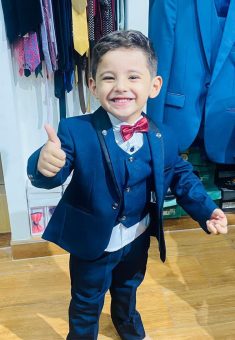
My husband, Bilal Jawwad Kahil, 30, and our children, Nabil, 5, and Sali, 18 months, lived in a six-story building in the Tell al-Hawa neighborhood in Gaza City. My mother-in-law and my husband’s brothers also lived there with their families.
We stayed home in the early days of the war, but on 10 October 2023, the army ordered everyone to evacuate the area. We were scared to leave. It was terrifying. There were bombings all around us. It was one of the scariest days of my life.
Still, we left and went to my sister-in-law’s house because it felt safer. She lives on the ground floor, not too far from us. When we got there, there were already lots of people there, maybe 50 including us. The heavy bombing in the area continued. We called the Red Cross, and they suggested we go to al-Quds Hospital, which is in our neighborhood. We went there, but the army ordered everyone out of there the very next morning. I went with my husband and children to my parents’ house in the a-Derj neighborhood in eastern Gaza City. I didn’t take anything with me. My husband’s relatives went to their relatives on al-Wihdah Street in Gaza City, near a-Shifaa Hospital.
I stayed with the kids at my parents’. It was a very difficult, terrifying time and what’s more, our children got a severe intestinal infection and had diarrhea. We didn’t have enough clothes, so I decided to go get them some from our house. But when I got there, I was shocked. The whole building, six stories, was on the ground – a pile of rubble. I went back to my parents’ empty-handed.
On 6 November 2024, when we were still at my parents’, my widowed mother-in-law called and said things were really tough there, and that they were very scared. She came with her daughters and some more of my husband’s relatives to my parents’ house. They stayed one night. They went back to al-Wihdah Street the next day, but my mother-in-law called again later and said she wasn’t feeling well. My husband went and got her, and she stayed with us at my parents’ place.
The next day, on 8 November 2023, in the early morning, the house where my sisters-in-law were staying with the rest of my husband’s family was bombed. Twenty-five people were killed, including my sisters-in-law. My husband went there at around 7:00 A.M. and tried to get the bodies out from under the rubble with the help of other people. He was in shock. They took the bodies to a-Shifaa Hospital and from there to a cemetery in the eastern part of Gaza City.
When the bombings in Gaza City intensified, we decided to go south – me, my husband, our children, my mother-in-law, my parents, my sister and my sister’s husband. We crossed Netzarim Checkpoint on foot, holding our ID cards with our hands up in the air.
We got to Rafah and went to the house of my cousin on my father’s side, in the al-Barazil neighborhood. We stayed with her for about a month and a half, and then we left and my parents stayed. My sister and her husband pitched a tent in some other relatives’ yard. My husband, my children, my mother-in-law and I pitched a tent in the a-Sallam neighborhood in Rafah. We lived there in very rough conditions: extreme heat, sewage running next to us, flies, mosquitos and very little food. We got very little food aid – canned food and grains. At first, you could still buy flour, but it was already very expensive.
After about a month in the tent, I felt that something was wrong with Nabil. Up until then, he was a healthy boy. He didn’t have any problems. He played with the neighbors’ children and his sisters, and was usually in a good mood and ate well. But around that time, he started waking up at night screaming. He would come and sleep huddled next to me. He didn’t want to eat, either. He had diarrhea, and I thought it might be a digestive system infection again. I took him for a check up, and they gave him an anti-diarrhea shot and it really did stop, but Nabil didn’t get better.
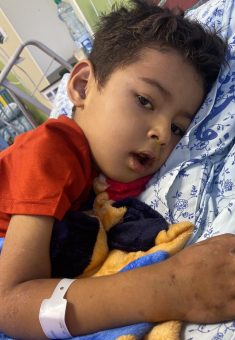
He was very weak and hardly left the tent. I tried to get him to go out and play, but he didn’t want to. He complained of stomach aches and had twitches. Then he got lots of pimples on his forehead. At first, I thought maybe it was mosquito bites, but then his eyes swelled up. I took him to the UNRWA clinic, and the doctor there ordered a urine test because she thought he might have an infection, but the results were negative.
Then Nabil’s stomach started swelling, and he got reddish and bluish spots on his thighs. I took him to a doctor at Abu Yusef a-Najar Hospital. He examined him and said he probably had an enlarged spleen and liver. I got stressed and started crying, and the doctor reassured me and said we wouldn’t know until we did a blood test. They did the test and saw his hemoglobin was low. The doctor said they needed more tests, and the next day, my husband took him to the hospital, and it turned out he really did have an enlarged spleen, liver and kidneys.
The doctor referred Nabil to a specialist. I was pregnant and very tired, so my sister took him. The doctor suspected leukemia and ordered more blood tests. The results came in the evening, and they weren’t good. We understood we had to take Nabil to the European Hospital in eastern Rafah.
We went there with him and the doctors didn’t want to rely on the results of the tests we brought, so they ran new ones. The results were supposed to arrive within 24 hours, and we waited, extremely anxiously. When they came, they confirmed that he really did have leukemia.
Nabil was admitted to the European Hospital and my mother stayed there with him. One of the doctors prepared an urgent referral for him to be treated in Egypt, and a journalist ran a campaign for him and shared a video about him. On 9 May 2024, we got a date for him to go through the crossing, and his name was put on the list of patients who would be allowed to exit Rafah Crossing for treatment in Egypt. But the next day, 10 May 2024, at 8:00 A.M., I got a message on my phone: “Don’t come to the crossing. The crossing is closed and the army is there.” Meanwhile, the army ordered us to evacuate the European Hospital, and we had to get out of there.
We all went from Rafah to Deir al-Balah. We transferred Nabil to Shuhada al-Aqsa Hospital. The doctors said his condition was serious and that he should stay in hospital. I thought the crossing would open within a couple of days. My mother and I stayed with him. In the meantime, Nabil’s condition got worse. He couldn’t walk anymore and kept complaining about stomach pain. His whole body was swollen.
The pediatric ward was full of patients – kids with cancer, hepatitis and many other illnesses. The hallways were crowded with sick and wounded people and the people staying with them. I have no words to describe what went on there. The whole time Nabil was treated in the hospitals in the Gaza Strip, he never got chemotherapy. All he got were solutions, painkillers, calcium and magnesium. His hemoglobin level dropped even more. He needed three doses of blood transfusions a day, but his blood type isn’t common (A-). Some journalists ran another campaign for him to get blood donations.
A doctor from the hospital in Egypt that Nabil was supposed to go to, called us to check on his condition. He knew they wouldn’t be able to help him in the Gaza Strip. We could only hope that Rafah Crossing would open and Nabil would be able to travel for treatment.
Nabil ate less and less. At first, he still asked for food he liked, such as mulukhiya or chocolate. But at some point, he didn’t want to eat anything anymore. He just drank water and juice. He lost control of his bladder and couldn’t make it to the bathroom anymore.
On 28 May 2024, when my mother was at the hospital with Nabil, a doctor arrived with good news: the next day, Nabil would travel for treatment in East Jerusalem through the Karam Abu Salem (Kerem Shalom) Crossing. My mother called us right away to give us the good news.
That same day, I got a call from al-Mutal’a (Augusta Victoria) Hospital in East Jerusalem. They told me to come with Nabil and his sister to Shuhada al-Aqsa Hospital at 8:00 A.M., and bring the kids’ birth certificates and my ID card. They said we’d been issued entry permits and the Red Cross had coordinated everything with the Israeli army.
The next day, 29 May 2024, we arrived at the hospital at 8:00 A.M., and an ambulance was waiting for us there. We arrived at Karam Abu-Salem Crossing within an hour, and an al-Mutal’a Hospital ambulance was waiting for us there.
The crossing was empty except for trucks loaded with goods. The soldiers played with my children as if there was no war in Gaza and wished Nabil a speedy recovery. They put me in a room where a female soldier searched me and also took a sample of my daughter’s milk.
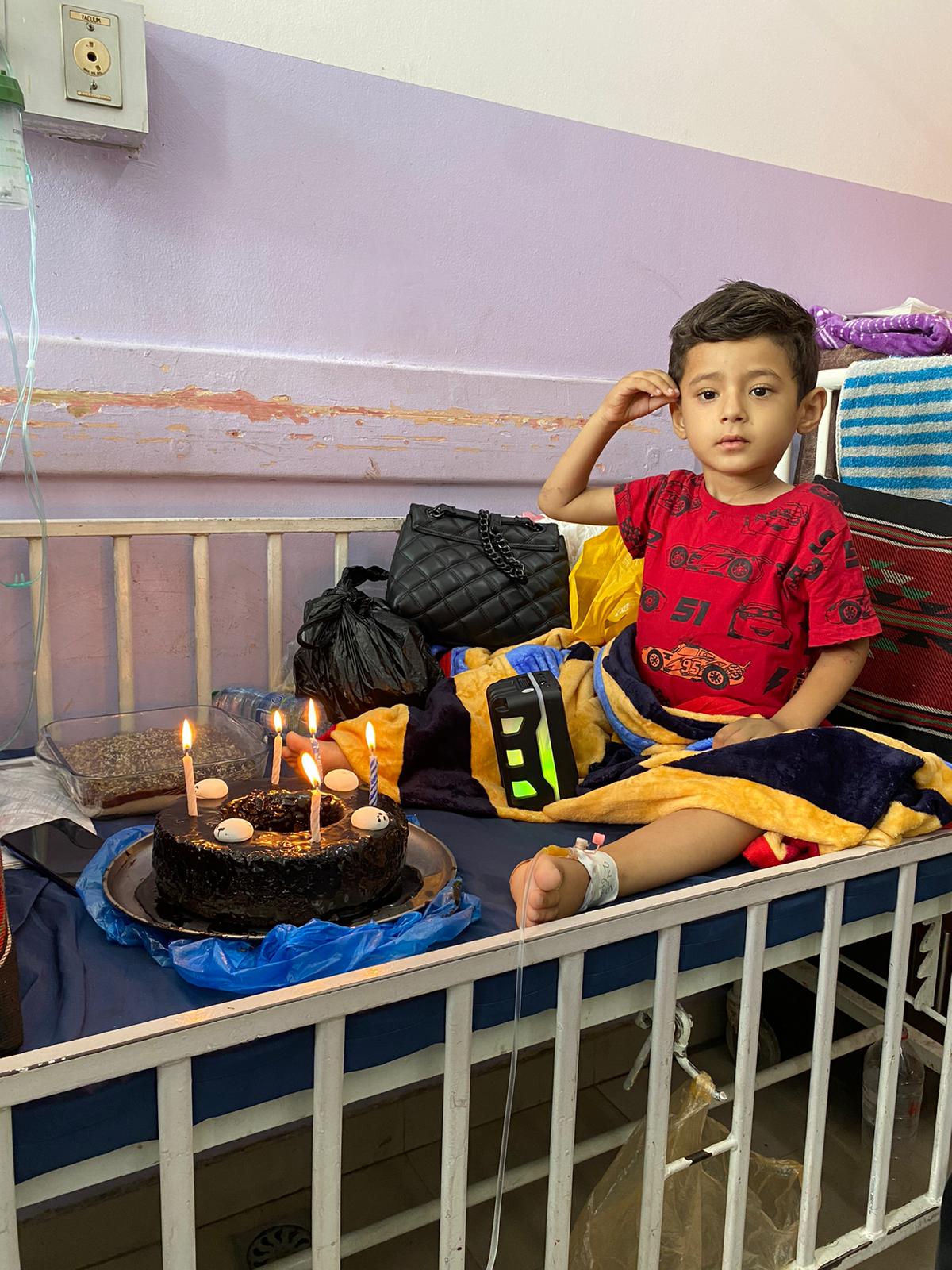
Then we went by ambulance to al-Mutal’a Hospital. We got there in about 90 minutes, and a UN vehicle drove behind us the whole way. When we arrived, everyone couldn’t believe how I’d managed to get there from the Gaza Strip. Nabil was taken into the ICU right away. He cried a lot because he wanted me to stay with him, but because of his weak immune system, at first they didn’t let me sit next to him. Sali and I stayed at the hospital and some good people brought Nabil and Sali toys and games, but Nabil didn’t want to play. He was tired all the time, but couldn’t sleep at all.
The doctors ran tests and discovered that he had bacteria. They ran more tests to see what kind of treatment they could give him, and also gave him medicine to ease the pain and help him sleep, but it didn’t help much. From the moment we arrived at the hospital until he passed away, he didn’t sleep at all.
On Friday, 31 May 2024, Nabil’s face went very pale. They gave him oxygen. In the early afternoon, I was standing next to him, and he asked me to come closer. Suddenly he had convulsions, and started trembling and twitching. He grabbed my hand and his teeth chattered loudly. When he let go of my hand, I fell down. I started screaming, crying and slapping myself. I was told not to be afraid, that maybe they were just convulsions. The director of the hospital came in. Nabil was dying. They tried to resuscitate him. His heart started beating again for a few seconds and then stopped again. They couldn’t save him. He died.
After Nabil died, they washed him and let me say goodbye. It was an unbearable day. They moved him to the refrigerator in the morgue and told me he would be buried in Ramallah. I couldn’t go with him to the cemetery because my permit didn’t allow me to leave the hospital.
Nabil was buried in Ramallah. A relative of ours who was there, went with him. He took a picture of the grave and sent it to us.
In the meantime, it turned out that Sali had hepatitis A. She must have caught it in Gaza, because it’s very common there now. We’ve been at the hospital ever since and she’s getting treatment.
* Testimony given by phone to B’Tselem field researcher Olfat al-Kurd on 3 June 2024
Update: About two months after her testimony was collected, Aya Kahil gave birth at Augusta Victoria Hospital. Her son was born prematurely and is still in the hospital’s neonatal unit. Aya and Sali are also still at the hospital, while Aya’s husband and mother-in-law remain in Deir al-Balah.