A 39-year-old mother of three from al-Bureij R.C., Asmaa spoke about losing her husband and three children when Israel bombed their home on 17 November 2024
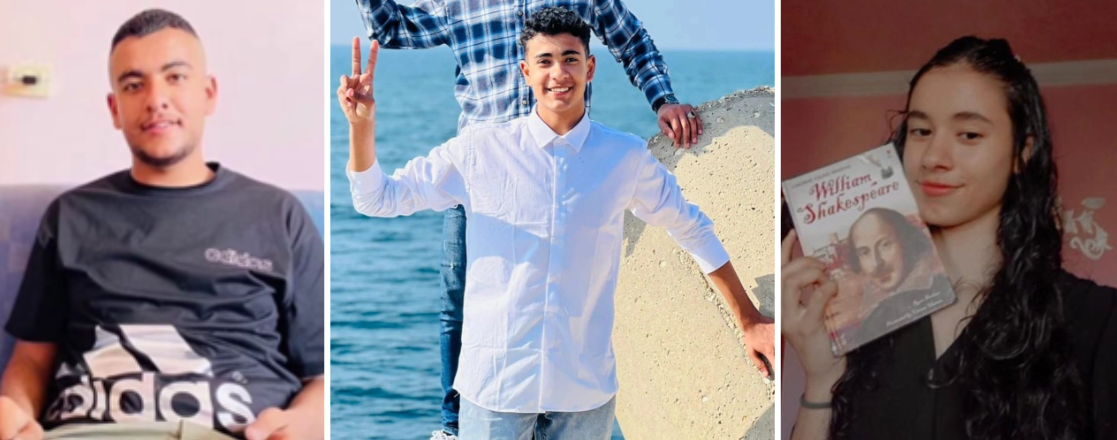
Until the war, we lived in a two-story building in the southern suburbs of al-Bureij Refugee Camp. I lived on the first floor with my husband, Ziad Suliman ‘Amer al-Masri, 53, who was an architect, and our three children, Suliman, 19, a first-year programming student at the University of Palestine, and Mustafa, 17, and Malak, 16, who were high school students. My husband’s brother lived on the second floor with his family.
I suffered from depression before the war and had rage attacks. I was in therapy, and I was taking medication that helped me balance emotionally and mentally. I got worse during the war, and there were days when I fell into depression. Despite the situation, my husband managed to get me the medication at private pharmacies most of the time. Some weeks we couldn’t get it, and I’d get worse and fall into depression.
When the war began on 7 October 2023, we left home and moved to a-Nuseirat Refugee Camp because our house is close to the border. At a-Nuseirat, we stayed in my husband’s sister’s house. We lived with her until September 2024. It’s a small house with a tin roof, one bedroom and a living room, and we crowded in there with my sister-in-law, her husband, and their four daughters. There were 11 of us in total. My husband and my sister-in-law’s husband and our two sons slept in the living room, and Malak, my sister-in-law, her four daughters and I slept in the bedroom.
There was a water shortage. There was only water in the taps once a week. When it ran out, the men went to fill up containers in schools that were being used as IDP camps, and we filled a large tank in the yard with the water they brought back. It was very hot then, and even hotter inside the house because the roof was made of tin. Most of our food was canned and we didn’t have cooking gas, so we bought firewood and lit fires to heat water or cook when we occasionally managed to get hold of vegetables, meat or frozen chicken.
We lived like that until we decided to go back to our house in al-Bureij R.C. on 16 September 2024. When we got home, we discovered all the outer walls of the house had been destroyed. We hung up a tarp in their place and moved back in.
On 15 November 2024, I was very unwell emotionally and I went to see a friend of mine in the al-Mufti area, north of a-Nuseirat R.C. She insisted I stay over because of my condition, so I there for two days. On the night between Saturday and Sunday, I heard that the occupation forces were advancing towards a-Nuseirat R.C. and there were brutal bombings from fighter jets. During the night, news of what was happening there was unclear.
On Sunday, 17 November 2024, at 8:00 A.M., my husband’s relatives called and told me that our house had been bombed and that I had to go to Shuhadaa al-Aqsa Hospital in Deir al-Balah. I went there right away. I thought my husband and children were just injured, but when I arrived, I found out that my two sons, Suliman and Mustafa, had been killed and were already in the morgue. I was in shock and couldn’t face going to see them. When I asked about my husband and Malak, they told me they were both dead too and their bodies dismembered. My husband’s body stayed in the ambulance for two days, because the ambulance couldn’t reach the hospital until the army withdrew from the area. My husband’s brother, his wife and his sons, who lived on the floor above us, were saved because they moved in with relatives the day before.
My husband and sons were buried without my seeing them. I was shattered. I broke down. I was unconscious for several days, and every time I woke up, I remembered them and broke down again.
I’ve been taking a much higher dose of the medication since my husband and children were killed.
My son Mustafa was a gifted student and was very emotionally intelligent. He loved listening to his friends and helping them solve their problems. He was going to study medicine.
My son Suliman loved people. He loved playing soccer and also worked out weightlifting every day. During the war, he volunteered at the soup kitchen at al-Bureij R.C.
My daughter Malak was an amazing girl. I used to call her my angel. When they told me she was killed, I couldn’t believe she was really gone. To me, she was a true angel. We talked about everything. We were so close, we even slept in the same bed. She was brilliant, learned how to speak English fluently in three months, and wanted to study genetic engineering.
Today, all I can hope for is to get mentally balanced. I feel like I’m neither dead nor alive, that there’s no point to my life. In all this loss, Malak’s death was especially hard for me. Without her, I don’t feel like my life has a purpose anymore.
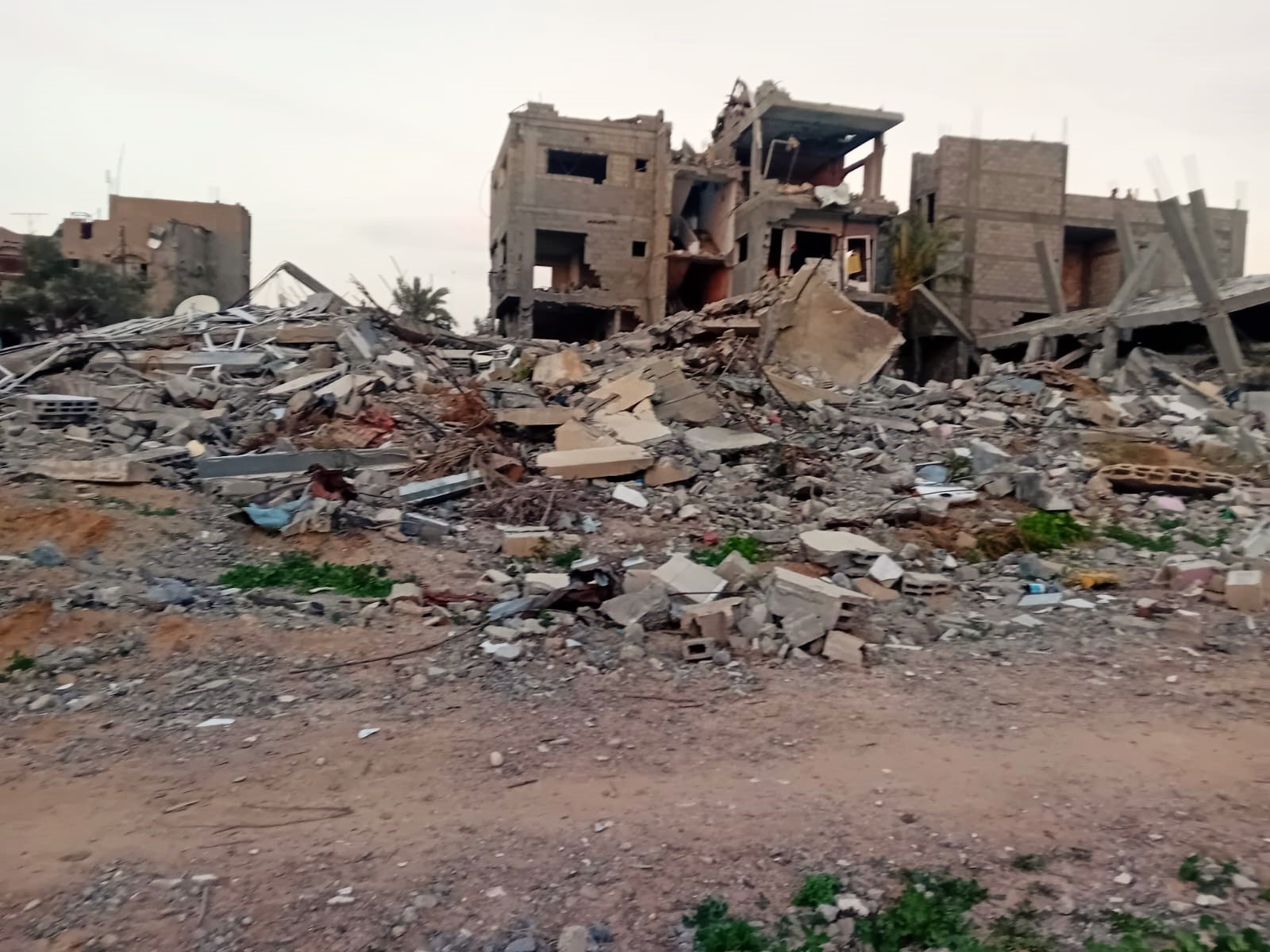
All that’s left of our home is a pile of rubble. It was bombed along with other houses in the area, without any warning. Now I live at my sister’s house in a-Nuseirat R.C. I lost my husband and all my children, and I’m all alone.
* Testimony given to B’Tselem field researcher over the phone on 19 January 2025
Watch a video of 16-year-old Malak, filmed by her cousin and posted on her Instagram account, in which she speaks about her family’s life, which was destroyed during the war. A few months later, Malak was killed with her two brothers and father in an airstrike on their home.