The testimonies of Wisam Dufosh, 35, who was attacked by soldiers on 24 June 2024 near the Gilbert checkpoint, and Yasser Abu Markhiyeh, 52, who witnessed the attack on Dufosh and was attacked himself on 21 June 2024 in the Tel Rumeidah neighborhood
Wisam Dufosh, 35, a father of three from the Tel Rumeidah neighborhood in central Hebron, attacked by soldiers on 24 June 2024
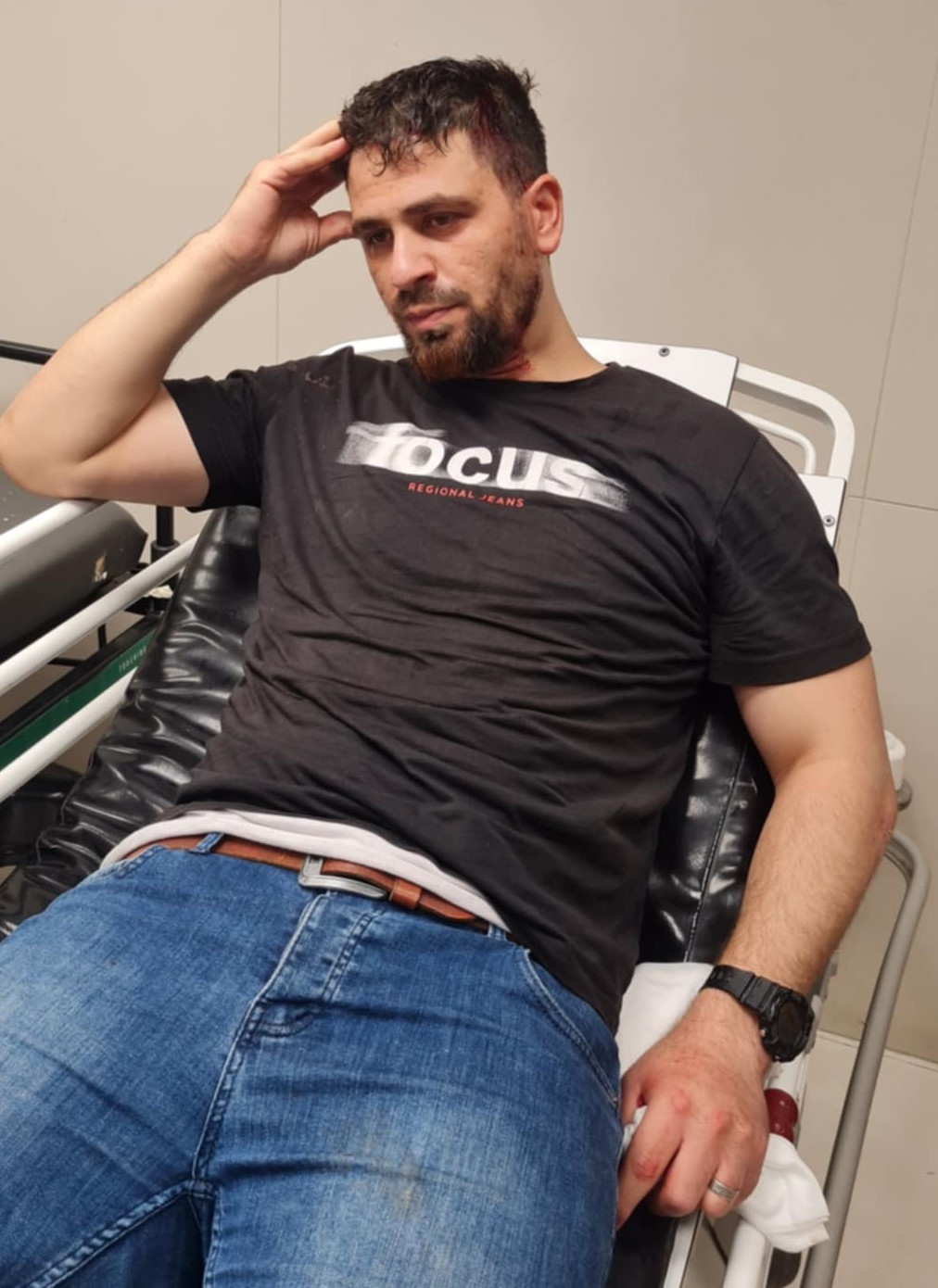
I live with my wife and three daughters, Rital, 7, Hur, 5, and Nur, 2. The Gilbert checkpoint was installed across the street from our home. I work as a teacher.
The soldiers suddenly started hurling stun grenades at us and firing “rubber” bullets. I was hit in the head by a rubber bullet and started bleeding
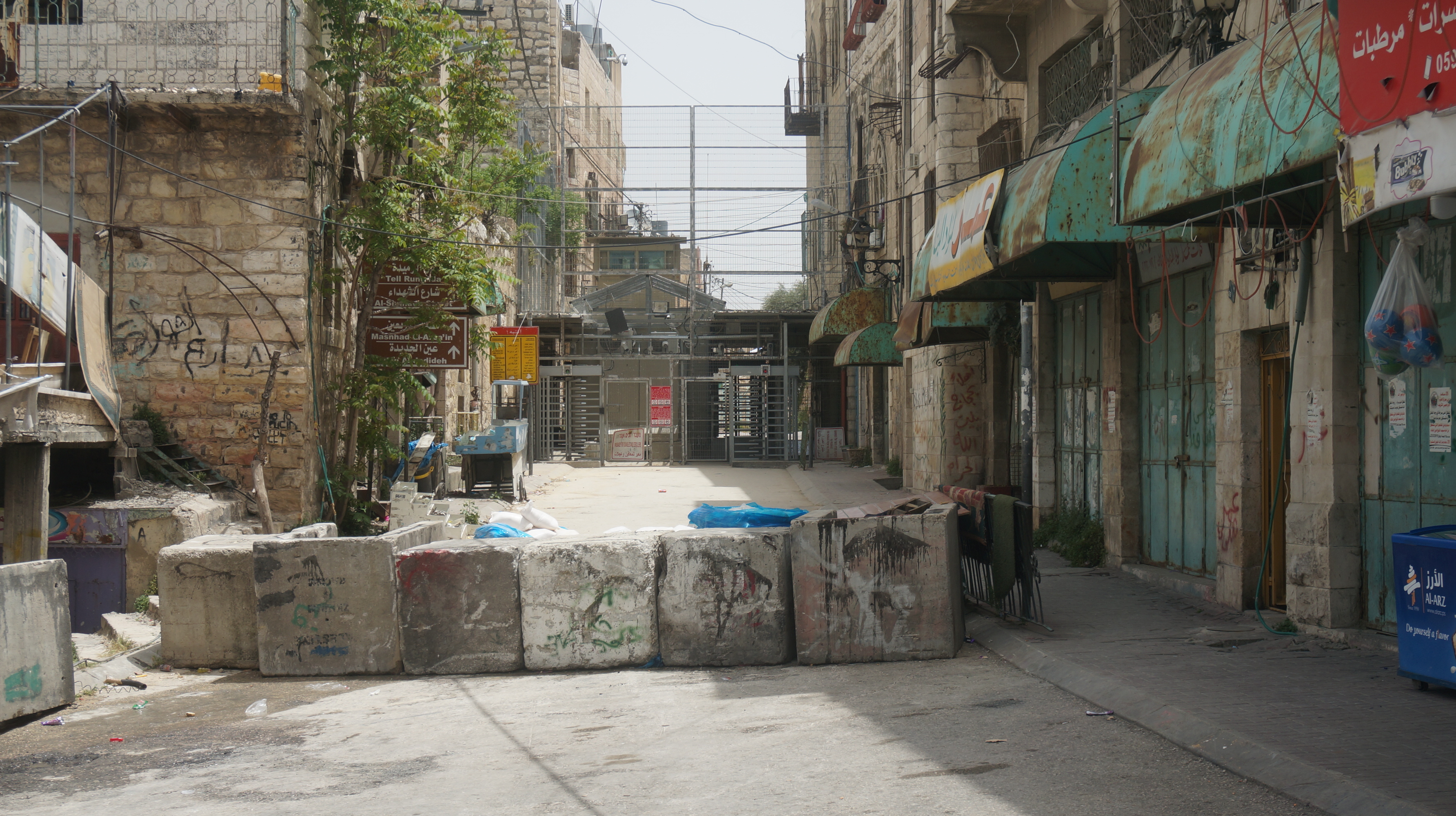
Since the events of 7 October and the start of the war in Gaza, we, like everyone else in the neighborhood, have been suffering from harassment and attacks by the occupation forces, especially in the checkpoints that surround the area. First of all, they restricted our movement even more. Since the war started, we’ve been allowed to go in and out of the neighborhood only between 7:00 A.M. and 7:00 P.M. It wasn’t until a week ago that they started letting us through the Qafishah checkpoint and the Bab a-Zawiya checkpoint after 10:00 P.M.
The area has turned into a large prison. Only neighborhood residents are allowed in, and the soldiers at the checkpoint won’t even let relatives visit us. In the evening, they forbid us from sitting together in our yards, too. Every time there’s a security incident, even if it’s not in the Hebron area, they shut the checkpoint. Even when the checkpoints are open, they detain us for hours on our way out and back in, and search our phones and belongings. Sometimes, it makes me late for work. The soldiers make no distinction between men and women, and everyone is searched and inspected at the checkpoint. On Jewish holidays, they don’t even let us move inside the neighborhood.
The soldiers keeping running riot and make life in the neighborhood very difficult. They all the time chase young guys, detain them, beat them and arrest them. If they find videos on their phones about the war and things that have happened since October 7, they get really abusive.
On 24 June 2024, around 9:00 P.M., I gathered with about 20 people between the ages of 25 and 65 around the Gilbert checkpoint, to welcome a neighborhood resident who was just back from the Haj. There were about five soldiers at the checkpoint whom we know like to stir things up and act like bullies. They asked us why we’d gathered there, and we told them we were going to welcome a resident who was back from the Haj.
My testicles still hurt badly. I’m getting medical treatment and am worried it will turn out I’ve suffered major damage to that area. I also have severe pain in my back
The soldiers let us go, but they followed us to the entrance to a-Shuhada Street opposite the Bab a-Zawiya checkpoint. When we got there, we called the resident we’d come to visit on the phone, but found out he’d gone to pray in the mosque nearby. One of us, Hazem al-Bayed, invited everyone to his house, to have tea and wait for the haj to return from prayers.
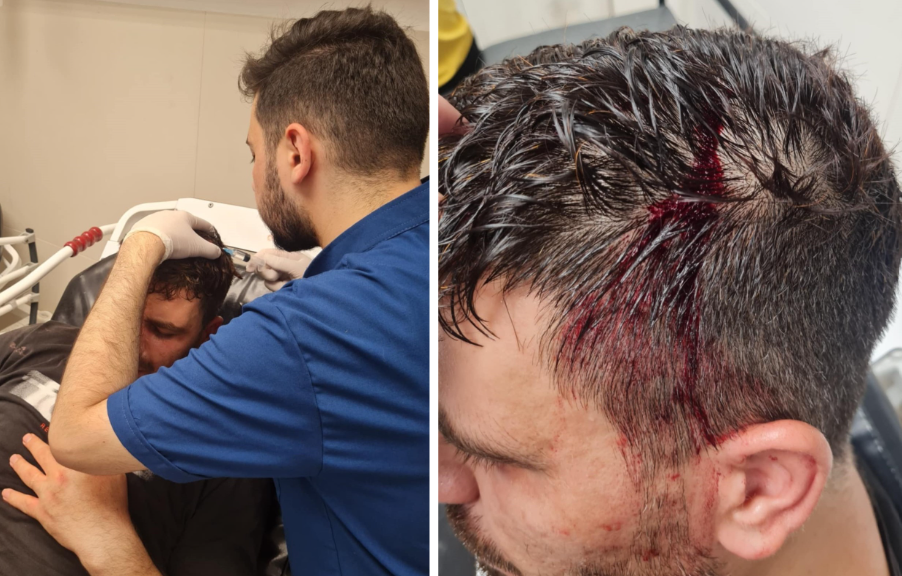
We went up a few stairs leading to the al-Bayeds’ home, and then the soldiers suddenly started hurling stun grenades at us and firing “rubber” bullets. I was hit in the head by a rubber bullet and started bleeding. The soldiers ran over to us and everyone ran to the al-Bayeds’ home. I was the only one who couldn’t escape, because of my injury.
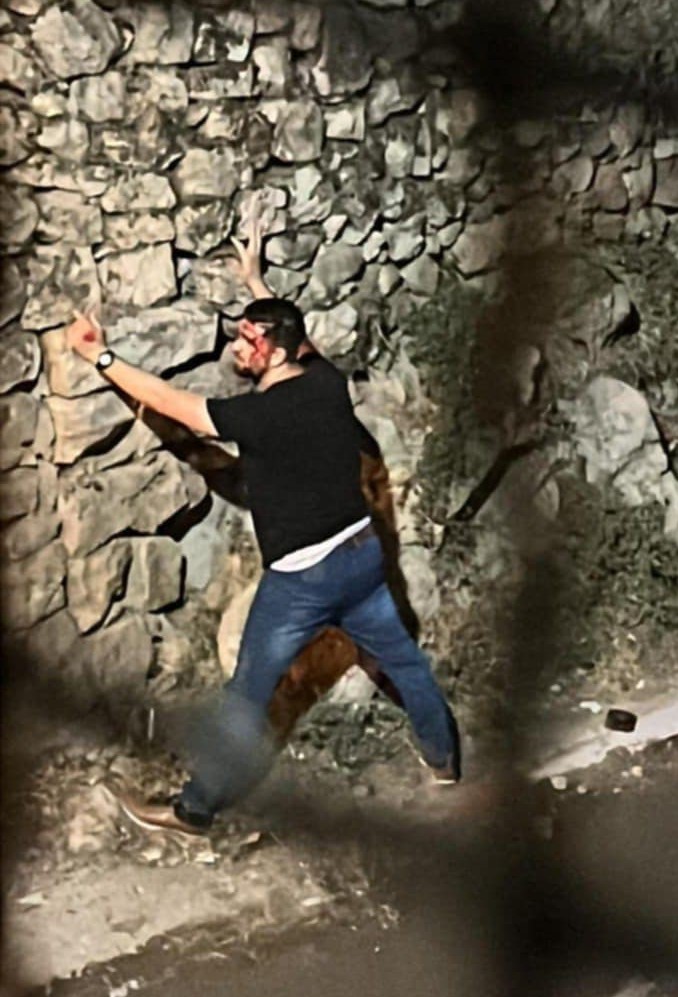
The five soldiers surrounded me and started hitting me with their guns. One of them hit me on the head with his rifle. I fell to the ground and they continued beating me, aiming deliberately at my testicles and other sensitive body parts. The beating lasted a few minutes. I started feeling faint. Then the soldiers pulled me up forcefully and made me stand facing the wall. They kicked me with their shoes, which have steel parts, and swore at me.
I could barely stand, but one of them put the barrel of his gun to my head and cocked it, so I had no choice. I felt that he was going to shoot me, mostly because he was acting hysterical and aggressive.
I made an effort to stay standing, leaning against the wall. They held me there for a few minutes and conducted a violent, brutal body search on me without offering any first aid to stop the bleeding or even wipe the blood off my face. Then they ordered me to get out. But I couldn’t move and fell down. At that point, some neighborhood residents came and took me up the stairs to the al-Bayeds’ home.
When I came to, I was in an ambulance that was taking me to the Aliya Governmental Hospital in Hebron, where they did X-rays. I also had bruises all over my body, especially on my testicles. My head wound was stitched, and the doctors wanted to keep me at the hospital for 24 hours for observation, but I chose to go home after my daughter Rital called me, crying, because she’d seen pictures of me bleeding on the neighborhood WhatsApp group.
It’s been a week, and my testicles still hurt badly. I’m getting medical treatment and am worried it will turn out I’ve suffered major damage to that area. I also have severe pain in my back and feel that my health is deteriorating day by day.
* Testimony given to B’Tselem field researcher Manal al-Ja’bari on 2 July 2024
Yasser Abu Markhiyeh, 52, a father of four from the Tel Rumeidah neighborhood in central Hebron, was attacked by soldiers on 21 June 2024 and witnessed the attack on Wisam Dufosh on 24 June 2024
I live across from the Gilbert checkpoint and work as the director of the Ibrahim al-Khalil Society in Tel Rumeidah. The society’s projects include a center for cultural and educational activities, dental clinics, a medical center and a study center. I’m also involved in activism, documenting illegal acts by the occupation regime in the Tel Rumeidah area.
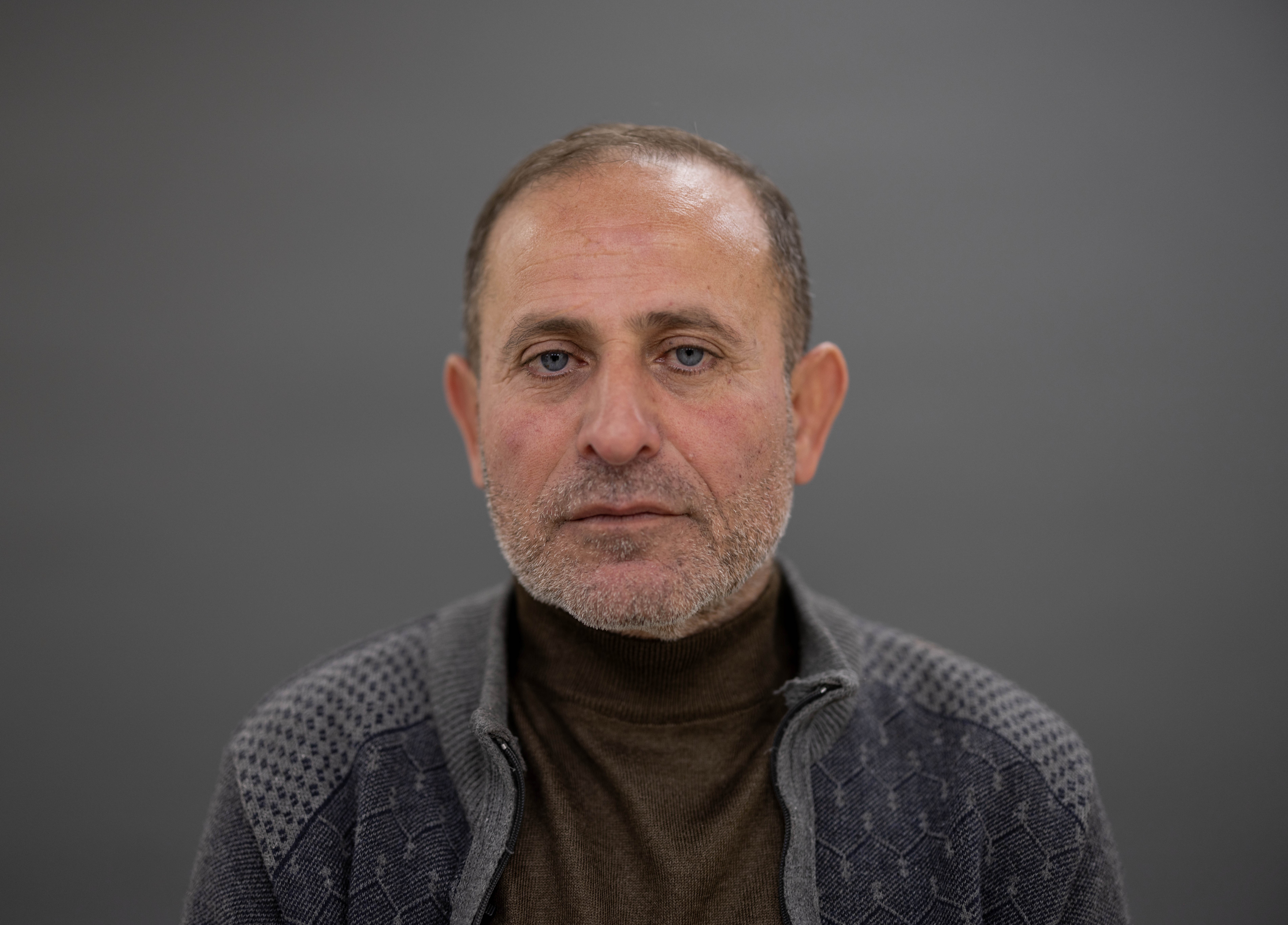
On the evening of 21 June 2024, I was at the society’s offices in Tel Rumeidah. There were about eight of us area residents there, including Safwat Shweiki, 28. We sat around and chatted, because there’s nowhere else around here to get together in the evening and talk. The army doesn’t allow us in and out of the neighborhood at night, or to walk around it.
[the soldiers] threw a stun grenade inside and then shut the door on us [...] One of the soldiers started cursing us in Arabic and threw another stun grenade in my direction
Around 7:00 P.M., four soldiers came into the building and stood at the doorway to the office. They threw a stun grenade inside and then shut the door on us. I protested what they did, and told the soldiers we were allowed to be in the office and they had no right to stop us sitting there or to attack us. One of the soldiers started cursing us in Arabic and threw another stun grenade in my direction. I was very angry and threatened to file a complaint against him at the police station. The soldiers left, swearing at me and threatening to return.
The next morning, Safwat Shweiki called and told me that after he left for work, the same four soldiers detained him for more than an hour before letting him go. He also said they’d asked him where I live.
Right after I hung up the call with Safwat, the same soldiers came to my house. This time, they had an officer with them. He ordered me to get dressed, take my ID card and come with them. I obeyed and the soldiers led me to the Gilbert checkpoint, where they took away my phone and ordered me to unlock it. At first. I refused, and then one of the soldiers pressed the barrel of a gun to my head and threatened to shoot if I didn’t obey.
I unlocked the phone for them, and they started going through it while swearing at me. That lasted about two and a half hours, and then a Civil Administration officer arrived. He introduced himself as ‘Adel and asked me what was going on. I told him the soldiers were stirring up trouble over nothing. The soldiers found some videos I took on my phone of attacks on local residents or conduct at checkpoints. ‘Adel asked me about the videos, and I told him filming was allowed. He said, “You can film, but far away from the soldiers.” He went and talked to the soldiers, and then came back and said the soldiers would let me go in 10 minutes. Then he left. About 10 minutes later, the soldiers gave me back my phone and threatened that if I did any more filming, they’d shoot me in the head.
One of the soldiers fired rubber bullets at us from about 10 meters away, one of which hit Wisam Dufosh, 35, in the head. I was almost hit, too
On 24 June 2024, at around 9:00 P.M., about 20 neighborhood residents, myself included, got together to visit Haj Mustafa Abu Zeinah at his home, at the end of a-Shuhada Street, to congratulate him on his pilgrimage.
We gathered in the neighborhood, and then the same four soldiers who were at the Gilbert checkpoint came towards us with a fifth soldier. They asked why we were gathered there and where we were going. I said we were going to congratulate a neighborhood resident who was back from the Haj and lived on a-Shuhada Street.
They let us go, but followed us to the end of a-Shuhada Street. We called Haj Mustafa Abu Zeinah, and he told us he was out praying at the mosque.
We decided to go to Hamzah al-Bayed’s house. He was with us and invited us over for a cup of tea until Haj Mustafa returned. As soon as we went up the stairs to the al-Bayeds' house, the soldiers suddenly started throwing stun grenades at our feet and chasing us, so we all ran towards the family’s house. One of the soldiers fired rubber bullets at us from about 10 meters away, one of which hit Wisam Dufosh, 35, in the head. I was almost hit, too.
The soldiers continued to attack Wisam barbarically, kicking him and hitting him with guns all over his body for about five minutes. Then I saw them lift him up, while he writhed in pain
The soldiers managed to grab Wisam, who was injured, and beat him brutally. We watched them beat him from the window of the al-Bayeds' home. I watched them drag him brutally up the stairs, even though he was wounded and bleeding from the head. I also saw one of the soldiers hit him on the head with a gun. Blood flowed down from his head and covered his face.
The soldiers continued to attack Wisam barbarically, kicking him and hitting him with guns all over his body for about five minutes. Then I saw them lift him up, while he writhed in pain. They pinned him violently to the wall, facing the wall with his arms spread out to the sides, kicking him as they were doing it and telling him to shut up.
After about 10 minutes, I saw the soldiers let Wisam go and tell him to get lost, but he fell to the ground and couldn’t move. I went outside with Bassam Abu ‘Eishah, who’s in his sixties, and walked over to Wisam, calling for a Palestinian ambulance on the way. But when the ambulance got to the al-Arba’in (Tamar) checkpoint, which you can only enter on foot, the soldiers refused to let the paramedics through. The driver had to take a detour through the Bab a-Zawiya checkpoint and from there, his team entered on foot and carried Wisam through the checkpoint on a stretcher. Wisam was semi-conscious and writhing in pain. The ambulance took him to the ‘Alia Governmental Hospital, and we all went home. I called Wisam later to check on him.
* Testimony given to B’Tselem field researcher Manal al-Ja’bari on 30 June 2024
In another testimony, Abu Markhiyeh recounted being attacked again on 14 July 2024
