On the Agenda
Filter updates:
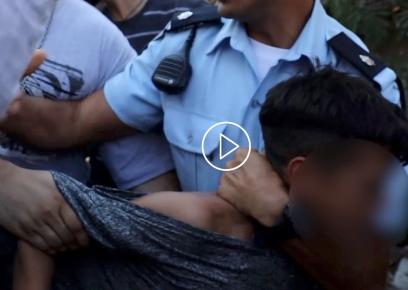
Still from video filmed by Shiraz Grinbaum and Oren Ziv, Activestills
The a-Sheikh Jarah neighborhood of East Jerusalem: Police arrest two brothers, 13 and 15, and assault their mother
On 8 Sept. 2017, during a demonstration in the a-Sheikh Jarah neighborhood of East Jerusalem, police officers arrested ‘A.H., 15, assaulted his mother, and released him an hour later. They also arrested his brother M.H., 13, interrogated him, and obtained his signature on a statement written in Hebrew. He was released on bail at about 10:30 PM and spent five days under house arrest. This conduct is consistent with Israel’s policy on the detention of minors in East Jerusalem, which entails the systematic violation of their rights.
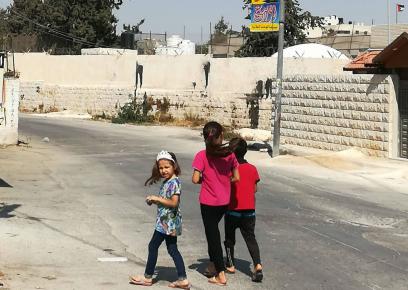
The occupation routine in Balata Refugee Camp near Nablus: Army regularly accompanies hundreds of Jewish worshippers to “Joseph’s Tomb,” imposing draconian restrictions on the residents
During August-October 2017, B'Tselem documented incidents in which soldiers accompanied Jewish worshippers on visits to Joseph’s Tomb in Nablus, imposing sweeping restrictions on the movement of Palestinian residents. The army uses tear gas against youth who confront it and sometimes shoots them. Israel consistently places the interests of the worshippers over those of Palestinian residents, as part of the violent daily routine it has maintained in the Territories for fifty years.
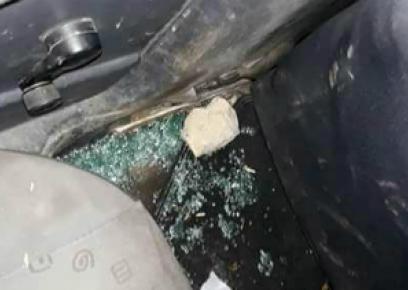
Photo: Shards of glass in Nimer Jabber’s car.
Route 60: Settlers attack family with stones, injuring girl aged 5 in the head
On 5 Oct. 2017, members of the Jabber family from al-Baq’ah near Hebron were returning home from a family visit. Near the access road to their village they encountered settlers, one of whom threw a rock at their car. Two of the passengers were injured and required treatment. Yafa Jabber, 5, was injured in the head, and her aunt, Shirin Jabber, was injured in the elbow. This is the latest in a series of violent attacks by settlers along Route 60 and elsewhere in the West Bank.

Still from video.
Beit Ummar: Soldiers arrest boy aged 13
On 16 Oct. 2017, Khaled Bahar, aged 13, and his cousin ‘Abed Bahar., 12, were chatting with other youths from the area. Soldiers approached, seized Khaled Bahar by the arm and took him to the nearby settlement of Carmei Tzur. He was handcuffed and blindfolded for hours and interrogated for approximately four hours before being released at 2:00 AM. This incident is not unusual: soldiers routinely enter Beit Ummar, disrupting the residents’ lives, arresting youths, and searching homes. This conduct forms part of the daily implementation of the occupation regime.

Police officers assault girl aged 15 in her home and take her for interrogation
On 22 Aug. 2017 police officers came to a family home in the Silwan neighborhood of East Jerusalem. They put a gun to the head of the father, locked the rest of the family in the kitchen, and searched the house. They then assaulted the mother and her daughter, aged 15, shackled the daughter, and took her away for interrogation. The daughter was released after interrogation. Such behavior forms part of official Israeli policy in East Jerusalem that entails the systemic violation of the rights of minors during detention.
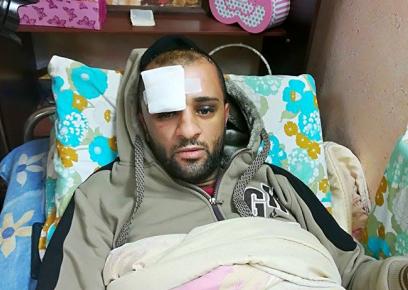
Muhammad Jarara at his home after being released from the hospital. Photo by Salma a-Deba'i, B'Tselem
Route 60: Settlers throw stones at three Palestinians, injuring one seriously in the head
On the night of 5 Oct. 2017 settlers threw stones at a car carrying three Palestinians close to the settlement of Shilo on Route 60. Muhammad Jarar’ah, 29, was struck in the head and injured seriously, requiring surgery. Although a complaint was submitted the next day, the police have not collected statements from the victims. This conduct is consistent with experience, which shows that it is extremely unlikely that the police will investigate attacks on Palestinians by settlers. As a result, such attacks will continue undisturbed.

Raed Salhi. Photo courtesy of the family
Soldiers shoot Raed Salhi in a-Duheisheh Refugee Camp without any justification during detention operation; Raed died of his injuries one month later
On 9 Aug. 2017 soldiers shot Raed Salhi, 21, as he attempted to flee during a detention operation in Duheisheh Refugee Camp. The soldiers later shot at his brother when he came to help Raed, who was only evacuated to hospital in Israel after 40 minutes. The medical team prevented Raed’s parents from visiting him and failed to update them on his condition and treatment. His brother was detained without trial and his mother was prohibited from entering Israel. Once again, no-one will be held responsible for the lethal and illegal shooting.
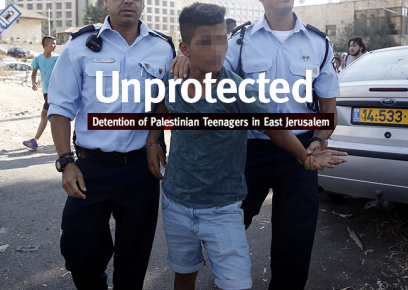
New report: Unprotected - The Detention of Palestinian Teenagers in East Jerusalem
A new report published today by human rights NGOs HaMoked and B’Tselem reveals broad, systemic abuse by Israeli authorities of the human rights of hundreds of Palestinian teenagers arrested every year in East Jerusalem. Affidavits were collected from 60 such boys: they described being pulled out of bed in the middle of the night, handcuffed, interrogated in violation of their rights, then kept in custody under harsh conditions, sometimes for extended periods of time. These practices are part of Israeli policy, which considers the Palestinians living in East Jerusalem unwanted residents.

Still from video filmed by B’Tselem field-researcher Nasser Nawaj'ah.
Israeli CA demolishes the homes of two families in Masafer Yatta
This morning, 19 October 2017, at 10:30 AM, Civil Administration officials together with a military detail, arrived at the community of Khirbet al-Halawah, in the Masafer Yatta region in the south Hebron Hills. The forces demolished the homes of two families, leaving 18 people, including eight minors, homeless. The demolition was captured on video by B’Tselem field-researcher Nasser Nawaj'ah. Residents in the area have been victims of repeated harassment by the Israeli authorities, who declared a large part of the area as a firing zone in the late 70s, and have been working to expel residents ever since.
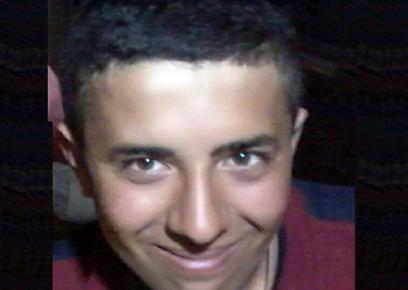
'Udai Nawaj'ah, 16. Photo courtesy of the family.
16-year-old Palestinian killed by unexploded ammunition left behind after Israeli military trains on pastureland
On 22 July 2017, three residents of Khirbet Ibziq in the northern Jordan Valley were grazing their flocks on nearby pastureland when a dud - unexploded munitions - went off, killing ‘Udai Nawaj’ah, 16. At least two other Palestinians have been killed in the Jordan Valley in similar circumstances since 2014. The military trains close to Palestinian communities as part of a policy aimed at taking over the area, and does not make sure to remove unexploded ammunition. This illegal practice violates the residents’ rights and endangers their lives.

Resident of Dul-Baba near the ruins of his home today. Photo: 'Amer 'Aruri, B'Tselem, 16 October 2017
Civil Administration demolished the homes of four families in Jabal al-Baba
This morning, at around 7:00 AM, Civil Administration officials, together with security forces and four bulldozers arrived at the Jabal al-Baba community near ‘Eizariyah, northeast of Jerusalem. The forces destroyed three pre-fab homes that housed four families, leaving 27 people, including 18 children and youths, homeless. The forces also demolished two bathroom stalls donated by a humanitarian aid organization. The most recent abuse the community was subjected to by the authorities was on 11 September 2017 when forces confiscated equipment used to repair the community’s access road.

Maryam Abu Yusef at the family grocery store. Photo: Khaled al-'Azayzeh, B'Tselem, 13 August 2017
Maryam Abu Yusef from a-Nuseirat R.C. describes coping with power and water shortages in Gaza
Maryam Abu Yusef, 67, a mother of five from a-Nuseirat R.C in Gaza, has to plan her life around the limited hours when her home receives electricity and water. Both vital services are provided only once every few days, and not always together. The family does not receive enough water, and what they do get is unfit for drinking. This forces them pay large sums of money to purchase additional water privately.
Israel’s regime of apartheid and occupation is inextricably bound up in human rights violations. B’Tselem strives to end this regime, as that is the only way forward to a future in which human rights, democracy, liberty and equality are ensured to all people, both Palestinian and Israeli, living between the Jordan River and the Mediterranean Sea.
Since the Hamas attack on 7 October 2023, Israel has acted in a coordinated and deliberate manner to destroy Palestinian society in the Gaza Strip, committing genocide against its residents. In light of Israel’s actions in Gaza, the public statements made by Israeli decision-makers, and the international community’s failure to take effective action, there is a serious risk that the Israeli regime will expand the genocide to other areas under its control—first and foremost, the West Bank.
B’Tselem calls on the Israeli public and the international community to use every tool available under international law to bring an immediate end to Israel’s genocide against the Palestinian people.