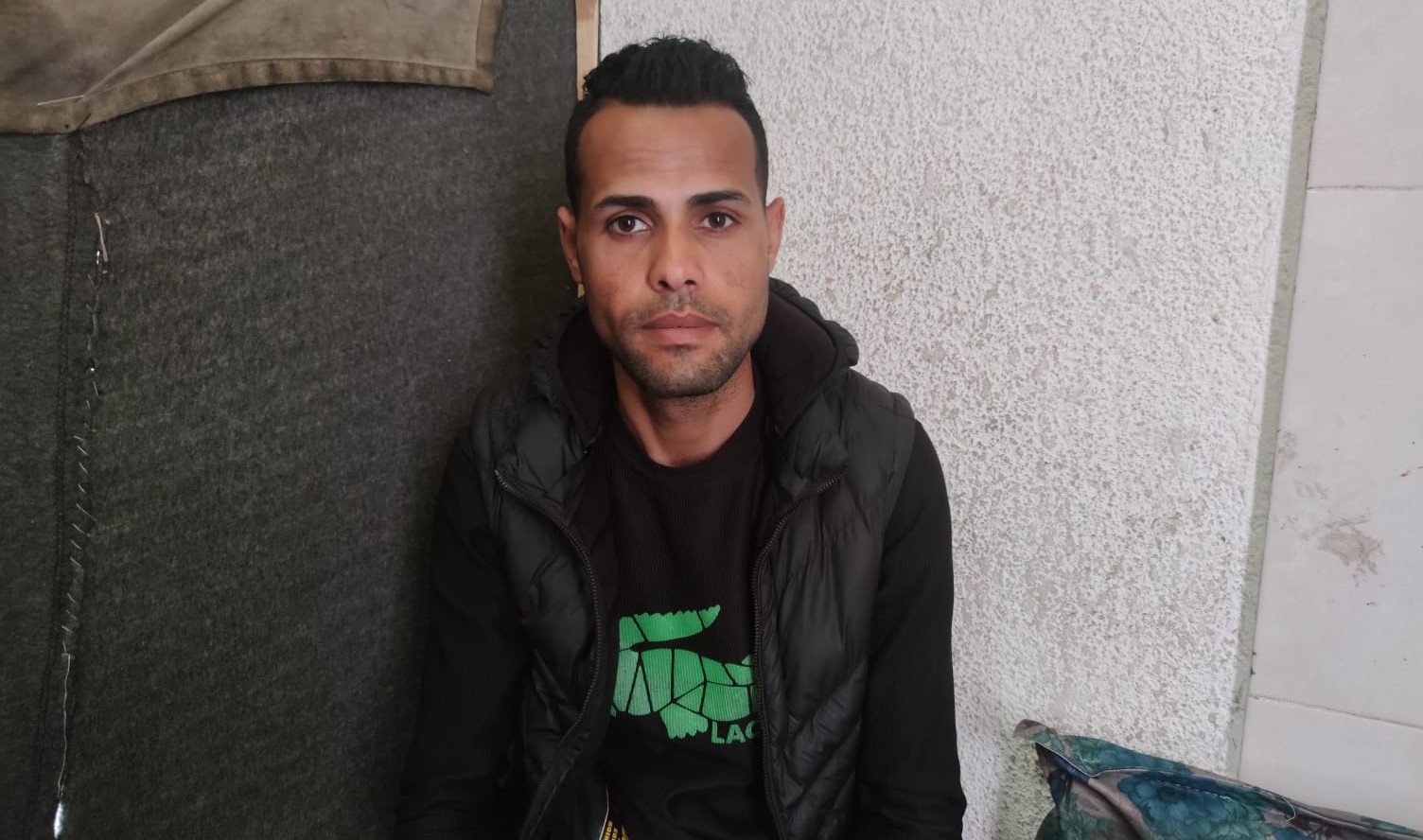
A 31-year-old father of four from Beit Hanoun talked about his son Yazan, 10, who had muscle disease and died during the war due to lack of food and adequate care:
When the war broke out, I was living with my wife Marwah, 31, and our three children, Yazan, 10, Mu’in, 8 and Wael, 4, in our house in Beit Hanoun in the northern Gaza Strip. Yazan was born with muscle disease, and was treated in hospitals in Gaza and Jerusalem. In the last four years, he got physiotherapy and we kept him on a special diet, which allowed him to have a normal life. He was getting medication to strengthen his muscles, injections to improve functioning, vitamins and calcium, and he was able to move normally.
At the beginning of the war, we moved to Jabalya Refugee Camp and stayed there for eight days. We were still able to give Yazan the nutrition he needed, which included fruit, especially bananas, eggs, milk, vegetables and meat – as much as I could afford.
On 13 October 2023, the army ordered us to move south. At first, we moved to a-Nuseirat Refugee Camp in the central Gaza Strip. We went to an IDP camp, but we only stayed there one day because of the overcrowding. I was afraid the children or my wife, who was pregnant, would catch diseases. We moved to an IDP camp in a school in Deir al-Balah. It was crowded there, too – 54 people in one classroom. It was also very cold, because the school is on the seaside and there’s a lot of wind. We stayed there for 130 days, and on 23 October 2023, my wife gave birth to our son Muhammad there. Those were 130 days of suffering.
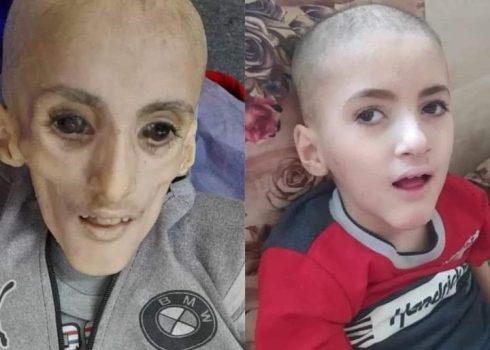
We couldn’t get Yazan the food he needed – not eggs, and not any fruit or vegetables. There were hardly any available and what was available, we couldn’t afford. Not a lot of aid made it there. They mostly gave out canned goods and grains. Other than that, we mostly had bread and tea. At lunchtime we’d make him semolina porridge, and because it was impossible to get fresh milk, we used powdered milk. Sometimes I went all the way to Rafah to look for semolina for him, and when I couldn’t find any, I bought him halva. We couldn’t get the medication he took before the war, either, and obviously he didn’t get any physiotherapy. There was no water or electricity and it was dirty. All of our children had upset stomachs because of the poor nutrition.
We felt Yazan’s health deteriorating. He was in awful pain and couldn’t sleep, in the daytime or at night. I took him to Shuhadaa al-Aqsa Hospital, and the doctor said no treatment was available and that he had to get the right food. He also had a chest infection and needed an antibiotic (Ceclor), but it wasn’t available in pharmacies. He kept getting worse.
Yazan weighed 15 kilos before the war and was quickly losing weight. We decided to move to Rafah 35 days ago, hoping to find medication and healthier food for him here, and a cleaner environment. We came to another school that was turned into an IDP camp and are staying here, in the hallway on the third floor. It’s open to the wind and there’s a kind of tent made up of blankets. All we have are three mattresses and some blankets.
But even in Rafah, we couldn’t get Yazan medication or proper food and he kept getting worse. I took him to Abu Yusef a-Najar Hospital, and the doctors examined him and said he had to be hospitalized for malnutrition and severe weight loss. He also had phlegm buildup in his chest. They fed him intravenously and put him on inhalation and oxygen, but he kept getting worse.
On 2 March 2024, I brought him clean clothes. When we were dressing him, I looked at him and my heart ached so much. He was all skin and bones. He was half his weight.
On 3 March, at 4:00 A.M., my wife called and told me Yazan had passed away. I went to the hospital right away. I hugged him.
We buried Yazan that day in the cemetery here in Rafah. Losing him is terrible. I look at the mattress he slept on until he was hospitalized, and all I can feel is grief and deep sorrow. I always tried to give Yazan everything he needed and take care of him, but the conditions here are so difficult now that I had nothing to give him any more. The deadly hunger here killed him.
* B’Tselem does not know Yazan al-Kafarneh's precise medical diagnosis.
* Testimony given to B’Tselem field researcher Olfat al-Kurd on 6 March 2024.