Dear friend,
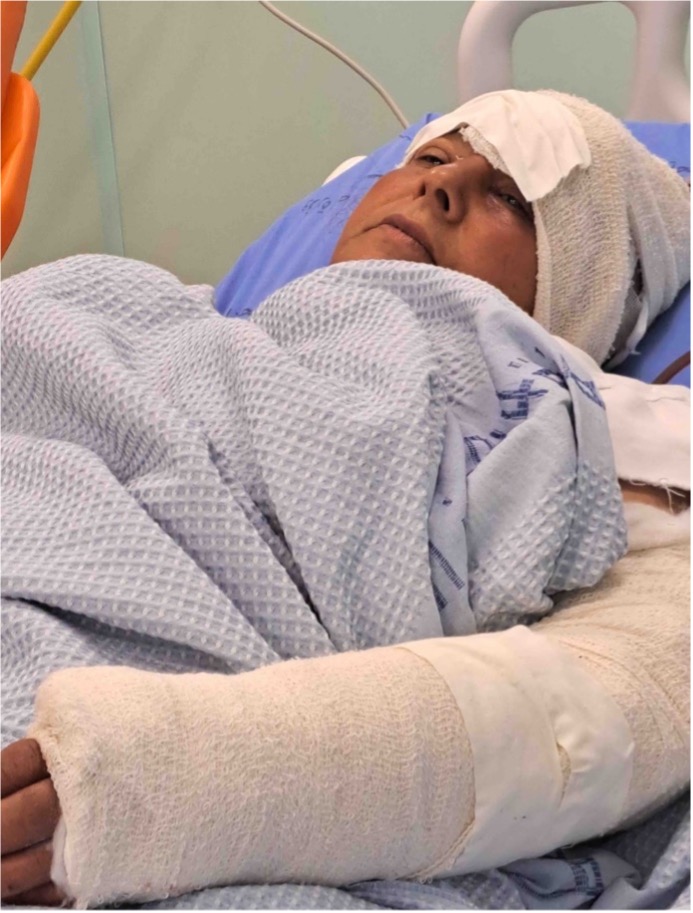
In mid-June, I went to visit Hajar Ka’abneh in hospital. The 48-year-old mother of nine was lying in the ICU with a fractured skull, a brain hemorrhage and a broken arm. Her face was pale and swollen. Her head was bandaged, her left arm was in a cast and she was hooked up to medical devices. Why? All because of a brutal assault by a group of settlers, who showed up one evening at her home in one of the Bedouin communities in Ras a-Tin. They burst into the family's tent, holding clubs and pepper spray and with their faces covered, they beat Hajar, her husband Mustafa and their sons. Soldiers who then arrived fired shots in the air and chased two of the couple’s sons, eventually arresting them. A few hours later, they came back and arrested Mustafa, after he was discharged from hospital.
Like many of their neighbors, the extended Ka’abneh family have been suffering frequent attacks of this kind for a long time. About a month after the last attack, they left and the various family members moved to nearby communities, in search of peace and safety. Dozens of Palestinian communities throughout the West Bank are regularly exposed to such violence, along with other forms of pressure by the Israeli apartheid regime, including home demolitions and banning all development. This raises the concern that they will meet the same fate as the Ka’abneh family.
Settler violence has never been a private initiative; it is situated within the broader context of Israel's apartheid regime. While the actions are carried out by individuals, they are deeply rooted in the nature of the regime and in its strategic goal: to drive Palestinians out of their land, so Israel can take over and use it for its needs.
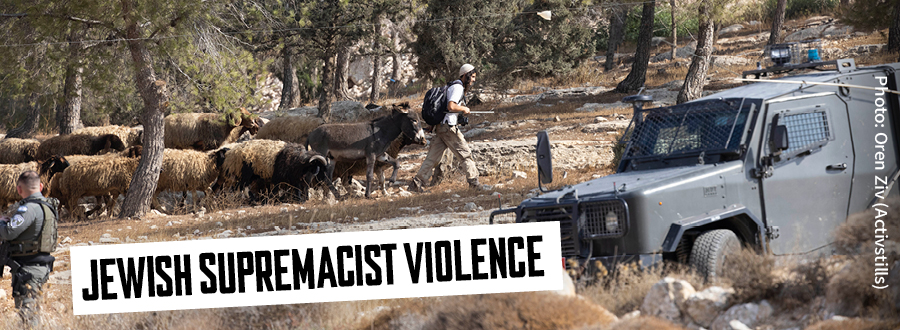
One way the state works towards this goal is by establishing "farms" where settlers raise sheep and cattle. In recent years, more than 15 such settlement outposts have been established in the Ramallah area alone, most of them on the eastern slopes of the Jordan Valley. Installing settlers at these vantage points allows for quick and easy takeover of up to thousands of dunams at a time. The investment is minimal compared to the resources needed to start a new settlement. The method is simple: an individual or a family settle in the heart of a Palestinian area and start raising livestock, protected by the military, which helps them violently prevent Palestinians from accessing the pastureland, fields and water sources they used up until then.
In more than 20 years as B’Tselem’s field researcher in the Ramallah area, I have witnessed and documented countless crimes and human rights violations. But we are now seeing an extreme rise in settler violence against Palestinians, fully backed by the state. The sheer number of incidents documented in the last three months speaks for itself. Since early September, I have documented 42 incidents of settler violence in the Ramallah and al-Birah District. In seven of them, settlers bodily assaulted Palestinians. In 13, they attacked Palestinian passengers in cars with stones (especially along Route 60). In six, they attacked Palestinian homes with stones, and in three, they torched cars. During this time, settlers vandalized hundreds of trees belonging to Palestinians (mostly olive trees), and this is compounded by 29 cases of damage to other Palestinian property.
In extreme instances, soldiers joined in and attacked Palestinians with live fire – sometimes, at the same time as settlers. For example, in late July, soldiers were deployed to disperse a demonstration of Palestinians from al-Mughayir who were protesting against settler violence and the establishment of outposts in the area. Soon after the soldiers arrived, several settlers also arrived, some of them armed. One of the settlers started shooting at Palestinians who were throwing stones, while other settlers threw stones themselves – all in the presence of the soldiers, who also opened fire at the Palestinians. Fifteen-year-old Amjad Nasr was killed by live shots fired at him from behind by a soldier or a settler, and two other Palestinians were injured. In another case, settlers went towards the spring in the village of al-Mazra'ah al-Qibliyah. Palestinians confronted them, and then the settlers summoned Border Police and military forces. The soldiers shot and killed Mahdi Ladadwah (17) and injured another Palestinian youth.
The state-backed settler violence reflects the violence of the apartheid regime. This explains why the regime makes no attempt to arrest settlers who cause harm to Palestinians and rarely holds them to account. B'Tselem's experience shows that even when the victims file complaints with the military or the Israel Police, it is in vain. In the absence of mechanisms in place to protect Palestinians from this violence, the international community must urgently intervene and exert real pressure over Israel to change this reality.
Yours,
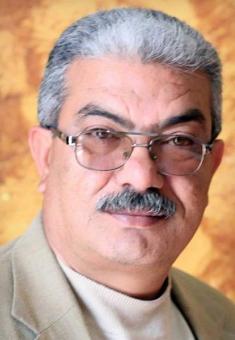
Iyad Hadad
B'Tselem Field Researcher
The Fight against Israel’s expulsion attempts of Masafer Yatta residents: B'Tselem appeals to ICC
In early October, we wrote to the Prosecutor of the International Criminal Court in The Hague requesting his urgent intervention in clarifying to Israel that it must immediately cease efforts to drive Palestinian communities in the South Hebron Hills out of their homes and land. In the letter, we called on the prosecutor to warn Israel that the forcible transfer of residents of an occupied territory, whether by loading them onto trucks or by taking daily measures that make their lives unbearable, is a war crime.
Israel has been trying to drive these communities off their land for decades. However, last May, the Israeli Supreme Court ruled – in contravention of international law and in breach of basic moral principles – that the residents have no right to live on the land and there is no legal impediment to expelling them. Since then, Israel has escalated its pressure on these communities, making their lives a daily nightmare in order to force them to leave supposedly of their own free will. Residents suffer daily threats, by soldiers and settlers, to their bodies and property, as well as noise and pollution hazards, routine damage to infrastructure, incessant invasion of their privacy, and constant uncertainty over their future. Recently, the military held alleged training in the area, using live ammunition and driving armored vehicles – including tanks – through the communities and nearby. Israel has also doubled its efforts to cut these small communities off from their surroundings: the military is placing roadblocks, confiscating cars and hindering activists, journalists and diplomats from accessing the area.
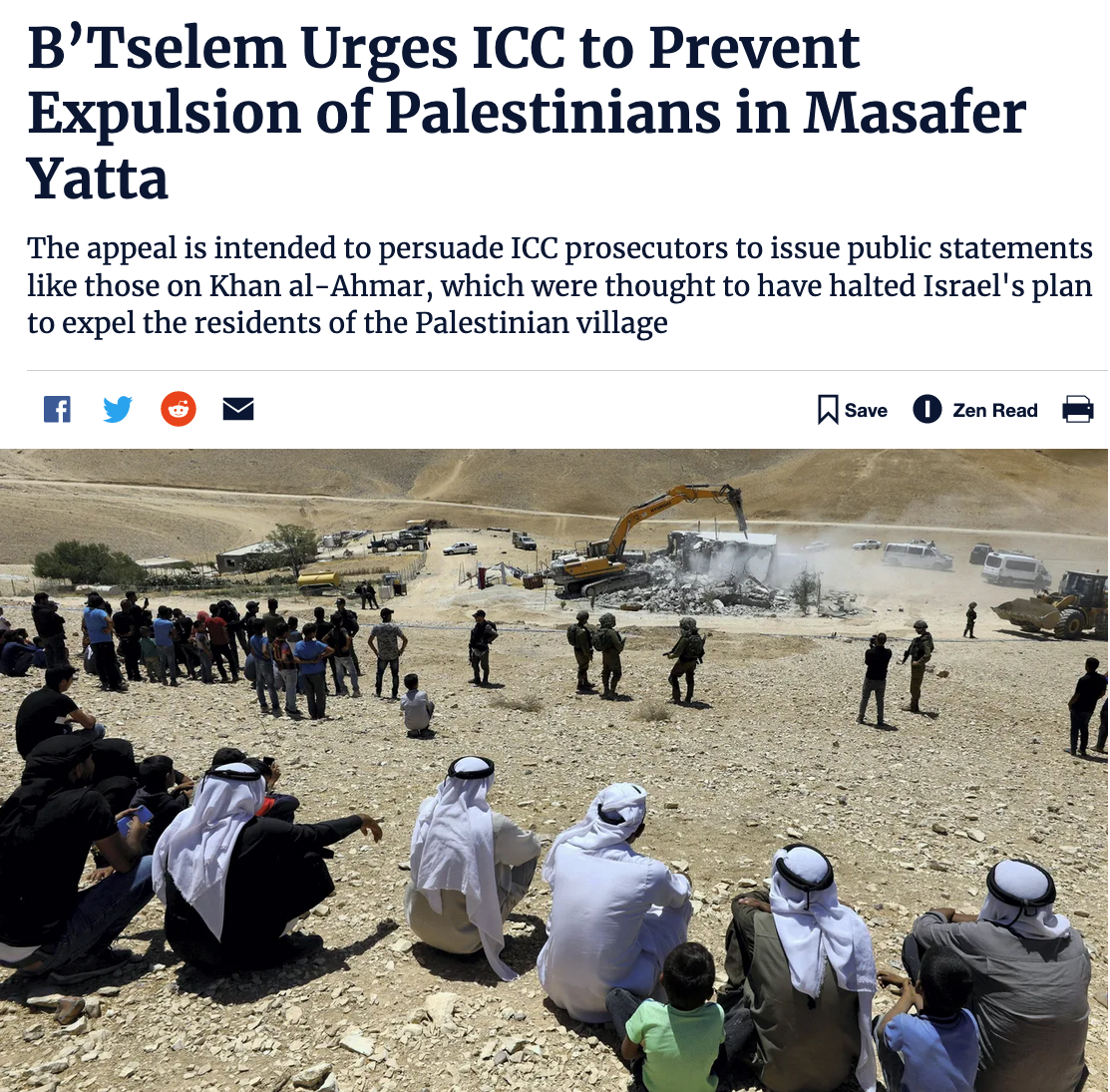
This policy reached a brutal peak about two weeks ago, when the military demolished a new primary school, built in the community of Khirbet a-Safai al-Foqa, on a school day. The day before yesterday the military again demolished two tents that were used as temporary classrooms. Until the school was built mere weeks ago, all 23 children studied in the community of Khirbet al-Fakhit. In recent months, they and their teachers were constantly harassed by soldiers, who detained them at checkpoints and confiscated teachers’ cars, among other things. The new school was meant to enable the children to study undisturbed. Meanwhile, Israel also issued demolition orders for the school in Khirbet al-Fakhit and for three other schools – in Khirbet Jenbah, Khirbet al-Majaz and Khallet a-Dabe’. Together, the four schools employ 44 teachers and have 172 students.
New documentary on killing of Shireen Abu Akleh and subsequent whitewashing
Al Jazeera recently aired an in-depth documentary about the killing of journalist Shireen Abu Akleh in Jenin. The film includes interviews with eyewitnesses – some of them colleagues of Abu Akleh – and with US Administration officials. It also features various investigations into the incident, including B’Tselem’s. In the immediate aftermath of the incident, the US publicly aligned itself with Israel and backed the whitewashing that followed. Recently, however, the FBI announced it would launch its own investigation, to which Israel hastened to respond that it would not cooperate.
More about our recent activity:
Palestinian schools are in danger of demolition not only in Masafer Yatta, but throughout the entire West Bank. One example is the modest structure that serves as a school for the children of ‘Ein Samia – a concrete cast covered with prefabs that function as four classrooms and two toilets. The community’s children used to walk or travel several kilometers to school in the neighboring village of Kafr Malik. The new school allows them to study close to home.
According to UN data, the ‘Ein Samia school is one of more than 40 throughout the West Bank – with a total of about 4,800 students – under threat of demolition.
Demolishing schools is just one way in which Israel tries to expel Palestinian communities. As a matter of policy, it bars almost all Palestinian development in the areas defined in the 1990s Interim Agreement as “Area C” – which span most of the West Bank’s land reserves. Whether they are simple tents that families use to live in or shelter their flocks, shacks, stone structures or water tanks and solar panels – Israel issues demolition orders for them, implementing some, in order to take over the land reserves for its own uses.
The state employs a similar policy in East Jerusalem, working to concentrate the Palestinian population in dense urban enclaves while devoting planning and development largely to the Jewish population. One aspect of this policy is demolishing homes built, for lack of choice, without permits. In August, September, October and November, Israel demolished 44 Palestinian homes in East Jerusalem and the al-Quds District of the Palestinian Authority, as well as 61 non-residential structures. As a result, 219 Palestinians, 95 of them minors, lost their homes (whether already inhabited or under construction).
Israel also indirectly advances its policy of dispossession by means of settler violence aimed at driving Palestinians out of their land. That is exactly what happened in the community of Ras a-Tin, where residents were subjected to severe violence – as described above by our field researcher in the Ramallah area, Iyad Hadad.
The incident in Ras a-Tin could ostensibly be written off as a rare assault by a gang of extremist hotheads, a handful of “bad apples.” But a broader perspective shows this violence is frequent, systemic and backed by the state. These are no gangs, but the state itself. These are not isolated incidents, but policy.
Our field researchers document dozens of such violent incidents every month throughout the West Bank. For example, in a severe attack last month, settlers assaulted and injured members of the Mashni family who were harvesting olives. One needed stitches in his head; another had his right leg broken and needed a platinum implant, while his left was bitten by a dog the settlers brought with them. A third suffered a torn eardrum, and the fourth was wounded in the eye. A fifth family member had her arm fractured, and the mother felt unwell and need to undergo catheterization. Seven-year-old Thaer avoided physical harm by hiding behind a car during the attack, but since then has been afraid to sleep in his bed and clings to his mother.
The regime's support for these actions often becomes visible. For instance, settlers entered the village of Kissan with soldiers, who safeguarded them and fired huge amounts of tear gas at the Palestinian residents who tried to defend themselves and their property. The same happened early one morning in the village of a-Tuwani, in the South Hebron Hills, when soldiers escorted settlers who entered the yard of a home in order to pray, claiming the site had remains “identified as an ancient synagogue.”
Meanwhile, in the Gaza Strip, life continues although the blockade has long since made the area uninhabitable. With two million Palestinians imprisoned and isolated from the world, the Gazan economy has collapsed: in the third quarter of 2022, general unemployment reached 46.6 % – and 75% among those under the age of 29. Infrastructure and public services are also collapsing: 96.2% of the water pumped in Gaza is contaminated and not fit for drinking; the sewage systems function only partially; and electricity is supplied irregularly, in some cases for only a few hours at a time. Our field researchers there recently spoke with women who are forced to raise their children alone, away from their husbands, who live in the West Bank several dozen kilometers away. We also spoke with residents injured in the Israeli assault on Gaza in May 2021. They described dealing with the fear and the trauma, and trying to restore their bodies and lives in the unbearable reality of the Gaza Strip.
Hebron made local headlines recently when a Border Police officer beat an Israeli civilian who was touring the city with left-wing activists. The incident received unusually wide coverage and top military commanders and political leaders were quick to comment. Yet the Palestinians who live in the city suffer daily violence that goes largely unreported. This includes extreme restrictions on movement, damage to property by settlers and violence and harassment by soldiers – such as the shooting and abuse of Mustafa al-Hasis, a 16-year-old who was filmed being dragged by soldiers as though he were a sack and not a wounded person. Doctors found a live bullet entry hole in his left calf along with a fractured bone, and he needed surgery. In another case, brothers Hamam and Ghazi Maharmeh, aged 8 and 10, were detained for more than five hours.
The regime’s violence throughout the Occupied Territories does not stop at the doorway, and Palestinian homes are long devoid of privacy and safety. In one instance, we documented soldiers and police officers entering a school and attacking teachers and students; in another, soldiers raided the a-Razem family’s home at night and stole gold jewelry.
B'Tselem in the media:
Netanyahu Is Just a Different Shade of the Same Jewish Supremacy, Op-ed by B’Tselem Executive Director, Hagai El-Ad
Masafer Yatta: ICC urged to prevent Israel committing 'war crime' in West Bank community, Middle East Eye
B’Tselem Urges ICC to Prevent Expulsion of Palestinians in Masafer Yatta, Haaretz
Resisting Israeli Efforts to Displace Them, Palestinians Move Into Caves, New York Times
West Bank footage throws spotlight on Israel's use of lethal force, BBC
Shireen Abu Akleh documentary to raise pressure on Biden over inquiry, The Guardian
Israel says its forces likely shot American journalist, but by accident, Washington Post
"Shocked and horrified": Alarm as Netanyahu set to form Israel's most right-wing government ever, Salon
Israel PM says FBI won't quiz troops over journalist's death, France 24
Israeli inquiry into Shireen Abu Akleh killing draws condemnation, Al Jazeera
Justice for Shireen: The Israeli investigation, Al Jazeera (Podcast)
Shireen Abu Akleh likely killed by IDF gunfire in Jenin, Israel admits, Jerusalem Post
Palestinian family harvesting olives say they were beaten up by settlers, Times of Israel
How Israeli Apartheid Destroyed My Hometown, Al Jazeera