Ethnic cleansing of Palestinian communities and lone families in the West Bank (59 communities as of 16 Mar 2026)
Demolitions and confiscations in communities facing expulsion
Thousands of people – residents of dozens of Palestinian communities located throughout Area C, the West Bank – face imminent expulsion by Israeli authorities on a variety of pretexts. The live blog will pool the regular updates we get from B’Tselem field researchers regarding the communities and any attempts by authorities to expel them. Click on the number of a community cluster and then on the tent icon marked on the map for further information about communities facing the risk of expulsion.
The information in the blog reflects the latest state affairs known to us and is updated as we receive new data from the field. For more on the communities facing expulsion, click here.
The information in the blog reflects the latest state affairs known to us and is updated as we receive new data from the field. For more on the communities facing expulsion, click here.
16 Sep 2024
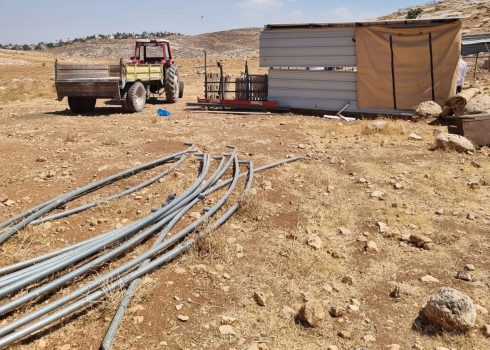
Bars belonging to one of the dismantled livestock enclosures. Photo by ‘Amr ‘Aruri, B'Tselem
Israel dismantles and confiscates three livestock enclosures in Baryat Hizma
On Monday 16 September 2024, Civil Administration personnel arrived with a military escort and a digger at the Palestinian community of Baryat Hizma, al-Quds District. They took down and confiscated three livestock enclosures belonging to one family.
21 May 2025
Civil Administration demolishes foundations of 4 homes and other agricultural structures
On Wednesday, 21 May 2025, Civil Administration personnel, escorted by soldiers and equipped with a bulldozer, arrived at the village of Marj Na’jah in the Jordan Valley and demolished concrete slabs intended to serve as the foundations for four pre-fab homes. The forces also demolished a seasonal tent home belonging to a family of four, including two minors, as well as three tents used as livestock pens and one livestock enclosure. The Civil Administration had previously demolished this family’s seasonal residence in September 2024.
21 May 2025
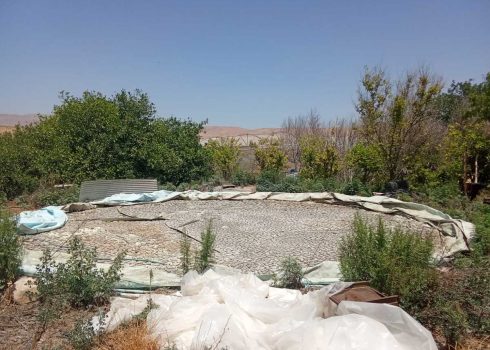
Irrigation pool demolished by owner in Furush Beit Dajan following Civil Administration order Photo: 'Aref Daraghmeh, B'Tselem, B'Tselem
Civil Administration demolishes irrigation pool in Furush Beit Dajan; another pool demolished by owner on authorities’ orders
On Wednesday, 21 May 2025, Civil Administration personnel, escorted by soldiers and equipped with bulldozers, arrived at the village of Furush Beit Dajan in the Jordan Valley and demolished a pool used to irrigate a fruit tree orchard and greenhouses. The forces then proceeded to another irrigation pool, about 500 meters away. They found the landowner had already demolished the pool after receiving a demolition order in January 2025, for fear the forces would also demolish the greenhouses it irrigated.
5 May 2025
Israel demolishes Palestinian homes and agricultural structures, leaving families homeless in the Jordan Valley
On Monday, 5 May 2025, Civil Administration personnel, accompanied by soldiers and two bulldozers, arrived in Khirbet a-Deir in the Jordan Valley. They demolished two homes, leaving two families—five people, including one minor—without shelter.
The forces also destroyed two shacks used as sheep pens, five fodder storage tents, and two outhouses. They vandalized eight water tanks, 28 solar panels, and ten feeding troughs.
5 May 2025
Israel demolished most of the homes in the community of Khirbet Khallet a-Dabe’ in Masafer Yatta, the South Hebron Hills, leaving 49 people, including 27 minors, homeless
On Monday, 5 May 2025, in the morning hours, Civil Administration personnel, escorted by Border Police officers and soldiers and equipped with an excavator and bulldozer, arrived in the community of Khirbet Khallet a-Dabe’ in the South Hebron Hills. The forces demolished ten homes, leaving 49 people, including 27 minors, without shelter. Additionally, the forces demolished 11 sanitation structures, two kitchen structures, 11 water tanks, five water cisterns, three structures used as sheep pens (including a cave), a hospitality hall, an electricity room, a solar power network and water infrastructure.
The community was left with the school building and four residential homes that are still under legal proceedings. Families whose homes were demolished received tents from a humanitarian organization and remained in the community area.
Khirbet Khallet a-Dabe’ is one of the communities in the Masafer Yatta region of the South Hebron Hills, which Israel declared a “closed military zone” in the early 1980s, with the aim of seizing the area and expelling its residents. Since then, the state has prohibited the development of the communities—many of which predate the occupation of the West Bank—prevented their connection to water and electricity infrastructure, and repeatedly demolished their homes, any infrastructure they tried to build, and even the roads leading to the communities. In recent years, the communities have also suffered repeated settler attacks, often with army assistance, which also allows settlers to establish outposts within the declared “firing zone” adjacent to them.
29 Apr 2025
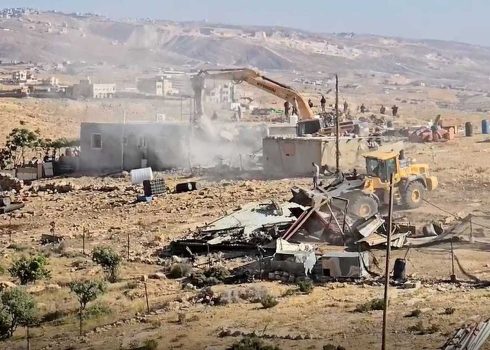
Photo: Demolition of structures in a-Zuweidin. Photo by Nasser Nawaj’ah, B’Tselem
Israel demolishes two homes and other structures, leaving 22 Palestinians homeless
On Tuesday, 29 April 2025, Civil Administration forces, accompanied soldiers and Border Police and equipped with four bulldozers, arrived atin the village of a-Zuweidin in the South Hebron Hills. The force demolished two homes, leaving left two families – 22 people, including 17 minors – homeless. The force also demolished two water cisterns, a shack used as a sheep pen, and three livestock enclosures.
22 Apr 2025
Israel demolishes water cistern and vandalizes water tanks, South Hebron Hills
On Tuesday, 22 April 2025, Civil Administration personnel, accompanied by soldiers and Border Police officers and equipped with a bulldozer, arrived in the community of al-Jawaya, southeast of the town of Yatta in the South Hebron Hills. They demolished a water cistern and vandalized a water tank.
9 Apr 2025
Civil Administration demolishes irrigation pool and confiscates solar panels and generators
On Wednesday, 9 April 2025, at around 10:00 A.M., Civil Administration personnel, escorted by soldiers and equipped with a bulldozer, arrived at the community of Khirbet a-Deir in the Jordan Valley. The forces demolished an irrigation pool and confiscated three solar panels and two generators.
6 Apr 2025
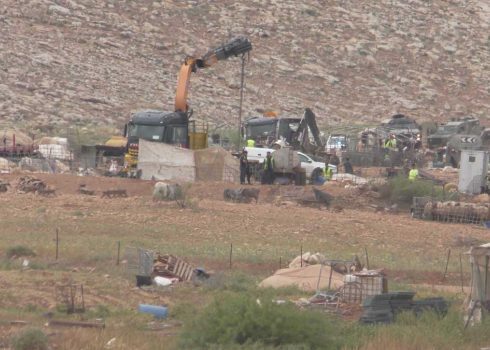
Civil Administration dismantles and confiscates homes of 4 families, leaving 35 people, 15 of them minors, without shelter
On Sunday, 6 April 2025, at around 9:00 A.M., Civil Administration personnel arrived with a bulldozer and trucks, escorted by soldiers and members of the Jordan Valley Settlement Council, to the area of Ras al-Ahmar in the Jordan Valley. The forces dismantled and confiscated eight residential tents, leaving four families – a total of 35 people, 15 of them minors – without shelter. The families had relocated to the area after settler violence drove them out of their homes in Khirbet Samrah about 20 days earlier. The forces also demolished a livestock enclosure and confiscated eight livestock pens, three water tanks, two generators, two solar panels, and two carts used for carrying goods.
31 Mar 2025
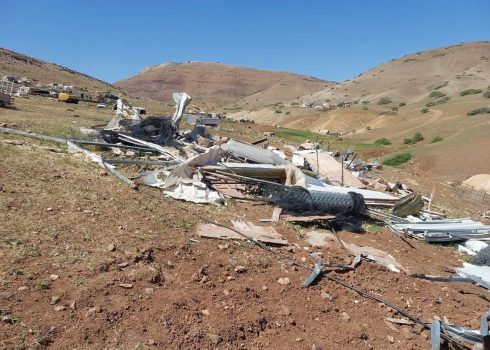
A structure demolished by the Civil Administration in al-Farisiyah (Khallet Khader). Photo by ‘Aref Daraghmeh, B’Tselem
Israel demolished a family's home for the second time in a month, along with additional structures in the Jordan Valley
On Monday, 31 March 2025, at around 8:00 A.M., Civil Administration personnel arrived in the village of Bardalah with a military escort and a digger. The forces demolished a tin-roofed chicken coop under construction. They then proceeded south to the community of al-Farisiyah (Khallet Khader), where they demolished an unoccupied house, an agricultural tent, a sheep pen, and two water tanks, and damaged an irrigation pipe.
From there, the forces continued west to the al-Burj area, where, for the second time in a month, they demolished a family’s shack, home to eight people, including four minors, as well as the family’s sheep pen and outhouse. The family’s home was previously demolished on 25 November 2024.
18 Mar 2025
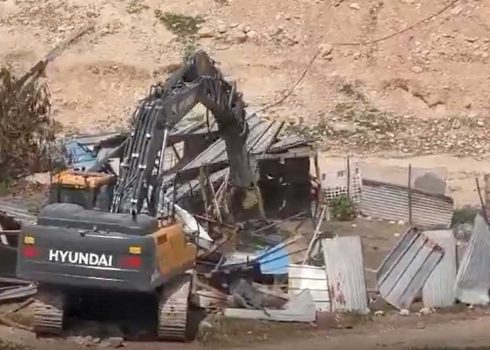
A Civil Administration bulldozer demolishing structures in the community. Photo: ‘Aref Daraghmeh, B’Tselem, 18 Mar. 2025
Israel demolished agricultural structures, water tanks, and 18 solar panels
On Friday, 18 March 2025, Civil Administration personnel, arrived at the Bedouin community of al-Mu’arrajat East (Mleiḥat) in the Jordan Valley escorted by soldiers and members of the Jordan Valley Settlement Council and equipped with a digger. The Israeli forces demolished two shacks used as sheep pens, a livestock enclosure, two troughs, two water tanks, and 18 solar panels.
6 Mar 2025
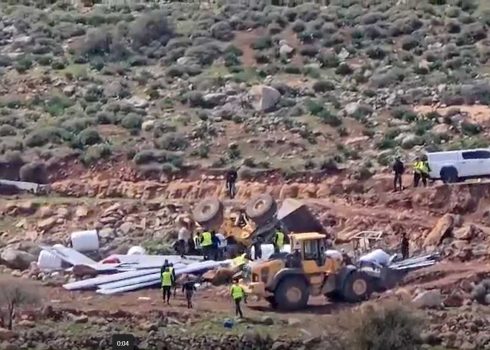
Demolition of structures in Khirbet a-Twayel, 6 March 2025. Photo courtesy of residents
Israel demolished and confiscated five homes, water tanks and additional structures, sealed caves used as livestock enclosures, destroyed a road, and damaged the power grid
On Thursday, 6 March 2025, Civil Administration personnel, accompanied by Border Police officers and equipped with an excavator, arrived at the community of Khirbet a-Twayel in Nablus District. The forces demolished five homes, leaving five families—25 people, including 12 minors—homeless.
The forces also demolished a fence and three shacks used as livestock enclosures, and dismantled and confiscated another shack used as a livestock enclosure and an outhouse. They demolished or confiscated 10 water tanks, sealed two caves used as livestock pens and for storage, destroyed a road, and damaged the community’s power grid.
The structures were erected after the Civil Administration previously demolished the families' homes and livestock enclosures, some on 10 December 2024 and others on 8 January 2025.
6 Mar 2025
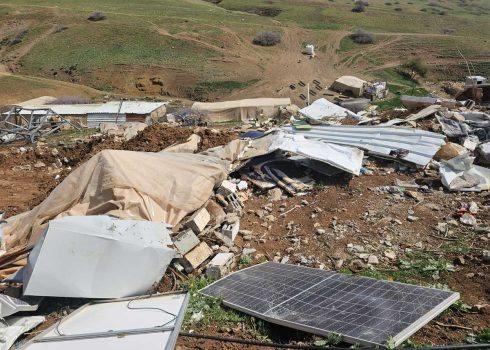
The ruins of the family's home in al-Burj. Photo: 'Aref Daraghmeh, B'Tselem
Israel demolished two homes, a livestock enclosure, solar panels and water tanks in the Jordan Valley
On Thursday, 6 March 2025, at around 9:00 A.M., Civil Administration personnel, accompanied by soldiers and equipped with an excavator, arrived at the community of al-Burj in the northern Jordan Valley. The forces demolished two tents that housed a family of eight, including four minors, as well as a tent used as a kitchen and bathroom, solar panels, and two water tanks belonging to the same family. The residential tents had been erected after the Civil Administration demolished the family’s home on 25 November 2024.
From there, the forces continued to Khirbet Um al-Jamal, where they demolished a residential shack and a livestock enclosure that had been left empty after most of the community’s residents were expelled from their homes under settler threats on 12 August 2024.
Israel’s regime of apartheid and occupation is inextricably bound up in human rights violations. B’Tselem strives to end this regime, as that is the only way forward to a future in which human rights, democracy, liberty and equality are ensured to all people, both Palestinian and Israeli, living between the Jordan River and the Mediterranean Sea.
Since the Hamas attack on 7 October 2023, Israel has acted in a coordinated and deliberate manner to destroy Palestinian society in the Gaza Strip, committing genocide against its residents. In light of Israel’s actions in Gaza, the public statements made by Israeli decision-makers, and the international community’s failure to take effective action, there is a serious risk that the Israeli regime will expand the genocide to other areas under its control—first and foremost, the West Bank.
B’Tselem calls on the Israeli public and the international community to use every tool available under international law to bring an immediate end to Israel’s genocide against the Palestinian people.