The Turmusaya Pogrom: Settlers and soldiers attacked residents. A special police force killed a Palestinian youth
On Wednesday, 21 June 2023, at approximately 1:30 P.M., hundreds of settlers – some of them masked and armed with guns, pistols, metal rods, and Molotov cocktails – entered the village of Turmusaya in
...
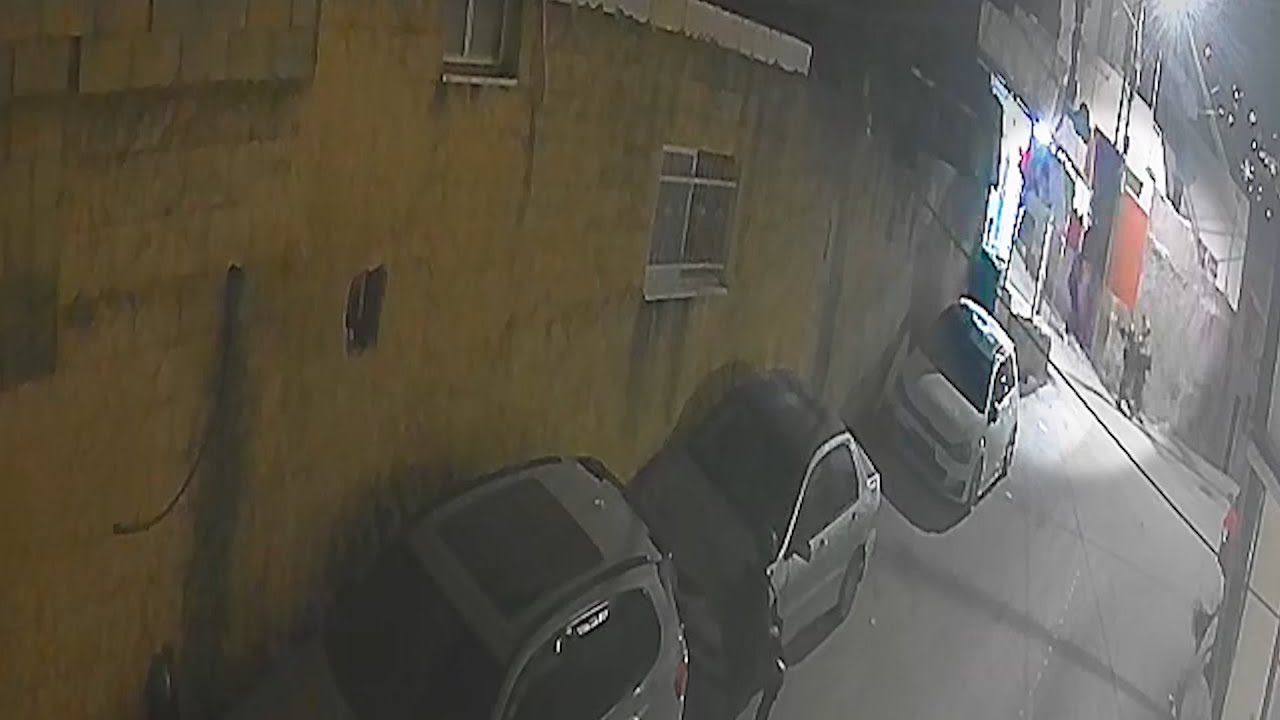
On Wednesday, 21 June 2023, at approximately 1:30 P.M., hundreds of settlers – some of them masked and armed with guns, pistols, metal rods, and Molotov cocktails – entered the village of Turmusaya in the district of Ramallah escorted by soldiers. The settlers entered the northeastern neighborhood of the village, attacked 30 houses and set fire to 10 of them, nine of which completely burned. They also set fire to 27 parked vehicles and dozens of fruit trees in nearby fields. They stoned houses and shattered 34 windows, as well as the windshields of three cars. At one point, a military jeep approached the rioting settlers, and the soldiers threw a single tear gas grenade at them and then left the scene.
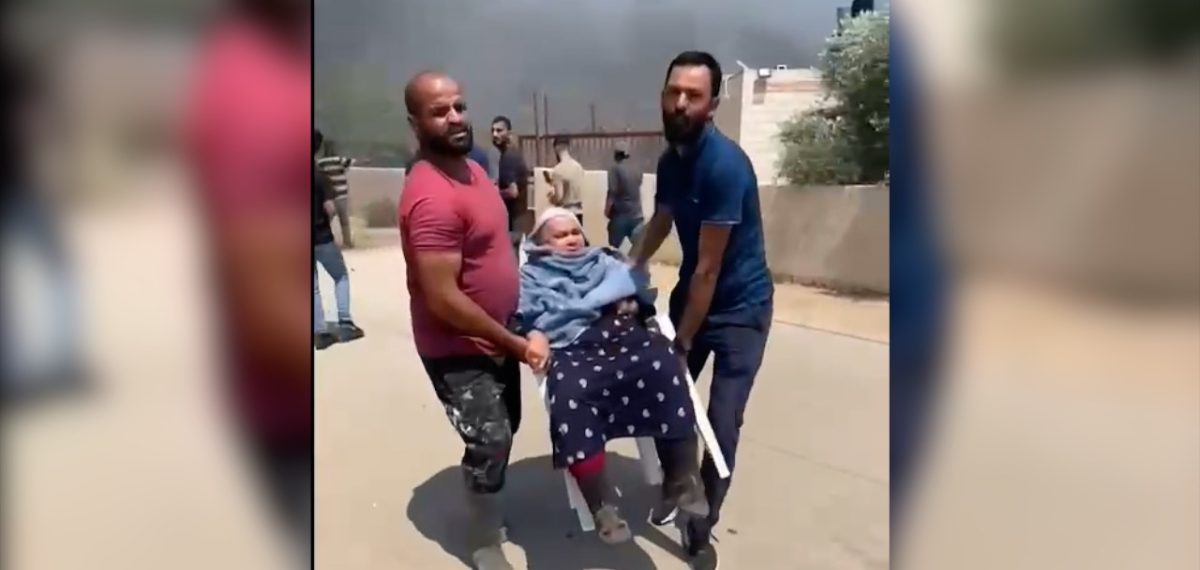
During the attack, two settlers broke into a house, and one of them attacked an elderly woman with pepper spray and a club in front of her eight-year-old grandson. Meanwhile, villagers sat trapped inside their burning houses until fellow residents evacuated them. Israeli soldiers fired live ammunition, rubber-coated metal bullets, and tear gas canisters at the dozens of villagers trying to protect the neighborhood’s residents and fend off the settlers with stones.
B'Tselem field researcher Iyad Hadad collected testimonies from women from the village who were trapped in their homes as the settlers set them on fire:
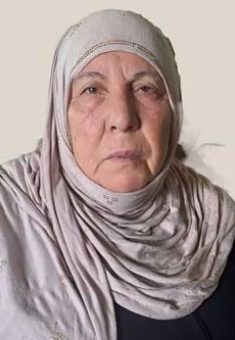
Rabihah Dar 'Awad, 68
Before I could go out to see what was happening, a masked settler appeared at the entrance holding a club and some other object in his hand that I couldn’t identify. The settler sprayed something in my eyes with that object, apparently pepper spray...
I felt my eyes burning. I ran inside the room and he chased me. I was very scared and froze from the shock...
The living room caught fire, and the electricity went out. I began to smell smoke coming from outside and heard the crackling sound of burning furniture.
"I sat down and was so overwhelmed with fear that I couldn't even send a message or make a call. I was terrified...
seem to have fainted. After about half-an-hour, I woke up. Village youth came to rescue me. They lifted me on the plastic chair I was sitting on... I almost burned inside my house...
Does what happened to me seem reasonable to people? How can this just slide by quietly?"
"They set the whole pile on fire.... When they took us out, I saw that all the rooms in the house were filled with smoke that had entered through the balcony and windows, and it was difficult to see anything, like a fog...
I felt serious shortness of breath...There was chaos in the village. The settlers set fire to and destroyed dozens of houses and cars. I have never seen anything like this; it was like watching a war scene on television."
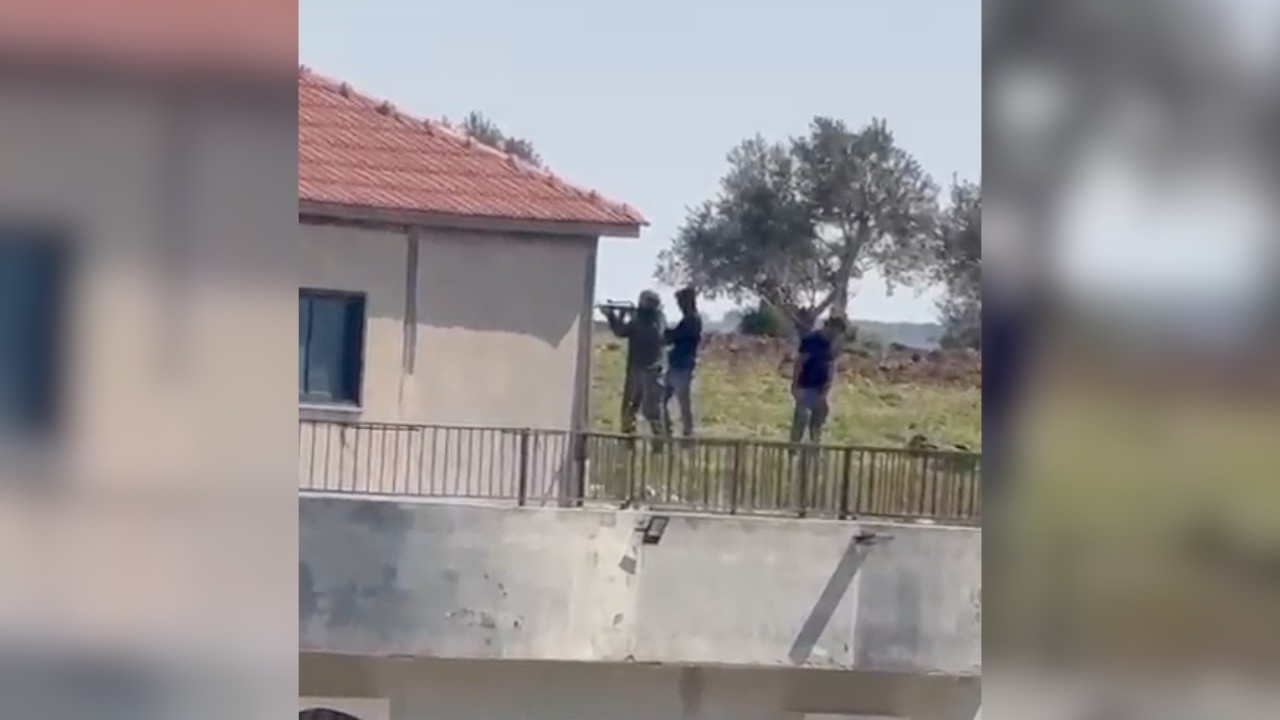
At around 2:30 P.M., when the settlers began retreating from the village towards Route 5055 and the settlement of Shilo, clashes between the village youth and Israeli soldiers and Border Police officers – who also arrived at the scene to protect dozens of settlers who’d gathered on the road – continued. The clashes occurred near an olive grove adjacent to the road. At this point, about 15 additional Border Police officers arrived at the scene and began shooting live fire at the village youth, along with the soldiers and the already-present Border Police officers. Immediately, three young Palestinian men were injured and evacuated from the scene. At around 3:30 P.M., a group of six or seven young men began advancing through the grove towards the road, with one of them setting off flares. Several police officers, from the riot police according to media reports, ambushed the young men between the trees and then fired at them from a distance of 20 to 30 meters. Four of the young men were injured, including Omar Jbarah (24), a resident of village, who was wounded in his chest and fell to the ground. The other young men evacuated the wounded to an ambulance that was waiting approximately 100 meters from the scene. They were taken to the village clinic, and then to the Palestine Medical Complex in Ramallah, where attempts to revive Jbarah failed, and doctors pronounced him dead.
Ten other village residents who were injured from live fire, and one person who inhaled tear gas, were transferred to the Palestine Medical Complex for treatment.
The previous day, Tuesday, 20 June 2023, at around 4 P.M., about 13 settlers arrived at the plots east of the village and set fire to a barley field. About two dunams [1 dunam = 1,000 sq. meters] of crops were damaged, yet the fire did not spread further because the fields were still green.
Soldiers in an army jeep tried to distance the settlers, but when local farmers arrived to fend off the settlers, the soldiers barred them from getting close. After about half an hour, Border Police officers arrived at the scene and removed the settlers. The farmers then left.
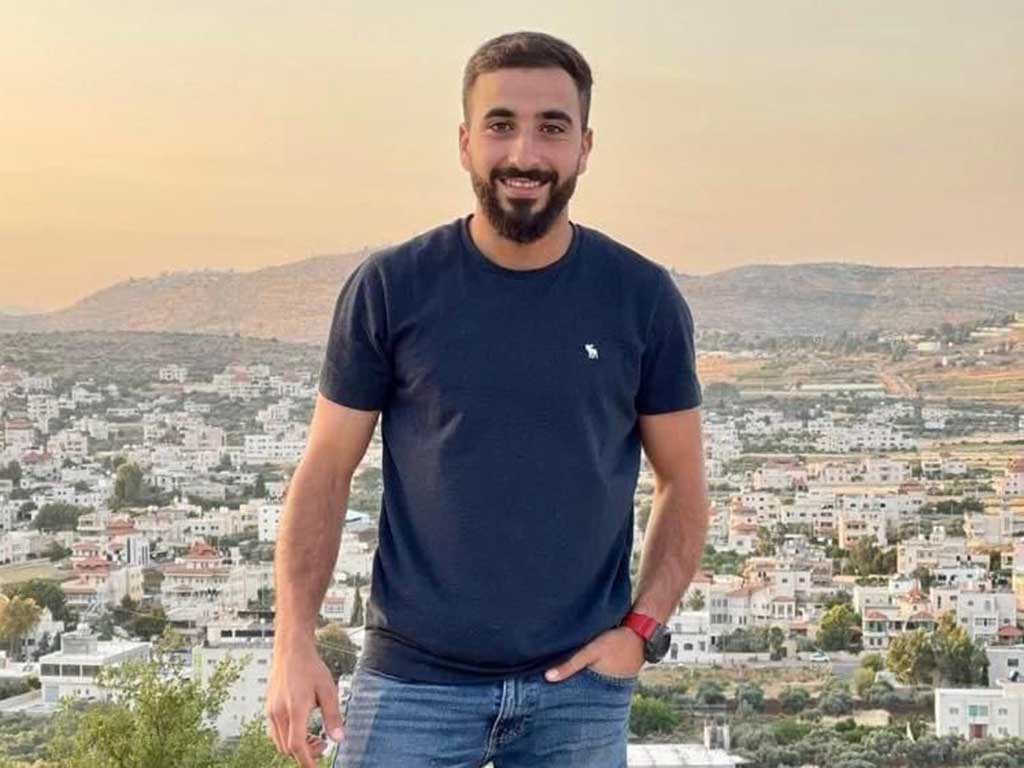
Omar Jbarah. Photo courtesy of the family
Omar Jbarah, a 24-year-old married father of two - three-year-old 'Abdallah and two-year-old Dunia, worked as a contractor and was an amateur soccer player. Below are two of the testimonies B’Tselem field researcher Iyad Hadad collected from witnesses to his killing:
A. K. (40) – a married resident of the village – testified on 22 June 2023:
On Wednesday, 21 June 2023, at 1:30 P.M., I was in my shop in the center of the village when a young man called and told me that settlers had entered and were setting things on fire. I immediately stopped what I was doing and went to see what was happening.
When I arrived in the northeastern part of the village – the part that faces the settlement of Shilo, which is about half a kilometer away – I saw at least 200 settlers spread out on the village streets. They were masked, and at least three of them were armed with rifles. Several others had pistols, and others were holding clubs, sticks and pipes. They set fire to and vandalized houses, cars, trees, plants–everything in their way. They threw Molotov cocktails at buildings and vehicles. It was horrifying. I had never seen such a sight before, only in movies. I heard cries for help coming from every direction. When I arrived, there were only 10 or 20 village youth, but more residents arrived later, and there ended up being dozens of us.
At first, we couldn't do anything. We hid, and every time one of us peeked, the settlers fired in our direction. Within the first 10 minutes, I saw a military jeep enter the neighborhood while the settlers destroyed and burned everything they saw. The soldiers ignored them and just advanced towards us, attempting to evacuate us. They fired tear gas canisters and rubber bullets at us. Clashes erupted on the village streets, mostly involving stone throwing, but also face-to-face clashes. Early into this, I was hit in my stomach by a stone. Meanwhile, some young men were evacuating people who’d been trapped in their homes and putting out fires in houses and on burnt property. At the same time, they pushed back the settlers, preventing them from advancing further into the village.
At around 2:30 P.M., or shortly thereafter, the settlers began to retreat towards the road that leads to Shilo. As they did so, they continued to destroy and burn every house and car they passed. Meanwhile, three military jeeps entered the village and patrolled among the houses. They passed the settlers who were burning and destroying our land, but did nothing to them, and then pushed away village youth who were chasing after the retreating settlers. Then, clashes erupted between villagers and the army, which had entered deeper into the village. The soldiers left and went to secure the retreating settlers. In the process, they fired tear gas canisters, and rubber and sponge bullets.
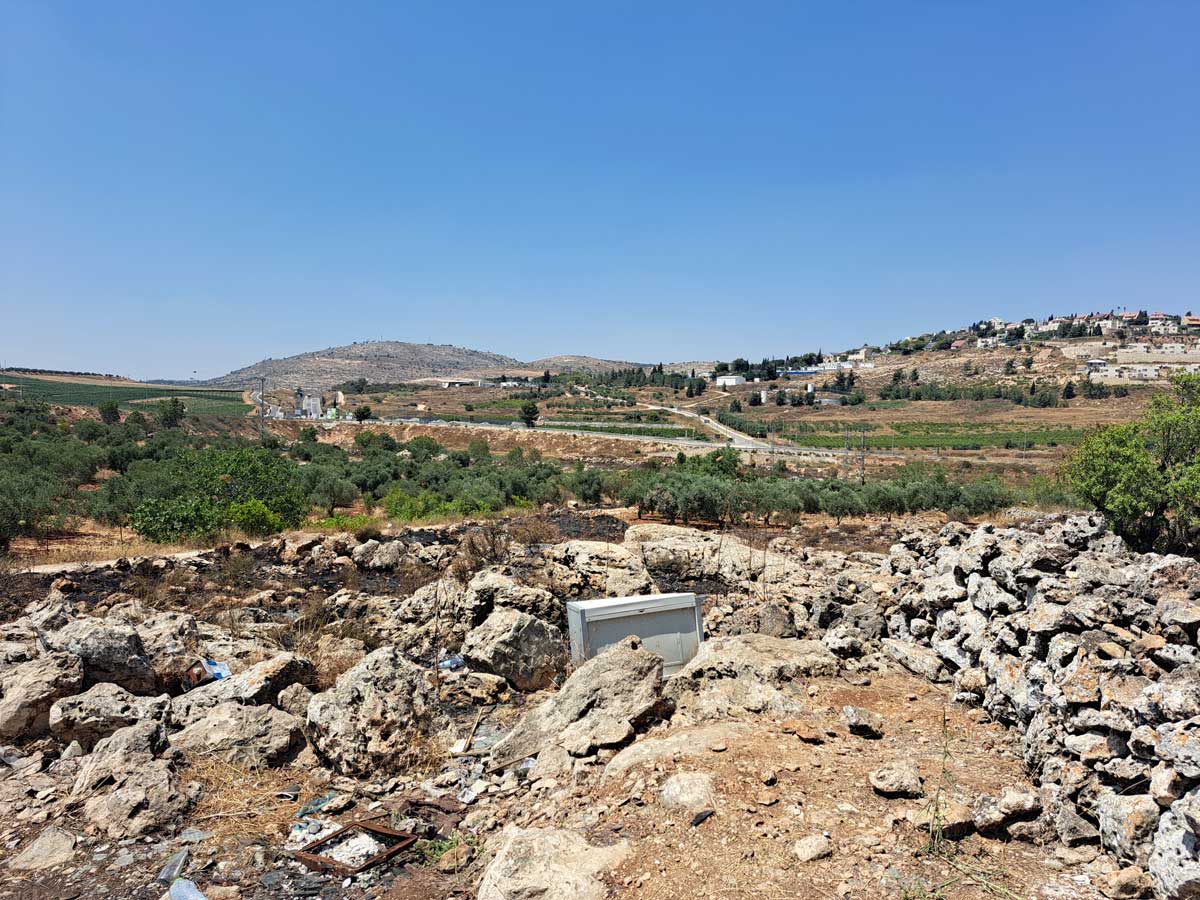
When the clashes moved to the outskirts of the village, dozens more Border Police officers and soldiers showed up. The settlers gathered on the road to Shilo and celebrated their actions. Dozens of army vehicles were stationed on the road, and the confrontations happened mainly in the orchards and rocky valleys between Shilo and Ahmed Abu 'Awad’s home, approximately 200 meters from us.
Around 3 P.M., two or three black GMC vehicles arrived, stopped on the Shilo road. Between 10 and 12 Border Police officers [riot police] in black uniforms got out, wearing helmets and transparent face shields. They divided into two groups and went in different directions, firing live ammunition together with the forces that were already there. At this stage, most of the shooting was live fire, because though they’d initially used tear gas, the wind was not in their favor. Around 3:20 P.M., approximately 10 or 15 minutes after the new police officers arrived, two or three young people east of me were hit by live fire.
At 3:25 P.M., several of the officers, maybe five, sneaked between the trees into the orchard. There were about six or seven of us, and someone fired a flare. No one noticed the officers sneaking up on us except Omar Jbarah, who saw them when they were about 20 or 30 meters away. He tried to warn us, but he barely had time to say something before they opened fire on us. Three or four young men were hit one after the other. I heard a lot of gunfire, more than one shooter. I was lightly injured by a rubber bullet or a live bullet, just a scratch on my leg. I didn't even realize it at that moment.
I saw that Omar was hit, as well as another youth who was injured in his right thight. A bone was protruding from his body, and his condition was severe. I started to help him, but then I left him because I noticed that Omar was in an even worse condition. I saw him convulsing and struggling. He was hit in the chest. Suddenly his body went limp. I thought he had lost consciousness or had died. I lifted him but had difficulty carrying him away. One of the young men took him from me, and then others helped him move Omar to an ambulance that was about 100 meters away. I was completely hysterical and wanted to be taken to the ambulance as well. Two more injured people were directed to another ambulance.
I rode with a few of the youth in a private car to the village clinic, following the ambulances. The doctor performed CPR on Omar while he seemed to be taking his last breaths. He remained there for 10 or 15 minutes, and then they transferred him in an ambulance to the Palestine Medical Complex. I arrived there afterwards. By the time I got there, Omar wasn’t showing signs of life, but they still tried to resuscitate him to no avail. At 4:50 P.M., the Palestinian Ministry of Health officially announced his death.
Scene of Omar Jbarah's killing. Photo by Iyad Haddad, Be'Tselem
B. J. testified the following on 24 June 2023:
At 2:30 P.M., settlers began retreating to Shilo. Border Police officers arrived at the scene and began dispersing villagers. Clashes ensued between the police and dozens of youth, while other villagers attempted to extinguish the fires and rescue people trapped in burning houses.
At around 3:30 PM, I entered an olive grove along with six other young men, including Omar Jbarah. The rest of the village youth were spread out on the hill behind us. We advanced towards the police officers who were gathered with settlers on Route 60, about 200 meters from us reinforced by Israeli forces of all types, and prepared to repel them. A group of settlers attempted to advance towards our village through the fields, and one of the youth fired warning shots to scare them away. There were around 15 Border Police officers who advanced ahead of the settlers. They fired live ammunition and hit several youth who were in another orchard.
As we watched the advancing settlers, a group of Border Police officers surrounded us without our noticing. Omar was the first to spot them and tried to warn us, but they emerged from the trees and opened live fire on him and us. I think more than one officer fired. They shot dozens of rounds. The officers hit three or four people, including myself and Omar. I was hit in my right thigh and fell to the ground. I couldn't stand up. My leg was bleeding heavily, and I couldn’t feel it. I was certain that the bone was broken. I cried for help. I saw Omar get hit, and he fell on his back beside me. I think I heard him whispering the Shahada, and then I stopped hearing him. His eyes rolled to the back of his head. Another guy next to us – someone I didn't know – was also injured. Someone lifted me and tried giving me first aid, but then he saw that Omar was more severely injured and went to him. They moved Omar to the ambulance that was about 100 meters away from us.
They took me along with someone else to a different ambulance, which took us to the village clinic. There, they also attended to Omar. They provided us with initial aid, cleaned and bandaged our wounds, and performed CPR on Omar. It was clear that these were his last breaths. Afterwards, they took him in ambulance to the Palestine Medical Complex in Ramallah. They also took me and someone else there in a separate ambulance. We arrived at 4:20 P.M. At the hospital, they told me I needed surgery to fix the broken bone. At 7:00 PM, they took me into a five-hour surgery and put a titanium implant in my leg. I won't be able to put weight on it for a long time.
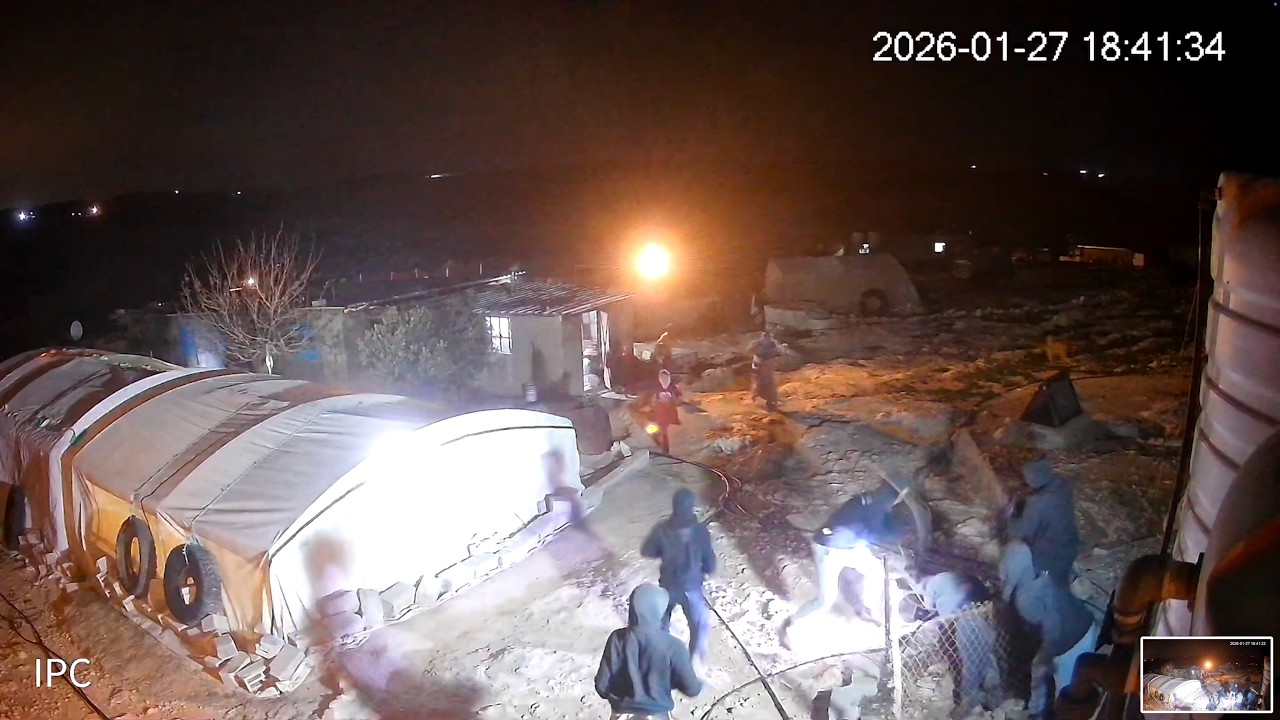
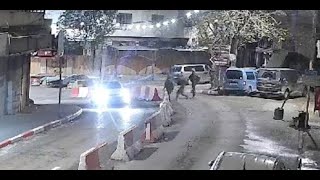
* Security cameras footage courtesy of Mujahed Shalabi.
Israel’s regime of apartheid and occupation is inextricably bound up in human rights violations. B’Tselem strives to end this regime, as that is the only way forward to a future in which human rights, democracy, liberty and equality are ensured to all people, both Palestinian and Israeli, living between the Jordan River and the Mediterranean Sea.
Since the Hamas attack on 7 October 2023, Israel has acted in a coordinated and deliberate manner to destroy Palestinian society in the Gaza Strip, committing genocide against its residents. In light of Israel’s actions in Gaza, the public statements made by Israeli decision-makers, and the international community’s failure to take effective action, there is a serious risk that the Israeli regime will expand the genocide to other areas under its control—first and foremost, the West Bank.
B’Tselem calls on the Israeli public and the international community to use every tool available under international law to bring an immediate end to Israel’s genocide against the Palestinian people.