Menu
From the field
Topics

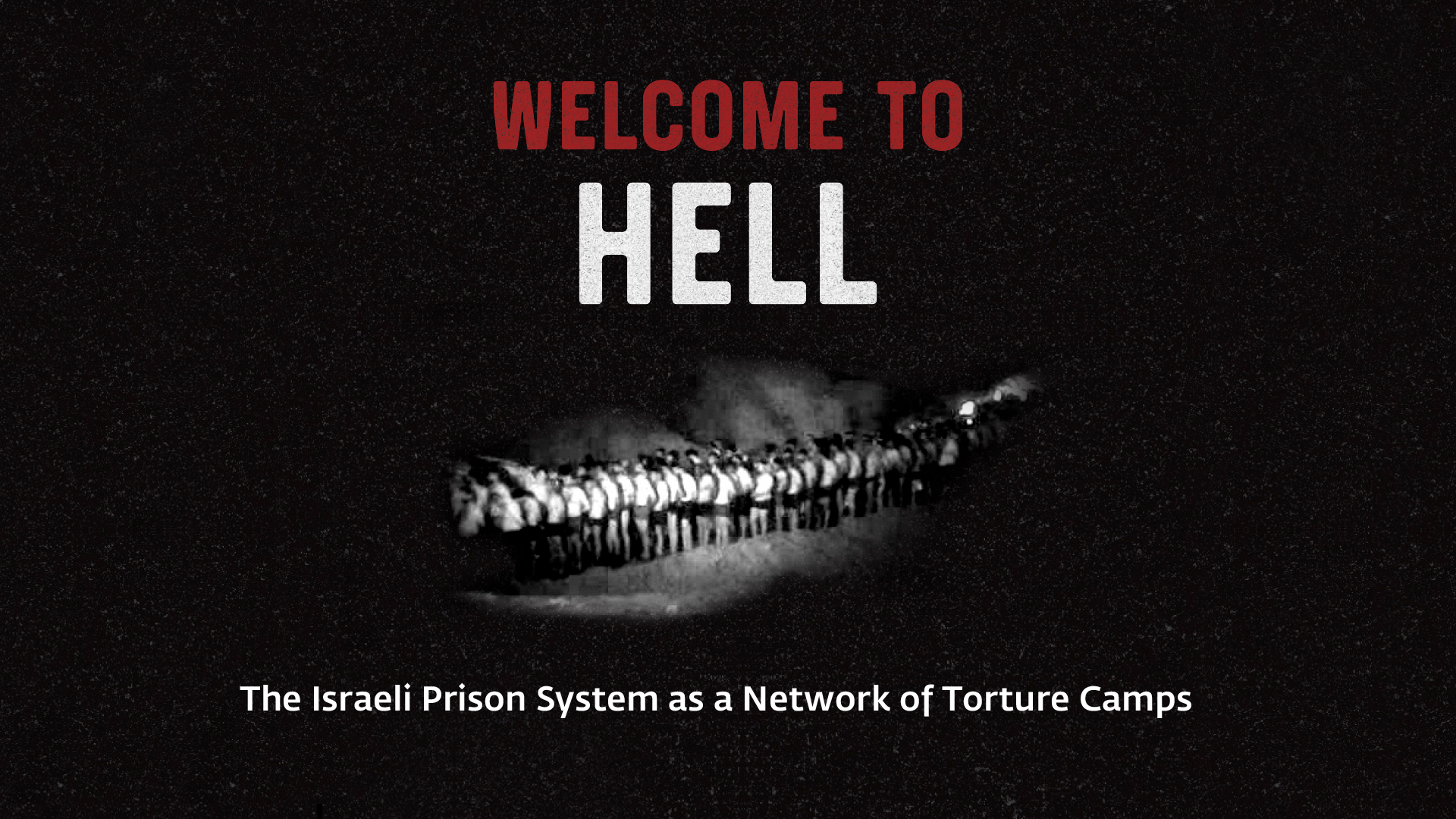
Welcome to Hell: The Israeli Prison System as a Network of Torture Camps

“Welcome to Hell” is a report on the abuse and inhuman treatment of Palestinians held in Israeli custody since 7 October 2023. B’Tselem collected testimonies from 55 Palestinians held during that time and released, almost all with no charges. Their testimonies reveal the outcomes of the rushed transformation of more than a dozen Israeli prison facilities, military and civilian, into a network of camps dedicated to the abuse of inmates as a matter of policy. Facilities in which every inmate is deliberately subjected to harsh, relentless pain and suffering operate as de-facto torture camps.
Physical and psychological abuse in Israeli prisons
Absence and denial of medical treatment in Israeli prisons
Food deprivation and starvation in Israeli prisons

"We were taken to Megiddo. When we got off the bus, a soldier said to us: "Welcome to hell."

From the testimony of Fouad Hassan 45, from Qusrah in Nablus District
We arrived at the transit wing of Ramla Prison. While they walked us there, the guards punched us in the head several times. When they released our hands from the zip ties, they would release one hand and tie the other hand. I felt like my wrist was going to break.
They blindfolded me with a piece of cloth and handcuffed me in front with white zip ties.There were six of us girls. One of the girls was in pain. The soldiers asked me to translate what she was saying into English, and I translated that she thought she’d miscarried. One of the soldiers said, ‘Oh my God.’ A doctor came in and covered her with a blanket. She was told to put on shoes, so she wouldn’t be so cold. The soldiers told us to sleep, but it was too cold and we were lying handcuffed on rocks, so we weren’t really able to.
These invasions of our cells by men were a serious violation of our privacy. They entered unannounced, when some of the inmates didn’t have their headscarves on and weren’t dressed modestly. This time, they confiscated the tables and chairs and even the shoes, and beat us with batons.
They put cigarettes out in my mouth and on my body. They put clamps on my testicles that were attached to something heavy. It went on like that for a whole day. My testicles swelled up and my left ear bled. I was asked about Hamas leaders and people I didn’t know and hadn’t met. They asked me where I was on 7 October, and I said I was at home and had only gone out to get food for my wife. They beat me. Then they put me back in the freezing room with the loud disco music, and again left me there, naked, for two days.
We had to wait in line to shower before prayers and to use the toilet. The smell in the cell was terrible. When we entered the prison, they took our clothes and we were left only with the uniforms they gave us, so there was no way to change our clothes or wash them.  
The whole way, they hit us hard with their guns, stomped all over our bodies and swore at us. They also used tasers to give us electric shocks all over our bodies. We got to a detention facility. I didn’t know where it was or what the place was called. When they took us off the truck, they dropped me face down on the ground. My jaw got injured and felt like it was broken, and some of my teeth fell out.
The guards turned very violent after the war broke out. One day, I heard shouts from the inmates in the next cell. Later, I found out that one of them asked a guard if there was a ceasefire or any sort of solution because we weren’t getting any news from the outside, and in response to that question, they beat him to death. The guards simply left him there for half an hour after the assault.
Before they released me, they strip-searched me again, and an officer threatened me that if my family celebrated my release they would hurt us. Then we were transferred to Ofer Prison, where they kept us for about 12 hours without food or water in a small, dirty and smelly room.
The room was just walls and concrete. I saw the mattresses and blankets at the cell door; they took them out before putting us in. I was wearing only shorts and a short-sleeved shirt, and I was cold. I pulled my knees to my chest to try to sleep, but I could only manage to fall asleep for a few minutes at a time, and even then, only out of sheer exhaustion.
An interrogator came in and asked me in English what I thought about what Hamas did. He swore at me and called me “whore”. He said there were 20 soldiers in the room and that they would rape me like Hamas-ISIS raped Jewish women in southern Israel. He kept swearing at me, and threatening me and my family. Then a female soldier came and took me to another room with more female soldiers, who told me: “Welcome to hell” [...]
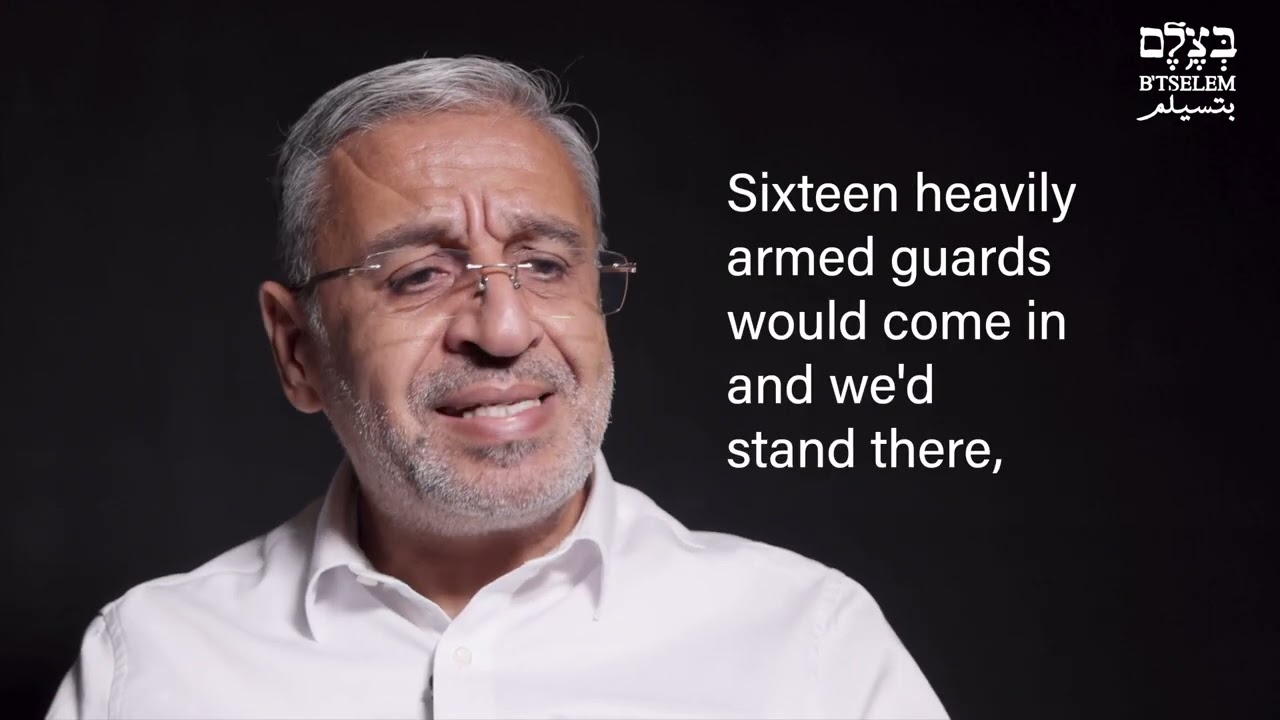
A week later, on 14 October 2023, they started a campaign of revenge against the inmates. It started with all of us being taken out of our cells and made to stand outside while the guards searched them. While we were standing outside, the guards pounced on us and started hitting and kicking us. When the search was over, they put us back in different cells than the ones we were in before.
I also wondered why they arrested me. Why are they still holding me? What will happen to me here? When will they let me go? I thought about my difficult situation, especially the darkness I was drowning in under the blindfold without seeing anything, about the fierce cold and the strong wind. I was freezing all the time, and hungry and thirsty.
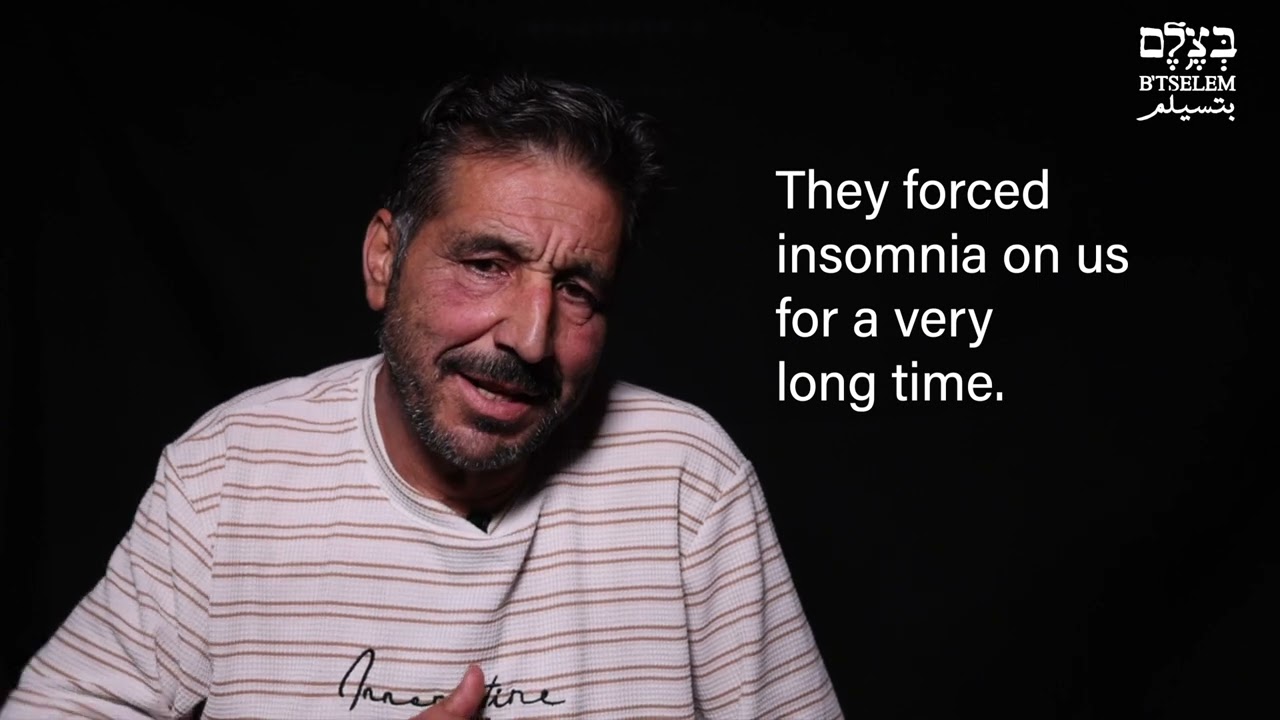
Every day, the soldiers ordered us to sit on our knees from 5:00 A.M. until the evening. We ate and drank with our hands tied in front of us. If we looked sideways, or even spoke to one another, they would punish us and make us stand with our hands raised for about three hours. On top of that, they didn’t let us go to the bathroom when we asked, and they didn’t always let us pray, either.
Once, a detainee from Balata Refugee Camp joined our cell. I don’t remember his name. He was injured in the hand and hip and was in severe pain. He asked for treatment, but they only gave him painkillers once a week and ointment for his wounds. I would wake up at night from his groans of pain.  
There was a huge Israeli flag on the wall. The first question the Shin Bet officer asked was: “Which organization do you belong to?” Then he ordered me to kiss the flag while I was being filmed. There were about 20 soldiers in the room. I told the officer I wouldn’t do it, and he said, “You have to kiss the flag.” I told him “No, I don’t want to.” Suddenly, the 20 soldiers in the room started beating me.
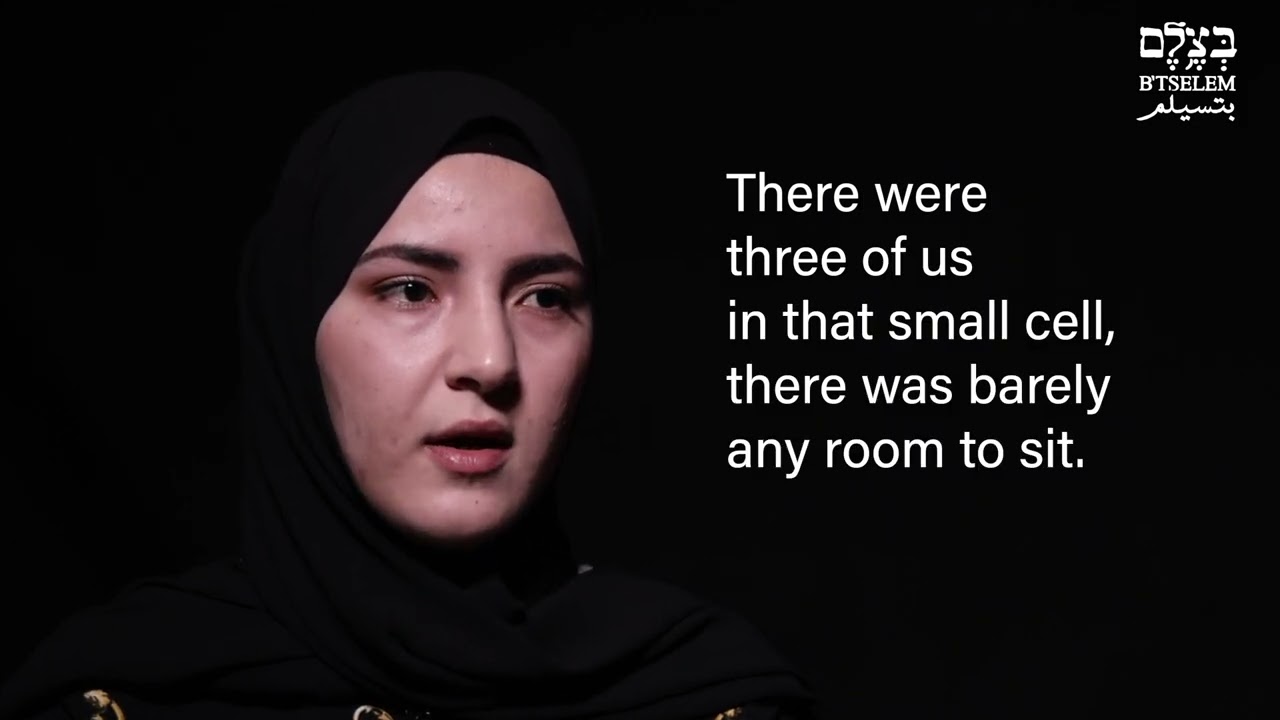
We were taken to Ofer Prison. When we were let out there, I was taken to a doctor and he asked if I had any illnesses. I answered no, and he said, "Too bad." They took my clothes away and gave me a shirt and pants. I saw that all the detainees were given the same clothes. Then they took me to a cell that was meant for six detainees but had 10 people in it
In the evening, they took me and about 15 other women they arrested to another place. They told us we were in an Israeli military detention facility. Every time I moved, I got hit on the head. Every time I heard soldiers’ voices, I was afraid I’d get hit again. They kept cocking their weapons to scare us. Every time I heard that, I recited the “shahadatein” because I was sure they were going to shoot me. Our hands were tied in zip ties the whole time.
When the war broke out, everything changed. As soon as it started, special forces raided our cells and took away the TVs, hot plates and kettles. They locked us in and didn’t allow us out of the cells. Until then, I was in a cell with five inmates. They transferred me and two others to a cell that already had five inmates, so the three of us had to sleep on the floor. I really suffered from the cold, especially because the guards took all my clothes and left me only a tank top and shorts.
We were handcuffed and blindfolded, and then, they put us in a big pit and left us there in the heat for about six hours. At first, we thought they were going to dump the sand on us and bury us alive, but they took us out of there and took us to a detention facility that I don’t know the name of. The trip there took about four hours, and the soldiers beat, humiliated and swore at us the whole way.
We weren’t given food often, maybe once every day and a half, and only a little bit. Most of the day, we were ordered to kneel. Once in a while we were beaten, threatened with weapons, and sometimes even shot between our legs.
They put me in a jeep again, with other detainees, and transferred us to a large structure that had a rough floor, like concrete, and a tin roof. The sides were open and it was very, very cold. There were a lot of detainees there. When we got there, they blindfolded us and ordered us to kneel down on our knees. I was held there for 35 days, and all that time we were not allowed to move or speak to each other. We ate and slept with our hands tied and our eyes covered.
I was released on 30 March 2024. I was taken out of my cell at 7:30 in the morning and brought to a different room, where they forced me to wait in the same painful position - kneeling with my head on the ground and my hands on my head. They kept me like that for four hours without food or water and without going to the bathroom. All this time my family members were waiting for me outside the prison.
Life in prison continued as usual until 7 October 2023. After that, it was like living inside a tsunami. That day, I woke up for dawn prayers. I heard inmates in the cells telling each other to look at the TV. We started following the news. After three hours, we heard explosions in the area around the prison, and then all the guards fled, leaving us alone. We were afraid a missile would hit the prison while we were locked in. Later, the prison administration locked the cell doors and cut off the electricity in the wings and cells. From that day until the day I was released, we didn’t see the light of day.
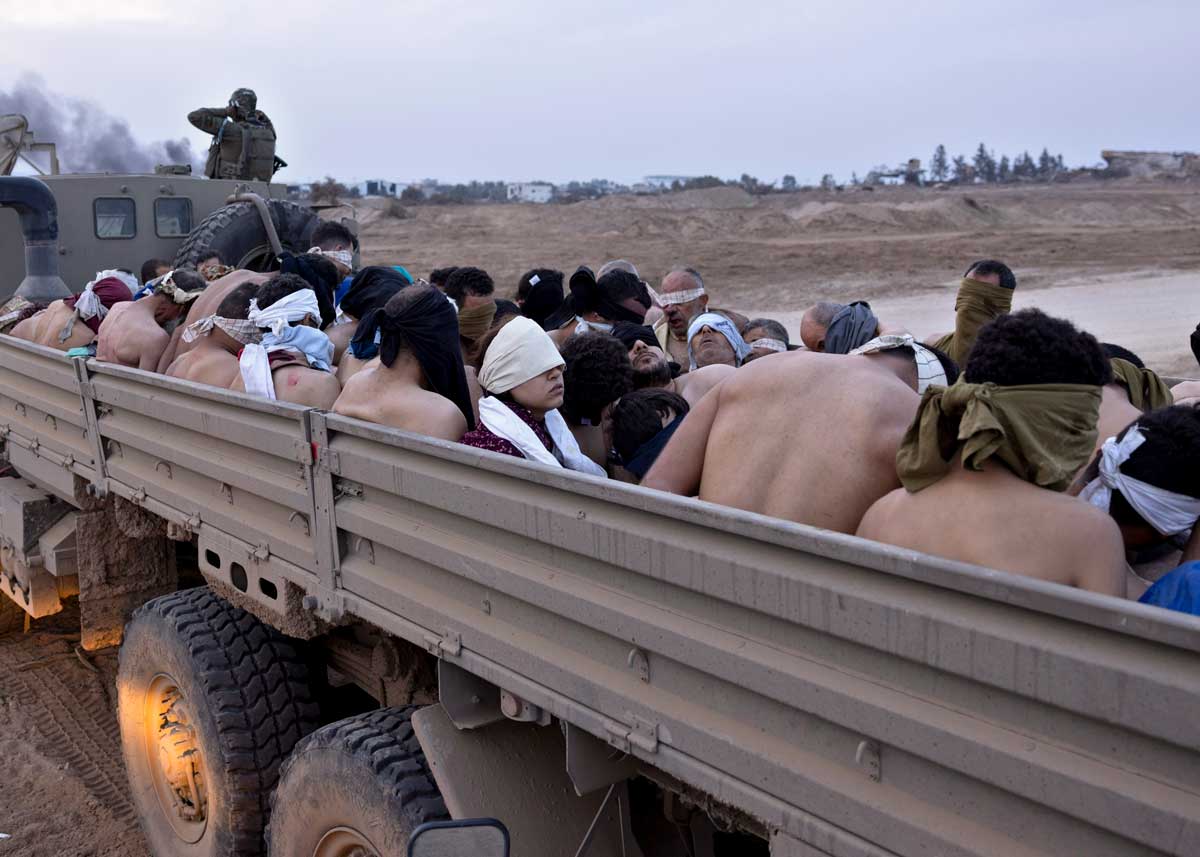
I was put in a pit in the ground. When I was in it, with all the other detainees, the soldiers ordered me to take off my hijab. One of them told me: “I killed your husband and I want to bury you alive. Let the dogs eat you.” About half an hour later, they took us out of the pit and put us on a truck. There were men inside who were right up against me. At that point, I thought my husband had been killed. After I was released, I saw a photo they took of us in the truck. I’m in that photo.
The scariest part of that time was at night. Forces would burst into the cell at night, explicitly threaten to kill us and beat us severely. They also played loud music at night. All that time, we still had no blankets or mattresses. We barely survived those 10 days. We felt that death was hovering over us every minute.
Before roll call, they yelled on the loudspeakers: “Prisoners in the ISIS wings, all of you get down on your knees and keep your heads down and hands on your heads, facing the wall.” That’s how we found out there was a new roll call protocol.
I didn’t understand how this was happening to me at my age, and it was very difficult to see the degradation of those around me. I couldn’t grasp it. We didn’t sleep at all the first night. There was a window in the cell, through which we heard detainees crying and shouting while guards beat them. The guards yelled out demands that they bark like dogs. We heard some of the detainees actually bark after they were hit. The guards laughed, of course.
They put me on a bus, and I could see under the blindfold that there was no one there except the driver. Eight soldiers got in after me and swore at me. One of them hit me hard on the head and on the shoulder. The bus started driving, and after about 10 minutes we got to a camp I didn’t know. The soldiers took me out, and then a soldier punched me hard on the head.
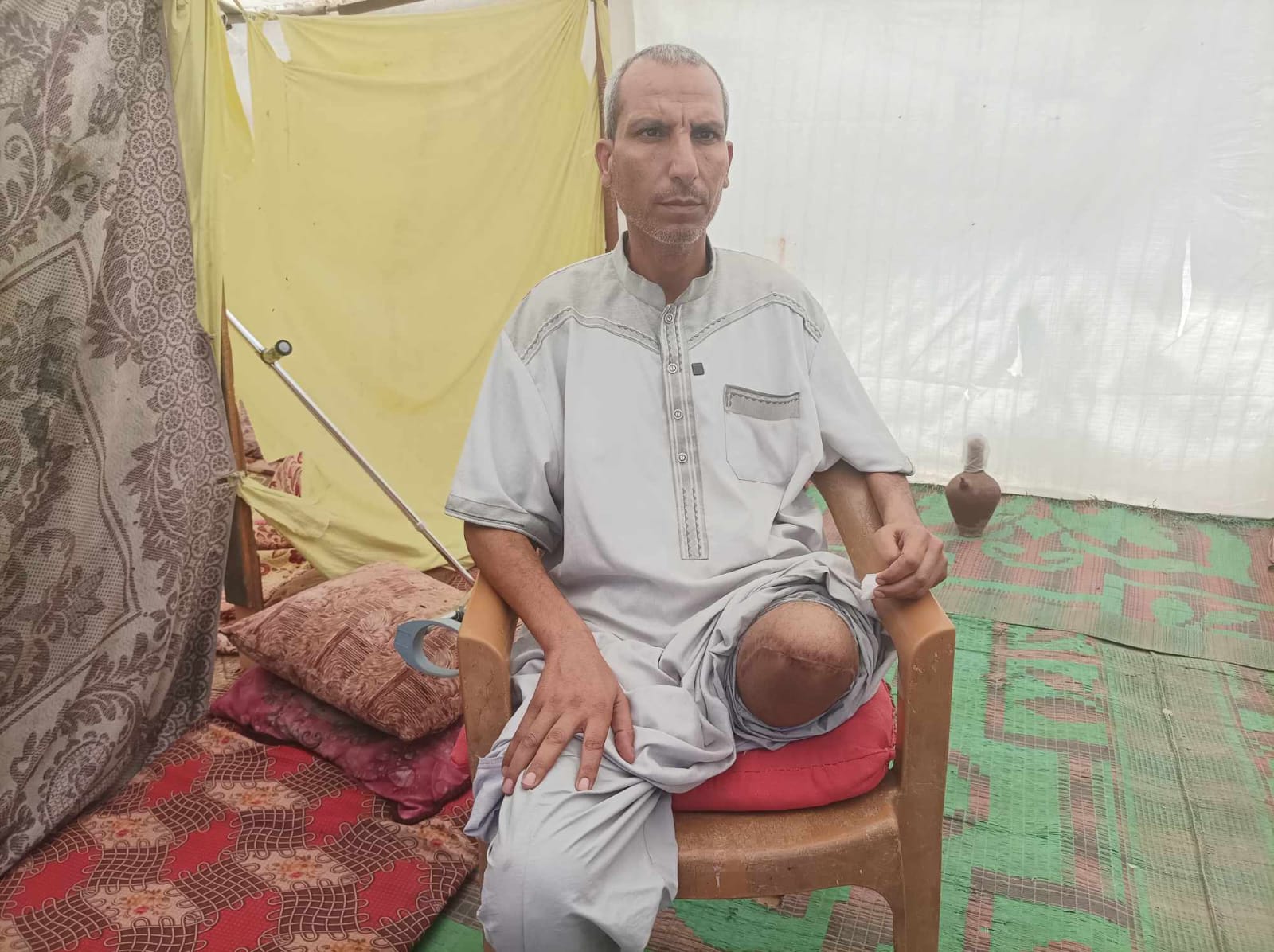
When I got to the hospital, I heard them saying ‘Shiba in Tel Hashomer.’ A vascular doctor came and told me: “Your leg needs to be amputated. We need to consult an orthopedist.” The soldiers laughed and made fun of me: “Cut off his leg [...] When the orthopedist came and examined me, he told me: “You have to choose: Your leg or your life. It’s your choice.” It was the hardest decision I ever had to make.
One of the guards threatened me that if I mentioned the name of any guard on his shift to the judge or to anyone else, he would punish me. He said there were no laws in the prison except his law. He threatened me in front of other prisoners, saying that when I was released, he would send a special unit to kill me in Um al-Fahem.
During that period, I lost 35 kilos because the food was so poor in quality and quantity. I remember the rice the guards would bring us. It felt like it was just soaked in hot water without being cooked at all. We had to eat it, and anyway each prisoner was given only one or two spoonfuls per meal.
It was nighttime. They loaded us onto an armored personnel carrier (APC). They tied our feet, too, but didn’t cover our eyes. The zip ties hurt me a lot. They took us to a building with soldiers in it. I think it was still in Khan Yunis. They covered my eyes with a piece of cloth, and I heard them ordering the young men to strip down. Then they hit me with a rifle on my neck and head, and hit the young men, too – I heard them shouting in pain.
Since 7 October, we were only allowed out for the shower, and we’d look there for the few rays of sunlight that came through a hole in the wall. On the days we couldn’t shower, I bathed in the toilet bowl with cold water, using the pitcher for hand washing before prayers.
They set dogs on us, beat us badly and hurled insults at us. Before we went into the cells, they took me and another detainee to a room where they sat us in front of a computer to participate in a live court hearing. Before the hearing began, we were attacked and beaten hard with metal batons all over our bodies for more than 30 minutes.
When the doctor saw my yellowish face, exhaustion and severe weight loss, he called the officer responsible for the prison in front of me and said that if I stayed in that condition, my life would be in danger. But the prison administration didn't care. After the visit to the hospital, they beat me again.
We were taken out of the cage and dragged to a bus, like animals. The bus started driving and the whole way, the female soldiers guarding us wouldn’t let us lift our heads. They swore at us, hit us on our hands and took pictures of us. After some time, the bus stopped. We were taken off it and each asked our name and photographed. A female soldier grabbed us by the head and ordered us to kiss the Israeli flag. Another female soldier bashed my head against the side of the bus.
The feeling of insult and degradation was worse than the pain. That morning I was the victim, and the following day the female guards attacked another inmate the same way. They also threw her underwear in the toilet and beat her in the toilet. I understood that every day, during the search, they would choose another inmate to punish.
I was taken to an iron cage where I stayed with other female detainees for 11 days. My hands were in zip ties the whole time. We were given very little food. I barely even ate that so I wouldn’t have to go to the bathroom, which was far away and didn’t have a tap. If you were menstruating, you got one pad. In the bathroom, we helped each other. There was no shower, either. There were male and female soldiers around us all the time, and they wouldn’t let us sleep. They would turn on the light, turn on speakers, eat in front of us and swear at us.
I was kept there with my hands in metal handcuffs day and night, and sometimes my legs, too. Sometimes they hung me by one hand and left me like that for three or four hours until I fainted. I couldn’t move the other hand because my shoulder must have been broken from the beatings when the platinum came out [...] I was taken to the interrogation room about 5 or 6 times and asked about my friends and neighbors and whether I had undergone military training. All they gave us to eat was a slice of bread, a cucumber and a small piece of cheese. Now and then we got some tuna fish and a bit of water to drink.
On 7 October 2023 the prison administration came and told us it was forbidden to give medical treatment to “security” prisoners, except ones who had diabetes or high blood pressure. And really, no one got treatment [...] on 7 October 2023. Then the prison administration came and told us it was forbidden to give medical treatment to “security” prisoners, except ones who had diabetes or high blood pressure. And really, no one got treatment. His stomach was always bloated [...] After I was released, I found out that Muhammad a-Sabbar died in prison.
The soldiers dragged me on the ground until we reached a yard, where they made me sit on the ground. They forced me to lie face down, and sometimes on my back. They hit me with their guns all over my body, with the butts and with the barrels. They also kicked me in the ribs on both sides of my body, and in the back. I couldn’t take it and asked them again and again to stop, but then the soldiers just beat me harder on purpose.
We were taken to a room which had a lot of clothes, shoes, rings and watches scattered in it. We were stripped naked and even had to take off our underwear. We were searched with a hand-held metal detector. They forced us to spread our legs and then sit half crouching. Then they started hitting us on our private parts with the detector. They rained blows down on us.
They forced us to kneel in a prostration position, with our hands still cuffed and our eyes covered. We stayed like that for about two hours, and if a detainee dared move, even a bit, he was beaten. One of the soldiers asked me what I did for a living, and when I told him I was a surgeon in the Indonesian Hospital, he attacked me and kicked me really hard.
Underneath the blindfold, I could see other detainees sitting on the ground in the yard, handcuffed and blindfolded. The soldiers hurled insults and curses at them. We were taken to an infirmary and sat on metal chairs. A military doctor arrived and cursed us, too. I speak Hebrew, and I heard him say to the officer: Why did you bring them here? It would have been enough to shoot them in the head.
The soldier told me: “Get down on the ground and crawl.” He also ordered me to strip completely, including my underwear. I took all my clothes off and when I was naked, a soldier came up from behind and hit me hard on the right side of my back with his hand, which was in a glove with a hard part. It still hurts where he hit me. Then he tied my hands behind my back and blindfolded me.
The interrogator repeatedly said to me “You’re Hamas,” “You’re a Hamas commander in the northern Gaza Strip,” and “We have information that you’re a Hamas supporter.” This time the interrogation included the “shabach” position: I was tied up while standing on tiptoes, with my arms stretched up and back. They left me in that position for two hours.