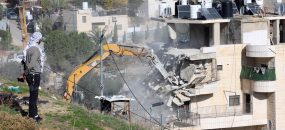
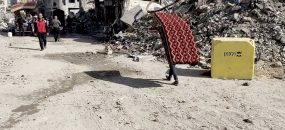
Israel is drastically restricting movement in the West Bank since the start of the Gaza war, disrupting the lives of 2 million Palestinians
Restricting movement is a major tool Israel uses to enforce its apartheid regime and control the Palestinian population in the Occupied Territories. The limitations are imposed on Palestinians wishing to move within the West Bank, travel between the West Bank and Gaza, enter Israel or travel abroad. For decades, Israel has imposed these restrictions on Palestinians only, while Israelis – including settlers – and other nationals move about freely.
Since 7 October 2023, Israel has extremely tightened the restrictions, using its network of checkpoints to tighten supervision, setting up dozens of new checkpoints, blocking access from dozens of villages to main roads, and revoking all permits for Palestinians to enter Israel for work or other reasons.
These restrictions do not allow Palestinians in the West Bank to maintain a reasonable routine and disrupt every area of life. They cause major financial losses, limit access to medical care and studies, and harm family life and social activities. They also create a state of constant uncertainty that makes it difficult to stick to a schedule: Palestinians who set out from home in the West Bank cannot know whether they will make it to work or when, whether they can keep a medical appointment and whether they can visit family. They may arrive, they may wait for hours at a checkpoint and be humiliated by soldiers, they may have to turn around and go home, or they may be arrested.
Below are a map and a description of the movement restrictions in Nablus, Ramallah, Bethlehem and Hebron:
 Closed road gate
 Open road gate
 Dirt mound/rocks/concrete blocks
 Internal Checkpoint (Since 7 Oct. 2023)
 Last Checkpoint before Israel
 Internal Checkpoint, Intermittently staffed
 Internal Checkpoint, Permanently staffed
 Roadblock (Hebron)
Nablus District
Israel has closed Huwarah checkpoint completely to Palestinian movement, tightened restrictions in two other checkpoints, and opened a checkpoint that was previously closed to partial Palestinian movement.
- The military has completely closed Huwarah checkpoint to Palestinian pedestrians and vehicles. Before the war, the checkpoint was open and only random checks were carried out. The military also blocked the entrances to the town of Huwarah for 40 days with dirt mounds, and ordered dozens of businesses along the road to shut down. After about a month, the owners were gradually allowed to reopen, except two that remain closed.
- In the Beit Furik and Za'tara checkpoints, only random inspections were carried out before the war; now, soldiers check the ID cards of every person passing through and thoroughly search vehicles, holding traffic up for hours.
- The ‘Awarta checkpoint was completely closed to Palestinians before the war; it is now open to crossing, but meticulous inspections cause lengthy delays.
Also, on 7 October 2023, the military put up three new checkpoints in the area:
- A new checkpoint at the al-Muraba’ah Junction southwest of Nablus, on the road leading from the villages of Tell and ‘Iraq Burin to Route 60, is manned 24/7 the clock and open to crossing some of the time, subject to inspections of pedestrians and vehicles.
- At a new checkpoint in al-Badhan, northeast of Nablus, soldiers randomly frisk pedestrians and search vehicles.
- At a new checkpoint named Checkpoint 17, on Route 5715 leading from ‘Asirah a-Shamaliyah, Zawata and other villages to Nablus, soldiers randomly frisk pedestrians and search vehicles.
When the war broke out, Israel blocked the entrances to nine Palestinian communities in the area. It has since has partially reopened some, while others remain completely blocked:
- Sarra: The military closed the gate at the northern entrance to the village leading to Route 60. This also blocks residents of other villages driving towards Qalqiliyah.
- Beita: The military initially blocked the entrance to the village with dirt mounds and later replaced them with concrete blocks. At a manned checkpoint there, soldiers randomly check pedestrians and vehicles. On 15 Feb. 2024, the military also installed a gate at the spot, so far leaving it open.
- Duma: The military blocked the entrances to the village with dirt mounds, forcing residents to take farm roads to other villages and continue driving from there.
- Qabalan: The military blocked the main entrance to the village, which is the western entrance leading to Route 60 through the village of Yatma, with dirt mounds. This also bars residents of Talfit, Qaryut and Jalud from reaching Route 60.
- Qusrah: The military put up a checkpoint at the eastern entrance to the village, and after about a month and a half replaced it with dirt mounds and a gate, completely blocking access from the village to Route 505. Access to Route 60, via Qabalan, was blocked earlier.
- A-Lubban a-Sharqiyah: The military blocked the main entrance to the village leading to Route 60 with dirt mounds. It also blocked all the other roads, which lead to residents’ farmland. On 15 Feb. 2024, it replaced the dirt mounds with concrete blocks.
- Burin: The military blocked the main, western entrance to the village with dirt mounds. On 15 Feb. 2024 it also installed a gate, which is so far open.
- Deir Sharaf: The military put up a manned checkpoint at the western entrance to the village, which leads to Route 60. It blocked all other entrances with dirt mounds, barring about 50 families that live in the western part of the village from accessing the rest of the village by car. Since the attack at the Shavei Shomron checkpoint on 8 Feb. 2024, the military has also forbidden these families from crossing the road on foot, forcing them to reach schools and workplaces via farmland and groves.
- Jalud, Jurish, and Jamma’in: The army installed gates on entrances from Highway 505 on February 15, 2024, but as of February 19, 2024, the gates are open.
- Burqah: The military blocked the western entrance to the village, which leads to Route 60, with a dirt mound.
- Khirbet Sarra: The military blocked the only entrance to the village with dirt mounds, and since then all 35 residents have been able to move around on foot only.
Several new gates were installed but so far remain open:
- On 15 Feb. 2024, the military installed gates at the entrances to the villages of Majdal Bani Fadel, Jurish and Jamma’in off Route 505. As of 4 March, they were still open.
- On 15 Feb. 2024, the military installed a gate at the entrance to the village of ‘Einabus off Route 60. As of 4 March., it was still open.
Ramallah District
In the Ramallah area, Israel no longer allows Palestinians through two of five crossings into its territory or through two out of nine internal checkpoints. It has also set up flying checkpoints on the roads to some villages in the district, and has blocked the exits from some villages to main roads.
Crossings between the West Bank and Israel closed to Palestinian travel:
- Rantis Checkpoint is located in the Separation Barrier and is operated by the Israeli military and private security companies. Until the war, it was open 24/7 to Palestinian residents of East Jerusalem and to all other West Bank residents with permits to enter Israel. Palestinians are now banned from using it.
- Qalandiya Checkpoint also operated 24 hours a day until the war, allowing travel for Palestinian residents of East Jerusalem and West Bank residents with permits to enter Israel. It closed to Palestinian travel on 7 October 2023 and reopened for East Jerusalem residents only on 23 October 2023, Sunday through Thursday from 5:00 A.M. to 5:00 P.M. On 7 February 2024, the checkpoint was reopened for travel by Palestinian residents of the West Bank with permit to enter Israel, during the same limited operating hours. The crossing remains closed on Fridays.
West Bank checkpoints closed to Palestinian travel:
The Beit El DCO Checkpoint, located at the northwestern entrance to al-Birah, was open 24 hours a day for Palestinian travel until the war and was rarely staffed. It is now closed to Palestinian travel altogether.
The Jaba’ Checkpoint, previously open 24 hours a day for Palestinian travel and rarely staffed, has been closed since the war between 6:00 and 9:00 A.M. regularly. It also randomly closes for several hours in the afternoon, and occasionally, though rarely, for the entire day. Since 7 February 2024, the checkpoint has been closed regularly from 6:00 P.M to 9:00 P.M., and occasionally, but rarely, at other hours as well.
New checkpoints:
After 7 October, Israel installed new checkpoints where random checks are carried out. They are located on the roads leading to the Palestinian communities of a-Taybah, Rawabi (connecting to Route 465), Yabrud-Silwad, Sinjil (Route 60), Kafr Ni'ma (Route 463), and Bir Zeit, as well as the intersection leading to ‘Ein Siniya and Yabrud (Route 466). These checkpoints operate at random hours, mostly in the morning from 7:00 A.M. to 9:00 A.M., and in the afternoon from 2:30 P.M. to 4:30 P.M.
Village exits blocked:
After 7 October, Israel closed gates installed in recent years at the entrance to several villages: A-Nabi Saleh, two gates in ‘Abud, Deir Abu Mash’al, Deir Ibzi’, al-Mughayir (eastern entrance leading to Allon Route), ‘Atarah and two gates at the entrances to Deir Nizam. The military also installed new gates: two at ‘Ein Yabrud, one at the entrance to the underpass leading to the village of Silwad and the other blocking access to Route 60. One is closed intermittently. The military also placed a gate at the entrance to the village of Rantis, which is often closed by soldiers. The military also blocked access from the Allon Route to Route 4561, which leads to the village of Malek.
Bethlehem District
In Bethlehem District, Israel closed two out of five crossings into its territory for Palestinian passage, and reduced the hours of operation at three of five internal checkpoints. Israel also blocked some village entrances with dirt mounds, concrete blocks and gates. These unjustified restrictions, harming tens of thousands of people, constitute collective punishment prohibited under international law.
Crossings between the West Bank and Israel:
- Checkpoint 300: Until the war, this terminal was staffed 24/7 and Palestinian residents of the West Bank with Israeli entry permits were allowed through. The crossing was shut down on 7 October and remained closed until the end of November. It reopened in December, operating from 6:00 A.M. to 8:00 A.M. every morning, with hours extended until 10:00 A.M. since mid-January.
- Wadi Fukin (Tzur Hadassah): Until the war, Palestinian residents of the West Bank with Israeli entry permits were allowed through this crossing in one direction – from Israel back into the West Bank only. Since the war began, they have not been allowed through.
Internal checkpoints:
- Beit Jala DCO Checkpoint: Until the war, the checkpoint was rarely staffed and Palestinians could cross it freely most of the time. The checkpoint was shut down on 7 October and remained closed for two months. Since December, the checkpoint has been staffed and open, subject to random checks, from 7:00 A.M. to 7:00 P.M. The military sometimes, but rarely, closes the checkpoint during the day.
- Nashash Checkpoint: Until the war, this checkpoint was rarely staffed and Palestinians could cross it freely most of the time. The checkpoint was shut down on 7 October and remained closed for two weeks. It has since been opened, subject to random checks, to enter Bethlehem from 6:30 A.M. to 7:00 P.M. and to leave Bethlehem from 8:00 A.M. to 7:00 P.M.
- Container Checkpoint: Until the war, the checkpoint was open 24 hours a day, with random checks. Since October 7, inspections at the checkpoint have been strict. It is now open 24 hours a day for entering Bethlehem, most hours except from 6:00 A.M. to 9:00 A.M. for exiting.
- Closed road gate
- Open road gate
- Dirt mound/rocks/concrete blocks
- Internal Checkpoint (Since 7 Oct. 2023)
- Last Checkpoint before Israel
- Internal Checkpoint, Intermittently staffed
- Internal Checkpoint, Permanently staffed
- Roadblock (Hebron)
Blocked village entrances:
Beginning on October 7, the military blocked the two southwestern entrances to the town of Beit Jala – al-A’araj and a-Sidr – with dirt mounds; the entrances to the villages of al-Khas and Dar Salah; three entrances to Za’tarah – north, south and east, the latter of which is also the western entrance to Beit Ta’mar; the entrance to the village of 'Asakrah (also used by residents of Beit Ta’mar); the southern entrance to Beit Ta’mar; three entrances to the village of al-Maniyah – the main entrance, (leading to Route 3698), the eastern entrance (leading to Route 356) and an alternate entrance (also leading to Route 3698); and the entrance to Batir leading to Route 60. Two entrances to the northern neighborhoods of the village of al-Manshiyah were blocked with concrete blocks.
Since October 7 the military has also closed gates it installed previously at the entrances to the town of Beit Sahur and the villages of Janata (Khallet ‘Ali), Tuqu', Jurat a-Sham’a, Marah Ma’alla and Husan.
* In April 2024, the military opened one of the two northern entrances to al-Manshiyah (entrance 2) and the southwestern entrance to the town of Beit Jala (al-A'araj).
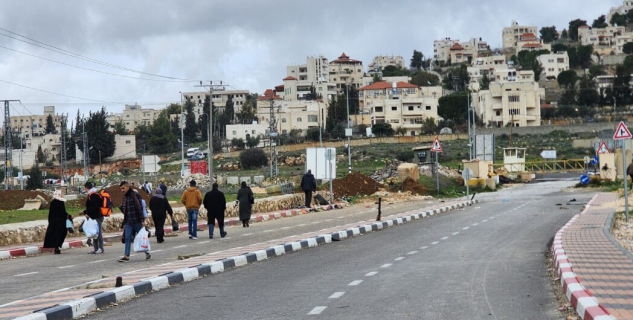
Hebron District
Since the Gaza war broke out on 7 October 2023, Israel has imposed draconian restrictions on the movement of Palestinians in Hebron District. It has blocked four out of five entrances to the city of Hebron, closed six out of seven internal checkpoints in the area to Palestinians, and installed gates and dirt mounds to block the entrances to 19 Palestinian communities.
Four of the five entrances to Hebron blocked:
The military has blocked the three southern entrances to the city by closing gates it installed at the al-Fahs junction in both directions, and two gates at turnoffs from Route 60: opposite the village of Khirbet Qalqas and opposite the settlement of Beit Hagai. The military also blocked one of the northern entrances to the city by closing a gate it installed previously on Route 35, north of the city. Since the beginning of Ramadan on 11 March 2024, the military has started to infrequently open the gate. After the war began, the military also installed a gate at the entrance to the neighborhood of Ras al-Jorah, which it closes infrequently.
Curfew on Area H2 in Hebron:
On 7 October 2023, the military imposed a curfew on 11 neighborhoods in Area H2 in Hebron. Stores and other places of business shut down, and some 750 families, numbering thousands of people, were imprisoned in their homes. On 21 October, after two weeks of full curfew, the military announced residents could leave home on Sunday, Tuesday and Thursday, for an hour in the morning and an hour in the evening, but otherwise, the neighborhoods are still under curfew
in addition to the 22 staffed checkpoints and 62 obstacles the military has long been operating in the city.
All seven internal checkpoints in Hebron area closed to Palestinians:
- Al-‘Arrub Checkpoint: Located at the alternate entrance to al-‘Arrub Refugee Camp. Until the war began, soldiers would infrequently come out of the observation tower there and carry out inspections. Since the war, the checkpoint has been closed to Palestinians.
- Beit Ummar Checkpoint: Until the war began, the checkpoint was usually open and infrequently staffed by soldiers, without a regular schedule. Since the war, the gate has been closed and Palestinians are not allowed through.
- Beit ‘Awwa Checkpoint: Until the war began, the checkpoint was staffed by soldiers and Border Police officers who carried out random inspections, and Palestinians were allowed through on foot or by car. Since the war, the gates have been closed and Palestinians are not allowed through.
- Al-Fawwar Checkpoint: Located on Route 60, at the intersection of al-Fawwar Refugee Camp and the town of Dura. Until the war began, the gate was open and the checkpoint was infrequently staffed by soldiers who carried out random inspections. Vehicles were sometimes forbidden. Since the war, the gate has been closed and Palestinians are not allowed through.
- Nabi Yunis/Halhul-Sa’ir: Until the war began, the checkpoint was usually open and infrequently staffed by soldiers. Since the war, the gate has been closed and Palestinians are not allowed through.
- Halhul-Hebron/Route 35 Checkpoint: Located at the intersection between Route 35 and Route 60. Until the war began, the checkpoint was usually open and infrequently staffed by soldiers. Since the war, it has been closed and Palestinians are not allowed through.
Since the war, the military has also closed gates at the entrances to communities around Hebron:
- Al-‘Arrub Refugee Camp: The military installed a gate at the main entrance to the camp and closed it, blocked the alternate entrance with a dirt mound (removed on 5 March 2024), and closed a gate previously installed at the entrance that leads to Route 60.
- Bani Na’im: The military closed a gate it previously installed at the southern entrance, and infrequently puts up a flying checkpoint near the northwestern entrance, which leads to an alternate unpaved road.
- Al-'Udeisah: The military blocked the eastern entrance leading to Route 60 with rocks and concrete blocks.
- Beit 'Einun: The military closed a gate it previously installed at the southern entrance, also used by residents of Sa’ir and a-Shuyukh to access Route 60.
- Tarqumya: The military closed a gate it installed at the western entrance to the town, on Route 354, leading to Route 35.
- Khirbet a-Taybah: The military blocked the northeastern entrance with a dirt mound.
- A-Simiya: The military blocked the entrance leading to Route 60 with a dirt mound.
- Idhna: The military closed a gate it previously installed at the main entrance to the town.
- Wadi a-Shajena: The military closed two gates it previously installed at the two entrances leading to Route 60.
- Dura: The military closed a gate it previously installed at the main entrance to the village and blocked with a dirt mound an alternate entrance leading to Route 60.
- Halhul: The military closed a gate it previously installed at the northern entrance to the village, leading to Route 60.
South Hebron Hills:
- Yatta: The military closed two gates it previously installed, which block access to Route 356 to residents of Zif Yatta and other communities west of that road. One gate is at the Zif junction on Route 3331, and the other is on an inner road leading to Route 356.
- A-Samu’: The military closed a gate it previously installed at the western entrance to the town on Route 3177, leading to Route 60, and blocked the southern entrance with dirt mounds.
- Khirbet Susiya: The military installed a gate in the western part of the village and closed it. The military also put up dirt mounds to block five entrances to the village along Route 3179, and another dirt mound on a road connecting the village with Khirbet Wadi a-Rakhim.
- A-Dhahiriyah: The military closes a gate it previously installed at the main entrance to the town, leading to Route 60, from 5:00 P.M. to 5:00 A.M.
- Al-Jawaya: The military put up a dirt mound to block the southern entrance, leading to Route 317.
- Khallet al-Mayah: The military put up a dirt mound to block the northern entrance, leading to Route 356.
- Um Lasafa: The military put up a dirt mound to block the entrance to the community, which is also used by residents of Khallet al-Mayah.
- She’b al-Batem: The military put up dirt mounds to block two roads leading to the town of Yatta – the northern road and the western road (blocked from the other side of Route 317).
- Al-Karmel: The military put up a dirt mound and rocks to block the entrance leading to Route 3176, and from there to Route 317.
- Khirbet Lasefar: Starting on 7 October 2023, the military forbade the Qabitah family from Khirbet Lasefar, which Israel has trapped on the western side of the Separation Barrier, from crossing the Beit Yatir/Khirbet Lasefar checkpoint to access the rest of the West Bank. A month later, the military reinstated permission to cross subject to filing a request in advance every time.
Al-Quds District
After 7 October 2023, the military used dirt mounds to block an alternate route that area residents take when the Container (Wadi a-Nar) checkpoint is closed. The checkpoint, located east of Abu Dis, controls Palestinian traffic between the north and south of the West Bank.
The military also used boulders to block access from the community of al-Muntar to Route 4171, cutting the community off from the other area villages.
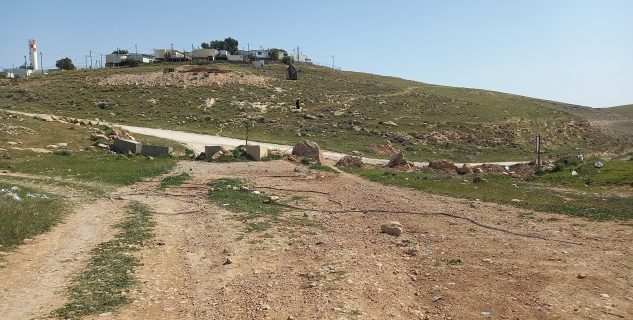
The Jordan Valley
On 7 October 2023, the military closed the gate at the Gochya checkpoint, which was installed west of the settlements of Beka’ot and Ro’i to limit the movement of Palestinians living in communities east of it to their district town, Tubas, and to the only source of flowing water available to them, in Khirbet ‘Atuf. Until 7 October, the military also used the checkpoint to inspect Palestinian laborers working in settlements. Until January 2024, no Palestinians were allowed through. Since then, soldiers have opened the gate in the morning and at irregular hours during the rest of the day.
On 28 March 2024, the military used dirt mounds to block four dirt paths that residents dug south of Khirbet ‘Atuf and used when the Gochya checkpoint was closed, or when there were long lines at the Hamra checkpoint.

Tulkarm District (as of 29 May 2024)
Since October 7, Israel has closed to Palestinians two out of six checkpoints located between the West Bank and Israel, two internal checkpoints between Palestinian villages and cities, and two entrances to two villages.
Checkpoints before entering Israel:
- A-Taybah / Sha’ar Efrayim: Served until the war for transferring goods and operated from 7:00 A.M. to 2:30 P.M. Now completely closed.
- Tulkarm / al-Kafriyat: Until October 7, this checkpoint was open on Saturdays only, and was used by farmers with permits to enter the seam zone and Palestinian citizens of Israel traveling to and from Tulkarm. Now completely closed.
Internal checkpoints:
- Shufa: Installed by the military in 2016 between the villages of ‘Izbat Shufa and Shufa on Route 5615, which connects southern Tulkarm to Nablus. Before the war, only random checks were conducted at checkpoint. Now completely closed to Palestinians.
- ‘Anabta/Einav (eastern entrance): Located on Route 557 at the eastern entrance to ‘Anabta. Until the war, was open and rarely staffed. Closed to Palestinian passage on October 7 and reopened in March 2024, for three hours in the morning and three hours in the afternoon, in both directions.
Village entrances:
- Blocked access to Route 57: The military blocked the turnoff from Route 5615 to Route 57, used by residents from the villages of Beit Lid and Safarin, with dirt mounds and boulders.
- Ramin: The southern entrance to the village has been blocked by the military with a dirt mound.
Jenin District (as of 29 May 2024)
Since October 7, Israel has closed three out of five checkpoints between the West Bank and Israel, and two internal checkpoints.
Checkpoints before entering Israel:
- Jalameh / Muqeibleh: Until the war, used by Palestinian workers with Israeli entry permits and Palestinian citizens of Israel traveling to Jenin and back. Completely closed since October 7.
- Zabda / Barta'a / Rihan: Until the war, passage was allowed only for residents of East Jerusalem and of the villages Barta'a, Um a-Rihan, and Dhaher al-Malih, who have been cut off from the rest of the West Bank by the Separation Fence. Since October 7, only residents of Barta'a, Um a-Rihan and Dhaher al-Malih are permitted to pass between their villages and the West Bank.
- Salem: Located on the Separation Fence and used as an entry gate to the Salem Israeli DCO. Until October 7, it was also used by Palestinian citizens of Israel traveling to Jenin and back. Since October 7, Palestinian citizens of Israel have not been allowed to cross to access Jenin.
Internal checkpoints:
- Ya'bad / Mevo Dotan: Located on Route 585 at the entrance to the settlement of Mevo Dotan. Until the war, rarely staffed, with only random checks. Closed to Palestinians on October 7 and reopened in March 2024.
- Hermesh: Located on Route 585 at the entrance to the settlement of Hermesh. The checkpoint has a lookout tower that was previously unstaffed. Closed to Palestinians on October 7 and reopened in March 2024, subject to inspection.
Qalqilyah District (as of 29 May 2024)
Since October 7, Israel has closed one of three checkpoints between the West Bank and Israel, one internal checkpoint at the entrance to Qalqiliyah, and the entrances to six villages.
- Qalqilyah DCO / Eyal: Passage allowed only for Palestinians with Israeli entry permits. Closed on October 7 and reopened in March 2024.
Internal checkpoints:
- Entrance to Qalqiliyah: Previously open with very rare random checks. Since October 7, closed off now and then with concrete blocks, and later also barred to pedestrians.
Village entrances:
- ‘Izbat a-Tabib: The military installed and closed a gate at the main entrance to the village leading to Route 55.
- ‘Azzun: The military placed a lookout tower at the southern entrance, and a gate at the northern entrance that has since been closed.
- Al-Funduq: The military blocked the main and alternative entrances to the village, both leading to Route 55, with concrete blocks.
- Jinsafut: The military blocked the northwestern entrance to the village (Route 5066) leading to Route 55 with concrete blocks.
- Kafr Laqif: On October 7, the military installed a gate at the entrance to the village and occasionally closes it.
Salfit District (as of 29 May 2024)
Since October 7, Israel has closed one of the two internal checkpoints in the district and blocked the entrances to nine villages.
Internal checkpoint:
- Deir Ballut: This checkpoint, used by Palestinians traveling south from the villages of Salfit District towards Ramallah, was previously open and rarely staffed. Since October 7, it is infrequently closed to Palestinian passage.
Village entrances:
- Salfit: The military installed a gate at the northern entrance to the town and infrequently closes it.
- Haris: The military installed a gate at the western entrance to the town and infrequently closes it.
- Kifl Haris: The military closed the gate previously installed at the southern, main entrance to the village.
- Bruqin: The military closed the gate previously installed at the northern, main entrance to the village.
- Kafr a-Dik: The military closed the gate previously installed at the western entrance to the village.
- Additionally, on October 7, the military closed the gate previously installed on Route 505, blocking access to the villages of Qarawat Bani Hassan, Bidya, Sarta, and Masha.