

Military shells home in al-Fukhari, east of Khan Yunis, killing young woman in her bedroom
Testimony of Duniana al-‘Amur’s mother, Farhah al-‘Amur

Self-portrait by Duniana
We live about 1.5 kilometers from the border with Israel. On Friday, 5 August 2022, my daughter Arij (24), who is married and doesn’t live with us, came to visit us at 2:00 P.M, as she does every Friday. At 3:30 P.M., my husband ‘Adnan (51) and I were sitting with Arij and all the kids under a tree by our house, drinking tea together. Then my daughter Rawan (19) and I went inside to bake pita bread. Arij and Duniana stayed sitting under the tree, and then Arij joined us and Duniana went into her room. I heard my son Ousamah (15) ask Duniana to give him her phone to play with. She gave it to him but took it back a few minutes later and told him to watch TV instead. A few minutes after that, I heard her talking to my son ‘Assem (21) in her room, and then he went to the TV room and joined the other boys there.
Suddenly, the room we were in filled with dust and sand. I thought the baking pot had exploded. We all ran outside, and then I heard Rawan say Duniana was still in her room. I rushed in there with ‘Assem. Everything was full of dust and we could hardly see, but I made out Duniana in her bed. Her head was covered in blood. It was only when I saw her that I realized it was a shelling. Everything was quiet, and nothing was going on around us.

Dunyana al-‘Amur’s artwork in her bedroom. Photo: Khaled al-‘Azayzeh, B’Tselem
I started screaming and tried to wake her up. I wanted to believe she was only unconscious, but it looked like she wasn’t alive anymore. ‘Assem covered her. We heard shooting around us.
Our neighbor Muhammad Farid al-‘Amur (28), who is a paramedic, came and checked Duniana’s pulse. He said she was still alive. ‘Assem and the paramedic picked her up, ran out to the road and put her in a car they hailed.
I quickly went inside and put on an overgarment. The house was full of rubble and dust. I went outside and got in the car, and we drove to the European Hospital in Khan Yunis. The doctors said they needed blood units. I asked again and again to see my daughter, but they said she was in the ICU and I couldn’t go in. They didn’t let me see her.
They killed her and destroyed her dream. She was a simple girl who did nothing to the military and wasn’t a danger to anyone.
After about 20 minutes, I asked again to see her, and again they told me I couldn’t. A few minutes later, a nurse came and gave me a tranquilizer shot. My son Muhammad (26), who got to the hospital after us, held me and cried. I understood my daughter was dead. We left the hospital and went to my sister-in-law Fatimah, who lives next to us. I didn’t feel anything because I was numb from the shot.
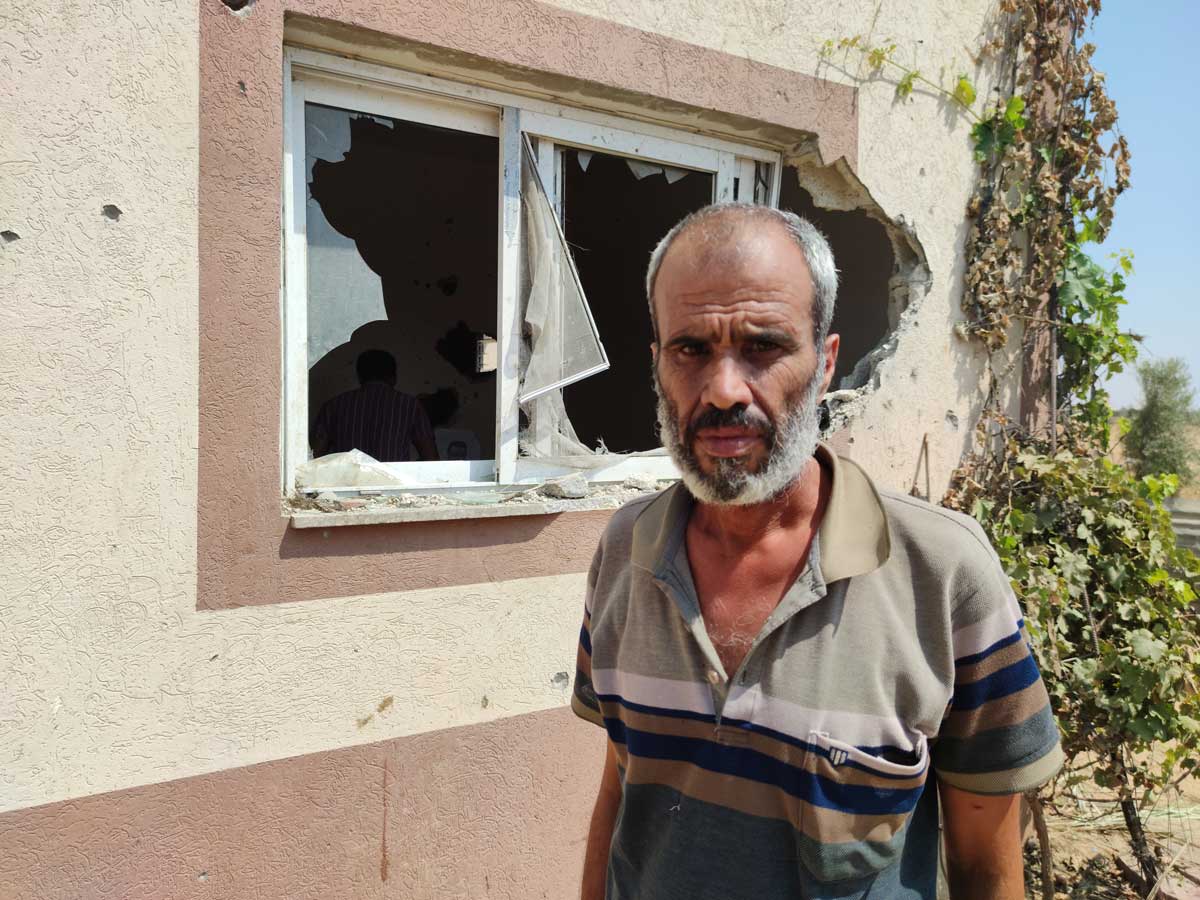
‘Adnan al-‘Amur, Dunyana’s father, by her bedroom window. Photo: Khaled al-‘Azayzeh, B’Tselem
About an hour later, they brought Duniana’s body from the hospital and laid her before me. I held her. Her face was covered and I couldn’t see it. Her sister Arij hugged her, too. Everyone was screaming and crying. Then they took her away from me.
The next day, Saturday, I woke up to a house full of women. I cried. We’re simple farmers. We did nothing to the Israeli military. Duniana was innocent. She was an artist and a fourth-year student at Al-Aqsa University. She loved painting and growing flowers. She was the one who tended to our yard and planted flowers in it. She loved reading the Quran and knew it by heart. Because she loved flowers so much, I called her “the basil of paradise.” Her paintings reflected the life of the poor. A simple life. She was hoping to graduate and continue with her artwork. They killed her and destroyed her dream. She was a simple girl who did nothing to the military and wasn’t a danger to anyone.
Our house is in ruins and isn’t fit to live in. We’re all staying with my son Muhammad and his wife now. ‘Assem and his twin sister, Asmaa, can’t sleep here anymore. Asmaa gets scared whenever she hears airplanes. They want us to move out.
Every day I go to our ruined home, to the place where my daughter was killed, and cry. Duniana and I were very close. I hold her phone and talk to photos of her, asking how she could leave me like that. Why did they kill her? I ask myself every day why they shelled our house. Why did the military hurt us? There was no war going on. Everything was peaceful and it was Friday, a day of rest when families get together. Life without Duniana is hell. My daughter is gone and we never got a chance to say goodbye. May God have mercy on her soul.
Farhah al-‘Amur (48), a mother of nine, gave her testimony to B’Tselem field researcher Olfat al-Kurd.
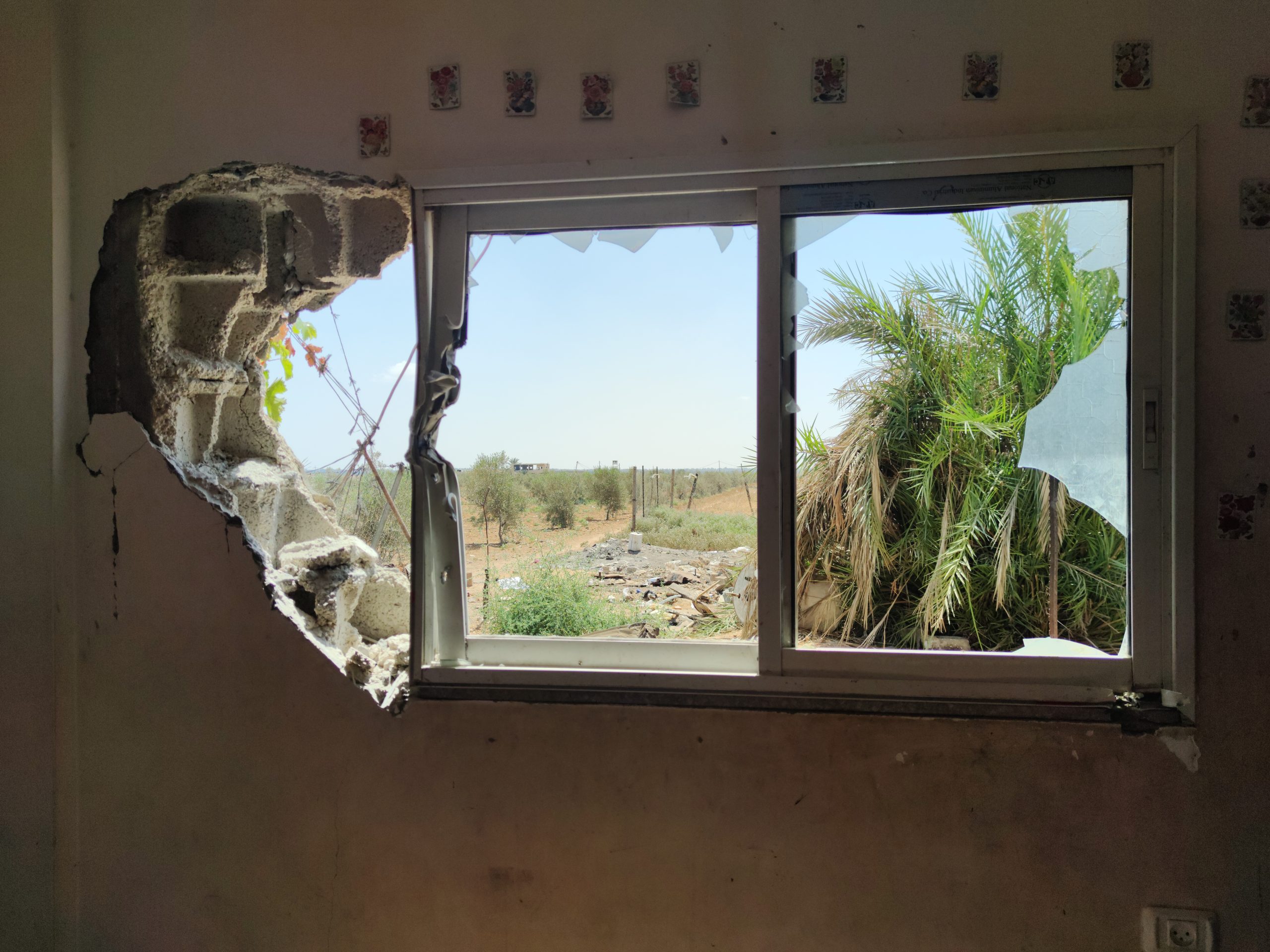
Dunyana al-‘Amur’s bedroom window. Photo: Khaled al-‘Azayzeh, B’Tselem